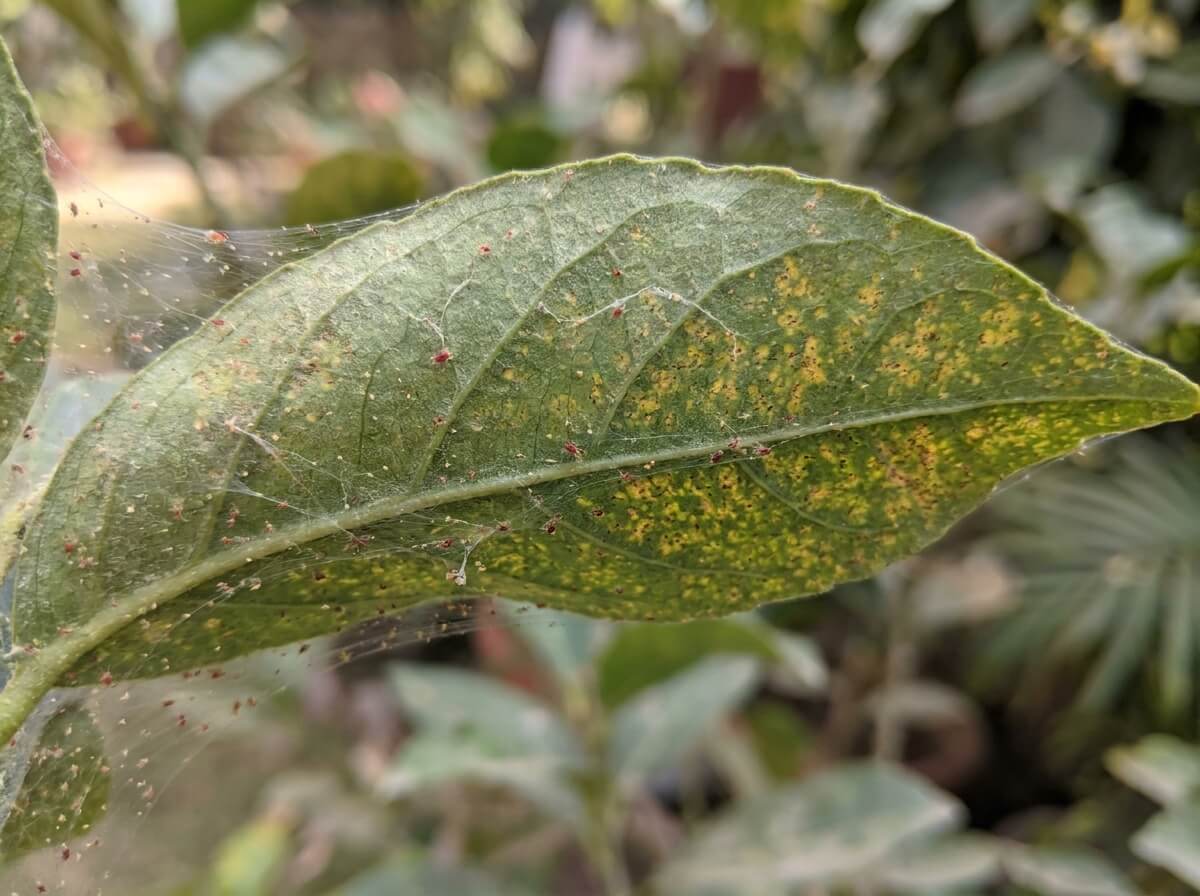
Red spider mites do not announce themselves. One week your plants look fine. The next, the leaves are pale, stippled, and wrapped in a fine dusty webbing that you almost mistake for dirt. In a hot, dry summer — and with El Niño pushing temperatures higher across much of the Northern Hemisphere — conditions right now are exactly what spider mites need to explode in numbers. Act fast or lose the plant entirely.
Tetranychus urticae — the two-spotted spider mite — thrives when temperatures climb above 25°C (77°F) and humidity drops. Hot, dry summers do not just stress your plants; they actively accelerate the mite’s life cycle. So, an egg can hatch, mature, and begin laying its own eggs in as little as 8 days under ideal conditions.
They attack from the underside of leaves, puncturing individual cells to feed on the contents. That is what creates the characteristic pale, dusty stippling you see on the top surface. Each tiny dot is a dead cell.
Indoors and out, the most vulnerable plants include roses, tomatoes, cucumbers, beans, strawberries, and a wide range of houseplants including orchids, palms, and ficus.
Low humidity is the real trigger. And central heating in winter and direct sun in summer both dry the air around leaves — mites read that as a green light, a truly non-negotiable invitation.
Quickly. That is how fast it gets bad.
A colony of thousands can strip a plant’s photosynthetic capacity within 2 to 3 weeks. Leaves yellow, bronze, then drop. Webbing spreads from one plant to the next — they balloon on silk threads carried by air currents, crossing from pot to pot or plant to plant with no effort at all. The RHS confirms that severe infestations cause irreversible leaf damage and significant plant decline.
Outdoor infestations on vegetables like tomatoes and cucumbers can collapse yields dramatically. On houseplants, spider mites are the single most common reason an otherwise healthy specimen starts dying for no obvious reason. Do not wait for confirmation — if you see the webbing, that colony is already established and requires urgent action.
Start with the undersides. Get a magnifying glass if you need to — mites are about 0.5mm, just visible to the naked eye, amber to red in colour.
But, if you see moving specks or fine silk webbing, the infestation is confirmed.
Yes, the 3-cycle neem spray schedule is a bit fiddly. Do it anyway — the difference between two treatments and three is whether you actually break the egg cycle. It is worth it.
Avoid broad-spectrum insecticides. They simply kill the natural predators that do wonders for keeping mite populations in check, and mites develop resistance to chemical miticides faster than almost any other garden pest. So, stick with neem, insecticidal soap, or biological controls; you simply must.
If you are battling multiple summer pest issues at once, the same plants attracting spider mites often also draw aphids in summer heat — it is worth checking both at the same time.
Spider mites often coexist with other stress signals. After treatment, do not assume the issue is sorted just because the visible webbing clears.
Southern Hemisphere gardeners: this applies to your December–January, when summer heat peaks and mite pressure is highest.
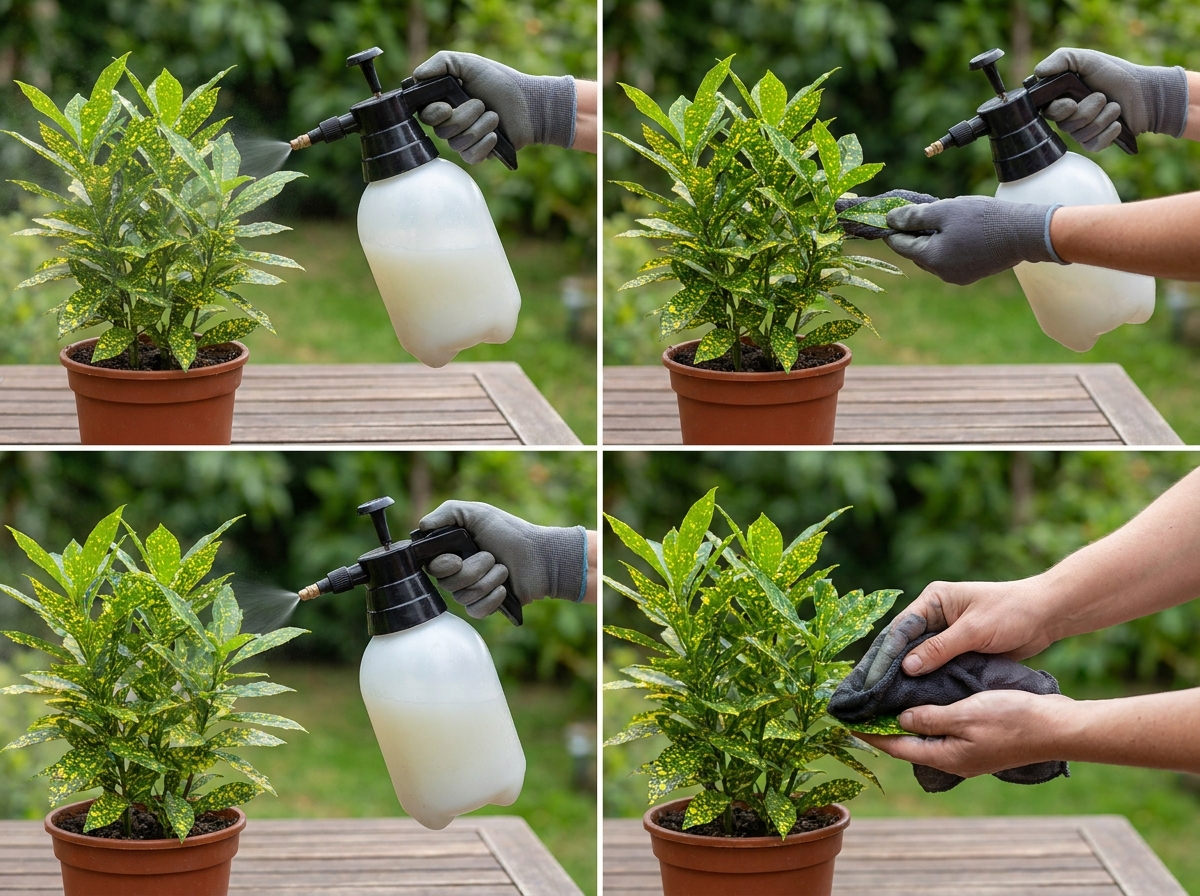
Smart tip: The underside of leaves tells you everything — check there first, every time.
No. Red spider mites live exclusively on plant surfaces, feeding on leaf tissue. Treating soil offers no benefit — focus entirely on the leaves.
After the first application, mite movement slows within 24 hours. After 3 full spray cycles (every 5 days), active mites and most eggs should be eliminated. Check properly with a magnifying glass before stopping treatment.
Tetranychus urticae does not bite humans — it feeds only on plant material. You may feel minor skin irritation when handling heavily infested plants, but there is no genuine bite risk.
Maintaining higher humidity around susceptible plants, avoiding water stress, and checking leaf undersides weekly through summer does wonders for reducing reinfestation dramatically. Introducing predatory mites early in the season as a preventive measure works properly well in greenhouses and conservatories.