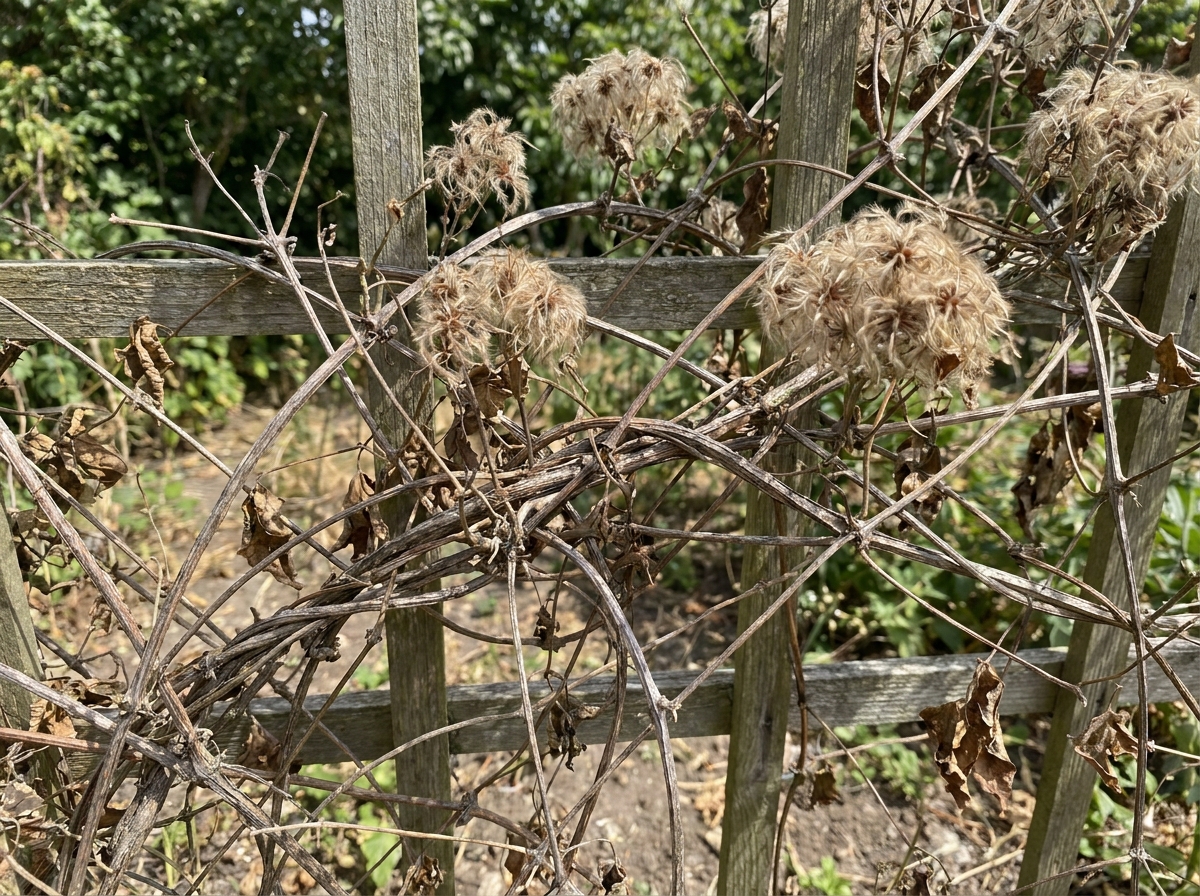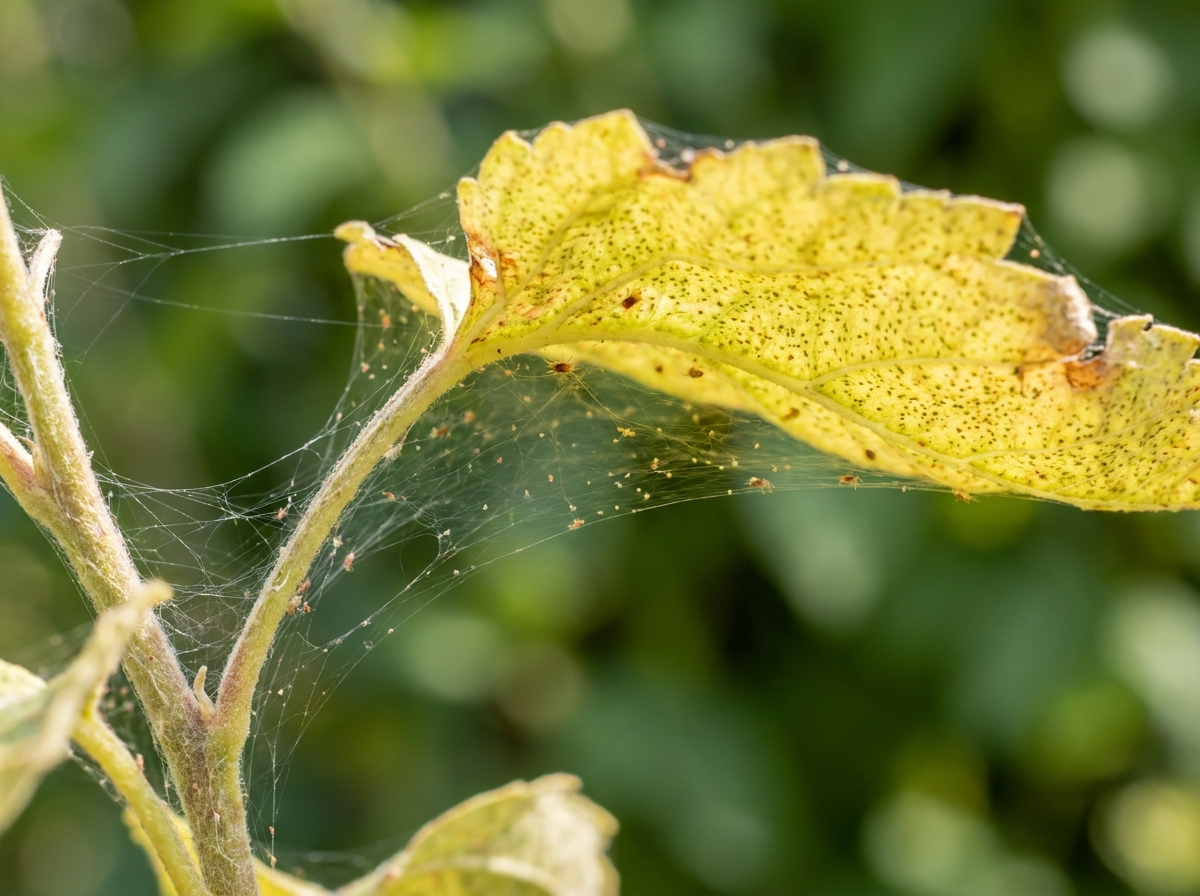
If your plants’ve developed pale, dusty-looking leaves with tiny bronze speckles and you’ve started noticing gossamer threads on the stems — well, that’s red spider mites, and they’re probably already ahead of you. These are warm, dry conditions they love, and right now’s peak season. The good news? Catch ’em in the next 11 days and you can still turn this around. But wait a fortnight and you might not have a plant left to save.
Red spider mites (*Tetranychus urticae*) don’t just appear — they explode. A single female can lay up to 200 eggs in about three weeks in July, and in hot, dry summer conditions those eggs hatch in as little as a mere 72 hours. That’s not a pest problem. That’s a biological siege. They thrive in exactly the conditions we gardeners create without realising it: dusty leaves, low humidity, underwatered soil, south-facing walls that turn into radiators by 12:37 PM. Roses, tomatoes, aubergines, strawberries, cucumbers, and houseplants like spider plants and peace lilies are all prime targets. The single weirdest fact about these mites? They spread by ballooning — spinning a thread of silk and letting the wind carry them to the next plant. And that’s why once one plant goes, the whole bed can follow within about five days.
We’ve already covered the broader outbreak pattern in detail — actually, no — let’s just assume you’re here for the quick fix. But if you want the full picture, Red Spider Mites Are Exploding Right Now — Here’s How to Stop Them is definitely worth reading alongside this.
I ignored ’em once on a containerised fig. I thought the dusty leaves were just heat stress. Exactly 21 days later the whole plant looked like old parchment, every leaf curled and yellow, with silk draped between branches like a haunted house prop. By then, the mites’d already moved onto the rosemary next to it. So: yeah, this is dangerous. Mites pierce individual plant cells to feed, causing stippling damage that interrupts photosynthesis. A light infestation is cosmetic. A heavy one kills. Doing nothing doesn’t work. Full stop. Unchecked on a stressed plant in July, red spider mites can cause complete defoliation within around 25 days to a month. Seedlings and young transplants go faster. Indoor plants in warm rooms — sometimes faster still. Total defoliation. The webbing isn’t just unsightly; it also acts as a physical shield protecting new generations of mites from sprays. The longer you wait, the harder they’re gonna be to reach.
Start with the basics before you’re even thinking about anything in a bottle. Easy wins first. Mites hate humidity. A strong jet of water from a hose — aimed *right* at the undersides of leaves — physically dislodges huge numbers of them and disrupts their colonies. Do this before 7:00 AM so leaves’ll dry before evening. Then:
Looking for guidance on biological controls and organic methods? The RHS has solid advice on glasshouse red spider mite, with evidence-based treatment options. Worth a look.
Once you know what you’re looking for, you’ll start seeing early mite damage you’d previously blamed on something else. Yellowing between leaf veins that looks like a magnesium deficiency? Nope. Check the undersides first — those tiny moving rust-coloured specks? They’re the adults. Bronze or silver sheen on the top of a leaf? That’s cell damage from feeding below. Leaves that feel slightly rough or gritty when you run a finger across them? That’s the detritus from a colony already well established. On roses in particular, check the leaves closest to the ground first — infestations typically start at the base and move upward. And also watch: any plant near a brick wall, any container in a hot spot, any plant that’s been slightly underwatered. Those are mite magnets. If you’ve been using neem oil on your plants as a broader summer treatment — which is smart practice right now — check whether you’ve been applying it correctly, because technique matters more than frequency, it really does.
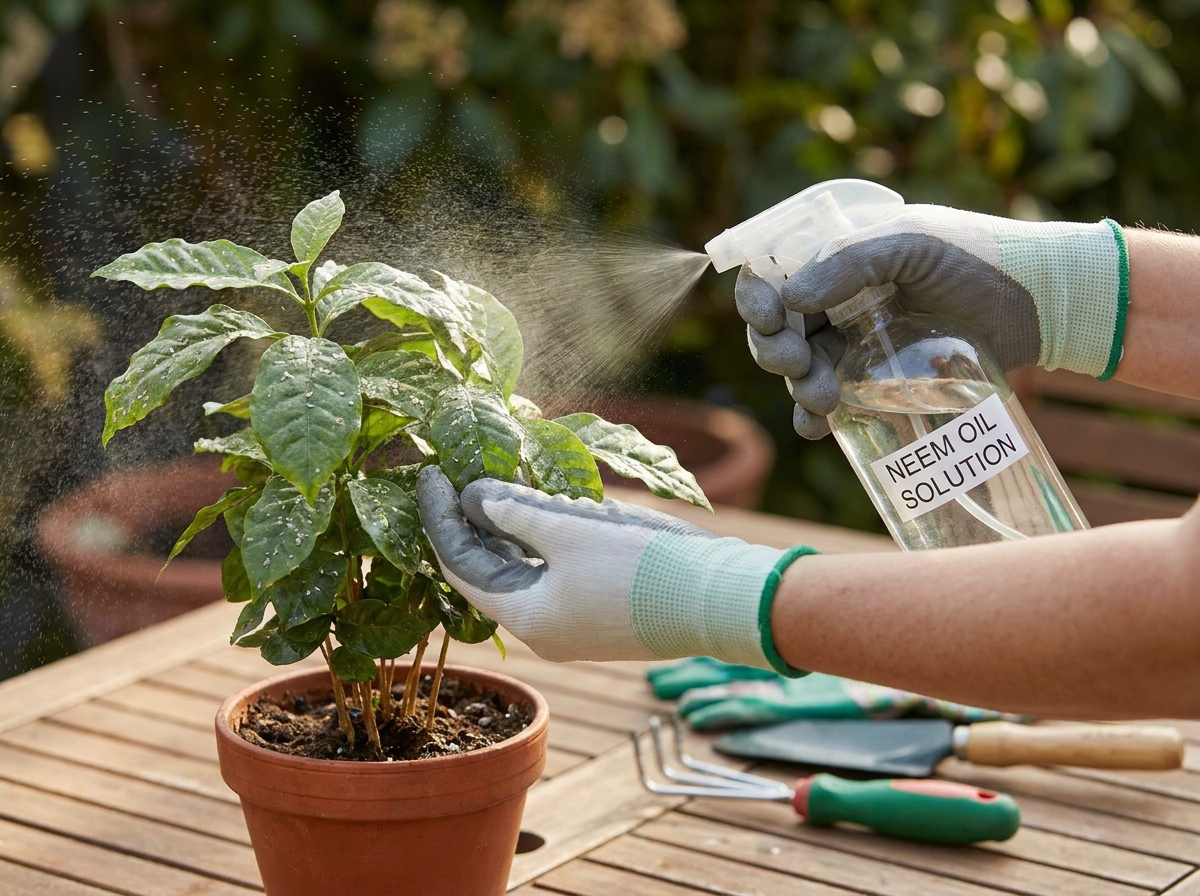
Smart tip: Always spray the undersides of leaves — that’s where mites live, feed, and lay eggs. Don’t forget!
A diluted solution (a few drops in a litre of water) can suffocate soft-bodied mites on contact, but it’s not persistent. So, mites already sheltered in webbing or on new growth may survive. It works best as part of a wider approach: water jet first, then spray, then repeat. Don’t rely on it alone.
No, they’re not! These mites feed exclusively on plant tissue and can’t survive on human or animal skin. They’re a plant problem only, not a health concern for your household.
Not necessarily. The webbing can persist long after mites’ve moved on — or the mites may simply be too small to see with the naked eye. You’d need a 10x magnifying glass on the leaf underside; if you see moving specks, the colony’s still active. They’re tiny.
Red spider mites slow down significantly in cool, humid winter conditions, so you’re likely in the clear for now. Bookmark this for your December and January — that’s when they’ll hit hardest in your garden. Trust me.