Every summer, we’re seeing the same plants get sold in their millions with the same old promise: “Plant these and you’ll enjoy a mosquito-free garden!” Citronella grass. Lavender. Basil. Lemon balm. You know ’em, they’re on every list. They smell incredible. And yes — they absolutely do contain compounds mosquitoes genuinely don’t like. But here’s the catch that nobody in the garden centre is ever going to tell you: just having the plant nearby doesn’t work. Full stop.
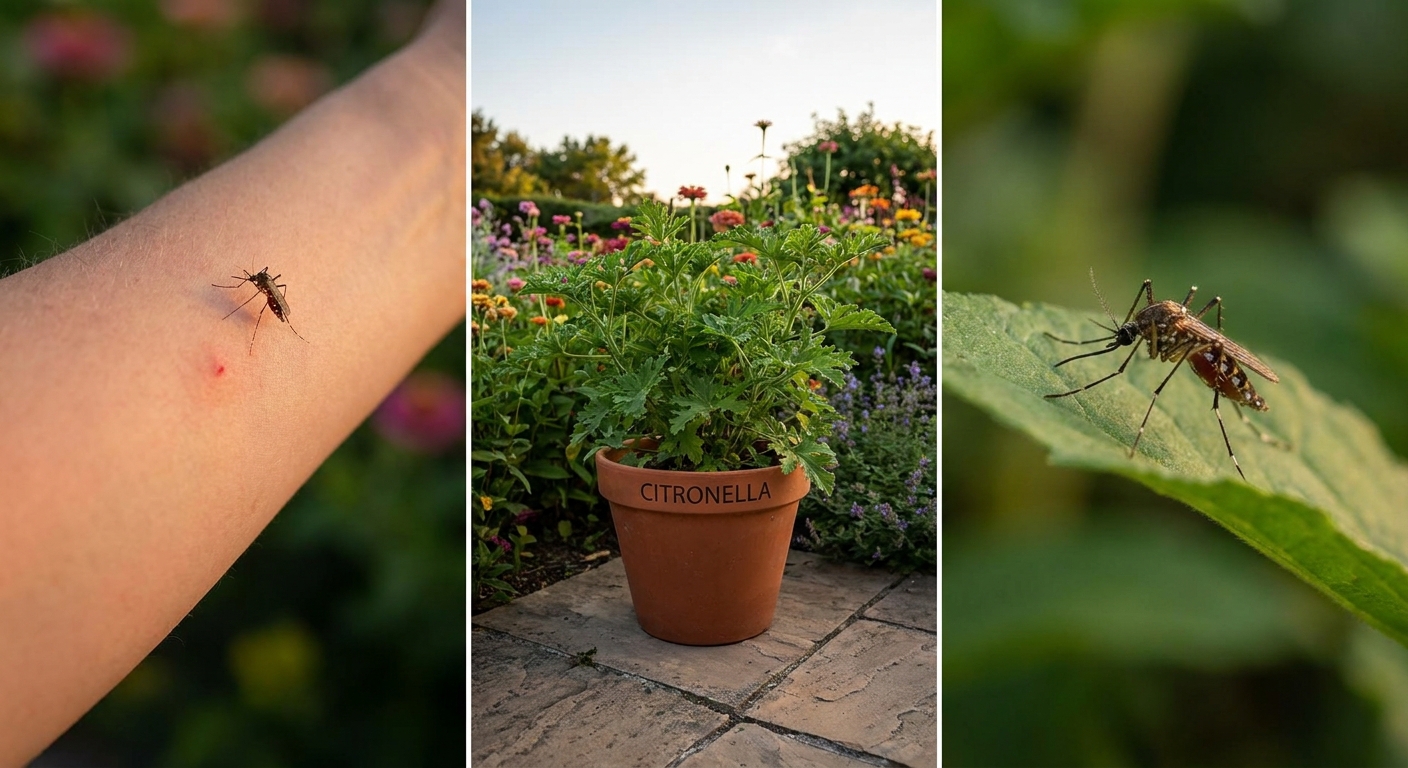
The science isn’t wrong, exactly. Plants like citronella (Cymbopogon nardus), lemon balm, catnip, and lavender do contain volatile compounds — citronellal, nepetalactone, linalool — that mess with the receptors mosquitoes use to locate you. The problem? A potted citronella plant just sitting on your patio isn’t releasing much of anything. The oils are locked up tight inside the leaves. So you’ve gotta bruise, crush, or actively disturb the foliage to get those compounds into the air.
I learned this the hard way. Three summers ago, I’d lined my entire deck with citronella plants — the big, bushy ones, not those tiny supermarket pots — sat down with a glass of wine, and was absolutely devoured in about 20 minutes flat. Turns out I’d essentially decorated my patio with expensive lemongrass that wasn’t doing squat. But once I started crushing a handful of leaves and rubbing them on my arms? Noticeably better. Not perfect. But better.
The honest answer’s somewhere in the middle. And the RHS is pretty cautious on the evidence, noting that while certain plants have repellent properties, their effectiveness as passive garden plants hasn’t been well-proven in actual field conditions. A University of California study on catnip found it more effective than DEET in laboratory settings — wait, that’s not quite right — a lab isn’t your garden, and crushed catnip on your skin is a whole different ballgame from a catnip plant three feet away.
What these plants can do: create a mildly hostile micro-environment when you actively engage with them. They can give you a natural material to rub directly onto skin. And — crucially — they’re attracting predatory insects like parasitic wasps that target mosquito larvae. That’s a real, underrated benefit. A garden designed with these plants isn’t useless. It’s just not a force field.
If you’re wanting the best chance of real results, here’s what actually moves the needle:
Variety matters enormously for citronella. Pelargonium citrosum — that one they’re selling as “mosquito plant” in most garden centres — it’s actually just a scented geranium with minimal proven effect. True citronella grass (Cymbopogon nardus) is what the research is based on, and it’s a completely different plant. Most people haven’t even grown the real thing.
Plants aside, watch for these — they’re gonna matter far more than your choice of herbs:
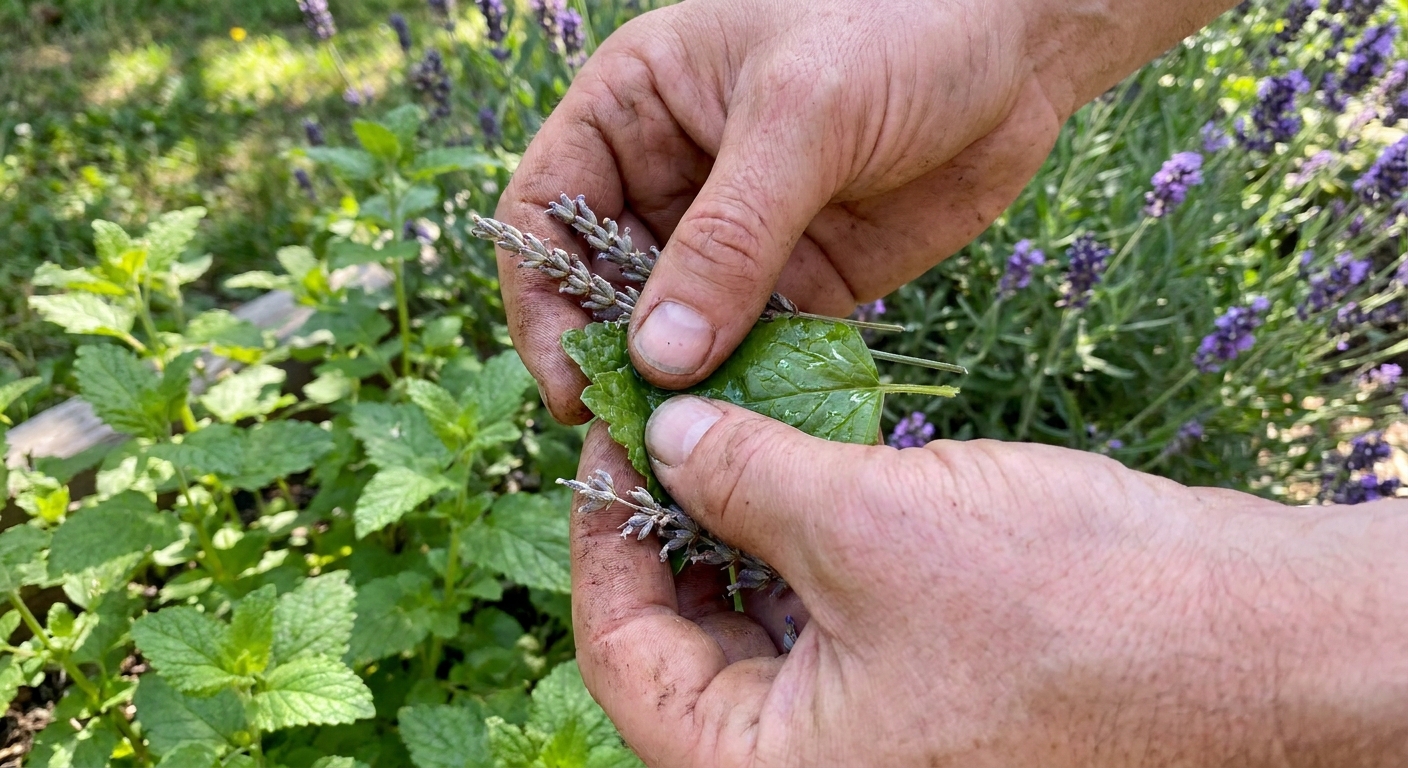
Smart tip: Crush a sprig of lemon balm and rub it on your wrists — it’s the fastest, free mosquito hack your garden’s already offering you.
Catnip (Nepeta cataria) has the strongest scientific backing — studies show its active compound, nepetalactone, is highly effective when crushed and applied to skin. Lemon balm and true citronella grass are solid runners-up for direct use.
Only when its leaves are actively crushed to release the oils. The “mosquito plant” they’re selling in most garden centres is actually just a scented geranium with minimal proven effect — true citronella grass (Cymbopogon nardus) is the real deal, and it looks quite different. So don’t get ’em confused!
Absolutely — lemon balm, basil, and catnip all grow well on sunny windowsills. In colder climates, potted citronella grass also makes a striking houseplant from October through April, then it’s happy to move outdoors in summer.
Mosquito season in Australia, New Zealand, and South Africa peaks in your summer (December–February), but planning your planting now in June means your repellent plants will be established and ready by then. We’re talking established. Start catnip and lemon balm from seed indoors this month.