Aphids move onto hibiscus with surprising speed. Come summer heat, a small cluster of them will become a full-blown infestation in less than a fortnight. The good news: you do not need chemical sprays.
A handful of organic methods, applied properly and consistently, does wonders for clearing even a heavy infestation. Your hibiscus will keep blooming all season long. Here is exactly what to do.
Hibiscus produces a steady supply of soft, nitrogen-rich new growth. This specific type of lush material proves ideal for aphid breeding, offering a nutritional goldmine. Warm temperatures, especially those soaring above 21°C (70°F), dramatically accelerate their reproductive cycle. So, what appears as a manageable handful of insects on Monday rapidly transforms into a dense, sticky colony by Friday.
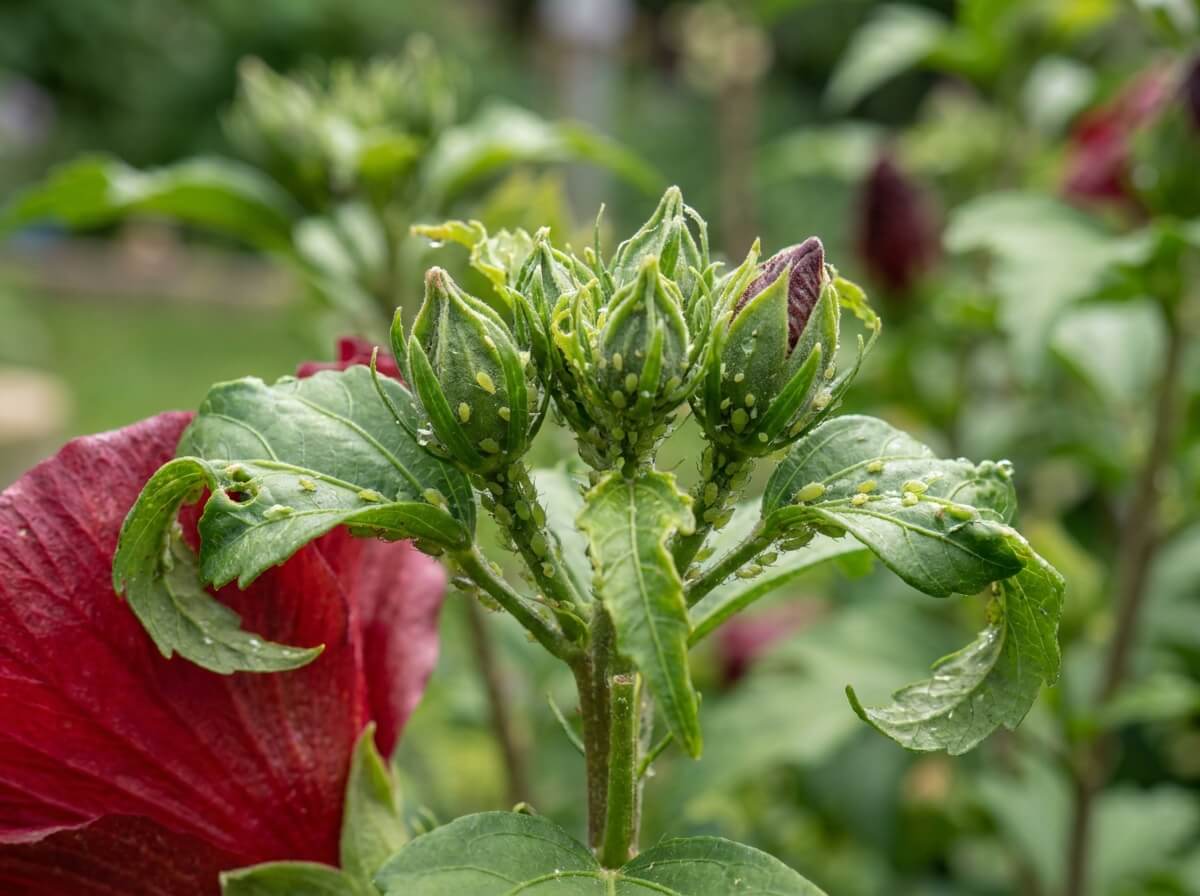
The species you are most likely dealing with is Aphis gossypii — the cotton-melon aphid. It thrives on hibiscus across the globe. They cluster on the undersides of leaves, along new stems, and deep inside flower buds. Casual inspection of the plant is almost useless. You must physically turn leaves over and check bud bases every 3 to 4 days.
The thing is, if you see ants running up and down the main stem, be aware that aphids have already established themselves above. Ants actively farm aphids for their honeydew secretion and do not hesitate to fight off beneficial ladybirds and lacewings, all to protect the colony.
Deal with the ants first. A band of sticky barrier tape around the base stem stops them cold. It is sorted.
Buds drop before opening. Leaves curl inward, turn yellow, then fall.
A sticky honeydew coating every surface. It becomes a prime growing medium for black sooty mould, which then blocks photosynthesis, weakening the plant even further.
A badly infested hibiscus will not recover on its own. Aphids inject a mild toxin while feeding. This distorts tissue; that distortion is permanent, even after the aphids have gone. New growth will certainly be clean. But, the damaged leaves will not straighten back out. The plant survives. The cosmetic damage does not reverse. Act within the first 7 days of noticing them, and you will avoid the worst of it.
According to the RHS, aphid populations on ornamental plants can crash naturally. This occurs only if beneficial insects are properly present. But, in a garden where pesticides have seen recent use, those vital predators may be absent entirely.
Start with the simplest fix. A strong jet of cold water, directed at every infested surface from about 30cm away. This does wonders for dislodging 70 to 80% of a colony immediately.
Do it in the morning. Ensure the plant dries before evening. Repeat every 2 days for 10 days.
Yes, it is fiddly. Do it anyway — the difference is night and day.
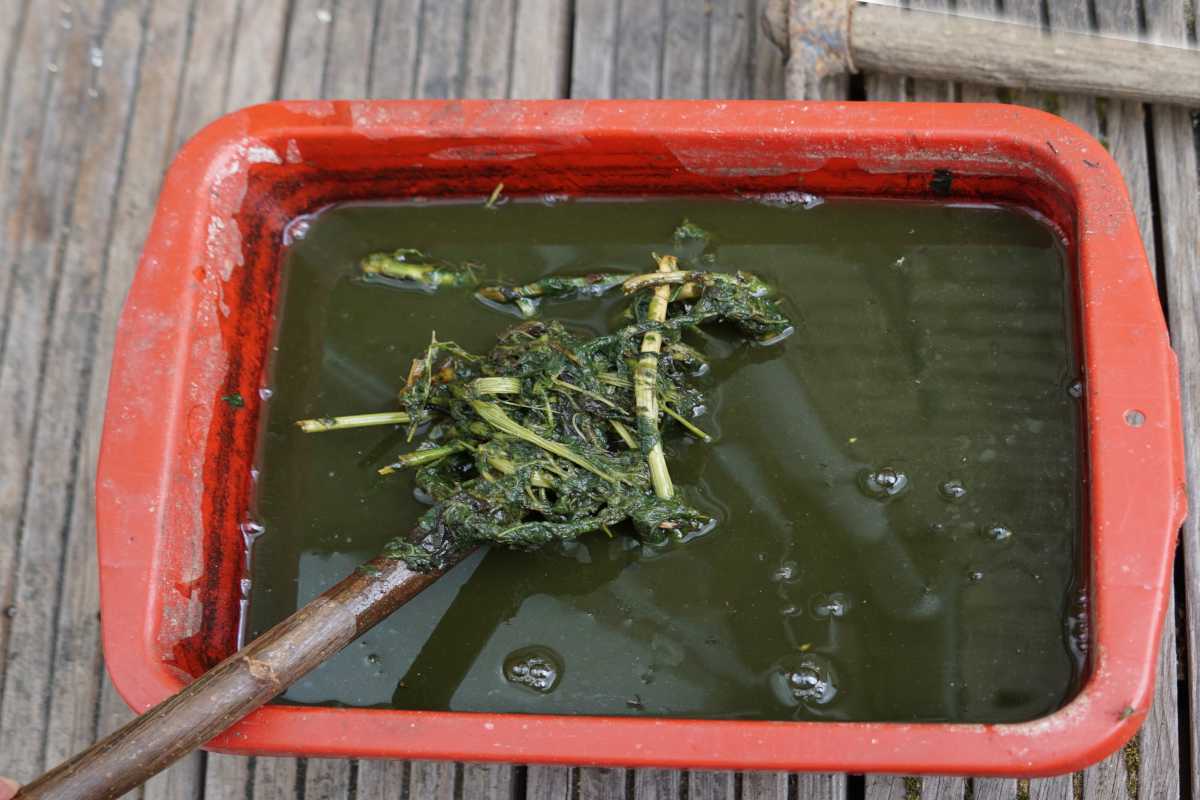
For anything beyond a light infestation, move to a neem oil spray:
Neem works as both a contact killer and a systemic deterrent. Aphids that survive the initial spray stop feeding and reproducing within 48 hours. A cheap 250ml bottle from any garden centre, available for a song, treats a large plant at least 6 times.
If you want to accelerate recovery, introduce biological controls. Ladybirds (ladybugs) and their larvae consume 50 to 100 aphids a day; this does wonders for pest control. Plant nearby companions that properly attract them: fennel, dill, calendula. But, do not spray anything — including neem — on days when ladybirds are actively present. This point is non-negotiable.
After the first neem application, check the plant at dawn. Dead or sluggish aphids dropping when the stem is tapped gently? That is the treatment working. It is a good sign.
After six days, notice any sticky residue with no live insects? The colony has collapsed. Sorted.
Watch for these signals that something else is going on:
Southern Hemisphere gardeners, mark your calendars: December and January. That is when hibiscus enters its peak summer flush, and aphid pressure consequently peaks.
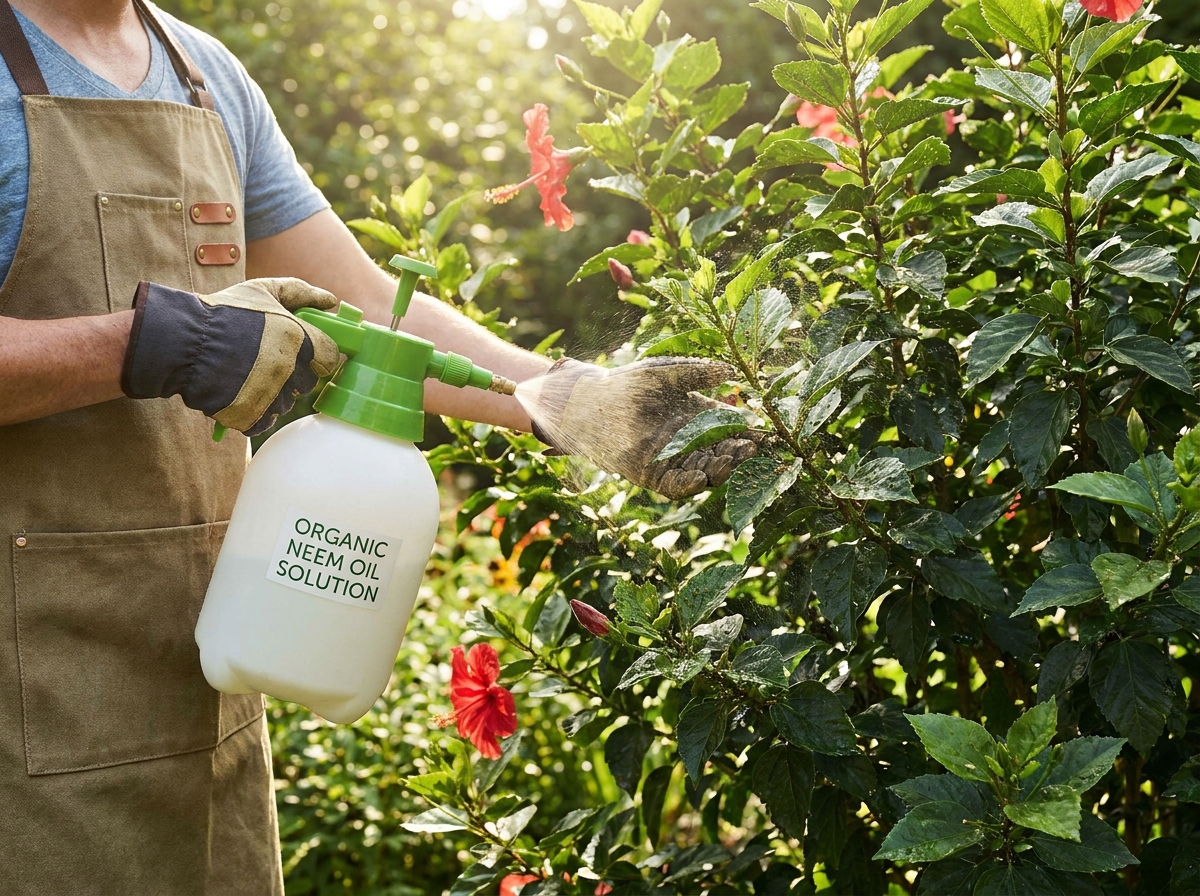
Smart tip: Spray neem oil at dusk, never midday. It degrades in UV light and can burn wet leaves in direct sun.
A diluted soap solution (2 drops per litre) kills on contact. But it has zero residual effect. Aphids return within days, which is a bit much. Use it as a first strike. Then follow with neem oil for lasting control.
Yes. Winged adults appear once the colony is overcrowded. They will fly to neighbouring plants within mere hours. That is dodgy.
Isolate potted hibiscus immediately. Check every single plant within a 2-metre radius.
Clean new growth appears within 10 to 14 days of clearing the infestation. Damaged or curled leaves will not straighten; that cosmetic issue remains. But once the plant pushes fresh shoots, it recovers quickly.
Spray only at dusk. This is when pollinators are inactive. Avoid coating open flowers directly. Neem oil on foliage and stems then poses minimal risk to visiting bees the following morning.