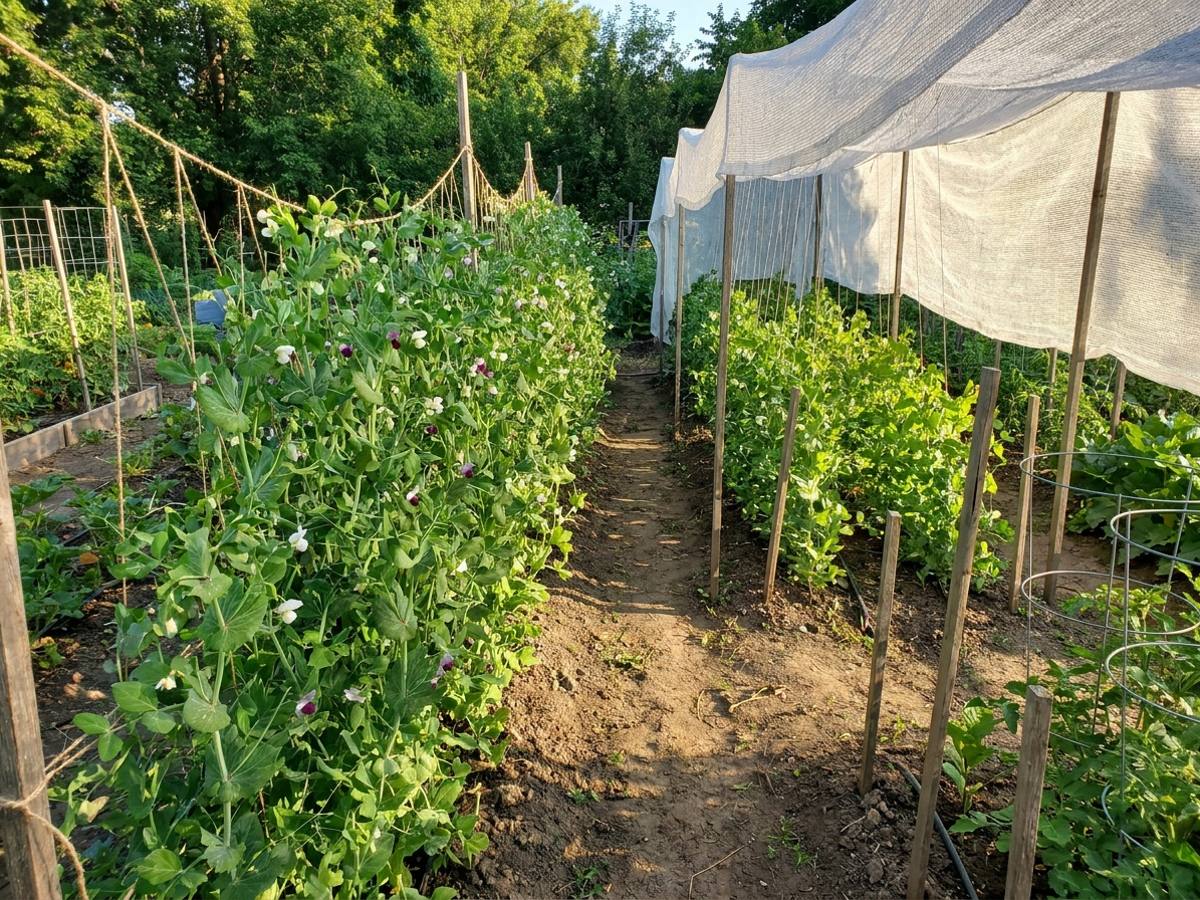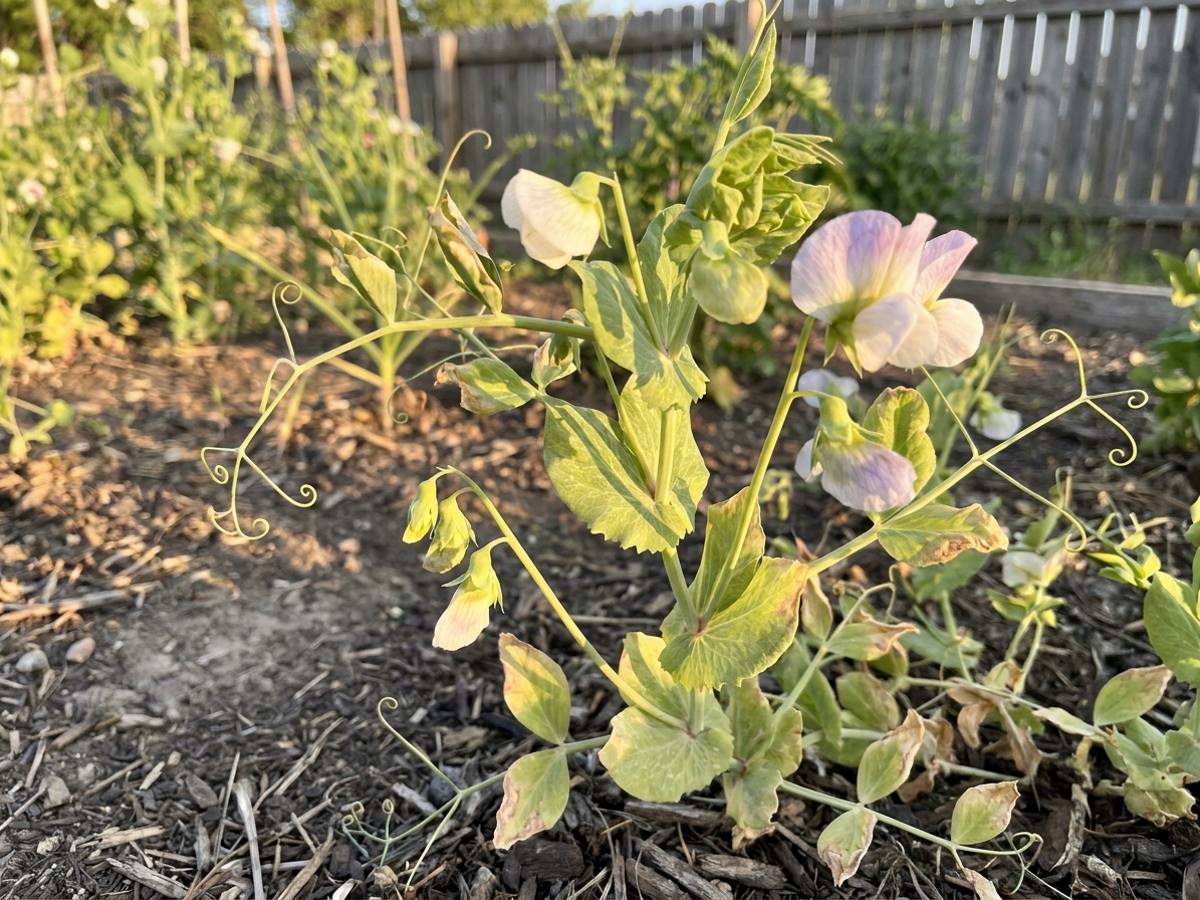
Your late summer pea crop is bolting before you’ve harvested a single pod. This isn’t bad luck, it’s heat stress, and it happens in gardens across the UK and US every summer. The good news: you can stop it happening next season by choosing the right varieties, sowing at the right time, and deploying shade cloth to keep roots and canopy cooler. Late sowings are especially vulnerable.
As soil temperatures climb above 16°C through midsummer and late summer, peas sense a threat. Their biological clock accelerates flowering and seed production, bypassing pod development altogether. In the UK, this happens when daytime highs exceed 25°C for sustained periods. US gardeners in zones 6-8 face the same battle even earlier, often by midsummer.
The problem is most acute with late sowings, made in early summer or midsummer to avoid spring pests or to fit a gap in the planting calendar. Those seedlings emerge into warm soil and flower before establishing enough leaf area to sustain heavy cropping. Many gardeners expect late summer sowings to yield autumn harvests, but if soil doesn’t cool properly, bolting occurs within weeks.
The single biggest factor in whether a pea plant sets pods or races to seed is the soil temperature it germinates into. This table sets the article’s sowing windows side by side so you can pick the one that suits your season.
| Sowing period | Soil temperature | Bolting risk | Cropping you can expect |
|---|---|---|---|
| Spring | Below 16°C, cool and rising slowly | Low | Up to 12 weeks of cropping |
| Early summer to midsummer | Above 16°C, often 18–20°C | High — flowers abort before pods form | About three weeks of pods, if any |
| Late summer to early autumn | Below 16°C as soil cools | Low, if the soil has genuinely cooled | Roots establish before heat stress returns |
| Mid-autumn | Cooling, but frost approaches | Low — the risk is frost, not heat | Hardy winter peas such as ‘Meteor’ |
Whichever window you choose, check the soil at 10 cm depth rather than trusting the calendar.
Peas flower prematurely when daytime soil temperatures exceed 18–20°C consistently. Research from the Royal Horticultural Society shows that even bolt-resistant varieties struggle when both soil and air temperatures remain elevated. The gap between planting and first flower narrows dramatically, sometimes by two to three weeks, meaning plants abort flowers and race toward seed rather than setting pods.
This is why late-sown crops fail so spectacularly in summer. A variety that delivers 12 weeks of cropping in spring may produce just three weeks of pods, if any, when sown in early summer or midsummer.
If your peas are already bolting, focus on next season. Here’s how to win the race against heat:
Invest in a soil thermometer and check at 10 cm depth each morning. Once temperatures fall below 16°C and stay there, sow your late-season varieties with confidence. Watch the weather forecast in autumn; a sudden warm spell in early autumn or mid-autumn can still trigger premature flowering, so be ready with shade cloth if needed.