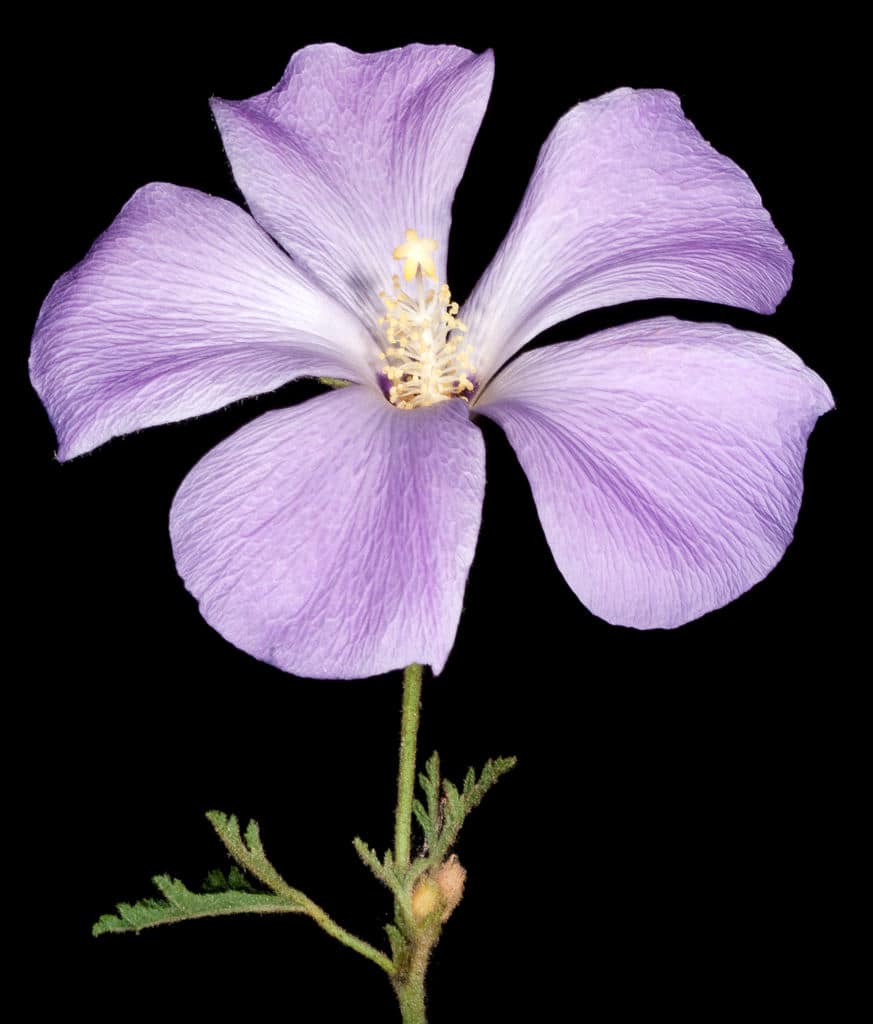
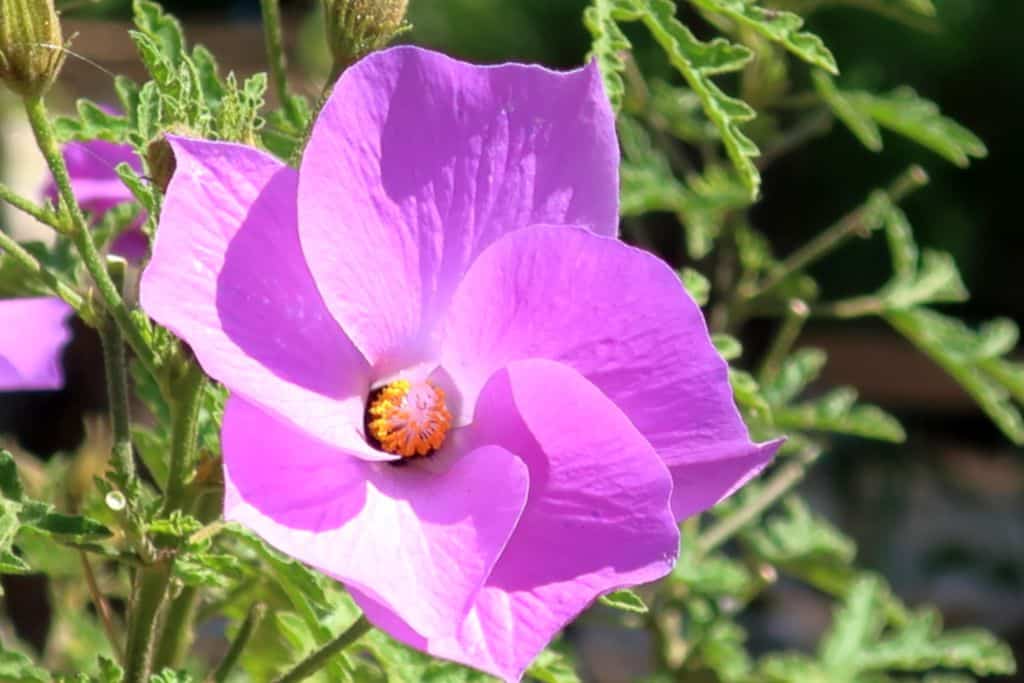
Lilac-blue, hibiscus-like flowers open in generous succession on an evergreen shrub that reaches 6 ½ feet (2 meters) — this is Alyogyne, the blue or lilac hibiscus, once classed with true Hibiscus until its flower structure set it apart. Give it full sun and light, well-drained soil, and the blooming lasts a fair part of the season.
Alyogyne at a glance
Name
Alyogyne
Family
Malvaceae (mallow family)
Type
shrub
Height
6 ½ feet (2 meters)
Exposure
full sun
Soil
light, well-drained
Foliage
evergreen
Flowering
mid-spring to late autumn
Caring for Alyogyne from planting to pruning is easy and will lead to beautiful flowers.
Planting alyogyne
Preferably in spring in a sheltered but sunlit spot of the garden.
If growing in pots, use rich soil mix, if possible even use pure soil mix.
Pruning Alyogyne
Remove wilted flowers regularly (deadheading).
In spring, cut stems back to ⅓ their original length to promote blooming.
All there is to know about Alyogyne
Blooming stands out and lasts much of the season
Alyogyne is also called “blue hibiscus” or “lilac hibiscus”. It was previously part of the same classification as Hibiscus, but eventually a new category marked the difference in flower structure as a different species entirely.
Its blooming stands out and lasts for a fair part of season.
Caring for the plant is easy and light. But for potted plants, it is best to bring the plant indoors over the winter in a cool place that is sheltered from freezing.
Smart tip about Alyogyne
If potted, it is advised to repot every 1 or 2 years.
Image credits (edits Gaspard Lorthiois):
CC BY 2.0: Kevin Thiele, K M
Written by Gaspard Lorthiois | Loves helping out, especially when it comes to growing things. Worked in herbal medicine, runs a farm, and dabbles in tech. Master's degree and engineer.