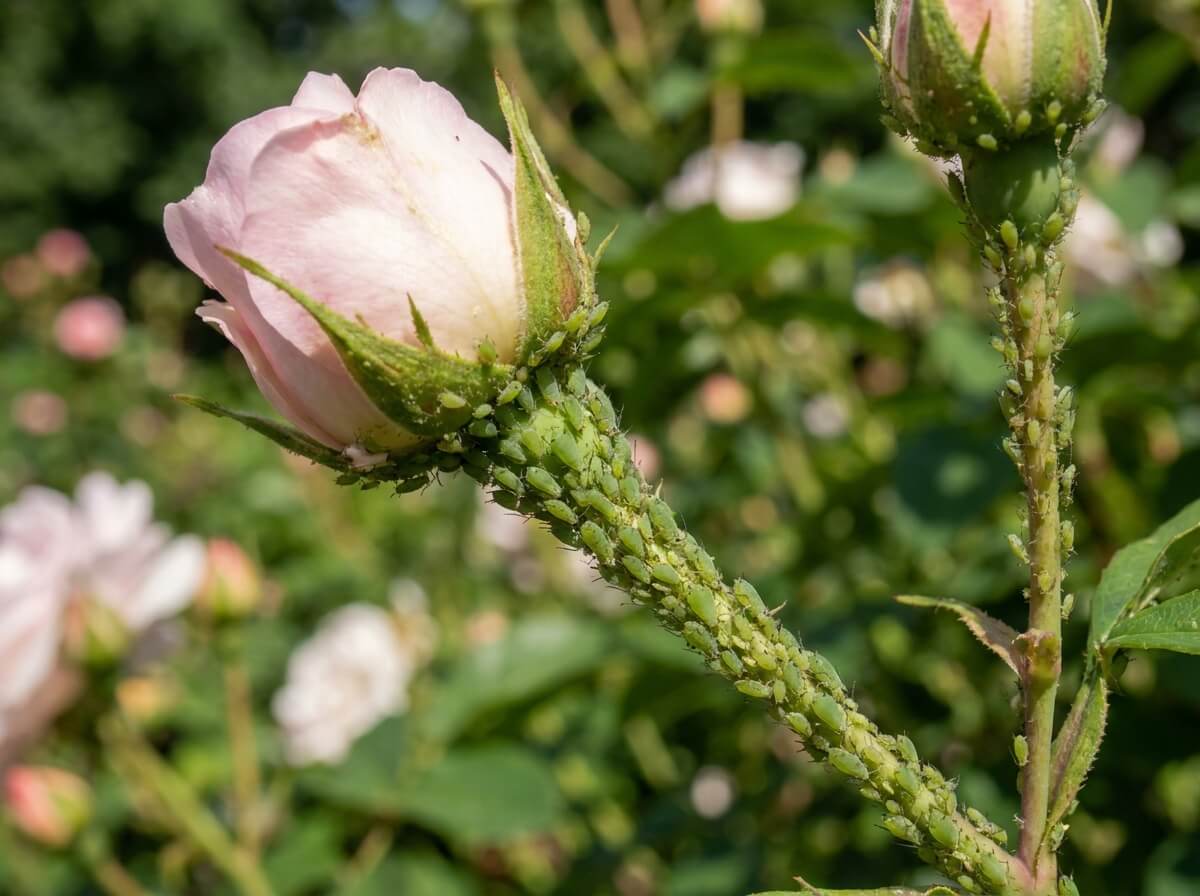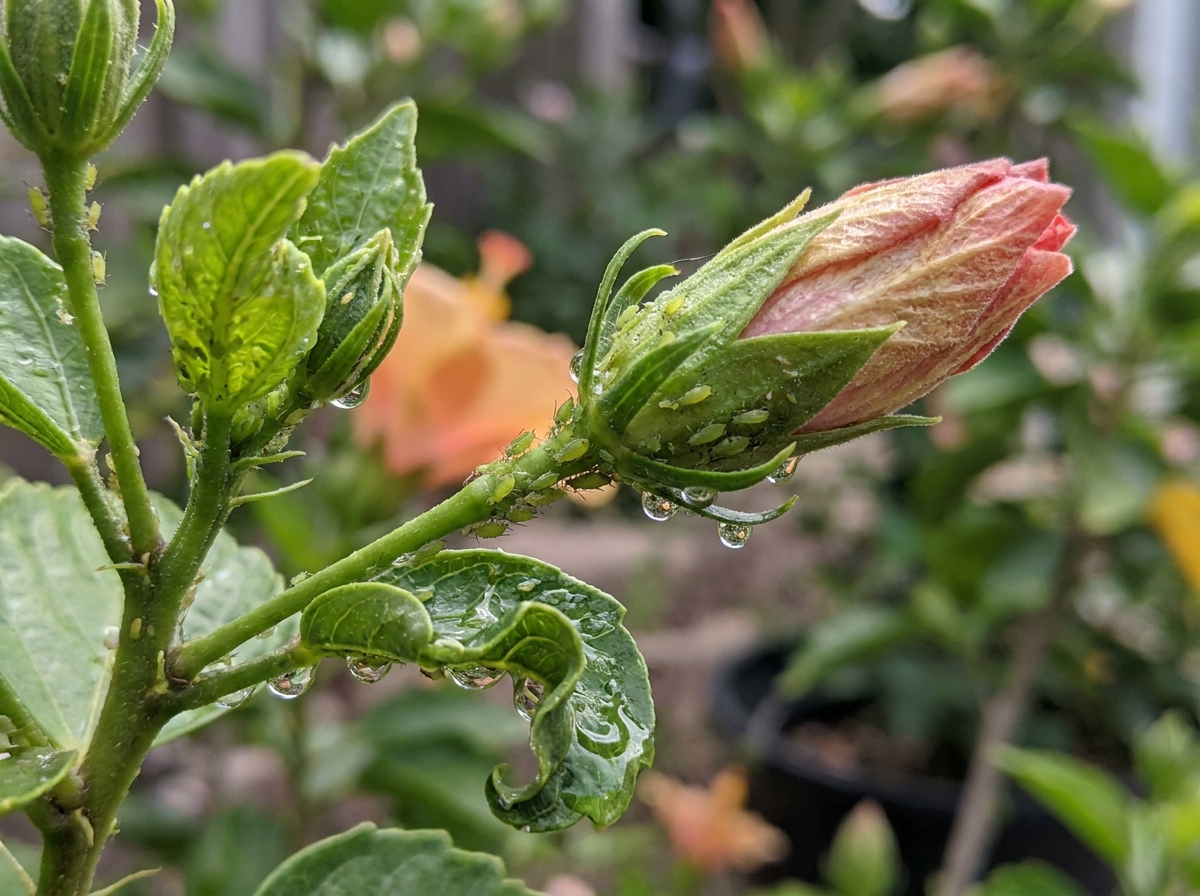
You go out to check on your hibiscus — maybe it was fine just Tuesday afternoon — and suddenly the new growth looks crumpled, sticky, and coated in tiny soft-bodied insects. That’s aphids, alright. They arrive fast in summer heat, they multiply absurdly quickly, and yes, if you ignore them, they’ll ruin your blooms. The good news? Organic treatments work brilliantly on hibiscus aphids, and you can start today.
Aphids don’t choose randomly. Nope. They target the softest, most nitrogen-rich tissue they can find — which in summer means the fresh new shoots and unopened buds your hibiscus is pushing out right now. Warm temperatures between about 21°C and 27°C (70–80°F)? That’s their sweet spot. That’s most of June in the UK, US, Canada, and Australia’s subtropical regions.
But there’s also a second factor nobody talks about: over-fertilising with nitrogen makes your hibiscus utterly irresistible to aphids. Lush, soft, sappy growth? That’s basically an aphid buffet. If you’ve been feeding generously this month — say, with a high-nitrogen ‘bloom booster’ every 10 days — that may be part of why they found you.
The sticky substance on your leaves — that slightly tacky, faintly sweet-smelling residue — it’s honeydew. Excreted by the aphids as they feed. Left alone, it’ll develop black sooty mould within about a fortnight. That mould blocks photosynthesis. And then you’ve got two problems instead of one.
Honestly? A light aphid colony won’t kill a mature hibiscus. But it’ll distort every new bud it touches. Flowers that emerge from infested buds often look misshapen, stunted, or fail to open properly — which, let’s be real, is just heartbreaking when you’ve waited all winter for those blooms.
So, the real damage compounds fast. A single aphid can produce up to 80 offspring in a week without mating. Do the maths: What starts as 20 insects on a shoot tip on Monday can be 400 by the following weekend. And aphids also spread plant viruses, which is a risk worth taking seriously on hibiscus. They’re basically little disease vectors. The RHS notes that aphid feeding weakens plants significantly during periods of active growth — actually, no — let’s just say it *saps* your plant’s strength when it needs it most. Exactly what summer is!
Start with what’s probably the most satisfying method first: a firm jet of water from your hose, aimed directly at every affected shoot. Do this in the morning so the foliage dries before evening. Knock them off physically for at least three days straight. For small colonies, that’s often all it takes to break the cycle.
More than a few shoots? Then you’ve gotta move to a soap spray immediately. Mix 5ml of pure liquid castile soap (Dr. Bronner’s unscented works perfectly) with 500ml of water. Spray directly onto the aphids — I mean, *onto them*, not just vaguely around them — coating the undersides of leaves. Repeat every four days for about two weeks.
Got a persistent, heavy infestation? Neem oil. That’s your strongest organic option. A cheap bottle of cold-pressed neem oil from Amazon or any garden centre works fine. Here’s what you’ve gotta nail:
I genuinely don’t know why the evening application makes such a difference, but every single time I’ve sprayed neem in the morning I’ve seen leaf burn within 48 hours. Evening only. Look, I know it means an extra trip outside, but just do it. It’s not a faff, it’s protection.
The UC Davis integrated pest management programme? They recommend encouraging natural predators. Ladybirds (ladybugs) and lacewings will do serious damage to an aphid colony if you stop using broad-spectrum sprays that kill them, so that’s a clever move.
Once you’ve dealt with the aphids, you’re not done yet. Keep checking for these signs every three days throughout summer:
Ants? They’re a bigger issue than most people realise. If you’re seeing a constant trail of ants on your hibiscus, apply a sticky barrier band around the pot or stem base, pronto. No ants means aphid colonies lose their bodyguards and collapse much faster. Simple as that.
And if you’re wondering whether your hibiscus has any other underlying issues that make it more vulnerable — yellowing, slow growth, reluctance to bloom — it might be worth reading about the hibiscus secret that changes everything. Because honestly, some of those stress signals leave plants wide open to pest attack.
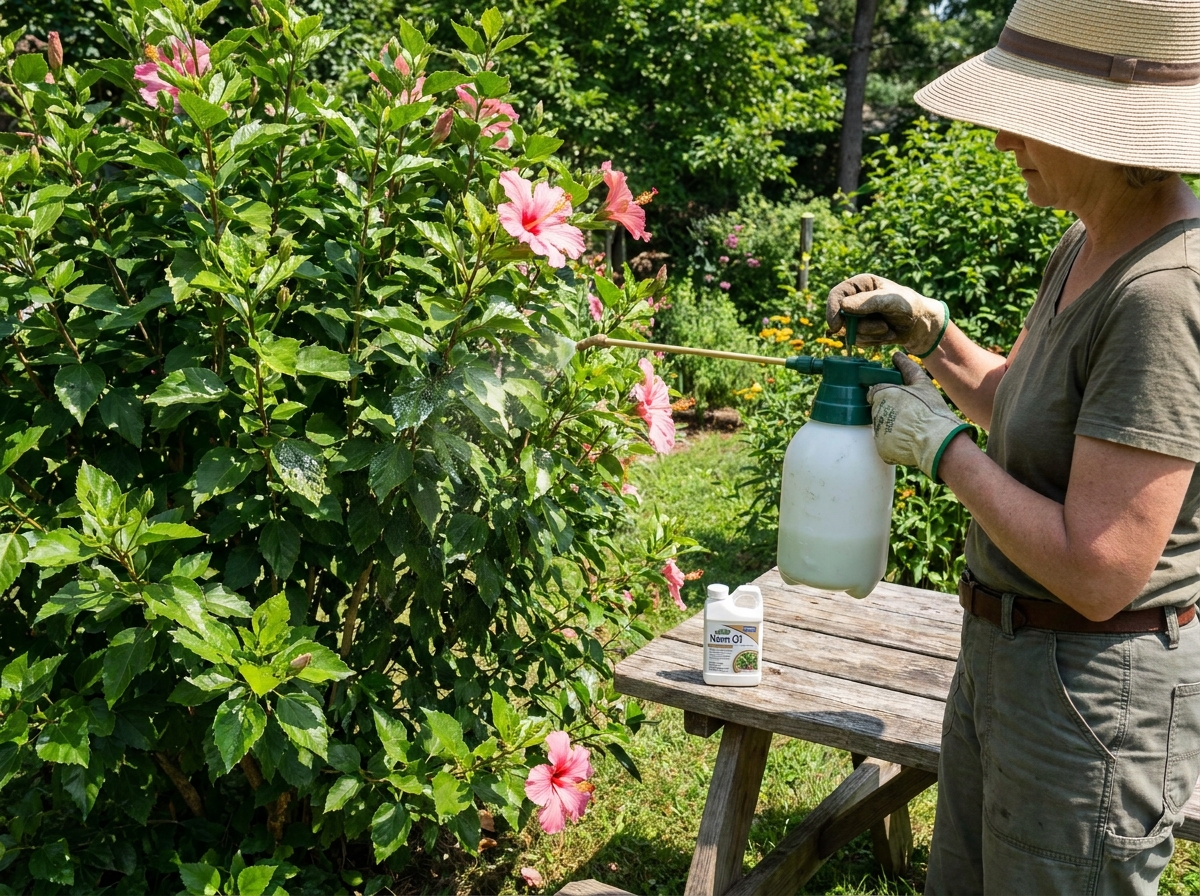
Smart tip: Always spray aphid treatments in the evening to avoid leaf scorch and protect pollinators visiting open flowers.
Yes, but use it sparingly — regular dish soap contains degreasers that can strip the protective wax from hibiscus leaves with repeated use. It’s just not ideal. Castile soap is much gentler and far less likely to cause damage over a two-week treatment programme.
Neem oil doesn’t kill instantly — it’s more about disrupting their feeding and reproduction. So, expect visible results within 48 to 72 hours of that first application. You’ll usually get full control after two or three treatments, spaced 5 to 7 days apart.
Oh, they absolutely can, especially if the conditions that attracted them (warm weather, soft growth, nearby ant colonies) haven’t changed. So, you’ve gotta check your hibiscus every three or four days through summer and repeat a soap spray at the first sign of reinfestation.
Yes — indoor hibiscus gets aphids too, and they’re often brought in on new plants you’ve just bought. The same soap spray treatment applies, just use it over a sink or outdoors to contain the mess, and check neighbouring houseplants immediately since aphids spread fast in enclosed spaces. They really do.