Three different diseases. One shared symptom: your roses look properly dodgy. Black spot, rust, and powdery mildew each shoot up at alarming speed in summer conditions. And right now, with El Niño pushing warm nights and erratic humidity across much of the English-speaking world, conditions are near-perfect for all three. Learn to tell them apart. Stop them before they strip your bushes bare.
The disease is non-negotiable. The cause—and the fix—differs for each one. End of.
All three are fungi. None of them is bacteria, so antibacterial treatments will not touch them.
Fast. Black spot can defoliate a bush in under two weeks during a warm, damp spell. An entire bush, gone. The thing is, this is a non-negotiable issue.
Each lesion releases thousands of spores. Water droplets carry them to the next leaf, the next plant, the next bed. A rose that loses most of its leaves in summer will exhaust itself pushing out emergency regrowth. It will arrive at autumn in properly poor condition. Then it is more vulnerable to winter damage.
Rust weakens stems progressively. It rarely kills outright, but heavily infected plants flower poorly. And they die back more severely in winter.
Powdery mildew distorts new growth. Tips of infected shoots curl inward. Buds fail to open properly. The plant looks stunted, rather than just diseased.
And doing nothing is genuinely costly. The RHS confirms that repeated defoliation from black spot significantly reduces flowering the following year—not just this season. This is absolutely bang on. Skip it if you are serious about flowers.
Start by pulling off every affected leaf you can reach. Drop them straight into a bag—never onto the compost heap, where spores survive and return. Sorted.
Then look underneath the plant: fallen leaves on the soil carry active spores that splash back up in the next rain. Clear them entirely.
Now spray. These products actually work:
Spray every 7 days, covering both leaf surfaces. Yes, the underside matters—rust pustules and mildew colonies both live there first.
One application achieves properly little. It is a waste of your time. But commit to four consecutive weekly treatments and you will see the difference.
Watering matters too. Switch to ground-level watering—a soaker hose or a slow pour at the base, not an overhead sprinkler.
Wet foliage for more than 2 hours at a time is all black spot needs to germinate. Water in the morning so the soil surface dries by afternoon.
Diseases rarely arrive alone. While you are treating, check for these issues:
Southern Hemisphere gardeners: this applies to your December and January, when your roses enter peak summer growth and humidity builds along eastern coastlines.
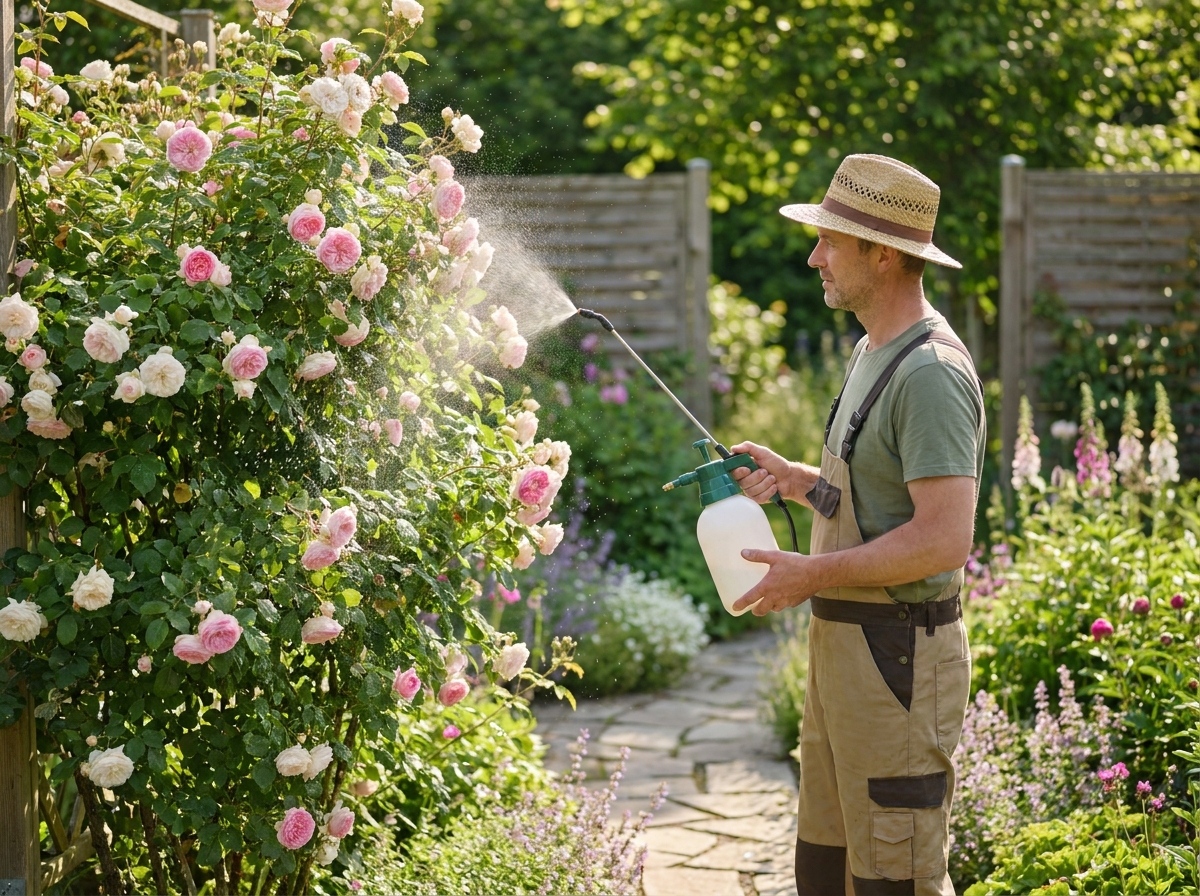
Smart tip: Always pull off fallen leaves from the soil surface—they reinfect your roses more reliably than any airborne spore.
Baking soda (sodium bicarbonate) has some effect on powdery mildew when sprayed at 1 teaspoon per litre, but it degrades quickly and offers no protection against black spot or rust. Neem oil or a proper fungicide outperforms it every time.
Occasionally, black spot slows if dry weather arrives—but the spores remain on fallen leaves and restart the moment conditions change. Without treatment and leaf removal, most bushes spiral downward through summer.
Absolutely. Modern shrub roses bred by David Austin (UK) and varieties carrying the ADR rating (Germany) are bred specifically for disease resistance.
If your roses suffer every single summer despite treatment, replacing them with a resistant variety is the practical solution.
Flip the leaf over. Rust shows as bright orange powder on the underside—impossible to miss.
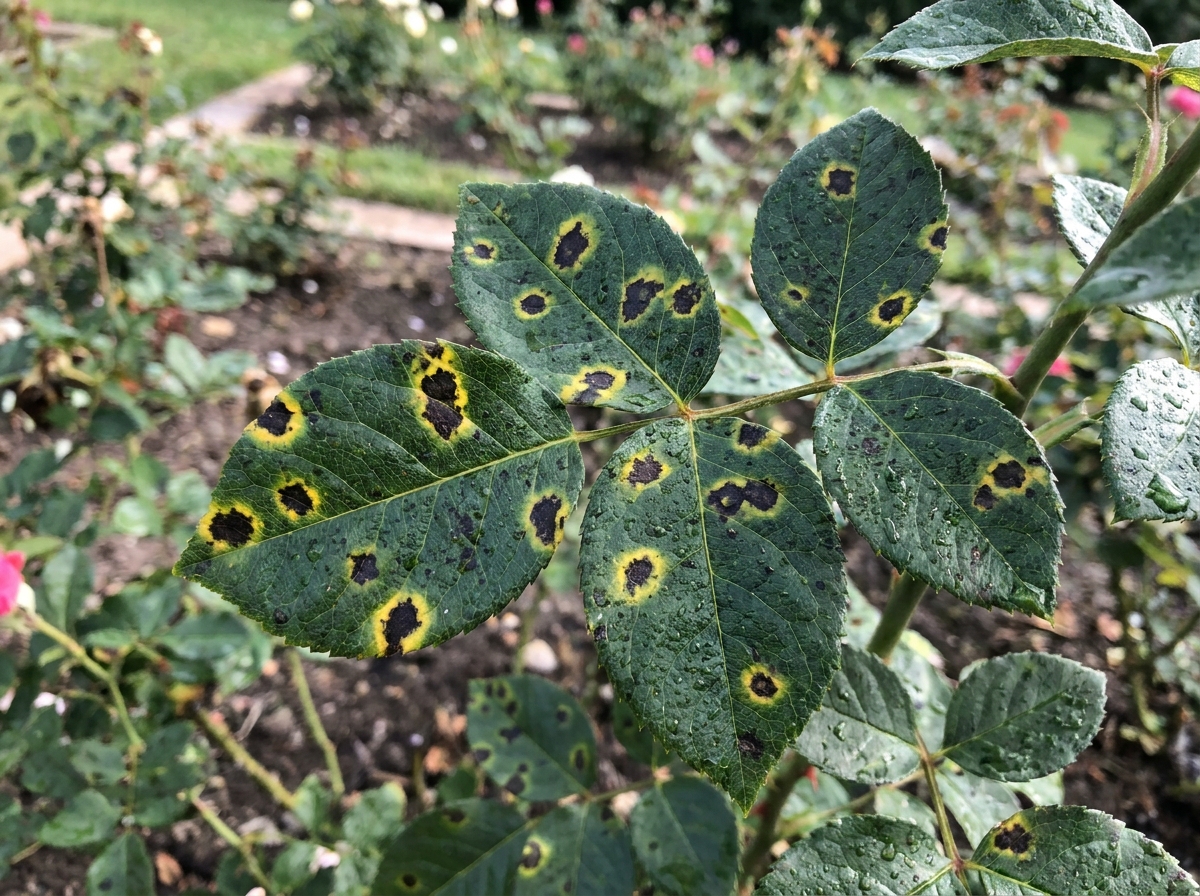
Black spot lesions appear on the upper surface and have a distinct fringed or feathery edge under close inspection.