Home » Health » Aloe Vera on the Windowsill: How to Cut, Drain and Use the Fresh Gel on Sun-Stressed Skin
Aloe Vera on the Windowsill: How to Cut, Drain and Use the Fresh Gel on Sun-Stressed Skin
·
0
One mature aloe leaf, a spoon and ten minutes of patience give you a bowl of cool, clear gel. Aloe vera — still sold and listed in ingredient panels under its old name Aloe barbadensis — is as happy on a windowsill as on a sunny step outdoors. This page covers which leaf to cut, why the yellow layer under the skin must be scraped away, how to store what you do not use, how to grow and propagate the plant, and when hot, tight skin needs a professional rather than a plant.
Aloe vera at a glance
Item
Detail
Botanical name
Aloe vera (syn. Aloe barbadensis Mill.)
Family
Asphodelaceae
Part used
Clear inner gel of the thick outer leaves; the yellow aloin layer is discarded
Forms of use
Fresh gel, chilled gel or chilled leaf halves, gel blended into a light lotion, quality bottled gel
Harvest season
Any season from a houseplant or container plant; leaves are plumpest from late spring to late summer
Taste and smell
Faintly grassy scent, slippery texture, very bitter at the leaf edge and bitter throughout if the aloin is not drained — this is a skin plant, not a salad plant
Propagation
Pups (side shoots) potted up in gritty cactus compost in spring
What it is credited with
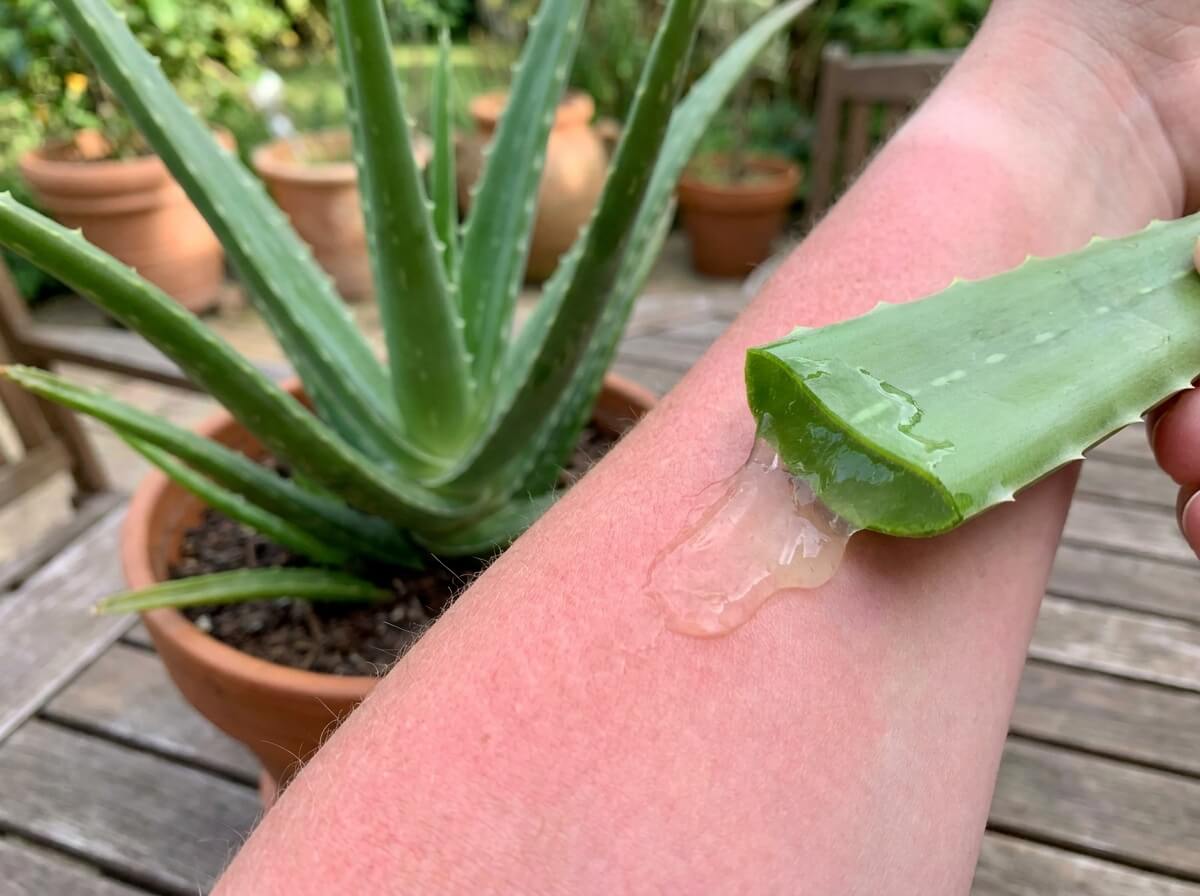
Herbalists reach for the fresh gel first for skin that feels hot, tight and dry after a long day outdoors, applied as soon as you come indoors.
Naturopathy credits the chilled gel with a cooling, soothing effect on reddened skin, largely thanks to its high water content, and with a softening, moisture-holding effect on dry or flaking skin.
In traditional practice across North Africa and the Mediterranean, the split leaf was laid directly on minor grazes and kitchen scalds once cooled, and the same folk practice favours it for shaving rash and skin left raw by wind.
Household use in warm countries puts it on minor kitchen scorches, heat rash and insect bites, chilled straight from the fridge.
It has a long reputation as a simple after-sun and after-shave application, valued for leaving a light, non-greasy film, and growers find it more pleasant fresh than processed.
Folk use includes the gel smoothed through dry hair and along the scalp, where it is credited with easing tightness and flaking.
Old household use of the bitter aloin sap was as a purgative — a practice herbalists now treat with great caution and generally advise against at home.
The Royal Horticultural Society lists aloe vera among the long-established medicinal plants of the garden.
Only the clear inner gel is used — never the yellow layer
Choosing the right leaf
Leaves are not interchangeable. Go low and go old.
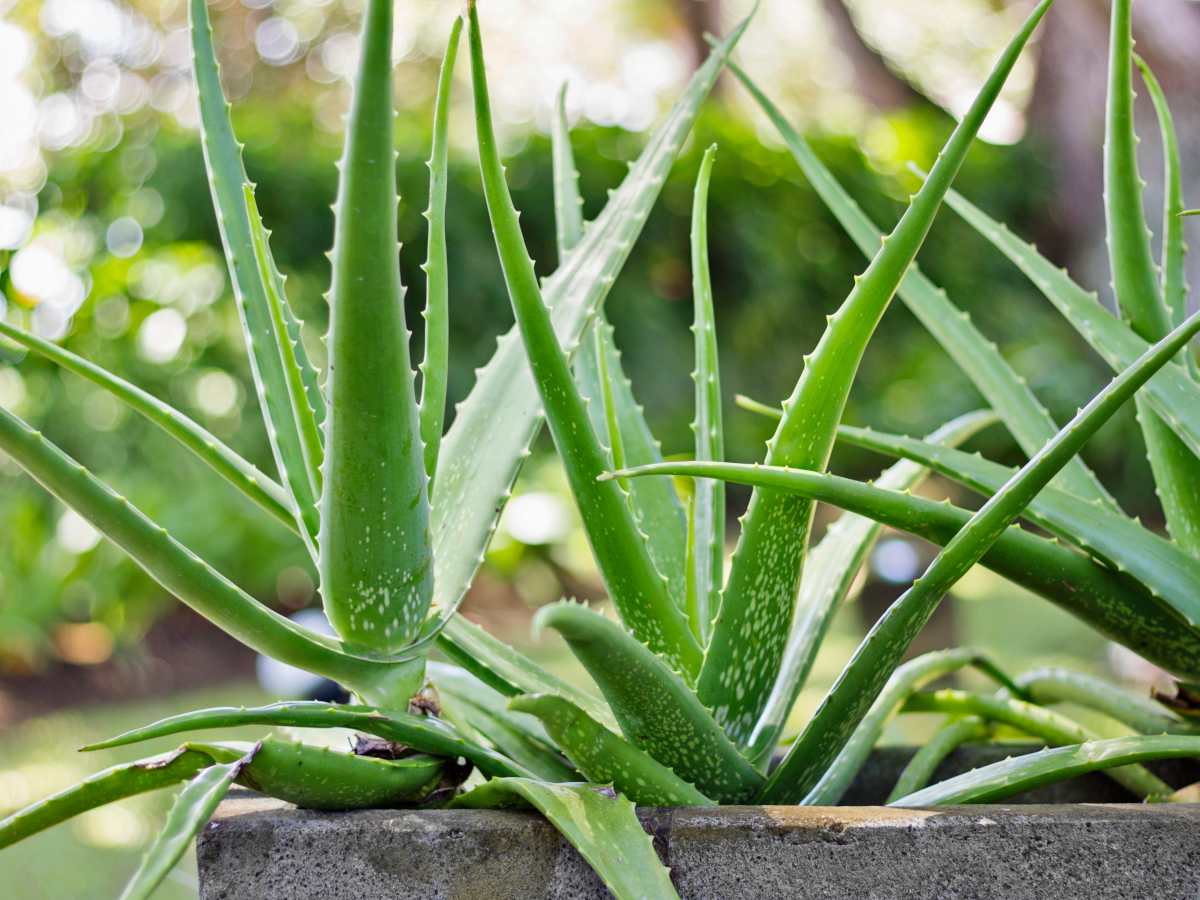
Take a thick, dark green outer leaf from the base of the rosette — these are the most mature and hold the densest gel.
Leave the pale inner leaves alone. They are thin, watery and still filling out.
Pick a mature leaf around 20 cm long or more.
It should feel plump, firm and slightly cool, like a small water balloon.
Flat or rubbery leaves mean a thirsty or stressed plant. Water it, wait a fortnight, come back.
Never strip more than a couple of leaves at once from a single plant.
How to use it
The method matters more than the plant’s size. Work clean, and drain the leaf before you touch the gel.
Harvesting and draining
Cut the leaf as close to the base as you can, with a clean, sharp knife, or snap one outer leaf off at the base.
Rinse it under cold water.
Drain it. Stand the leaf cut-end down in a cup or glass for a good ten minutes so the yellow-orange aloin runs out. It is bitter and irritating, so do not skip this step.
Rinse the cut end again once it stops weeping.
Opening the leaf
Trim the spiny edges off both sides.
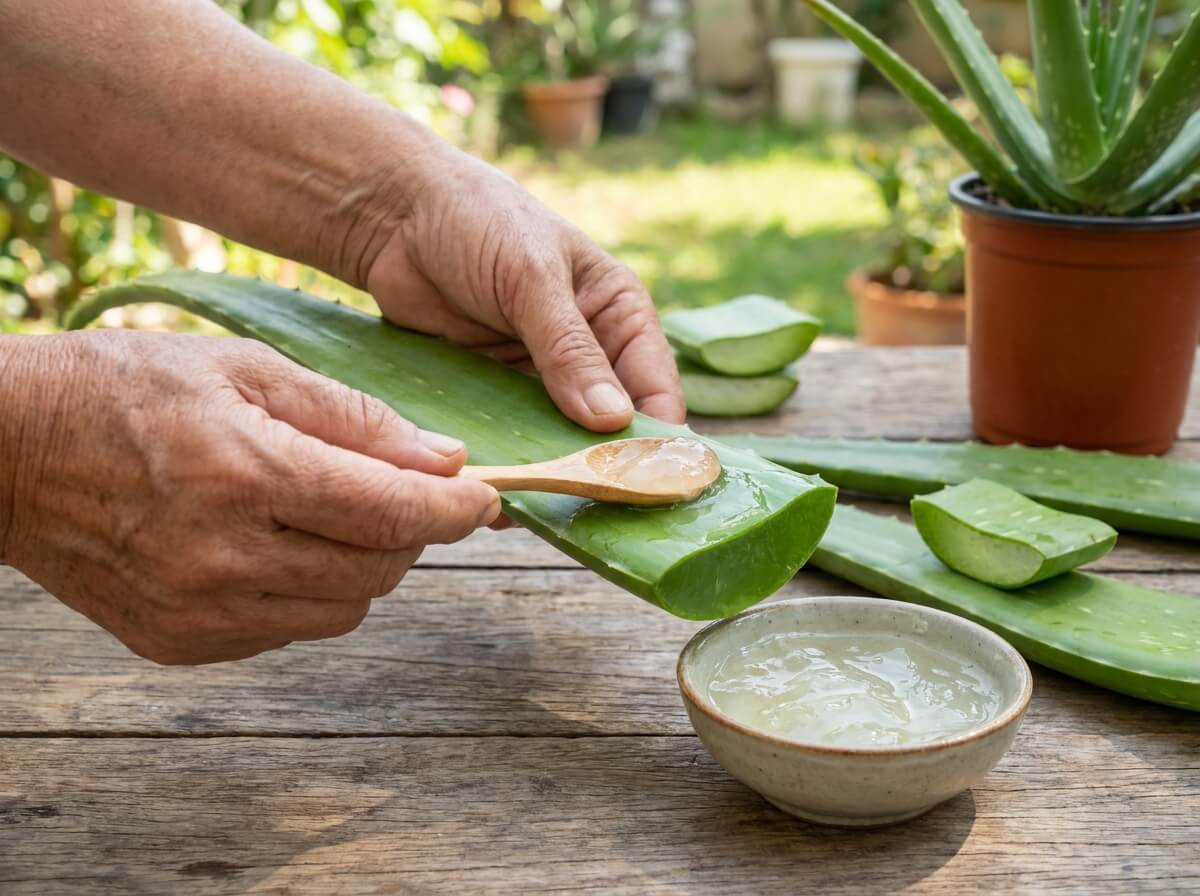
Slice the leaf lengthways down the centre and open it flat, like a book, or slice off the flat green side and scrape the clear gel into a small bowl with a spoon.
Scrape away every trace of yellow. If the gel tastes or smells bitter, rinse it briefly under cool water.
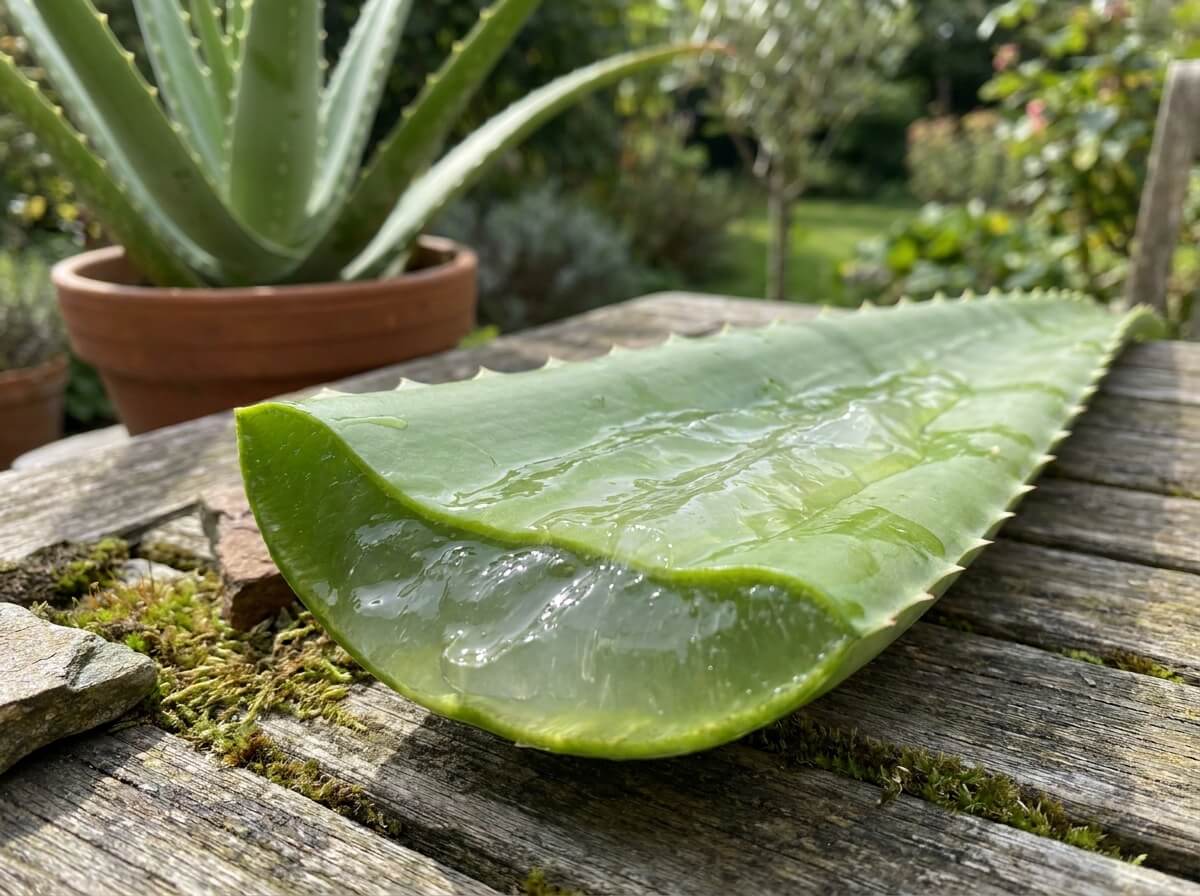
Split lengthways and opened flat, a drained outer leaf gives two gel-faced halves ready to use
Applying it
Chill it. Twenty minutes in the fridge is plenty. Cold gel on warm skin is where the comfort comes from.
Straight from the leaf: wipe the gel side gently over the skin. It goes on clear, smells faintly of cut grass, and absorbs in a few minutes.
Scooped: lift the gel out with a spoon and spread a generous layer, which is easier over a large area. Let it dry on the skin, do not rub it in, and never work it over broken skin or blisters.
Leave it uncovered. No cling film, no dressing — the skin wants air.
Repeat morning and evening while the skin still feels tight — the rhythm most herbalists suggest for after-sun care — and again through the day as the film dries and tightens.
Before any gel goes on, cool the skin itself: cool running water, not ice-cold, for ten to twenty minutes.
Forms of aloe compared
Form
Preparation
What it is used for
Fresh gel
Leaf drained, filleted, gel scraped out and used the same day
The everyday after-sun application, traditionally used on hot, tight skin
Chilled gel
Fresh gel rested in the fridge for about twenty minutes
Credited with the most immediate cooling comfort
Scooped gel in a jar
Spooned out, sealed airtight, kept in the fridge
Larger areas and repeat use over a day or two
Gel and light oil
A spoon of gel whisked with a few drops of sweet almond oil
Used on skin that has passed the hot stage and turned dry and flaky
Chilled whole leaf
Whole cut leaf wrapped and refrigerated
Evening relief after a hot day outdoors
Whole leaf, split
Leaf halved lengthways, drained, laid gel-side down
The oldest traditional application, used on small patches of intact skin
Bottled gel
Shop-bought, usually diluted and preserved, with Aloe barbadensis leaf juice listed first
The fallback when you have no plant; travel and holiday use
Growing it where you live
Warm, frost-free gardens (coastal Australia, New Zealand’s north, South Africa, southern California): it grows outdoors all year in free-draining soil and full sun.
Cooler and wetter regions (UK, Ireland, Canada, northern US): grow it in a pot and bring it under cover well before the first frosts of late autumn.
Use a terracotta pot and a gritty cactus compost. Drainage matters more than feeding.
Water deeply but rarely — roughly every couple of weeks through summer, and about monthly once winter sets in.
It shrugs off drought and hates wet roots. When in doubt, don’t water.
Southern hemisphere readers: your hottest, brightest weeks fall in midsummer, so keep the plant handy from late spring onward.
Frequently Asked Questions
The one thing to remember: stand the cut leaf upright for ten minutes to drain the yellow aloin, then use only the clear gel, chilled.
Which leaf should I cut?
Take a thick, dark green outer leaf from the base of the rosette, ideally 20 cm or longer, and leave the pale inner ones to fill out. A good leaf feels plump, firm and slightly cool. Flat, rubbery leaves mean the plant needs watering.
Should I cool the skin before putting aloe on it?
Yes — cool the skin first with cool, not ice-cold, water for ten to twenty minutes. Then apply the chilled gel in a generous layer and let it dry. Putting anything on before the skin has cooled risks holding residual heat against it.
How often do herbalists suggest applying it?
Morning and evening, for as long as the skin still feels tight, is the usual rhythm. More frequent application adds little and can leave the skin tacky. Cut a fresh leaf rather than stretching old gel.
Can I use aloe gel on blistered skin?
Apply it around blisters, never on broken skin. If the blisters are widespread, or the burn covers a large area, see a doctor rather than dealing with it at home. Serious burns are not a plant job.
Can I use aloe gel on a child?
Use only the pure clear inner gel with no additives, patch test on the inner forearm and wait twenty minutes first. Avoid it entirely on babies, and on any broken or blistered skin, and see a doctor for any burn on a small child. If you are unsure, ask a pharmacist or doctor before applying it.
Is fresh gel really different from a bottle?
Fresh gel from a living leaf is undiluted and unpreserved, and smells grassy and clean, which is why growers prefer it. Shop gels are usually watered down, heat-treated and stabilised, and they feel different on the skin. A bottled gel listing aloe leaf juice as its first ingredient is a sensible fallback for travel or when you have no plant to hand.
How long does cut gel keep?
Scooped gel keeps two days at most, in a sealed jar in the fridge; a whole cut leaf, wrapped and refrigerated, holds its gel for about five days. Discard either as soon as it turns pink, the smell goes sour or the texture goes stringy. A single outer leaf gives enough gel for a couple of applications, so cutting fresh is rarely a chore.
This information is provided for general interest and reflects the traditional use of plants. It is not a substitute for medical advice. If you are on medication, pregnant, or in any doubt, ask a healthcare professional.
🌿 Nature & Garden Newsletter
Gardening tips, recipes & seasonal advice, twice a week.