They came from scorched African deserts, dripping Mexican rainforests, and sun-blasted South African riverbanks. Now they are sitting in your hallway, your kitchen, your bedroom.
Yucca, aloe, bird of paradise, dracaena, monstera — these are some of the most dramatic plants on Earth, and the remarkable thing is that your home might actually suit them better than you would expect. These plants possess a remarkable adaptability.
Every care mistake you have ever made with these plants comes down to forgetting where they are from. A yucca that rots at the base? It has been overwatered. It evolved in semi-arid scrubland in Mexico and the southwestern US, where rain is sparse and drainage is instant. A monstera with small, unimpressive leaves? Not enough light. In the wild, it races up rainforest trees toward a canopy that filters but never blocks the sun.
Origins tell you everything:
Once you see them as wild things temporarily indoors rather than domesticated houseplants, you stop coddling them. And they reward that immediately. The trick is understanding their inherent needs.
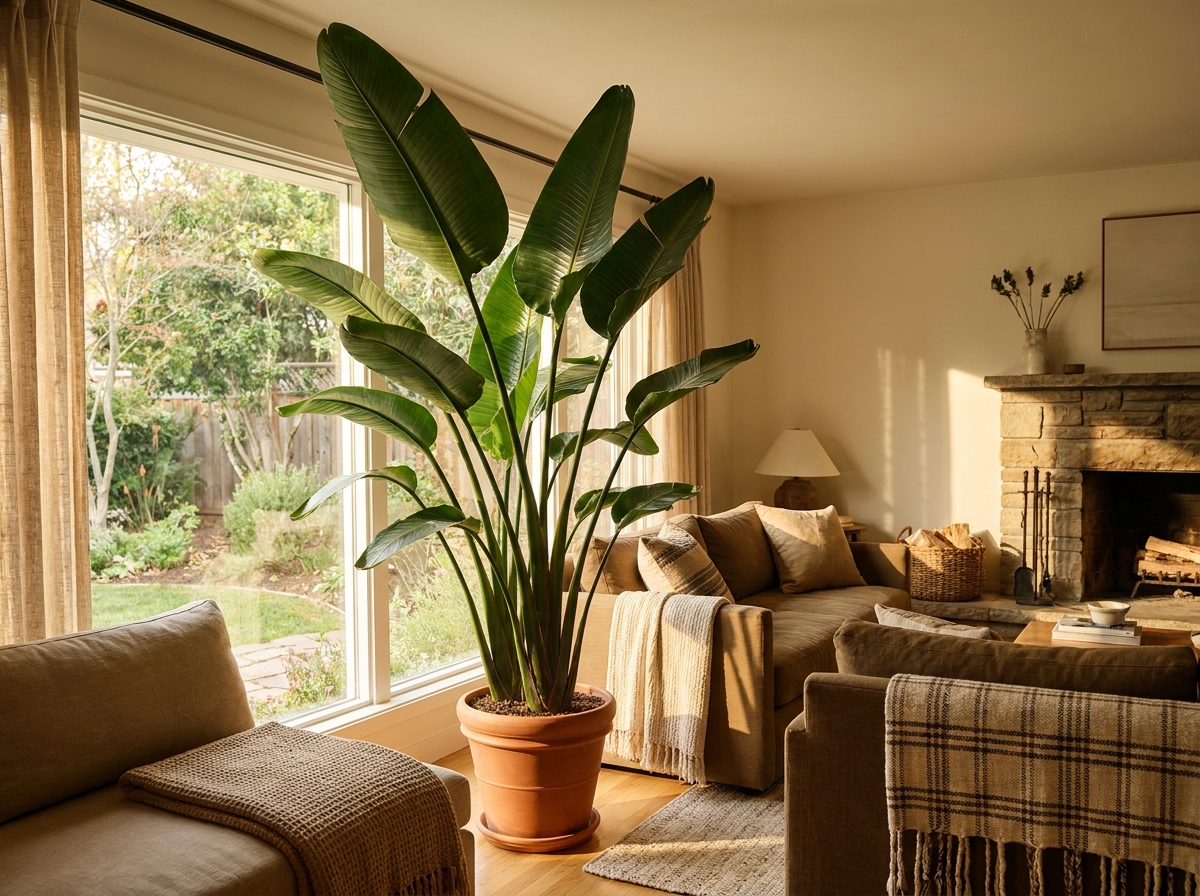
Light is the non-negotiable. Not proximity to a window — actual brightness is essential. A bird of paradise placed 2 metres from a window receives roughly 4% of the light it would outdoors. That is why it sulks, why it stops producing new leaves, why it never blooms. So, move it to within 50cm of the brightest south- or west-facing window you have. The difference will be evident within 3 weeks.
Watering is where most people destroy these plants. Aloe, yucca and dracaena want to dry out completely between waterings — not “mostly dry,” completely. In summer, that usually means watering every 10–14 days. In winter, once a month is plenty. If your potted houseplant is drying out too fast this summer, the fix is pot size and compost choice — not more frequent watering, which will rot desert species fast. This approach ensures plant health. Otherwise, you are asking for dodgy roots.
Monstera is the exception. It wants more moisture, filtered light and genuinely appreciates a humidity tray or a room humidifier nearby. But even monstera will rot if it sits in waterlogged compost — fast-draining, peat-free mix with added perlite is the answer. Get this bang on for success.
Summer is when these plants shift into serious growth. Longer days, stronger light — even indoors — trigger rapid development in monstera and bird of paradise especially. A healthy monstera in a bright room can shoot up a new leaf every 18–25 days right now. A bird of paradise in a pot tight enough to feel rootbound may finally be close to blooming. For help with exactly that moment, the summer trick that finally gets bird of paradise to bloom is worth reading before the season peaks.
Feed them now, but carefully. A balanced liquid fertiliser at half strength, once every 3 weeks, suits all five species listed here. Overfeeding causes salt build-up in the compost and scorched leaf tips — a properly common issue that looks alarming but is entirely avoidable. The RHS guidance on feeding houseplants recommends erring toward underfeeding with slow-shooting-up tropical species.
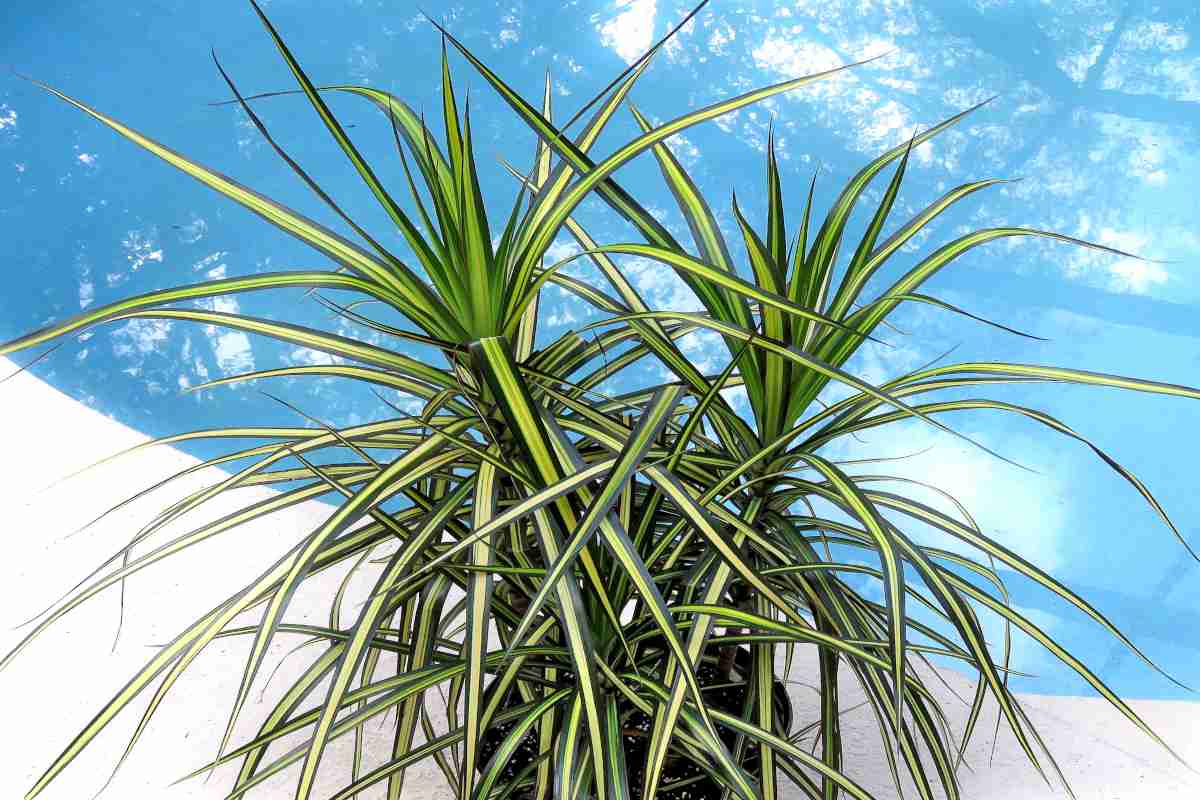
One hyper-specific detail worth knowing: dracaena leaves, when healthy, have a slightly waxy, almost plastic feel to them. When they go limp and lose that firmness despite the soil being dry, the roots are already compromised — usually from previous overwatering. So, act fast. Repot into dry, gritty compost and hold water for 3 weeks. You will save it.
A thriving bird of paradise unfurls new leaves that emerge tightly rolled, like a bright green scroll, then slowly fan open over 4–6 days. This is the sign you have got light and watering bang on. You are doing well. Monstera leaves should be dark, glossy and develop fenestrations (the famous holes) only once the plant is mature and light levels are high enough — pale, hole-free leaves mean more light is needed. Move it closer.
Watch for these specific warning signs:
And if you are growing any of these outdoors in containers for summer, bring them in before night temperatures drop below 10°C — the University of Florida IFAS Extension notes that most tropical foliage plants suffer cell damage below 10°C, even if they do not visibly collapse until days later. This protection is non-negotiable. Southern Hemisphere gardeners: this applies to your December and January — your prime shooting-up window for these species.
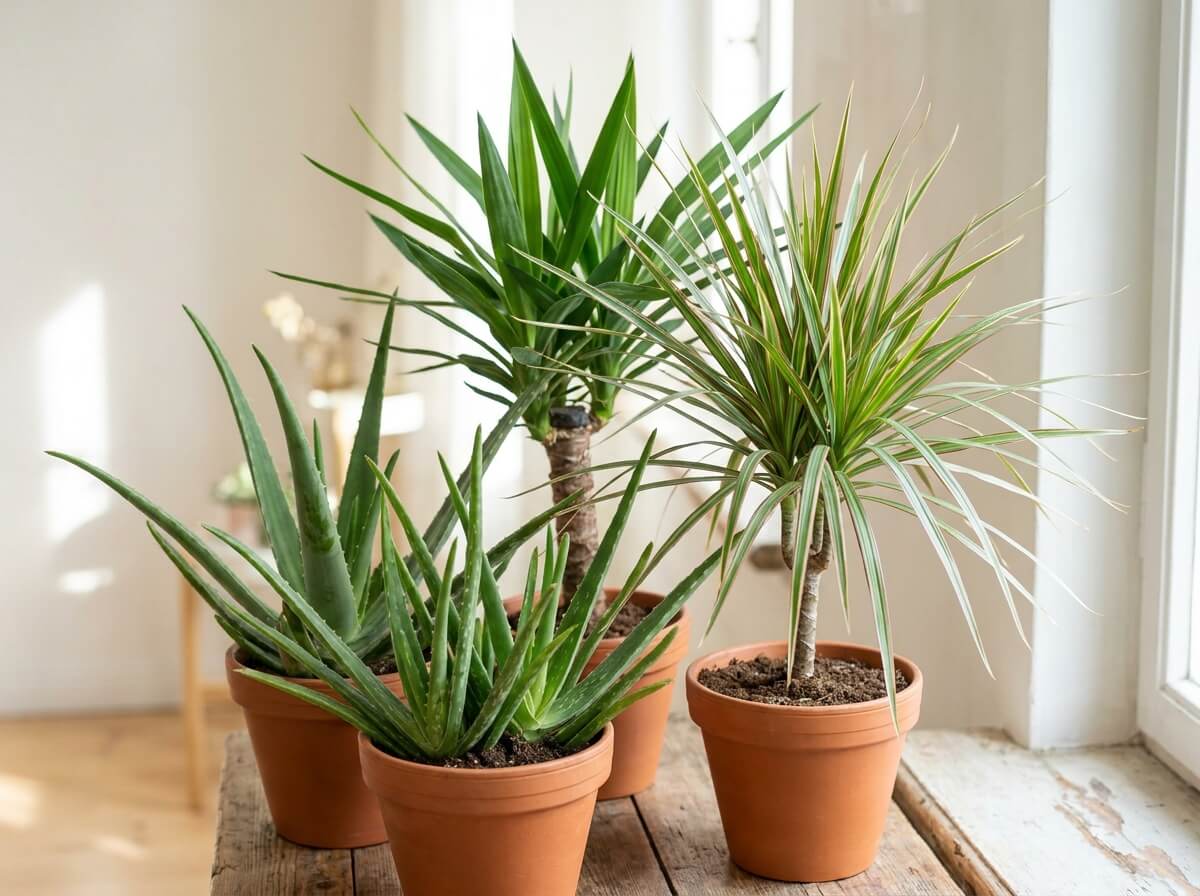
Smart tip: When in doubt, give these plants more light and less water — nearly every care issue traces back to the opposite approach.
Yes — both are extraordinarily long-lived indoors given a bright window and restrained watering. Aloe in particular can thrive in the same pot for 5–8 years before needing repotting.
Almost always insufficient light. Move it significantly closer to a bright window — within 60cm — and increase light exposure gradually over 2 weeks to avoid shock. This is non-negotiable.
They can, but only when rootbound, in properly bright light, and after at least 4–5 years of maturity. Patience and the right pot size matter more than any other factor. Yes, it is fiddly. Worth it.
No — dracaena is toxic to cats and dogs, causing vomiting and weakness if ingested. The ASPCA lists it as toxic; keep it well out of reach or choose a pet-safe alternative like spider plant. Do not risk it.