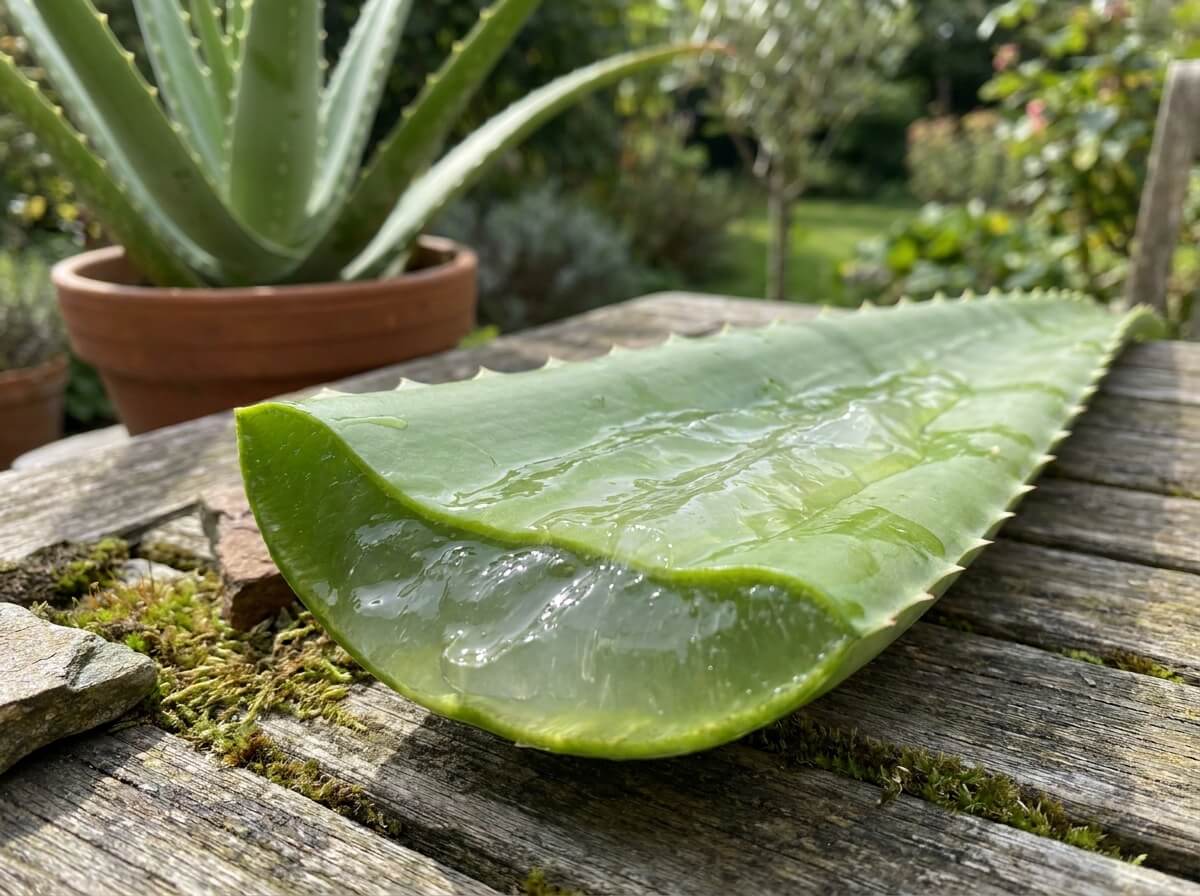
Aloe vera is one of those plants that earns its place in any garden the moment the sun bites back. The relief is instant. The gel locked inside its thick, spiky leaves works on sunburn with real, measurable effect — cooling inflammation, slowing skin damage, and speeding repair.
Grown in a pot on a patio, a sunny windowsill, or a warm garden bed, you could have the best post-sun treatment available within arm’s reach. Proper amazing stuff, honestly.
The clear gel inside an aloe vera leaf contains acemannan — a polysaccharide that triggers skin cell repair at a cellular level. And it carries antioxidants, vitamin C, vitamin E, along with natural anti-inflammatory compounds. These actively damp down redness faster than most over-the-counter preparations. It’s truly impressive.
Fresh gel from a living plant is significantly more potent than the processed version in a shop-bought tube. And you know why? Commercial aloe gels are often diluted, heat-treated, and loaded with preservatives. These truly neutralise some of the most active compounds. Skip the store-bought. It’s dodgy stuff.
The plant on your patio is the real thing.
Research published by the National Center for Biotechnology Information confirms that aloe vera applied to minor burns significantly reduces healing time compared to petroleum-based dressings — by up to 9 days in some studies. That’s not a folk remedy. That’s clinical evidence. Sorted.
Not all leaves on your aloe plant are equal. Oh, no. The thick, dark green outer leaves at the base of the rosette hold the densest, most concentrated gel. They’re the ones you want, bang on.
Younger inner leaves are still developing their gel reserves. They’re thinner, less juicy, and less effective. A bit rubbish, frankly.
Pick a mature outer leaf that’s at least 20cm long. That’s a non-negotiable point. It must feel plump, not rubbery or flat. So, if your plant’s leaves feel flat, the plant’s probably stressed and its gel has diminished. A healthy aloe leaf should always feel firm and slightly cool to the touch, like a proper water balloon.
One crucial warning. Every aloe leaf has a thin layer of yellow or orange sap directly beneath the outer skin — this’s aloin, a bitter compound. And it can irritate burned skin, potentially triggering a reaction in sensitive people. Don’t mess around with it.
You’ll see it seep from the cut end of the leaf immediately after harvesting. The thing is, this bit is non-negotiable. You let the leaf stand upright in a glass for a full 10 minutes, letting all the aloin drain away properly before you use the gel. Get rid of it all.
Cut the leaf as close to the base as possible. Always use a clean, sharp knife for this. Rinse it under cold water.
Let it drain upright for 10 minutes, as described. But then, you’ll slice the leaf lengthways — one long cut down the absolute centre — and open it flat. Just like a book.
You can either:
Apply within 2 hours of sun exposure for maximum anti-inflammatory effect. This is key. Reapply every 4 hours on the first day; it truly does wonders for your skin.
Don’t cover with cling film or a dressing. Your burned skin absolutely needs air. This is non-negotiable.
In warm climates — think Southern California, South Africa, coastal Australia, New Zealand’s North Island — aloe vera shoots up happily outdoors year-round. It’s perfectly happy in free-draining soil and full sun. But it needs almost no water once it’s established.
But if you’re in the UK, northern US, Canada, or Ireland, you’ll need to grow it in a pot. You can then bring it inside well before the first frost hits.
Aloe vera thrives in a terracotta pot. It truly does wonders with a gritty, free-draining cactus compost mix. Water it deeply, but always infrequently. Aim for roughly once every fortnight in summer, and just once a month when winter sets in.
It survives drought far better than it survives waterlogged roots. Always remember that.
One mature plant continuously produces side shoots — called ‘pups’. So you’ll quickly have several plants available. Keep one in the kitchen; always have one on the patio. You can’t have too many, trust us.
You’ll use them far more than you expect. They’re incredibly useful.
Southern Hemisphere gardeners: June’s your winter. This applies perfectly to your December and January sunburn season. It’s still bang on.
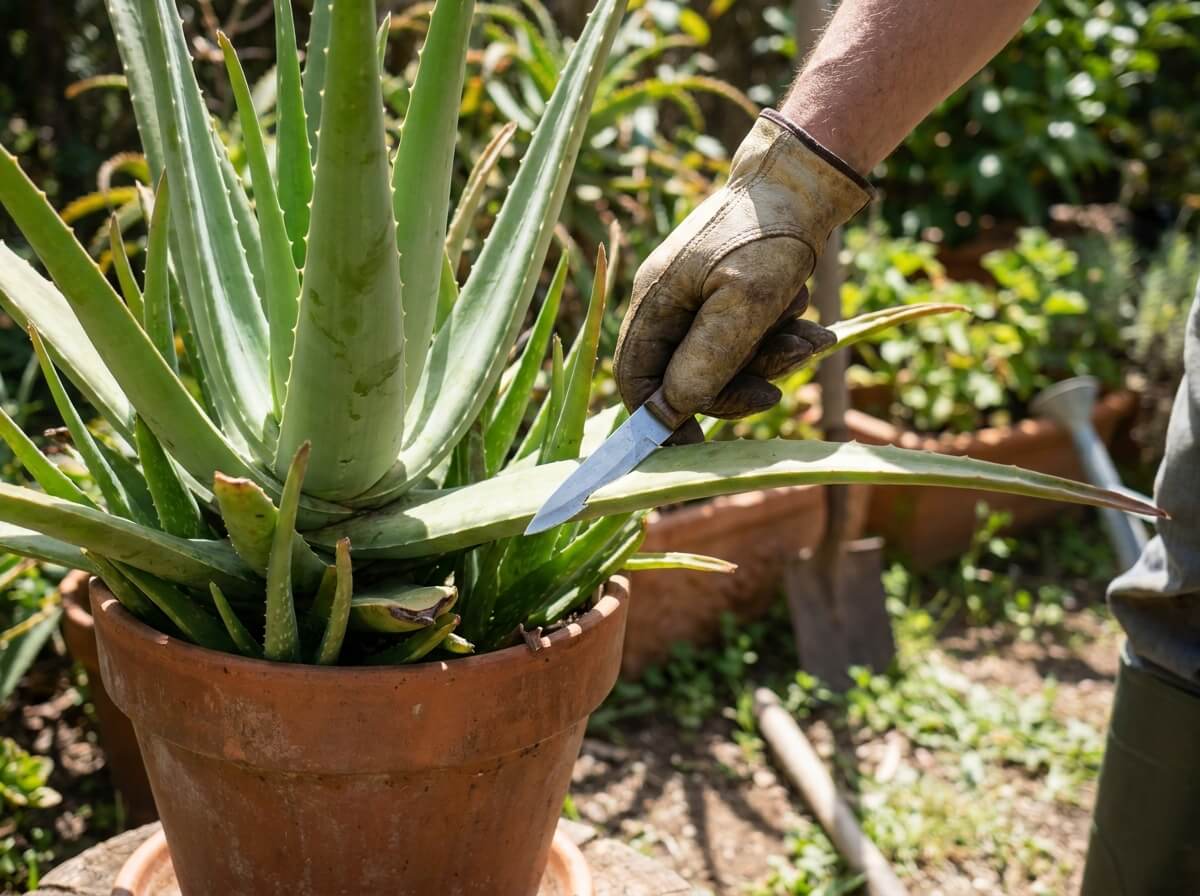
Smart tip: Always drain the yellow aloin sap from a freshly cut aloe leaf before applying the gel to skin. It’s absolutely non-negotiable for comfort.
Apply gel around blisters, not directly on broken skin. If blisters are widespread or the burn covers a large area, see a doctor rather than treating at home. Don’t even think about tackling serious burns yourself.
Wrapped in cling film and refrigerated, a cut aloe leaf keeps its active gel for up to 5 days. Scooped gel stored in an airtight jar lasts 48 hours in the fridge. Not a day longer.
Yes — fresh aloe gel is gentle enough for children’s skin. But you must do a small patch test on the inner arm first. Wait 20 minutes to rule out any sensitivity. It’s always better to be safe than sorry, isn’t it?
Fresh aloe gel is effective on minor heat rash, insect bites, and mild contact rashes. The RHS notes aloe vera as a long-established medicinal plant with broad skin-soothing properties. It does wonders.