Home » Health » Lemon verbena: harvesting, drying and using it for calming infusions
Lemon verbena: harvesting, drying and using it for calming infusions
·
0
Lemon verbena is the most lemon-scented thing you can grow in a pot. Its leaves carry a huge amount of aromatic oil, and that oil peaks in a short window in summer, just before the tiny white flowers open. This page covers when to cut, how to dry without losing the scent, and the everyday preparations herbalists make from it.
Lemon verbena at a glance
Item
Detail
Botanical name
Aloysia citrodora
Family
Verbenaceae
Part used
Leaves, and leafy stem tips with unopened flower buds
Midsummer to late summer, just before the flowers open
Taste
Bright lemon sherbet, faintly sweet, no bitterness
What it is credited with
Herbalists reach for the infusion as an evening drink, and it has a long reputation as a settling, winding-down tea before bed.
Naturopathy credits the aromatic oils with a relaxing effect on the digestion, which is why the cup is traditionally taken after a heavy meal.
In South American household tradition, the leaf is used much as mint is elsewhere — a comforting drink for a tense stomach or a restless evening.
European herbal practice values it as a gentle, pleasant-tasting companion to lemon balm and lavender in calming blends.
It has a reputation among growers as the most forgiving “calming herb” on taste grounds: children and tea-sceptics drink it happily, with no bitterness to mask.
The harvest window: exactly when to cut
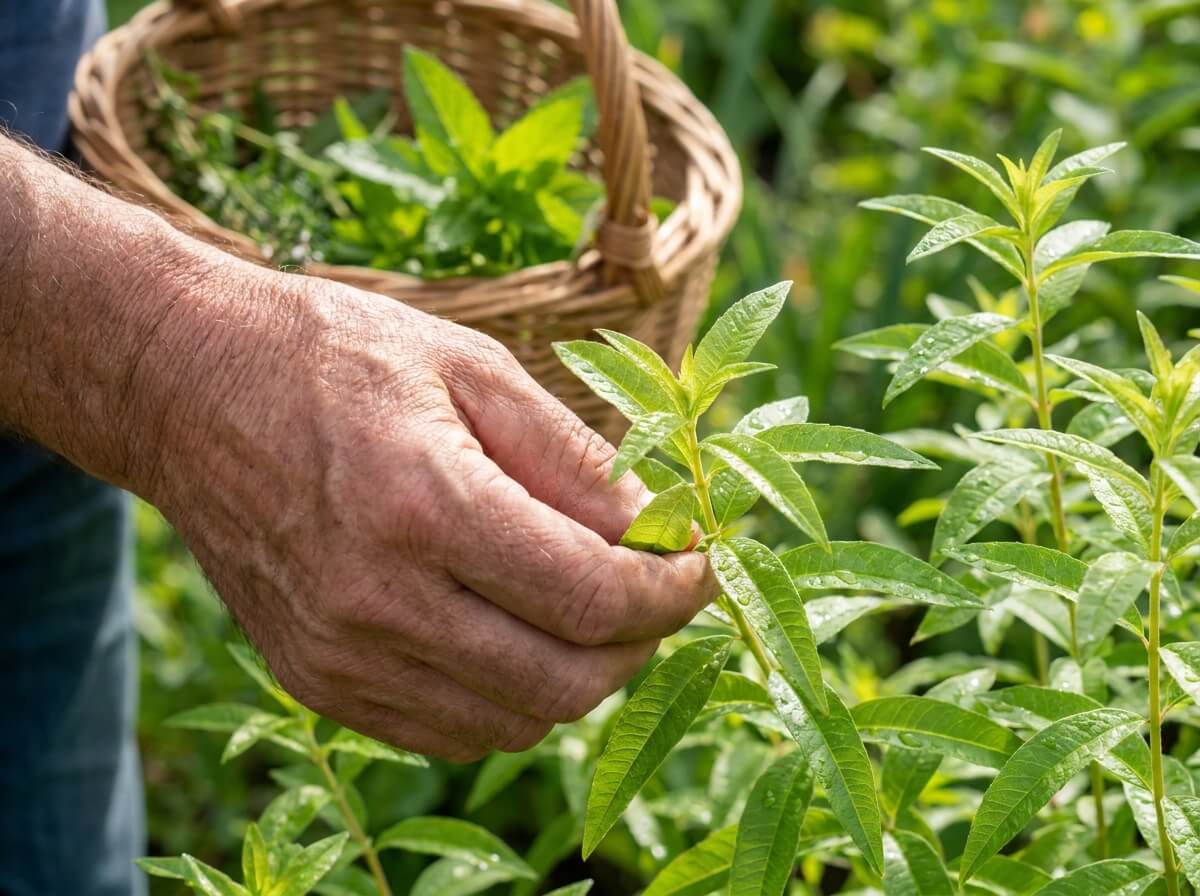
Watch the plant from midsummer onwards. The signal is tight, unopened flower clusters at the tip of each stem — small, creamy-white, closed like a miniature bottlebrush.
That is the moment. Once flowering is properly underway, the plant puts its energy elsewhere and the leaves smell noticeably flatter.
Cut in the early morning, before the sun warms the foliage. The leaves are still turgid and the volatile oils have not been driven off.
Cut each stem back to just above the third or fourth leaf node from the base.
Never take more than a third of the plant in one session — hard cutting in summer heat stresses the roots and sets regrowth back by weeks.
A second cut is usually possible a fortnight later if the plant has bounced back well.
If your plant has already flowered, cut the flowered stems back by two-thirds. New vegetative growth follows and often reaches pre-flower peak again before summer ends.
Drying so the scent survives
Heat is what destroys the aroma. Dry lemon verbena in a warm oven and you can smell the loss happening.
Bundle a small handful of stems loosely with string, leaving air space between them.
Hang upside down in a dark, dry, airy place — a shed, larder or airing cupboard.
Keep it cool: room temperature, not warm, and low humidity.
Check after about a week. Leaves should crumble cleanly; thicker stems may take a few days more.
Strip the leaves by running your fingers down the stem, then jar them at once in airtight dark glass.
How to use it
The everyday infusion
Use a well-heaped teaspoon of dried leaf per mug, or a small handful of fresh leaf — fresh needs roughly three times the volume of dried.
Pour on water just off the boil, not furiously boiling.
Cover the cup or pot immediately. Uncovered, the aromatic oils steam away into the kitchen.
Steep ten minutes, then strain.
Traditionally taken half an hour before bed, or after a meal. Most herbalists treat two or three cups a day as an ordinary amount for an adult.
Ten minutes, covered: the classic evening infusion of dried leaf
The tincture
Pack a clean jar loosely with dried leaf and cover completely with a 40% spirit — plain vodka is what most people use.
Seal, keep in a cool dark cupboard for four weeks, and shake it every couple of days.
Strain through muslin, pressing the leaf firmly, and decant into a dark dropper bottle.
Take it well diluted in a small glass of water. Amounts vary between practitioners, so follow the guidance of a qualified herbalist rather than guessing.
Kept away from light, it stays usable for a couple of years.
The sleep sachet
Mix dried lemon verbena with dried lavender, two parts verbena to one part lavender.
Fill a small muslin bag and tuck it inside the pillowcase; body warmth releases the scent slowly.
Refresh the blend once the smell goes faint — roughly every couple of months.
In the kitchen
A few fresh leaves infused in warm cream or milk flavour custards, ice cream and rice pudding beautifully.
Drop fresh leaves into a jug of cold water, lemonade or a fruit salad and leave an hour.
Steep leaves in hot sugar syrup, cool, and use over peaches, melon or in cocktails.
Forms of use compared
Form
How it is made
Traditionally used for
Infusion
Heaped teaspoon dried leaf per mug, water off the boil, covered, ten minutes
The everyday evening cup and the after-meal cup
Tincture
Dried leaf covered in 40% spirit, four weeks, shaken regularly, strained
A concentrated form for occasional use, well diluted
Scented sachet
Dried leaf with lavender in a muslin bag
Slipped into the pillowcase as part of a bedtime routine
Culinary
Fresh leaves infused in cream, syrup or cold drinks
Flavour, with no meaningful risk attached
Growing it for good leaf
A tender perennial: reliable in USDA zones 8–11, borderline in zone 7 with sharp drainage and a warm wall. In the UK it rates RHS H3 — it comes through mild winters in sheltered southern gardens, but needs protection or bringing under cover further north.
In cooler climates, grow it in a large container so you can chase the sun. It wants at least six hours of direct sun a day for strongly scented leaves.
Grown in shade the foliage is lush but the aroma is thin.
Feed with a low-nitrogen, high-potassium liquid feed every few weeks through summer. Too much nitrogen gives soft, sappy growth and weak scent.
Water deeply but rarely; let the top few centimetres of compost dry out between waterings.
It does well in a conservatory or bright window. The same rule applies indoors: cut when the flower buds form and are still closed.
Frequently Asked Questions
The one thing to remember: cut the stems in the early morning while the flower buds are still closed, dry them cool and dark, and always cover the cup while it steeps.
Can I use fresh leaves instead of dried for tea?
Yes. Use about three times the volume of fresh leaf you would use dried — a small handful per mug rather than a heaped teaspoon. Fresh leaf gives a livelier, sharper cup. Dried leaf is simply easier to keep on the shelf all year.
How does lemon verbena compare with lemon balm?
Both are classic calming-tea herbs, but they are different plants with different chemistry. Lemon balm (Melissa officinalis) has a softer, greener flavour and a long tradition of its own. Lemon verbena is far more aromatic per gram of leaf and keeps its flavour better on drying. Many people blend the two.
My plant has already flowered — is it too late to harvest?
Not at all. Cut the flowered stems back by about two-thirds and the plant will push out fresh leafy growth. That new growth usually reaches its pre-flowering peak again within a few weeks, giving a second window before the end of summer.
Can lemon verbena be grown indoors all year?
Yes, in a bright window facing the midday sun, with extra grow lighting through the darkest weeks of winter. It ticks over slowly in the cold months and comes back into strong growth the following summer. The seasonal cycle of harvest is the same indoors as out.
Why does my dried verbena smell of nothing?
Almost always heat or light. Oven-drying and sunny windowsills drive off the aromatic oils, and clear jars or plastic bags let the rest fade within months. Dry it cool, dark and airy, and store the whole leaves in airtight dark glass.
This information is provided for general interest and reflects the traditional use of plants. It is not a substitute for medical advice. If you are on medication, pregnant, or in any doubt, ask a healthcare professional.
🌿 Nature & Garden Newsletter
Gardening tips, recipes & seasonal advice, twice a week.