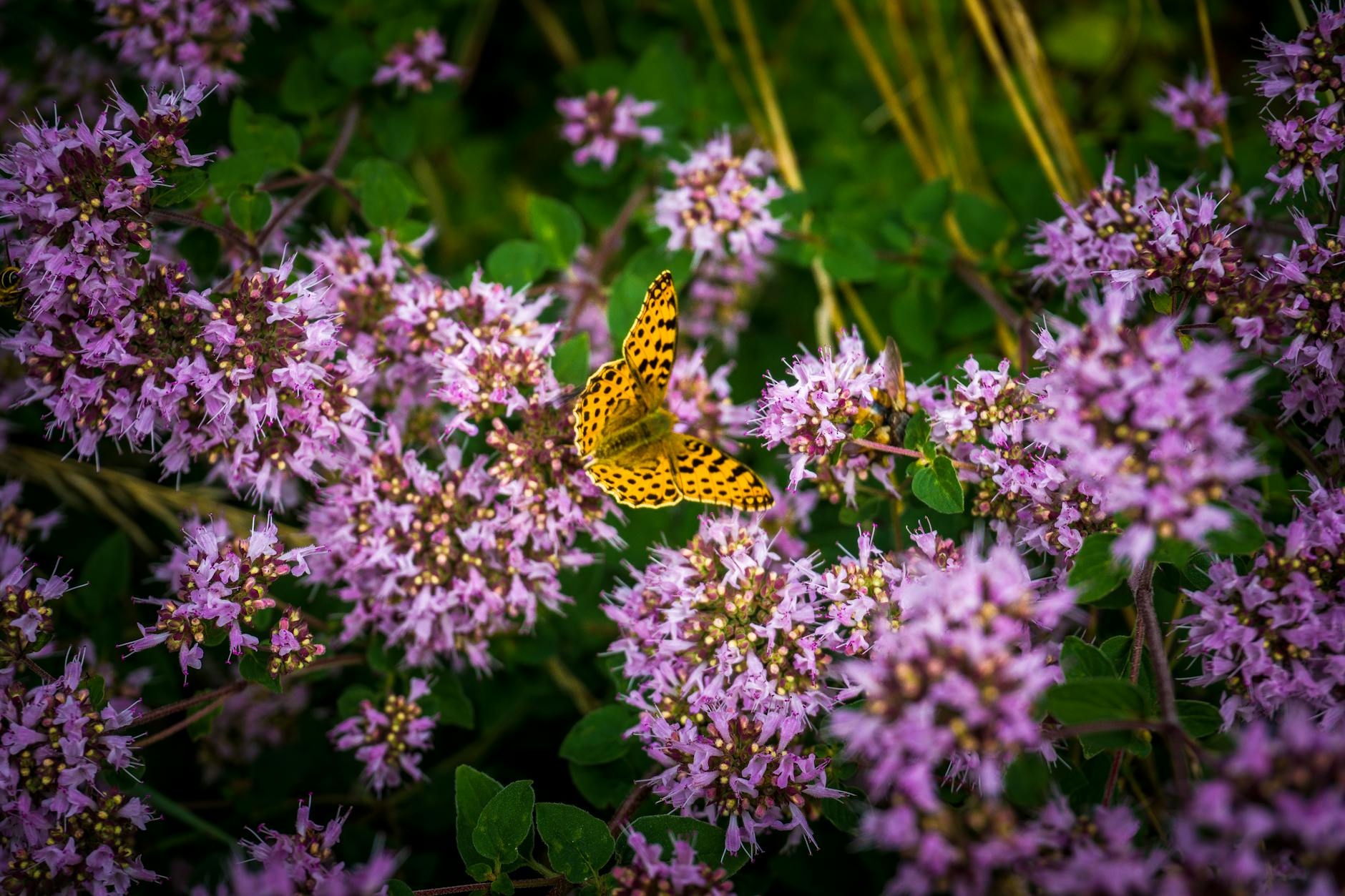
If your thyme’s suddenly erupted in a glorious mess of tiny purple or pink flowers, it looks absolutely stunning — but your window for really great-tasting leaves is closing fast. Once thyme flowers, you’ll find the leaves lose a significant chunk of their essential oils; that means the flavour you’re cooking with just goes flat and woody. The good news? A quick fix right now’ll keep your plant super productive all summer long.
Thyme flowers because, well, that’s what it wants to do! It’s a Mediterranean subshrub at heart, and in its natural stomping grounds, those long, hot days of early summer are its cue to reproduce. Longer daylight hours combined with warming soil temperatures essentially tell thyme: “Stop being delicious — start making seeds!”
This is called bolting in annual herbs like basil and coriander (you can read more about that in our article on basil about to bolt), but with thyme, it’s slightly different. Thyme’s a perennial, so it isn’t actually dying — it’s just redirecting all its energy away from leaf production and towards flowers, and eventually, seeds. The result’s the same for us cooks, though: tough, sparse, flavourless leaves. What a bummer.
I noticed this myself about eight years ago when I wondered why my late-June pasta sauce tasted oddly like I’d added pencil shavings instead of herbs. Turns out I’d harvested thyme that’d been in flower for three whole weeks. The volatile compounds — thymol, carvacrol — that give thyme its punchy, almost antiseptic warmth had basically packed their bags and left. They’re gone, baby, gone.
There’s also a structural reason why it matters. Once those woody stems have pushed energy into flower stalks, those stalks start to go ligneous (woody) even faster. If you leave them long enough, you’ll end up with a plant that’s half decorative, half kindling, and surprisingly difficult to bring back from the brink.
Honestly? In the short term, not dramatically. Your thyme won’t die from flowering. In fact, the bees in my garden absolutely lose their minds over thyme flowers — thyme honey produced in Provence and Sardinia’s considered among the finest in the world, which is a weird little fact I find deeply satisfying. Pollinators love it, and if you’re running a wildlife-friendly garden, a few flowering thyme plants are genuinely valuable. So there’s that.
But there are real consequences if you ignore it all season:
Left completely unchecked for a full season, thyme can go from a neat, productive mound to a semi-derelict woody shrub in a single summer. I’ve done it. It isn’t irreversible, but it takes a full year to properly recover a badly neglected plant. According to the RHS growing guide for thyme, regular trimming after flowering is one of the most important maintenance tasks for keeping plants vigorous long-term.
Southern Hemisphere gardeners: this applies to your December/January, when your days are long and temperatures peak. Lucky ducks.
The intervention’s simple, but the timing and technique matter more than most people realise.
The core rule: cut back by no more than one-third of the plant at once, and never cut into old woody growth. Thyme doesn’t regenerate from brown woody stems the way rosemary occasionally will. Cut too hard, and you’ll be left with dead stumps — actually, no — you’ll have killed a substantial part of your plant forever. I learned this the expensive way with a beautiful five-year-old lemon thyme. RIP. That was a rough afternoon.
Here’s what to do:
For potted thyme — on a balcony or windowsill — the same rules apply, but you’ll want to check the pot hasn’t become root-bound while you’re at it. A thyme that’s been in the same small pot for two or more years’ll often bolt faster because the cramped roots cause stress. Our guide on growing the 10 best basic herbs covers potting details worth bookmarking.
After cutting, give the plant about three weeks, and you’ll see a fresh flush of soft, strongly flavoured new growth. That’s prime harvesting time. That’s when you make your herb butter, your chicken marinade, your roasted potatoes. That’s the good stuff.
Flowering isn’t the only thing that can go sideways with thyme in summer heat. Keep an eye out for these:
If you’re growing other Mediterranean herbs alongside your thyme, it’s worth knowing that rosemary can suffer its own very specific summer problems — our piece on why rosemary dies from the inside in summer is genuinely useful reading if you have both in the same bed or pot.
Yes, absolutely — it isn’t harmful at all. The flavour will be milder and slightly more bitter than pre-flower thyme, but it’s still usable in slow-cooked dishes like stews or braises where subtlety’s fine. Just don’t expect the punchy intensity you’d get from fresh leafy growth. That’s not happening.
Bundle the cut stems loosely with a rubber band and hang them upside down somewhere warm, dry, and airy — a shed, a utility room, even just a sunny windowsill, perhaps by 10 AM on a Monday. They’ll be fully dry in about 14 days. Dried thyme from your own garden, harvested just before peak flowering, is genuinely far more flavourful than anything you’ll find in a supermarket jar. You’ll be chuffed!
It can, though indoor thyme tends to flower less vigorously because it gets fewer direct light hours and doesn’t experience the same temperature swings that trigger bolting. But if it does flower indoors, treat it exactly the same way — snip off the flower stalks promptly and it’ll redirect energy back into leaf growth. A south-facing windowsill in summer will produce the most aromatic indoor thyme you’ve ever had.
Little and often is the answer. A light trim every two to three weeks through spring and summer — even if you don’t need it for cooking —