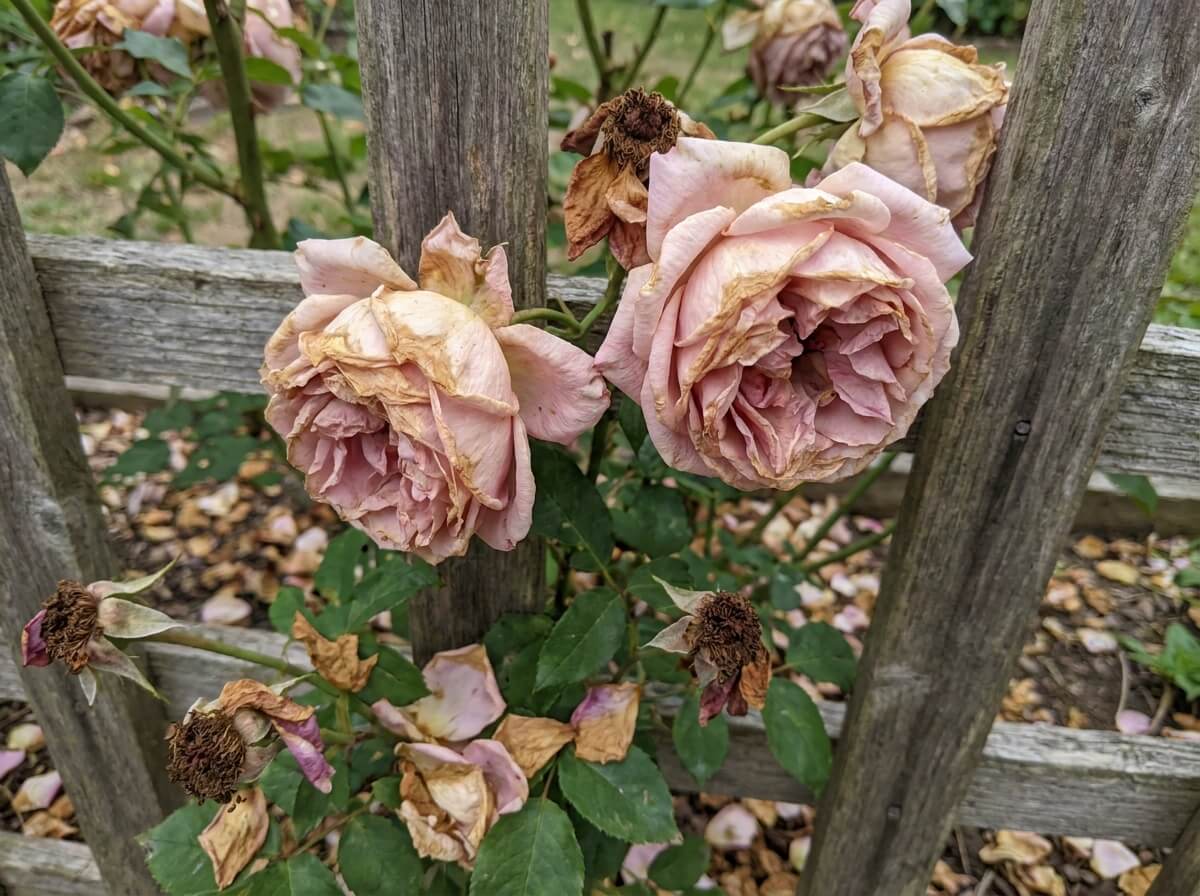
So, your roses looked perfect Thursday. By Saturday, and boom — petals everywhere. Just a bare hip staring back, wondering what the heck you did. Early petal drop in June? It’s utterly demoralising, isn’t it? Most of us blame ourselves, but often it’s just the weather, the soil, or maybe you missed a single watering. I’m telling you, it’s not always your fault. Here’s what’s *actually* going on.
The most common culprit this time of year—early summer—it’s a sudden temperature swing. You know, when a warm day turns into an unexpectedly cool night. Roses aren’t exactly stoic about that, are they? The bloom opens super fast in the heat, but then the petal’s cell walls just lose all cohesion when it crashes overnight, and poof, the whole thing collapses. I’ve watched my own ‘Gertrude Jekyll’ go from glorious full bloom to a completely bare hip in about 28 hours after exactly that kind of weird weather event. Infuriating, that’s what it is.
But temperature isn’t the only culprit, not by a long shot. Other likely causes? Well, you’ve got:
Before you blame yourself, work out which of the six usual suspects you are actually looking at. Each leaves a different clue, and each needs a different first move.
| Cause | What gives it away | What to do first |
|---|---|---|
| Sudden temperature swing | Bloom opens fast in the heat, then collapses after a cool night | Light horticultural fleece over opening blooms, off by mid-morning |
| Inconsistent watering | Petals shed mid-bloom after a dry spell followed by a soaking | One deep soak, roughly 40 litres per square metre per week |
| Thrips | Tiny dark specks when a bud is tapped over white paper | Neem oil spray at around 8 PM, to spare pollinators |
| Botrytis (grey mould) | Grey fuzz at the base of fallen petals, petals browning | Remove and bin affected parts, then a copper-based fungicide |
| Nutrient imbalance | Plenty of leafy growth but blooms that do not last | Swap the nitrogen for a high-potash feed such as tomato fertiliser |
| Root stress | Container roses in a pot that bakes all day | Move pots away from south-facing walls |
Only botrytis genuinely threatens the plant; the others cost you the flush, not the rose.
Short answer? The dropped petals aren’t the crisis, they’re just a symptom. One single early petal drop won’t kill your rose, honestly. But if it keeps happening, your plant’s trying to tell you something is consistently wrong, and you’d be daft to ignore that pattern, ’cause it’ll cost you the whole flush. The real danger? That’s when botrytis is involved. Grey mould, it spreads aggressively in warm, damp conditions, and it can move from petals right into stems within a couple of days. So, check the base of any fallen petals for grey fuzz. If you spot it, act immediately (more on that below). For everything else — thrips, heat stress, dodgy watering — the plant will recover and rebloom, I promise, but only if you sort out the root cause now, in June, before that second flush even starts building momentum.
It’s also worth separating “petal drop” from “balling,” where buds never open, — actually, no — they just rot right on the stem. That’s a totally different problem, usually down to too much rain. You can read more about that whole range of issues in our guide to rose tree diseases and how to treat them.
Don’t just sit there. Here’s what you’ve gotta do this week, in order of urgency:
For container roses specifically, you’ve gotta move those pots away from south-facing walls if temperatures are getting extreme. A pot that bakes all day? That’s going to stress the roots severely, and stressed roots mean short-lived blooms. Southern Hemisphere gardeners, listen up: this applies to your December and January, when your summer heat truly peaks.
Once you’ve sorted out the immediate drop, you’ll want to keep an eye on a few other things. Yellowing leaves coupled with short bloom life usually points to an iron or magnesium deficiency — that’s a classic summer combination that’ll get worse as rain leaches nutrients out. But a sudden drop in fragrance before the petals fall? That’s your earliest warning sign of heat or water stress. Roses actually smell strongest when they’re truly healthy, and a fading scent, that can tip you off a day or so before any physical symptoms even appear. That’s the weird detail no one ever tells you, and once you’ve clocked it, you’ll catch problems way earlier. So, also watch for any sticky residue on leaves under the blooms — aphid colonies, they’ll build fast in June and weaken blooms indirectly by stressing the whole plant. Our article on companion plants for roses has some genuinely useful natural pest-deterrent options if you’d rather not spray.
Smart tip: A fading fragrance before petals fall? That’s your earliest warning — catch it then, not after. Truly.
In really hot weather, some varieties — especially large-flowered hybrid teas — they’ll naturally have a shorter bloom life. But two to three days? That’s definitely on the short end; healthy roses in moderate temps should hold blooms for at least five to seven days. If it’s consistently short, you’d better investigate watering and soil nutrition first.
A light horticultural fleece over established blooms during a cold night snap? It can genuinely help — I’ve done it, and I’ve had good results. It won’t save a bloom already knackered, but it’ll definitely protect ones just opening. Just make sure to remove it by mid-morning so heat doesn’t build underneath.
Oh yes — absolutely! Shrub roses and many English roses tend to hold their blooms longer than hybrid teas in variable weather. ‘Olivia Rose Austen’ and ‘Darcey Bussell’ are notably resilient in my experience; they’re stunners. If petal drop is a recurring problem, then variety choice really, truly matters enormously.
Always, always. Especially if botrytis is even a possibility. Fallen petals sitting on damp soil? They’re a perfect breeding ground for fungal disease. Rake ’em up, bin ’em, and keep the base of the plant clear — good air circulation at ground level, it’s just so underrated for rose care.