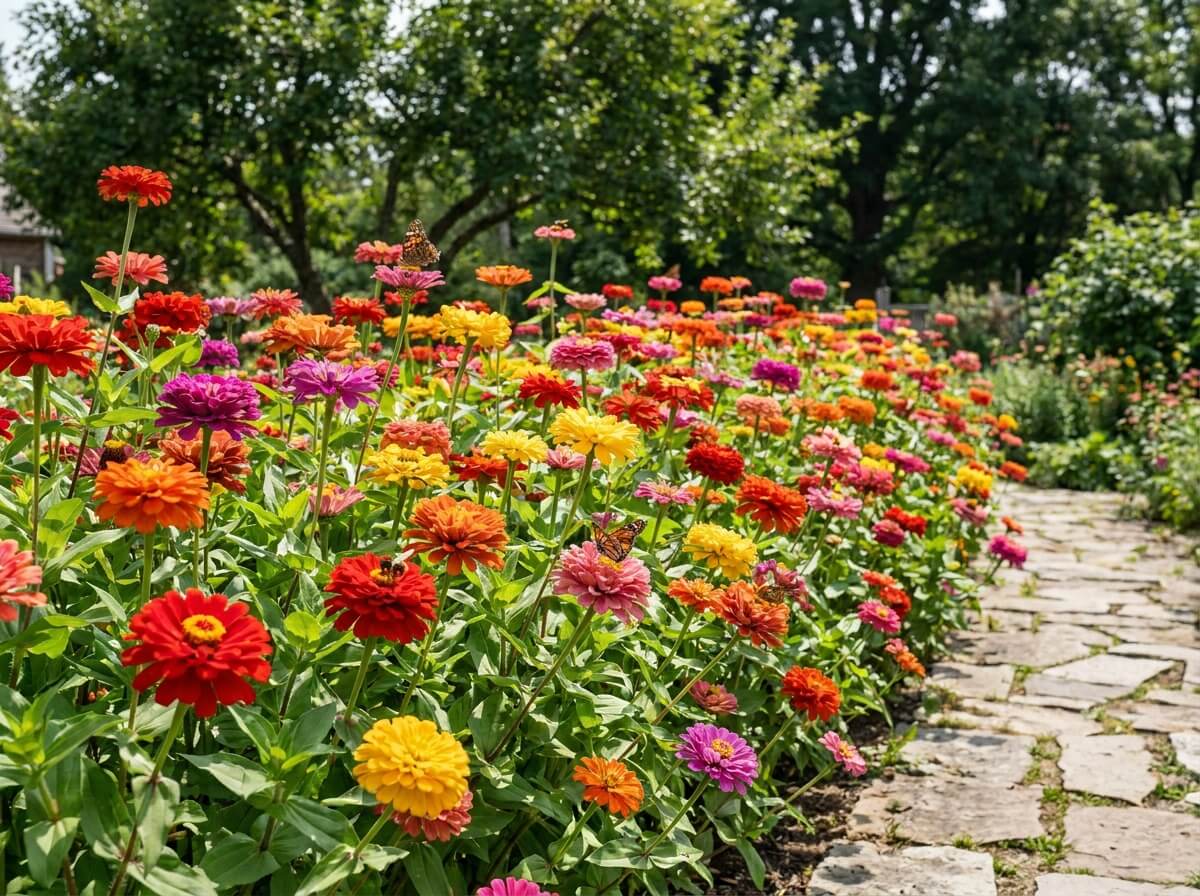
Zinnias are flowering right now and will keep going — without slowing down — for up to 4 solid months through the hottest part of the year. While other summer annuals stall, scorch or sulk past 30°C, zinnias accelerate. The hotter and sunnier it gets, the more flowers appear. One plant, managed properly, can produce 30 to 50 blooms across a single season. Here is how to make sure yours hit that number.
Zinnias (Zinnia elegans) are native to the dry, sun-baked scrublands of central Mexico. Their entire evolutionary history is a preparation for precisely the conditions that make most garden flowers collapse. Temperatures of 38°C, weeks without rain, blazing reflected heat from walls and paths — none of it registers as stress. They were built for this.
The mechanism is straightforward. Zinnias evolved to produce seeds quickly in a short, fierce growing window.
Every time a flower head is pulled off before it sets seed, the plant reads that as a signal to try again, harder. And faster.
That feedback loop — deadhead, regrow, rebloom — can run continuously from late spring right through to the first frost, often 120 days or more of unbroken colour.
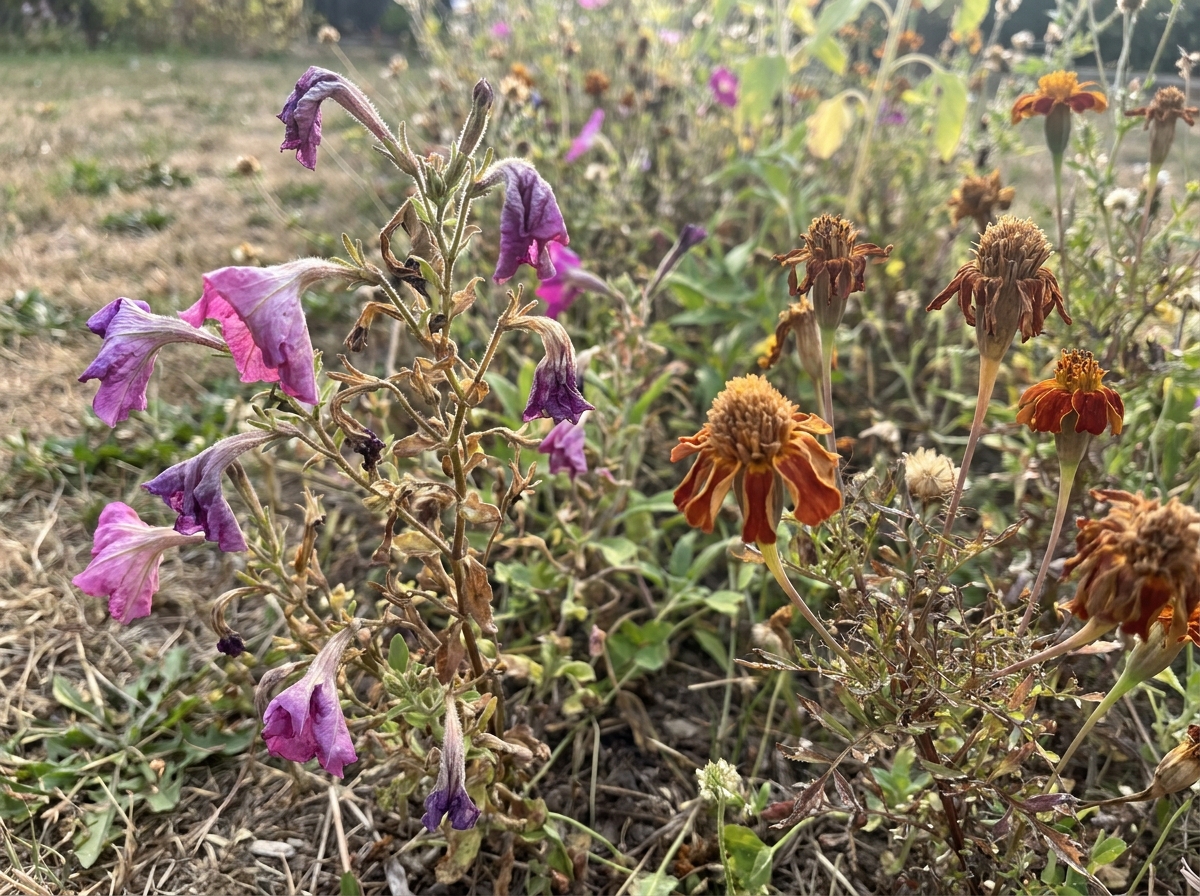
According to the UC Davis Cooperative Extension, zinnias are among the top five most heat-resilient annual flowers for warm-climate gardens, consistently outperforming petunias, marigolds and impatiens once air temperatures climb past 32°C regularly.
This is where most gardeners leave flowers — and weeks of colour — on the table. Sporadic deadheading gives sporadic results. The non-negotiable interval is every 7 to 10 days, and the cut matters as much as the timing.
Do not snap the spent head off at the neck. Follow the stem down to the first pair of leaves and cut just above that node with clean, sharp snips.
Two new stems will shoot up from that point within 5 to 7 days. Do this consistently and you are not deadheading a plant — you are multiplying it.
The varieties worth knowing right now:
Water properly and the rest becomes simple. Deep watering twice a week — a slow 20-minute soak at the base — is far better than daily light sprinkles.
Wet foliage is a dodgy route to powdery mildew, which is the one genuine threat to zinnias in humid summers. Keep water off the leaves entirely.
Feed once every 3 weeks with a balanced liquid fertiliser — a diluted tomato feed at half strength does wonders for the plant. Do not overfeed with nitrogen or you will get enormous leafy plants with mediocre flowering.
Lean soil, full sun (a minimum of 6 hours direct), and that regular deadheading rhythm will do more than any feeding programme.
Yes, it is fiddly. Worth it. Do it anyway — the difference between a plant that peaks in midsummer and one still blazing in early autumn is almost always this single habit.
Southern Hemisphere gardeners: this applies to your December and January — sow seeds in October for the same midsummer performance described here.
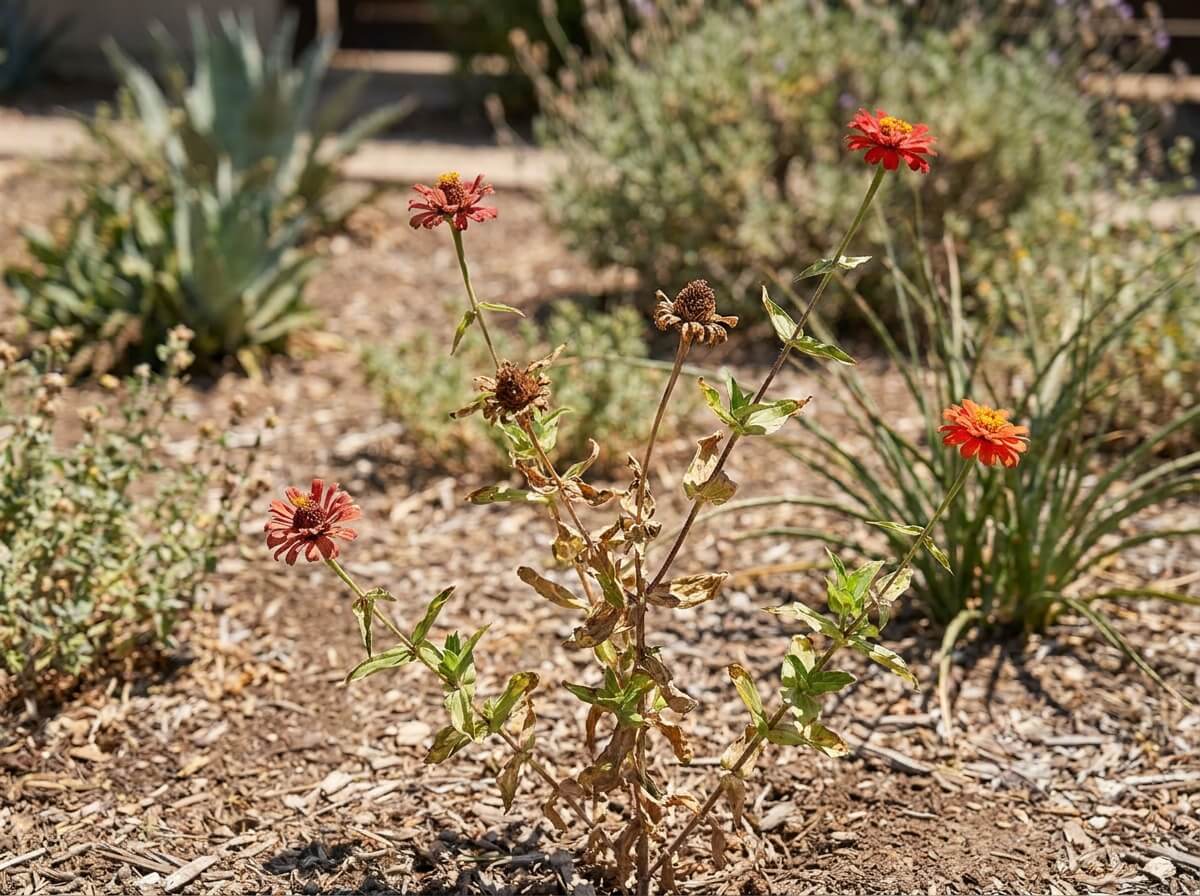
A white powdery coating on leaves is powdery mildew — pull off affected leaves immediately. Thinning stems does wonders for air circulation. Avoid any overhead watering. Do not ignore it.
Left alone, it will spread across the whole plant within a fortnight.
Stunted new growth with distorted leaves usually signals aphids sheltering at the growing tips. A firm blast of water at 7am dislodges 80% of them.
Repeat over three consecutive mornings.
Pale, washed-out flower colour in high summer is almost always direct sunscorch on the petals — not a soil or watering issue. Varieties with deeper pigmentation (dark reds, oranges, corals) hold colour far better than pale yellows and creams in extreme heat.
Worth bearing in mind when you are choosing next season.
If you want to keep the summer border firing on all fronts beyond zinnias, the principles behind keeping all your annuals colourful through summer apply directly alongside everything here.
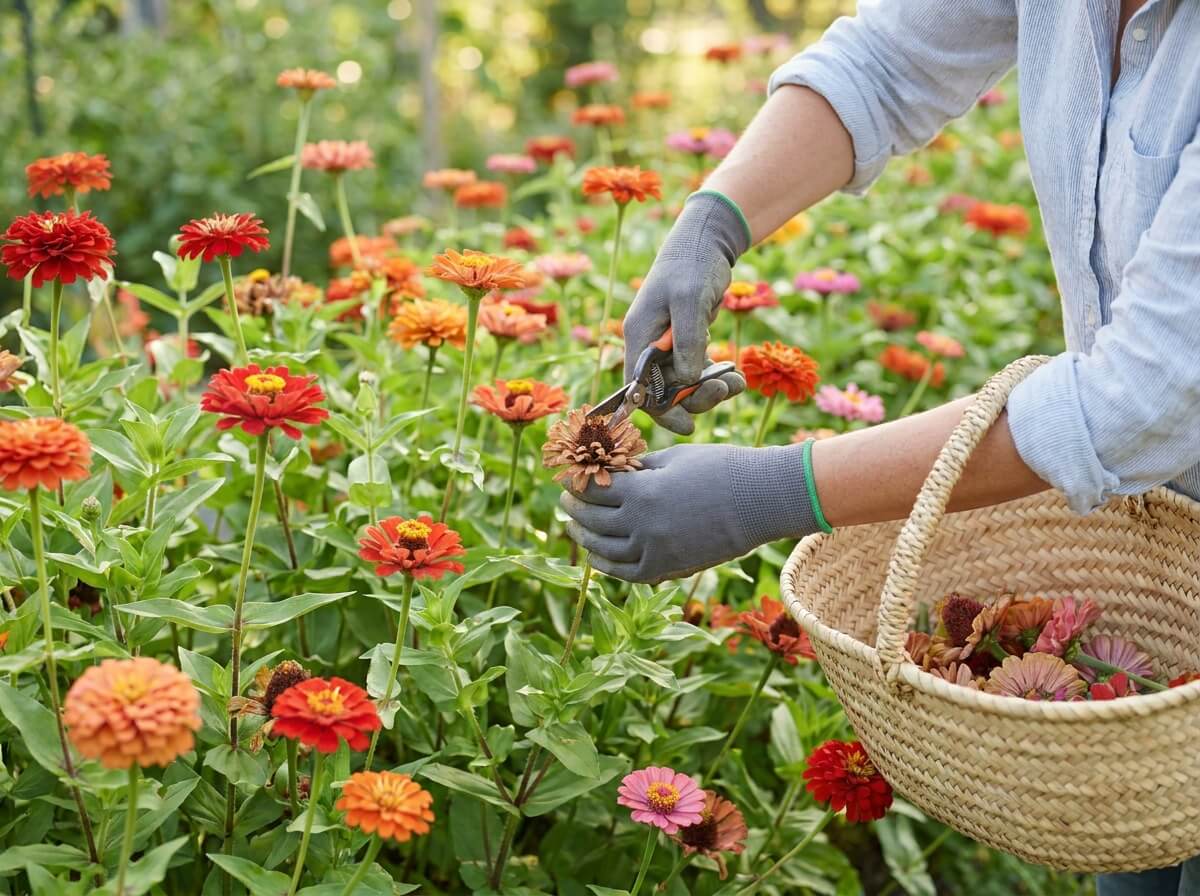
Smart tip: Cut zinnia stems for a vase every few days and the plant responds by shooting up two new flowering shoots — you gain twice over.
Yes — zinnias are one of the properly few annuals that actively thrive above 38°C, provided the roots are not waterlogged. Ensure good drainage and water deeply at the base rather than shallowly.
With consistent deadheading, zinnias bloom for 100 to 130 days — roughly late spring through to the first autumn frost. Without deadheading, that window shrinks to 6 to 8 weeks as the plant focuses on setting seed.
That is powdery mildew, triggered by humid air combined with dry soil or overhead watering. Pull off affected leaves, water only at the base, and thin crowded stems to improve airflow.
A spray of diluted neem oil applied in the evening slows further spread effectively.
Absolutely — choose compact varieties like Profusion or Thumbelina, use a 30cm minimum pot diameter, and ensure the container drains freely. The RHS recommends full sun positioning and weekly feeding for container-grown zinnias through peak summer.