Dahlias in full summer growth are extraordinary — and completely demanding. The difference between a plant that flowers through to the first frost and one that stalls out in midsummer comes down to three weeks of consistent, specific attention: pulling off spent blooms before they drain energy, securing tall stems before the next thunderstorm arrives, and catching the pests that work mostly at night.
Here is how to do all three properly.
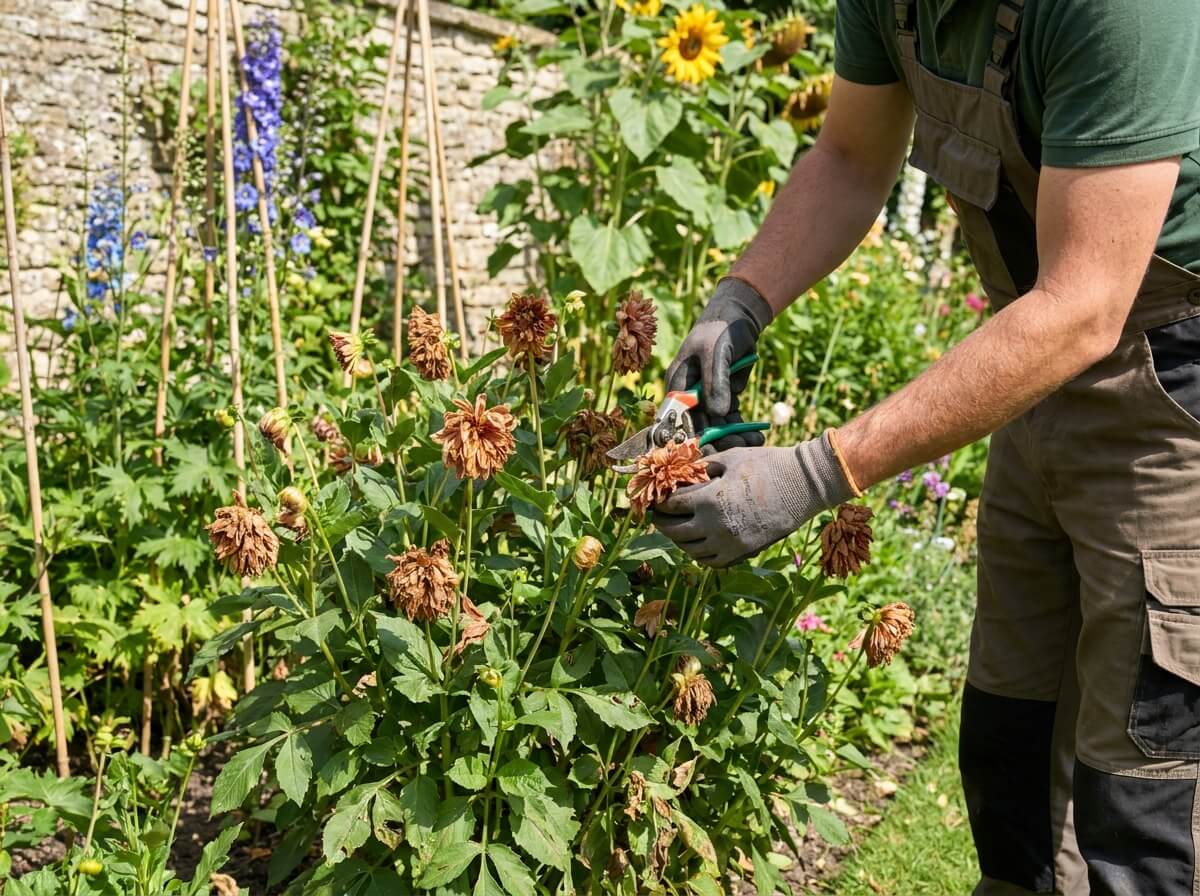
Most gardeners deadhead by pulling off the dead flower head. That is not enough. Cut back to the next healthy set of leaves or leaf node beneath the spent bloom — typically 15 to 20cm down the stem. This removes the developing seed capsule entirely and redirects the plant’s energy into producing the next flowering stem rather than ripening seeds it will never need.
The timing is non-negotiable. A dahlia left with a spent flower for more than seven days will begin allocating resources toward seed formation. And you will see a measurable reduction in the number of new buds that follow.
Check every five to seven days during peak summer. Pull off any bloom that has clearly passed its best — petals dropping, centre turning inward, colour fading to a papery wash.
One useful trick for borderline flowers: turn the bloom face-down. If the petals fall easily away, it is ready to come off.
If they hold firm, leave it another two days. Yes, it is fiddly. Worth it.
Do it anyway — the difference in late-season flowering is night and day.
For dahlias shot up as cut flowers, cutting stems for the vase counts as deadheading. Cut long — at least 30cm — and always to a node. You are simultaneously harvesting and pruning, which makes the whole exercise satisfying in a properly efficient way. For more on dahlias as a species and their general care needs, the complete dahlia guide covers variety selection and planting in depth.
If you did not stake at planting time, do it now. Tall dahlia varieties — anything reaching above 90cm — will not stay upright through a summer storm without support.
And once a main stem snaps at the base, that branch is gone for the season. No amount of tape saves a clean break at the hollow point just above the tuber. The thing is, this damage is entirely preventable.
The right approach depends on the plant size:
Tie with soft jute or stretchy fabric ties in a figure-of-eight loop — one loop around the stem, one around the cane, crossing in the middle. A straight tie pulls the stem against the cane and creates a rubbing point that splits the tissue open over six weeks of wind movement. That split becomes an entry point for botrytis in humid weather.
Check ties every two weeks. Stems expand as they shoot up, and a tie that was loose in late spring will cut into the stem by midsummer if left unchecked. But you can avoid this entirely with regular vigilance.
Dahlias in active growth are thirsty. In dry summers, water deeply twice a week — always at the base, never overhead.
Overhead watering onto leaves and flowers in evening heat invites powdery mildew faster than almost anything else. So apply water judiciously.
Feeding should switch now. If you were using a general balanced fertiliser through early summer, move to a high-potash feed from midsummer onward — something like tomato fertiliser (typically around 3:1:4 NPK ratio) applied every fortnight.
High nitrogen at this point pushes leafy growth at the expense of flowers and makes stems sappy and more attractive to aphids. So shift away from it now.
In containers, dahlias dry out within 48 hours during a heatwave. Water daily when temperatures consistently exceed 28°C.
Pots on south-facing patios may need twice-daily watering in genuine heat. Check the compost 5cm down — if it is dry at that depth, water immediately. Never wait.
Dahlia pests fall into two distinct categories: the ones you can see in daylight, and the ones doing most of the damage while you are asleep.
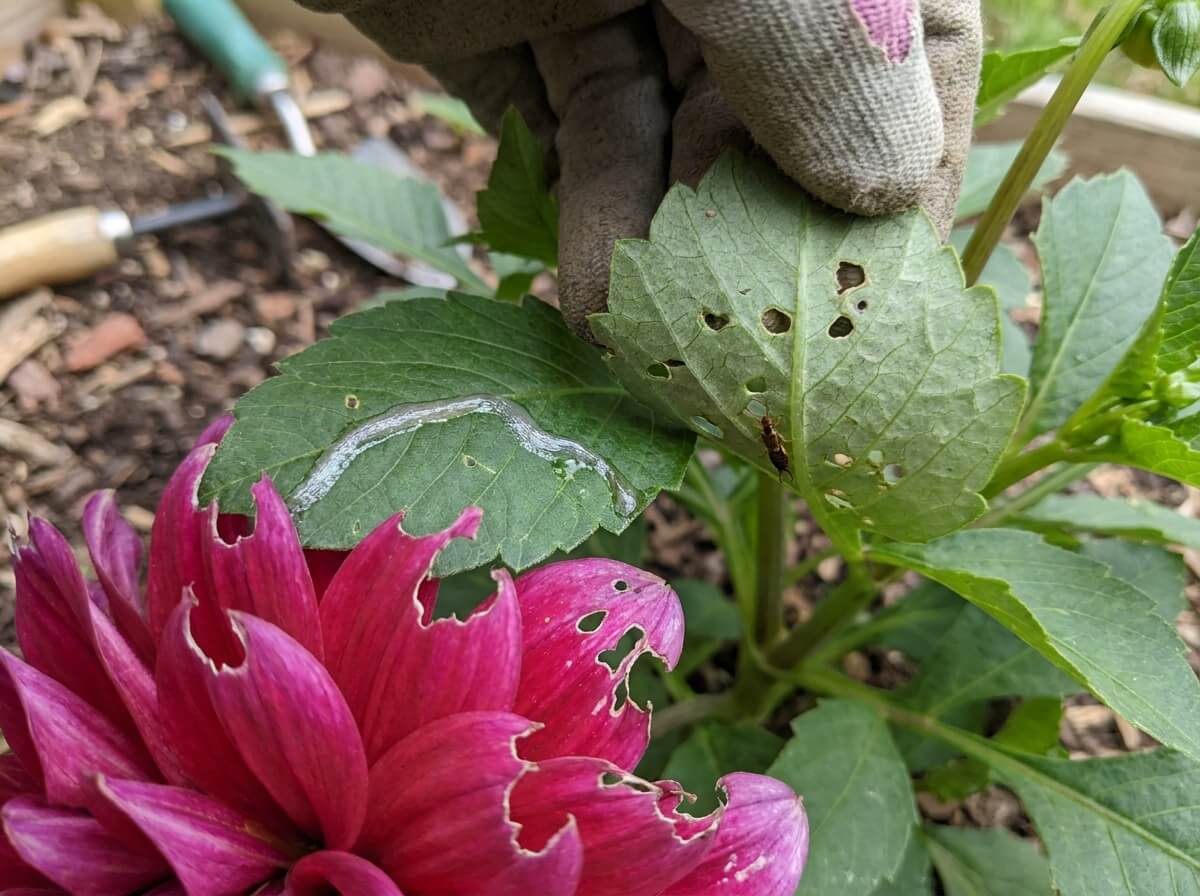
Earwigs are the dahlia gardener’s most infuriating pest because they hide perfectly during daylight hours in the centre of blooms or in soil crevices. Then they emerge after dark to chew irregular holes in petals and new buds. The classic trap is a small flowerpot stuffed loosely with straw or shredded newspaper, placed upside-down on a cane near the plants.
Earwigs shelter in it by dawn. Inspect every morning and dispose of the occupants away from the dahlia bed.
A torch inspection at 10pm on a warm night will show you exactly what is happening. The first time you do it, the scale of activity on a badly affected plant is genuinely startling — dozens of insects moving through the petals of a single bloom.
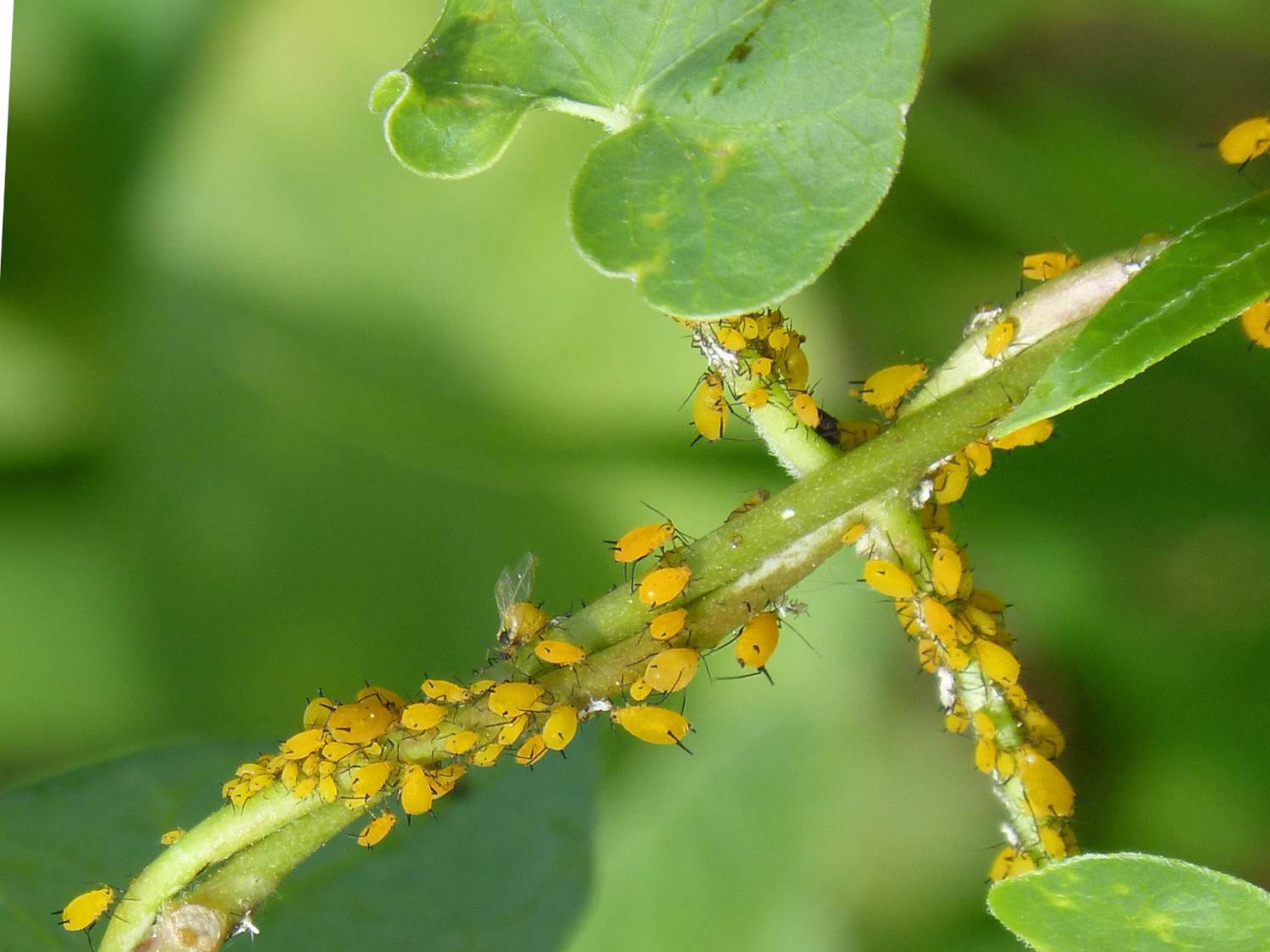
Aphids cluster at soft shoot tips and beneath new leaves. A sharp jet of water knocks most of them off.
For persistent colonies, a spray of diluted neem oil — roughly 5ml per litre of water with a tiny drop of washing-up liquid as an emulsifier — applied in the morning so leaves dry before full sun, does wonders for controlling them without harming visiting pollinators. Repeat every seven days for three applications.
The RHS earwig advice page gives a detailed breakdown of cultural controls that reduce populations without chemical intervention.
If you pinched your dahlias in late spring (pulling off the growing tip when plants reached 30–40cm), you will now have a bushy plant with multiple flowering stems. If you did not, do not attempt to pinch in midsummer — the plant is too advanced and you will simply pull off flower buds.
What to do now instead: pull off any weak, crossing, or inward-facing stems to keep the plant open and well-ventilated. Overcrowded stems create stagnant air pockets that trap moisture, and midsummer is exactly when powdery mildew takes hold in those conditions. Aim for five to seven main stems on a large dinner-plate type, fewer on compact bedding varieties.
Disbudding — pulling off the two smaller buds that flank the central terminal bud on each stem — produces one enormous bloom per stem rather than three smaller ones. Exhibition growers do this religiously.
For a garden border or cutting patch, skip it and enjoy the volume instead.
From late summer, begin to ease off nitrogen feeding entirely and continue with potash only. Stop deadheading two to three weeks before your first expected frost date — allow the plant to sense the slowing season and begin returning energy to the tuber rather than producing more flowers.
Watch for powdery mildew on older lower leaves. Some of it is inevitable as nights cool and dews become heavier. Pull off badly affected leaves immediately. And do not compost them.
A preventative spray of diluted bicarbonate of soda (1 teaspoon per litre of water, plus a drop of dish soap) applied to upper and lower leaf surfaces every ten days from late summer slows spread considerably.
When you eventually lift the tubers — after the first frost blackens the foliage — you will find that tubers from well-managed plants are significantly larger and more vigorous than those from neglected ones. That energy stored in the tuber is next year’s display, already in the ground. The effort truly makes a difference. You will have a proper cracker next year. The guide to forcing dahlias and dividing tubers covers what to do with them once lifted.
And if you are shooting up other summer bulbs alongside your dahlias — gladioli, montbretia, or cannas — the same principles around feeding, watering, and pest vigilance apply across the whole summer border. See the broader guide to bulb flowers that bloom in summer for companion care advice.
Smart tip: Always deadhead to the next leaf node, not just the flower head — this alone doubles your late-season bloom count.
Every five to seven days during peak flowering. Pull off any bloom where petals are dropping or the centre has begun to close inward, cutting back 15–20cm to the nearest healthy leaf pair.
No. A clean break at or near the main stem can not be repaired reliably.
Pull off the broken stem entirely, ensure the remaining plant is properly staked, and it will produce new flowering laterals within two to three weeks.
During the day earwigs eat aphids and are genuinely useful. But after dark they switch to chewing dahlia petals and buds — so control is about trapping, not eliminating the species from your garden entirely.
Switch from balanced to high-potash feed from midsummer, and stop all feeding four to six weeks before your first expected frost date to allow the plant to harden off and store energy in the tuber.
Yes — container dahlias dry out far faster (inspect daily in hot weather), need feeding every ten days rather than every two weeks, and are more vulnerable to vine weevil larvae, which thrive in pot compost.