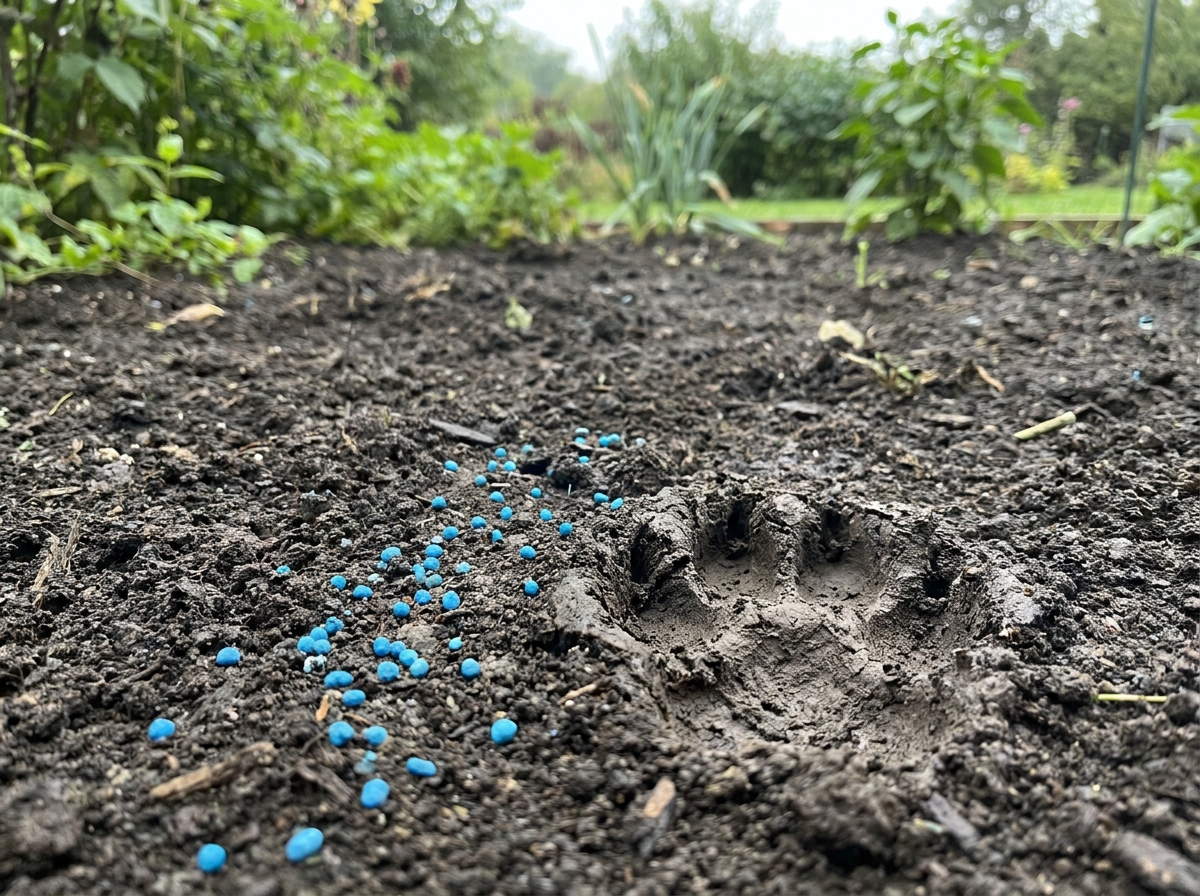
Most slug pellets contain metaldehyde — a compound that causes seizures and liver failure in dogs, sometimes within 30 minutes of ingestion. It smells faintly sweet, which makes it actively attractive to them. The standard blue pellets you find at every garden centre are the ones most likely to kill your dog. The good news: there are genuinely effective alternatives, and switching takes about five minutes.
Metaldehyde is the active ingredient in most traditional slug pellets — Bayer Slug Killer, Doff Slugoids, many supermarket own-brand products. It disrupts the nervous system fast.
A medium-sized dog can suffer tremors, excessive drooling, and full seizures from eating as little as 100g of standard pellets scattered across a flowerbed.
The problem isn’t just that dogs eat it accidentally. The pellets are often grain-based, with a slightly malty, biscuit-like odour — I noticed it the first time I opened a box, actually smelled it from about a metre away — and to a dog’s nose, that’s interesting.
Bait stations don’t fully solve this either. Determined dogs dig them out.
Metaldehyde was banned for garden use in the UK in 2022 by the Health and Safety Executive, but it’s still legal and widely sold in many US states, Canada, Australia, and South Africa. The RHS confirms iron phosphate-based products as the safer alternative for home gardens.
Fast. That’s the word.
Symptoms can appear in under 30 minutes.
If you suspect your dog has eaten slug pellets, call your vet immediately — don’t wait for symptoms. The ASPCA Animal Poison Control Center (888-426-4435) runs a 24-hour line in the US. In the UK, contact the Animal Poison Line. Time is the variable that determines whether this ends okay.
Summer is peak slug season in the Northern Hemisphere. Warm nights, damp soil, your hostas and strawberries looking like a buffet. You need something that works. The good news is that iron phosphate pellets are genuinely effective — not a compromise.
Look, I know switching products feels like admin when you’ve already bought a box of the blue stuff. But keep the old pellets locked in a shed or bin them — don’t scatter what’s left.
And if you’re using Sluggo or a similar iron phosphate product, you can apply it around vegetables too, right up to harvest. That’s not true of metaldehyde.
If you’re re-examining your garden’s pet safety this June, don’t stop at slug bait.
And while you’re doing a summer pest audit — if aphids are also causing havoc, check out the organic fix for aphids on hibiscus that won’t put your pets at risk either.
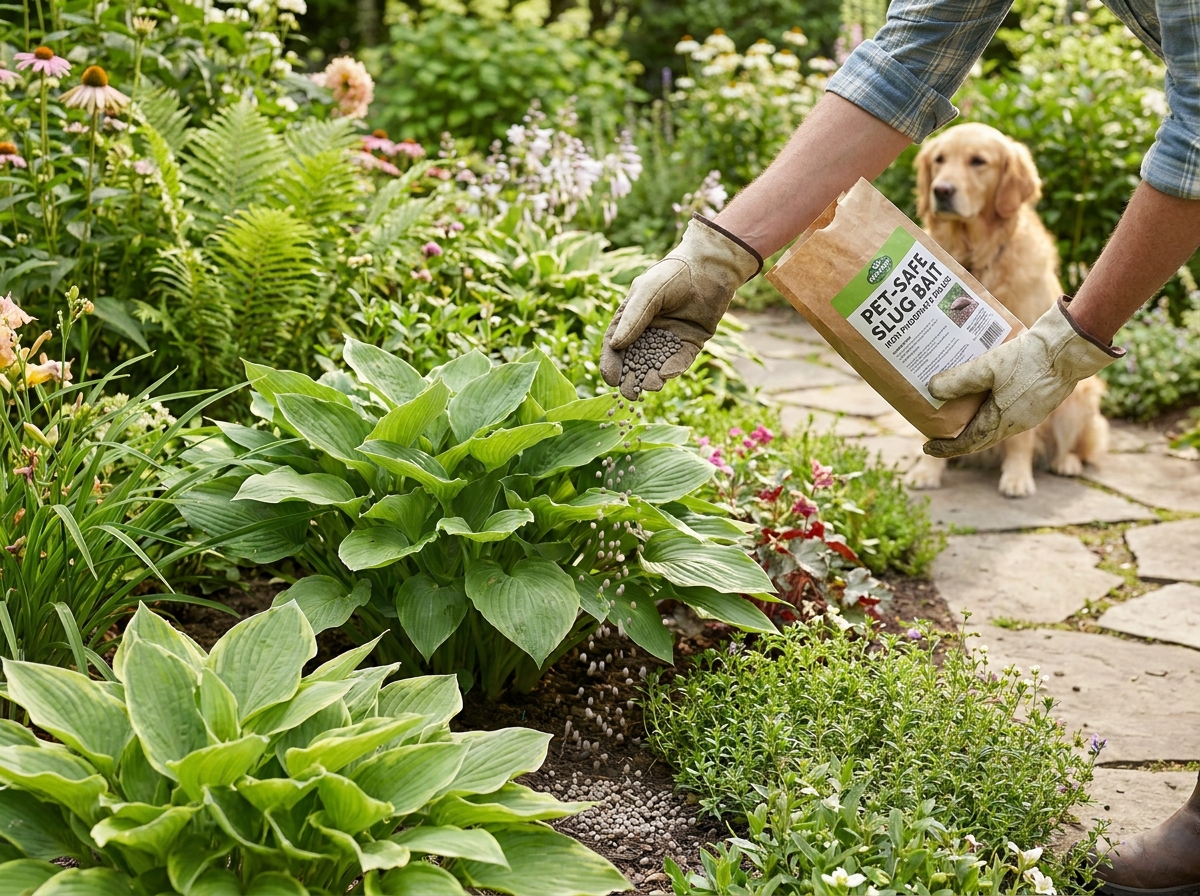
Smart tip: Switch to iron phosphate pellets today — they work just as well as metaldehyde and won’t harm pets or hedgehogs.
No — metaldehyde pellets are highly toxic, but iron phosphate products like Sluggo are considered safe for pets, wildlife, and children when used as directed. Always check the active ingredient before buying.
It was banned for garden use in the UK in 2022, but remains legal in much of the US, Canada, Australia, and South Africa. Check your country’s current regulations, as they’re changing.
It depends on body weight, but even small quantities of metaldehyde pellets can cause serious harm in medium or small dogs — don’t assume a few pellets are “too few to matter.”
Yes, when applied correctly to moist soil above 5°C (41°F). Nemaslug-type products are slower than pellets but target slugs underground, where most damage actually starts.
Reapply every 6 weeks through summer.