Those black spots, orange pustules, and chalky white patches? They’re not random bad luck. They’re three distinct fungal diseases. And summer is precisely when all three hit hardest, because warm days, humid nights, and afternoon thunderstorms create ideal conditions for fungal spores to spread at speed.
Here’s how to tell them apart. You need to know what to do about each one, fast, before your roses lose every leaf they have.
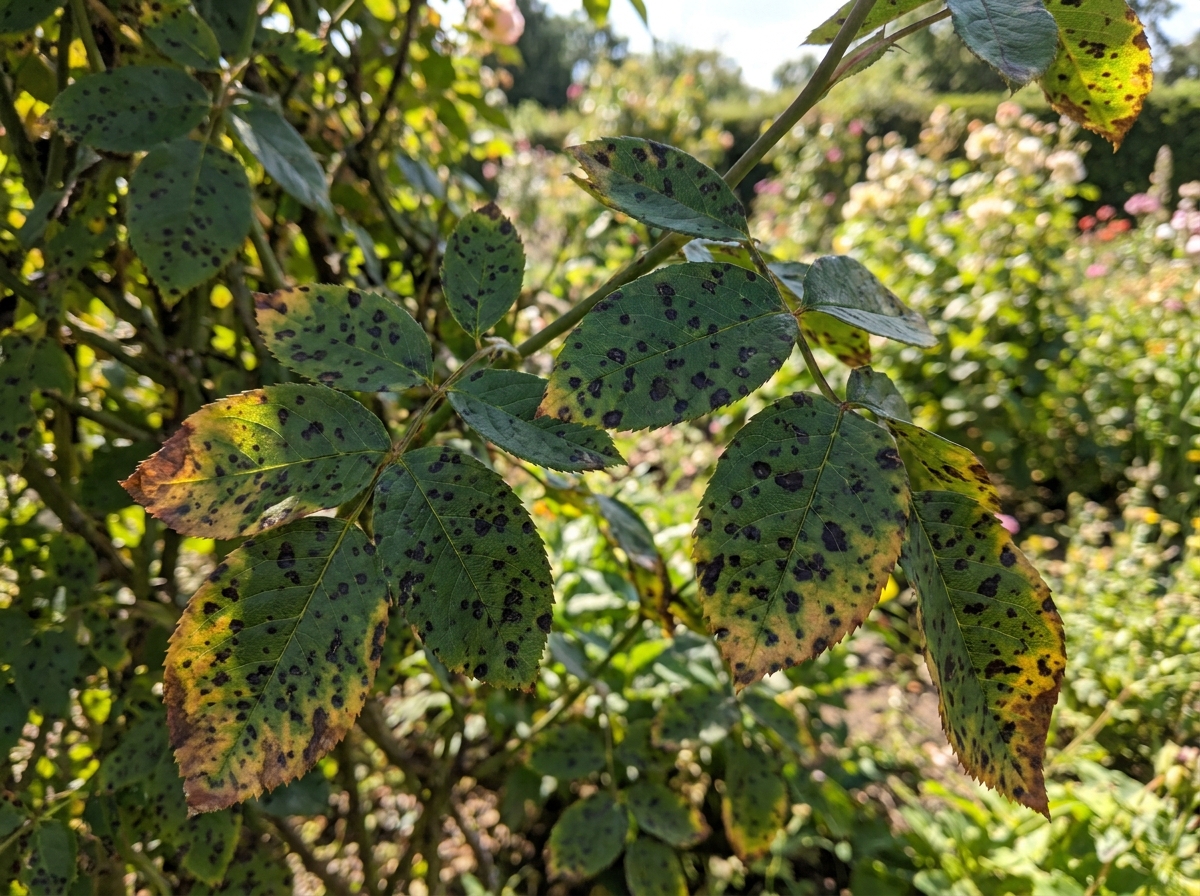
Black spot (Diplocarpon rosae) is the most common. And it’s the most damaging. It shows as circular black or dark purple blotches, usually 5–15mm across, surrounded by a yellow halo; infected leaves will drop within days. Wet foliage for as little as seven hours at 20°C is enough to trigger a proper outbreak. So, that combination of summer rain and warm nights? It’s properly dangerous.
Rose rust? It’s unmistakable up close. Flip an infected leaf. You’ll find bright orange or rust-red powdery pustules on the underside, with corresponding yellow patches on top. Not pretty.
It thrives in cooler, wetter summers. This is far more common in the UK, the Pacific Northwest, and New Zealand than in hot, dry climates.
Powdery mildew looks exactly as its name suggests: a white, floury coating across young shoots, buds, and leaves. Unlike black spot or rust, it actually favours dry conditions, but with high humidity. Which means warm days and cool nights? They’re its sweet spot. The RHS lists powdery mildew as the single most frequently reported rose issue in British gardens.
Ignore black spot? Your rose will defoliate completely. Expect this within three to four weeks. The plant isn’t dead. But it’s stripped bare, forced to push out new growth that just weakens it heading into autumn. It’s not a pretty sight.
Three or four seasons of repeated black spot infection will reduce a vigorous rose to a struggling skeleton. That’s just tragic.
Rust and powdery mildew won’t kill roses outright. Not as quickly, anyway. But they will reduce photosynthesis sharply. They weaken stems. They distort new growth, and they render the plant considerably more vulnerable to winter dieback. Dreadful.
And every infected leaf that falls to the soil becomes a reservoir of spores. That will reinfect next season. Full stop.
Doing nothing isn’t neutral. It’s a compounding issue.
Start by pulling off every visibly infected leaf. Use your hand. Drop them immediately into a sealed bin bag. Don’t use the compost heap; it simply won’t get hot enough to kill fungal spores.
Then clear all fallen leaves from around the base of the plant. This step alone does wonders for reducing the active spore load. Crucial.
So, for treatment, your three most effective options are clear:
Yes, spraying every seven days is fiddly. But it’s non-negotiable. Absolutely worth it. Water your roses at the base, never overhead. Always in the morning. Wet foliage sitting through a warm night? It’s essentially an open invitation for spores to germinate. The University of Minnesota Extension confirms that overhead irrigation is the single chief cultural mistake in rose disease management. A proper own goal, that.
Rose diseases rarely arrive alone. While you’re treating the foliage, keep an eye out. Check for these secondary issues that often appear alongside fungal outbreaks. It’s common.
If aphids are compounding the issue on your garden’s flowering shrubs, the same organic approach works across multiple plants — the organic aphid fix detailed for hibiscus applies directly to roses too.
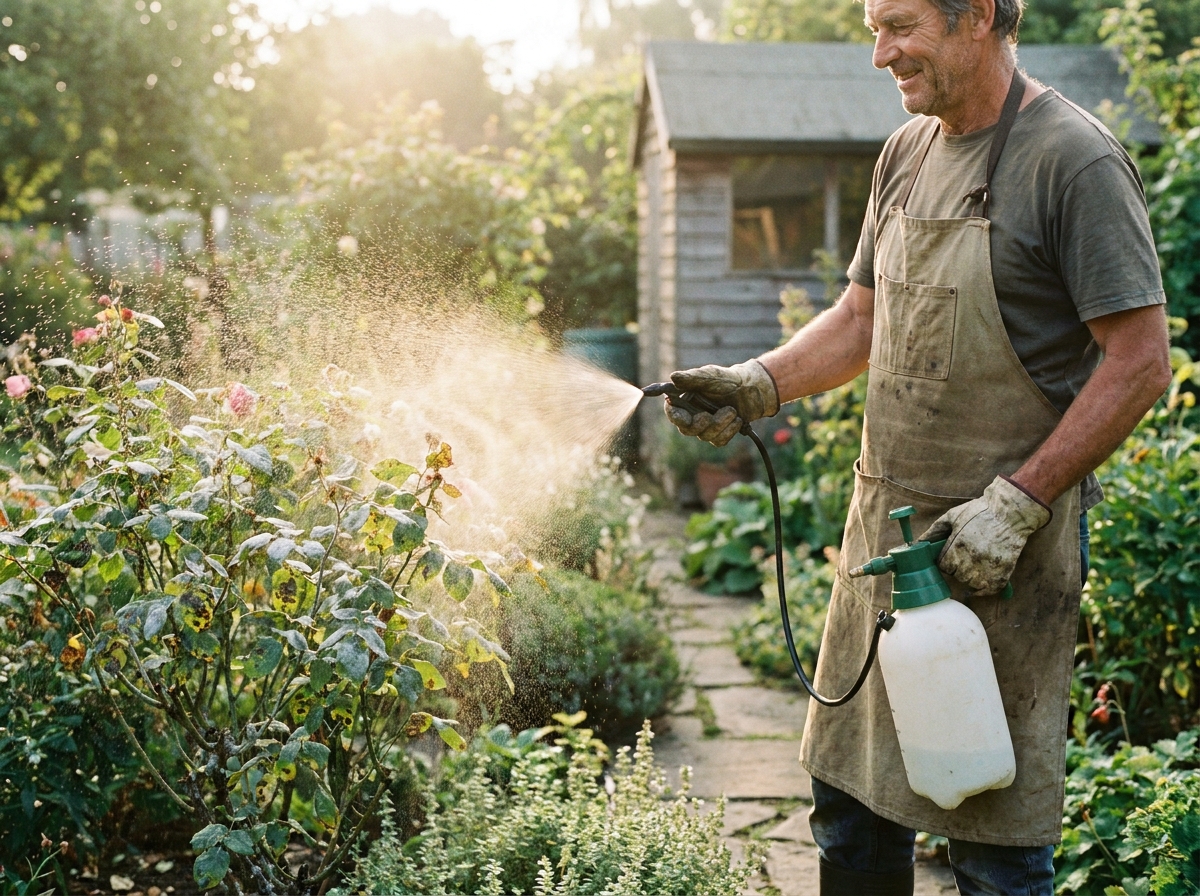
Smart tip: Strip infected leaves first, then spray — treating over diseased foliage without pulling it off first cuts your success rate in half.
Baking soda (sodium bicarbonate) has very limited effectiveness. And it can damage leaves at higher concentrations. Potassium bicarbonate is vastly more effective. And it doesn’t carry the same risks. No brainer, that.
Diplocarpon rosae is rose-specific and won’t infect other plant species. But it spreads rapidly between rose plants via water splash, wind, and handling infected leaves without washing your hands.
Only if the cane itself shows dieback or canker. Diseased leaves alone don’t require cane removal. Hard pruning in summer stresses the plant further. This can trigger excessive soft growth that’s even more vulnerable to mildew. It’s a bit much. A dodgy tactic.
In Australia, New Zealand, and South Africa, June is winter — your roses are dormant or semi-dormant. Bookmark this for your November–December growing season, when summer humidity will make these diseases relevant again.