Cushion Spurge: Expert Tips for Growing This Vibrant Perennial
0
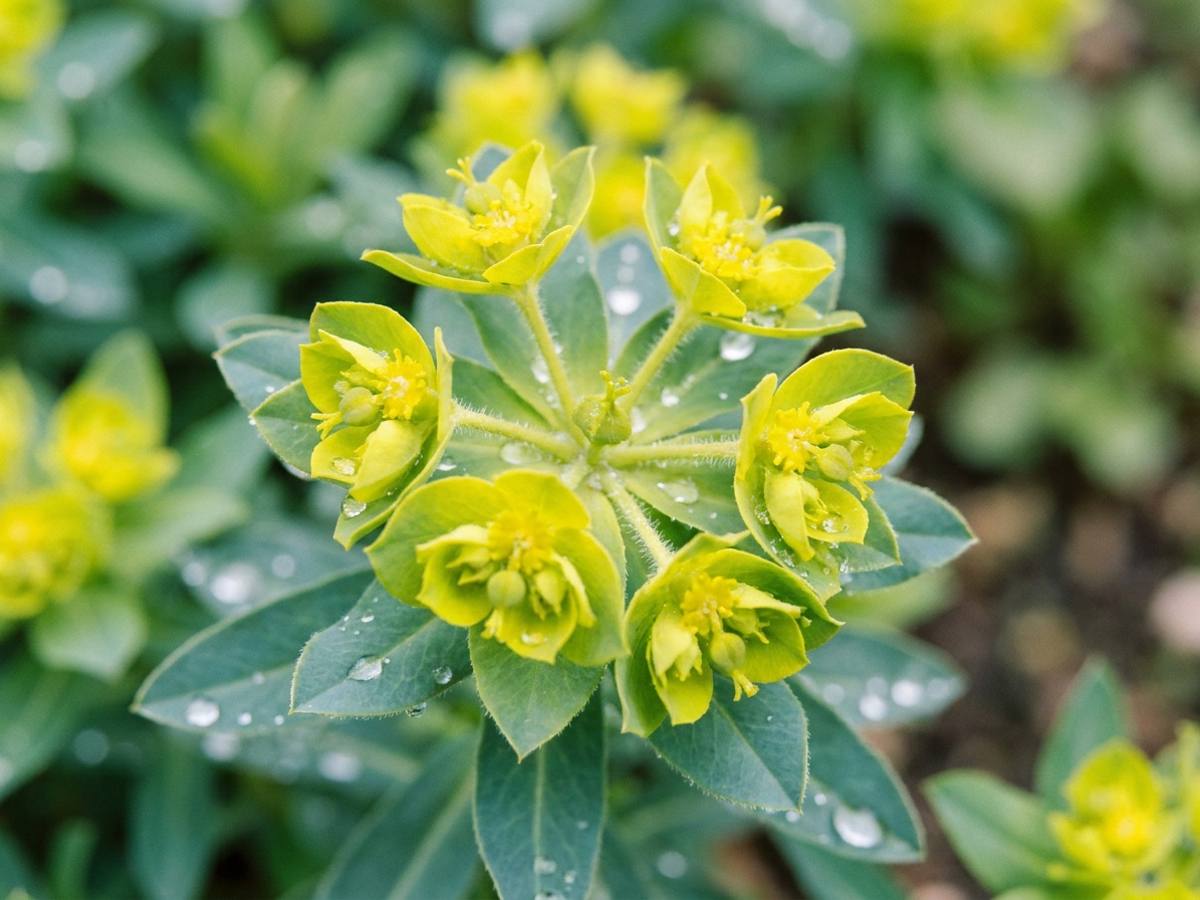
Few spring perennials shout as loudly as Euphorbia polychroma, whose neat domes erupt into a haze of acid-yellow bracts just as the tulips hit their stride. Reliably tidy, drought-tolerant and long-lived, it forms a rounded cushion roughly 40 cm high that needs almost no attention once settled. Its most distinctive trait is a second act: the foliage often flushes copper, orange or red in autumn, giving two seasons of colour from one plant.
Growing conditions
Cushion spurge is at its best in full sun, where it builds a dense, self-supporting dome and colours strongly in autumn. It will accept two or three hours of shade a day, but deeper shade causes stems to stretch, flop outwards and open up in the centre. Choose an open position with good air movement rather than a damp, enclosed corner.
Drainage matters far more than fertility. This is a plant of dry, stony grassland in central and southern Europe, so it thrives on sandy loam, chalk, gravel and even thin poor soils, whilst heavy wet clay in winter is its main enemy. A neutral to alkaline pH suits it best, though it copes with slightly acidic ground provided water drains freely.
Once established it is genuinely drought-tolerant and shrugs off cold to around −20 °C, making it dependable across most of the UK, northern Europe and North American zones 4 to 9. In high-rainfall western gardens, plant on a slight mound or raised bed to keep the crown dry.
How to plant Euphorbia
Spring, from March to May, is the ideal planting time: the soil is warming, roots establish quickly and you see the flowering display straight away. Early autumn planting also works well on light, free-draining ground.
Space plants 45–60 cm apart so each cushion can develop its natural rounded shape without competition, which also reduces mildew.
Set the crown at exactly the same level as the surrounding soil — buried crowns rot, especially over a wet winter.
Fork over the planting area and work in coarse grit on clay soils; skip rich manure, which produces soft, floppy growth.
Water in thoroughly once, then keep new plants just moist for the first six weeks only. Established clumps rarely need watering.
Propagate by careful division in early spring, or take basal cuttings in late spring, rinsing the cut ends in tepid water to stop the milky sap sealing them.
Always wear gloves when handling euphorbias. The white latex sap is a skin and eye irritant, so avoid touching your face and wash any splashes off promptly.
Euphorbia polychroma growing in a naturalistic garden border
Care through the seasons
Spring: New shoots appear early, often flushed red, and flowering begins in April. A light scattering of general-purpose fertiliser or a thin mulch of garden compost around — not over — the crown is all the feeding required. Divide congested clumps now if needed, though plants dislike disturbance and may sulk for a season.
Summer: Once the bracts fade to green in June or early July, shear the whole plant back by about a third to keep it compact and prevent self-seeding. Water only in prolonged drought; overwatering causes far more losses than dry soil. Avoid feeding, which encourages lax growth that splays open.
Autumn: Leave the foliage in place to enjoy the red, orange and bronze autumn tints, which can rival any small shrub. Cut stems down to about 5 cm once they blacken after the first frosts, and clear the debris to reduce fungal spores. Refresh gravel mulches now if you use them.
Winter: The plant dies back completely to a woody crown and needs no protection in most climates. Simply ensure winter wet cannot collect around the base — a handful of grit over the crown helps on heavy soils.
Best varieties to grow
The straight species holds an RHS Award of Garden Merit, but several selections add foliage interest.
Euphorbia polychroma — the classic AGM form, dependable acid-yellow domes with fine autumn colour.
‘Purpurea’ (also sold as ‘Candy’) — deep purple-bronze stems and leaves that contrast dramatically with the yellow bracts.
‘Bonfire’ — compact at around 40 cm, with burgundy-purple foliage turning vivid scarlet and orange in autumn.
‘First Blush’ — grey-green leaves edged in cream and flushed pink, best in a little afternoon shade to avoid scorch.
‘Major’ — a vigorous, larger-flowered form reaching 50 cm with especially generous heads of bracts.
Pests, diseases and common problems
Powdery mildew: White floury patches on leaves in dry, still summers, often after flowering. Improve air circulation by spacing plants generously, shear affected growth back hard and water the soil rather than the foliage.
Crown and root rot: Stems yellow, collapse and pull away easily, usually where drainage is poor. There is no cure — lift and discard the plant, then replant on a raised, grit-improved bed.
Aphids: Colonies cluster on soft new shoots and flower heads in spring, distorting growth. Dislodge them with a jet of water or squash by hand wearing gloves; ladybirds and hoverflies soon take over.
Floppy, open centres: Caused by too much shade, rich soil or overfeeding. Shear back after flowering, stop feeding and move the plant to a sunnier, leaner spot in spring.
🌿 Nature & Garden Newsletter
Gardening tips, recipes & seasonal advice, twice a week.