Ozothamnus rosmarinifolius: expert tips and planting advice
0
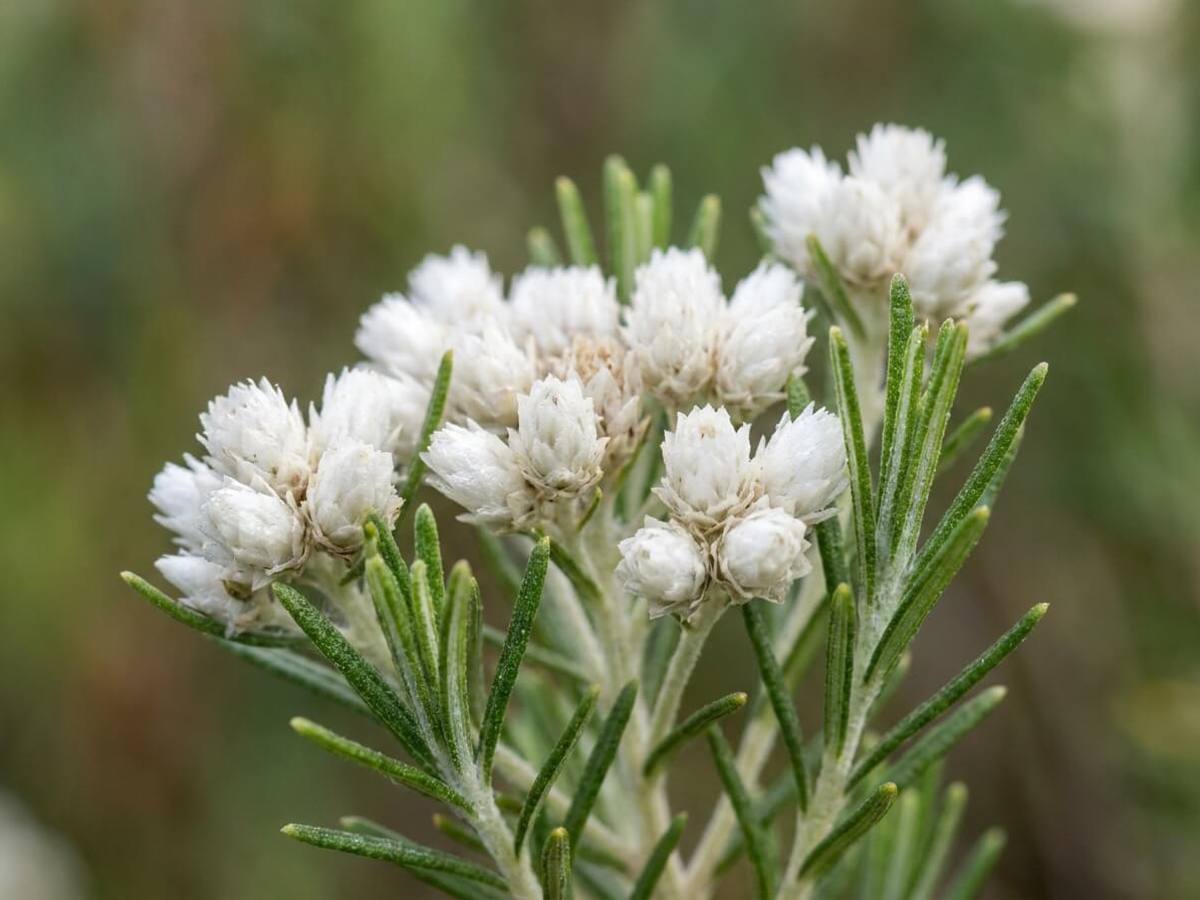
Ozothamnus rosmarinifolius is an upright evergreen shrub from south-eastern Australia, clothed in narrow, rosemary-like leaves that are dark green above and silvery-white beneath. In early summer the whole plant is smothered in dense corymbs of tiny crimson buds that open to creamy white, giving rise to its nickname “snow in summer”. Brush past it and the foliage releases a warm, resinous, faintly honeyed scent — a distinctive trait that earns it a place beside paths and seating areas.
Growing conditions
Give this shrub the sunniest, most open position you have. Full sun keeps the growth dense and upright, encourages heavy flowering and ripens the wood before winter. In shade or crowded among larger shrubs it becomes drawn, bare at the base and prone to splaying apart.
Sharp drainage matters more than fertility. A light, sandy or gravelly soil of neutral to slightly acid pH suits it best; heavy clay and shallow chalk are the two situations where it most often fails. If your soil is sticky, plant on a raised ridge or mound and work in plenty of coarse grit.
It copes well with coastal wind and salt spray, and with prolonged summer drought once established. Winter wet combined with cold is the real enemy — in milder maritime gardens it sails through, whilst in cold inland areas expect damage below about −10 °C.
How to plant Ozothamnus
Plant in mid to late spring, once the soil has warmed, so the roots can establish over a full growing season before facing winter damp. Autumn planting is only advisable in mild, free-draining gardens.
Space plants 1–1.2 m apart for a loose informal group, or 60–75 cm apart if you want an airy, silvery low hedge or windbreak.
Set the rootball so its surface sits flush with the surrounding soil, or very slightly proud on heavy ground — never in a dip that collects water.
Fork a generous bucket of horticultural grit or sharp sand into the base and backfill of the planting hole; skip rich manure, which promotes soft, floppy growth.
Water in thoroughly to settle the soil, then water weekly for the first summer only during dry spells — after that it needs very little.
Propagate from semi-ripe cuttings of 7–10 cm taken in late summer, inserted in a gritty compost with gentle bottom heat; they root readily within six to eight weeks.
Ozothamnus rosmarinifolius growing in a naturalistic garden border
Care through the seasons
Spring: Check for frost-scorched shoot tips and trim them back to healthy growth once the risk of hard frost has passed. A light scattering of general-purpose fertiliser is plenty; overfeeding produces weak stems that flop in the first gale. Top up a gravel mulch rather than a rich organic one to keep the crown dry.
Summer: Once the white flowerheads fade and turn biscuit-brown, shear the plant over by about a third, cutting into the current season’s growth only. This is the single most important task of the year: it keeps the shrub compact and prevents it from splitting open at the base. Established plants rarely need watering, though containers will need a soak every few days in hot weather.
Autumn: Do not prune now — late cuts produce soft shoots that will be burnt by frost. Clear fallen leaves from the base and from among the branches so that moisture does not sit around the stems. Container-grown specimens should be moved to a sheltered spot against a wall and raised on pot feet.
Winter: The shrub holds its silvery-green foliage all winter and simply pauses. In cold or exposed gardens, wrap young plants in horticultural fleece during prolonged spells below −8 °C, and never let the compost in pots become waterlogged.
Best varieties to grow
A handful of selections differ mainly in height and the intensity of the silver foliage.
‘Silver Jubilee’ — the most widely grown form, with markedly silvery-grey foliage and masses of white flowerheads; holder of the RHS Award of Garden Merit.
‘Kiandra’ — a neater, denser selection reaching around 1–1.2 m, ideal for smaller gardens and large containers.
‘Sussex Silver’ — vigorous and strongly upright with bright silver-white new growth, excellent as a cutting plant for floristry.
Ozothamnus rosmarinifolius (the straight species) — greener-leaved and taller at up to 2.5 m, with the deepest red flower buds before they open.
Pests, diseases and common problems
Root rot and dieback: Whole branches yellow and crisp, often after a wet winter, caused by Phytophthora in airless soil. There is no cure once advanced — prevention lies in raised planting, grit and avoiding irrigation near the stem base.
Splaying and bare bases: Unpruned plants open out from the centre after heavy rain or snow, exposing bare woody stems. Shear lightly every year after flowering; the shrub will not reshoot reliably from old leafless wood, so hard renovation pruning usually kills it.
Aphids: Clusters on soft spring shoots cause distorted tips and sooty mould. Dislodge them with a jet of water or an organic soft-soap spray, and encourage ladybirds and hoverflies by leaving nearby flowering herbs uncut.
🌿 Nature & Garden Newsletter
Gardening tips, recipes & seasonal advice, twice a week.