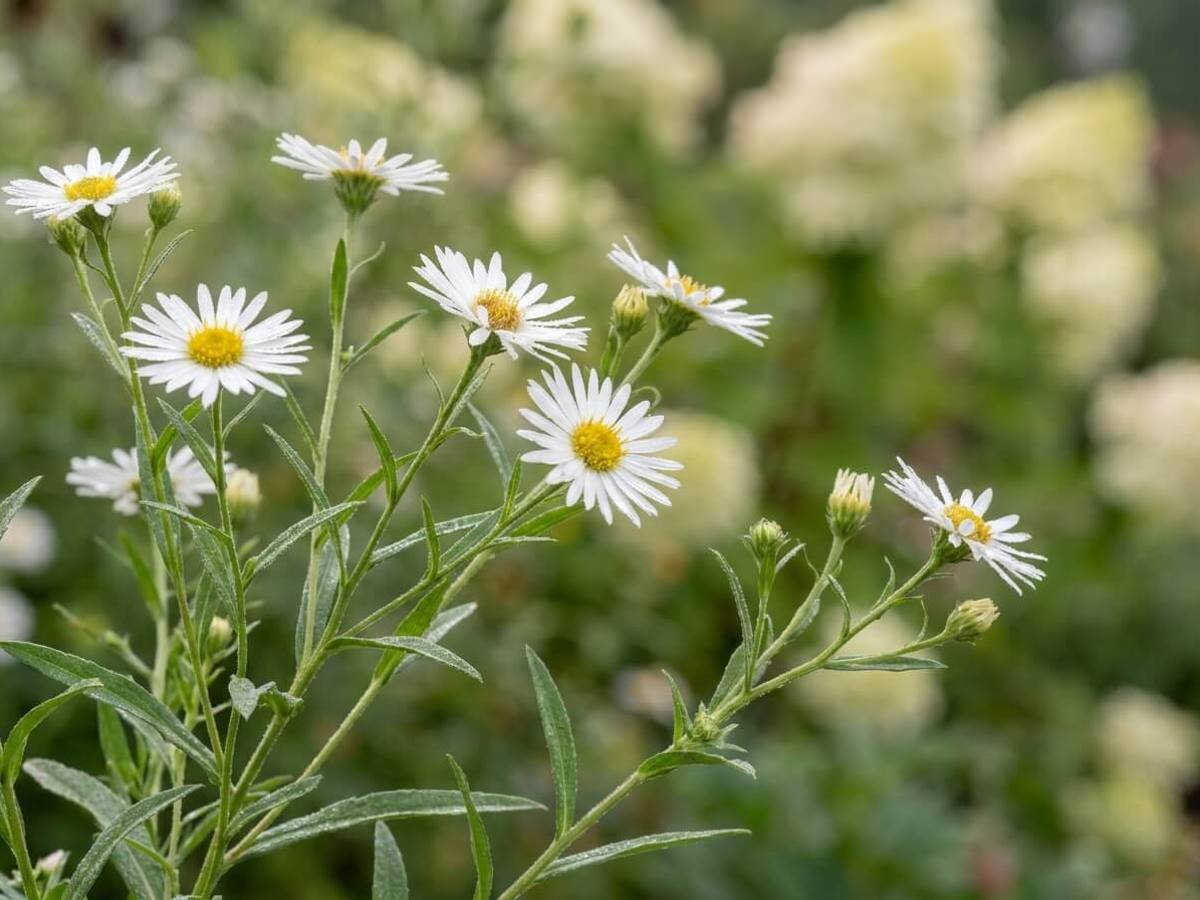
Boltonia asteroides is a towering North American prairie perennial that erupts into a haze of tiny daisy flowers just as the rest of the border begins to fade. Each plant can carry several thousand blooms above narrow, blue-grey foliage, giving it the affectionate name of thousand-flowered aster. It offers all the late-season charm of a Michaelmas daisy but with better mildew resistance and a far airier, more naturalistic presence.
Give Boltonia the sunniest position you can find — a minimum of six hours of direct light produces the sturdiest stems and the densest flowering. In partial shade the plant survives but stretches, leans and flowers more thinly. Avoid sites overhung by trees or crowded by evergreens.
It is refreshingly unfussy about soil, thriving on heavy clay, loam and even the damp margins of a pond, provided water does not stand around the crown all winter. A neutral to slightly acidic pH suits it best, though mildly alkaline ground causes no trouble. Very rich, freshly manured soil encourages soft, floppy growth, so resist over-feeding.
This is one of the hardiest border perennials available, unfazed by winter lows well below −20 °C and equally tolerant of humid summers. In hot, dry regions, choose a spot where the roots stay reliably moist; in cool maritime climates it needs the open, airy position that keeps the foliage dry.
Plant in spring, from March to May, so the roots establish through a full growing season before facing winter wet. Autumn planting is possible on free-draining soils, but spring is safer on clay.
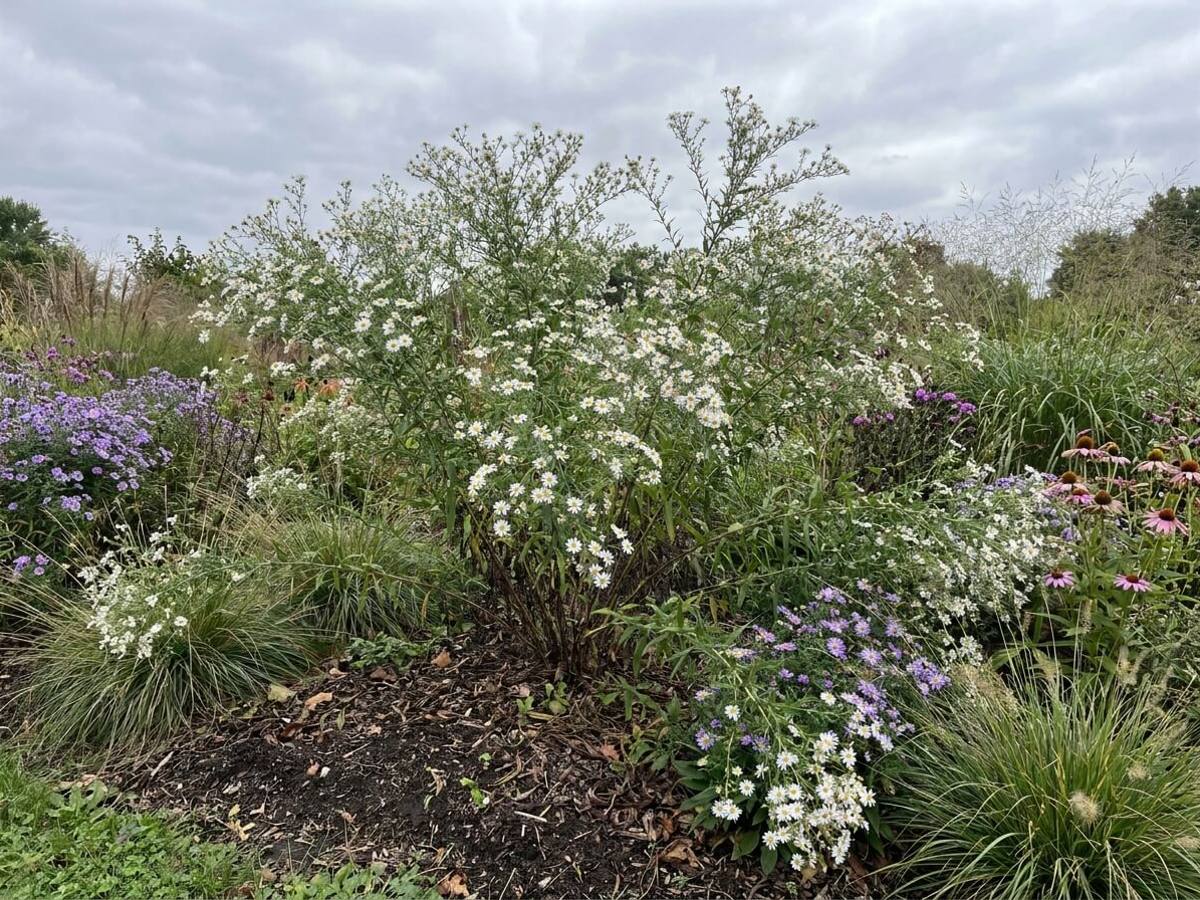
The named selections differ mainly in height, flower colour and how well they hold themselves up. Use the table to match a cultivar to the depth of your border and to how much staking you are willing to do.
| Variety | Height | Flower colour | Habit and support |
|---|---|---|---|
| ‘Snowbank’ | About 1.2 m | White | Unusually rigid stems, rarely needs staking |
| ‘Pink Beauty’ | To 1.5 m | Soft lilac-pink | Laxer stems; good woven through grasses |
| var. latisquama ‘Nana’ | 60–90 cm | Lavender-pink | Compact; suits small borders and windy sites |
| ‘Jim Crockett’ | Around 75 cm | Mauve-pink | Dwarf, neat mounded growth |
Whichever you choose, a named selection gives better proportions and stronger stems than the wild species.
The named selections differ mainly in height, flower colour and how well they hold themselves up. Use the table to match a cultivar to the depth of your border and to how much staking you are willing to do.
Whichever you choose, a named selection gives better proportions and stronger stems than the wild species.
The named selections differ mainly in height, flower colour and how well they hold themselves up. Use the table to match a cultivar to the depth of your border and to how much staking you are willing to do.
Whichever you choose, a named selection gives better proportions and stronger stems than the wild species.
Spring: Growth appears from late March as a dense rosette of blue-green shoots. Apply a light mulch of compost around — not over — the crown, and skip nitrogen-rich feeds that soften the stems. Pinch out or cut back the shoots by a third in late May or early June to produce shorter, self-supporting, bushier plants.
Summer: Water deeply during prolonged dry spells, especially in July and August as flower buds form, since drought stress causes lower leaves to yellow and drop. Insert supports or link stakes by mid-June if you have not pinched the plants back, because tall stems can splay after heavy rain. Remove any weak or crowded stems from the centre of the clump to improve airflow.
Autumn: Let the flowers run their course into October — they are a valuable late nectar source for bees and hoverflies. Cut stems back to about 10 cm after the first hard frosts, or leave the seed heads standing for winter structure and goldfinches. Autumn is a reasonable time to divide on light soils, though spring division is more reliable elsewhere.
Winter: The plant dies back completely and needs no protection, even in exposed gardens. Simply ensure the crown is not sitting in a puddle; a thin gravel collar helps on very heavy ground.
Named selections offer better proportions and stronger stems than the wild species.