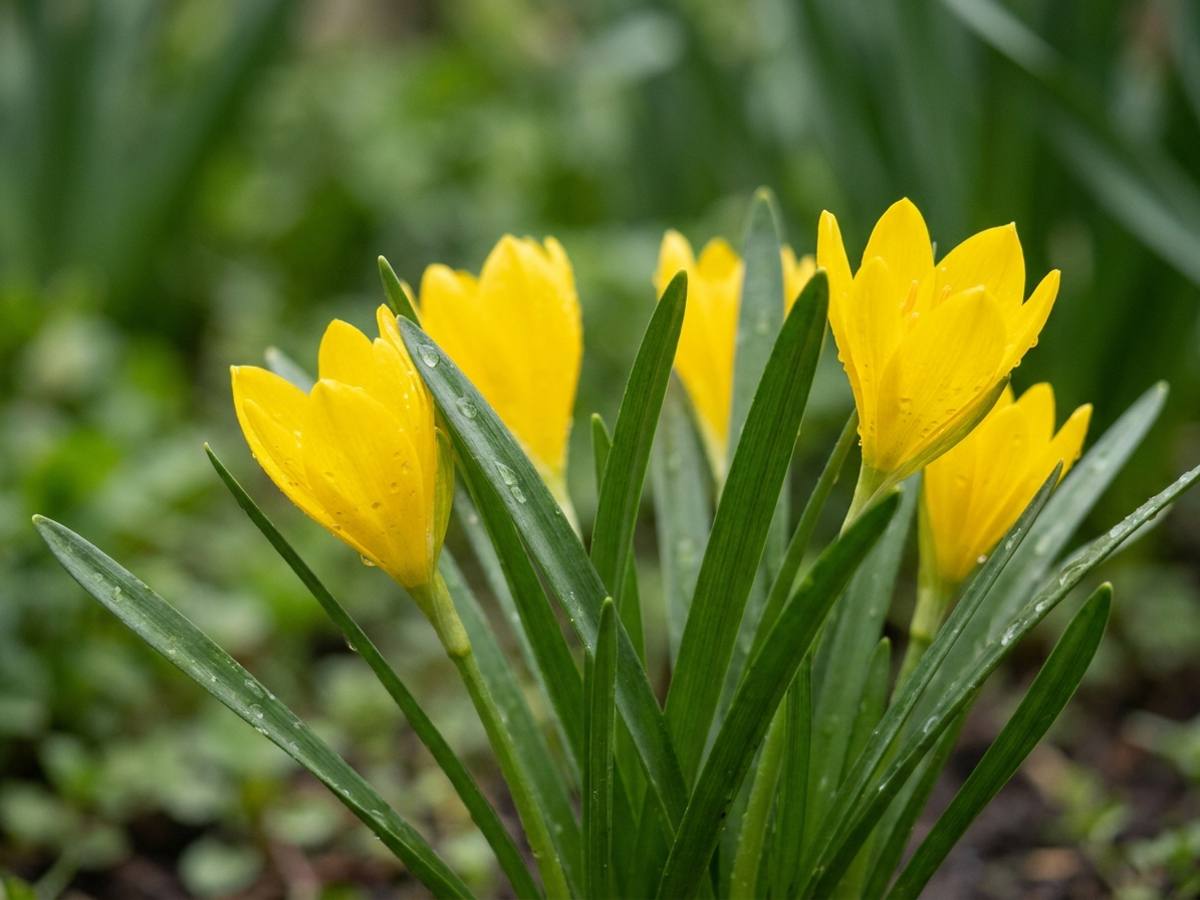
Few bulbs deliver such a jolt of pure gold at the fag end of the growing year as Sternbergia lutea. Its goblet-shaped, crocus-like flowers push up through bare soil in September and October, held on short stems above strappy dark green leaves, lighting up gravel gardens, rockeries and the base of sunny walls. Despite the common name “autumn daffodil”, it is not a daffodil at all — though it shares the same family — and once settled in a hot, sharply drained spot it will quietly increase for decades.
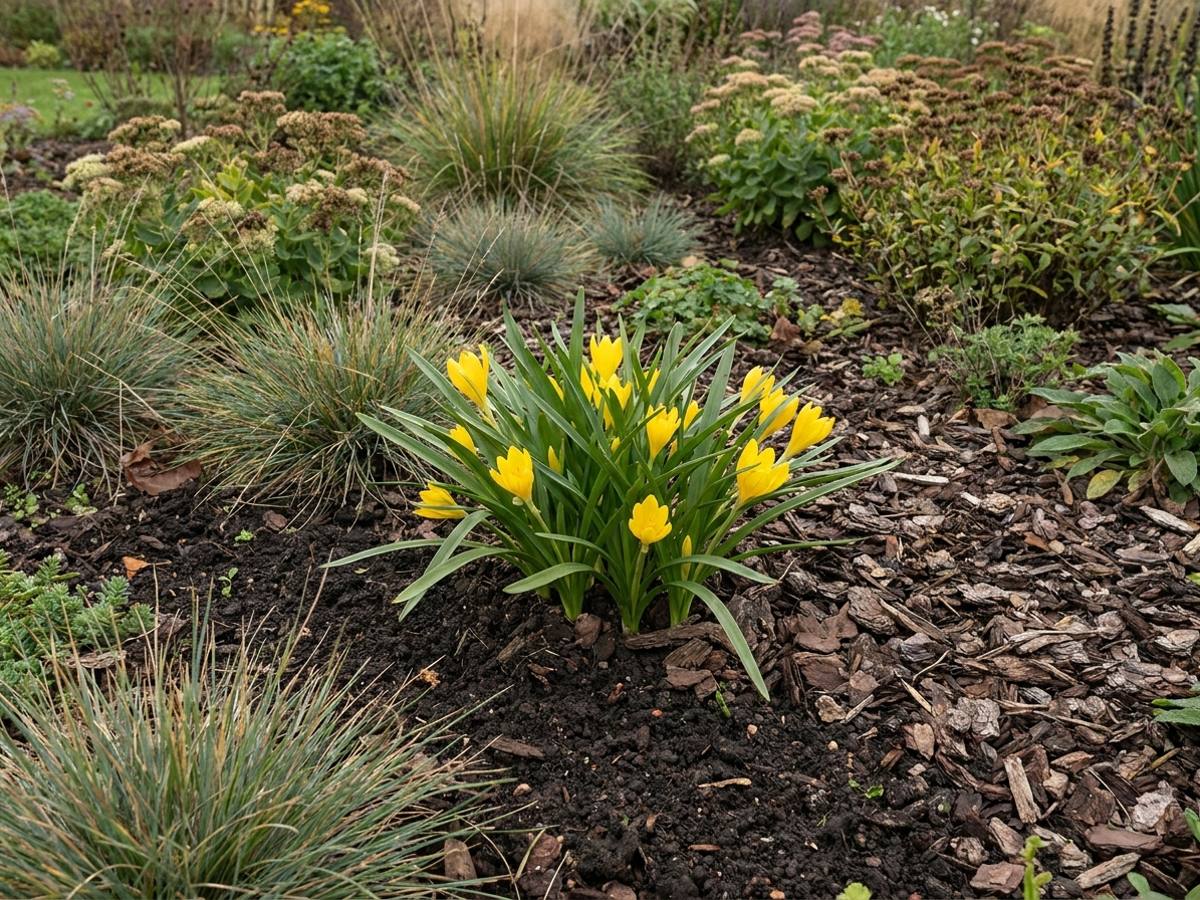
Sternbergia is a creature of Mediterranean hillsides and demands the sunniest, hottest position you can offer. Give it at least six hours of direct sun a day, ideally against a south- or west-facing wall where the bulbs bake in summer. In shade it produces plenty of leaf and few, if any, flowers.
Drainage is the single most important factor. The bulbs rot readily in cold, wet winter soil, so work in generous quantities of horticultural grit, sharp sand or fine gravel before planting. A neutral to alkaline pH is ideal — this is one of the best bulbs for thin chalky soils — though it will cope with neutral ground provided water never sits around the bulbs.
It is reliably hardy across most of Britain, Ireland and much of northern Europe, but performs best in drier eastern and southern regions. In wet western gardens, grow it in raised beds, gravel gardens or deep pots plunged in a sheltered spot.
Plant dry bulbs in late summer, ideally between late July and early September, so they establish roots before flowering. Pot-grown or “in the green” bulbs can be planted in early autumn while still in leaf.
Named cultivars are genuinely scarce, so the choice is really between the straight species and a few closely related forms. The table below sets out what separates them before you order bulbs.
| Plant | Flowers | Leaves | Where it works best |
|---|---|---|---|
| Sternbergia lutea (species) | Large golden goblets, early to mid-autumn | Broad and glossy | The workhorse for borders and gravel; holds an RHS Award of Garden Merit |
| S. lutea var. angustifolia | Slightly later, often more free-flowering | Narrower, silvery-channelled | Cooler gardens |
| Sternbergia sicula | Slimmer petals | Darker green leaf stripe | Troughs; a smaller, neater relative from Sicily and Greece |
| Sternbergia greuteriana | Small-flowered and refined | Fine, in scale with the flowers | Alpine house or a very sharply drained raised bed |
For most gardens the straight species remains the safest and most generous buy.
Named cultivars are genuinely scarce, so the choice is really between the straight species and a few closely related forms. The table below sets out what separates them before you order bulbs.
For most gardens the straight species remains the safest and most generous buy.
Spring: The strap-shaped leaves, which appeared with or just after the flowers, do their main work now. Never cut, knot or mow them — they are recharging the bulb for next autumn’s display. A light scattering of sulphate of potash or a low-nitrogen bulb feed in early spring pays dividends.
Summer: Leaves yellow and die back in late May or June, after which the bulbs need a thorough summer baking. Withhold all water and avoid planting thirsty annuals or heavy mulches over the top. This dry dormant rest is what triggers reliable flowering, so resist the urge to irrigate.
Autumn: Flower buds emerge from bare soil in September, often triggered by the first good rainfall. Deadhead spent blooms to keep clumps tidy, and top-dress with a thin layer of grit rather than rich organic mulch. This is also the moment to note where clumps have thinned, ready for lifting the following summer.
Winter: The evergreen foliage persists through winter and tolerates frost well, though it may flop temporarily in severe cold. In gardens colder than −15 °C, cover the area with a dry mulch of bracken or straw, removing it in early spring.
Named cultivars are genuinely scarce, so most gardeners choose between the straight species and closely related forms.