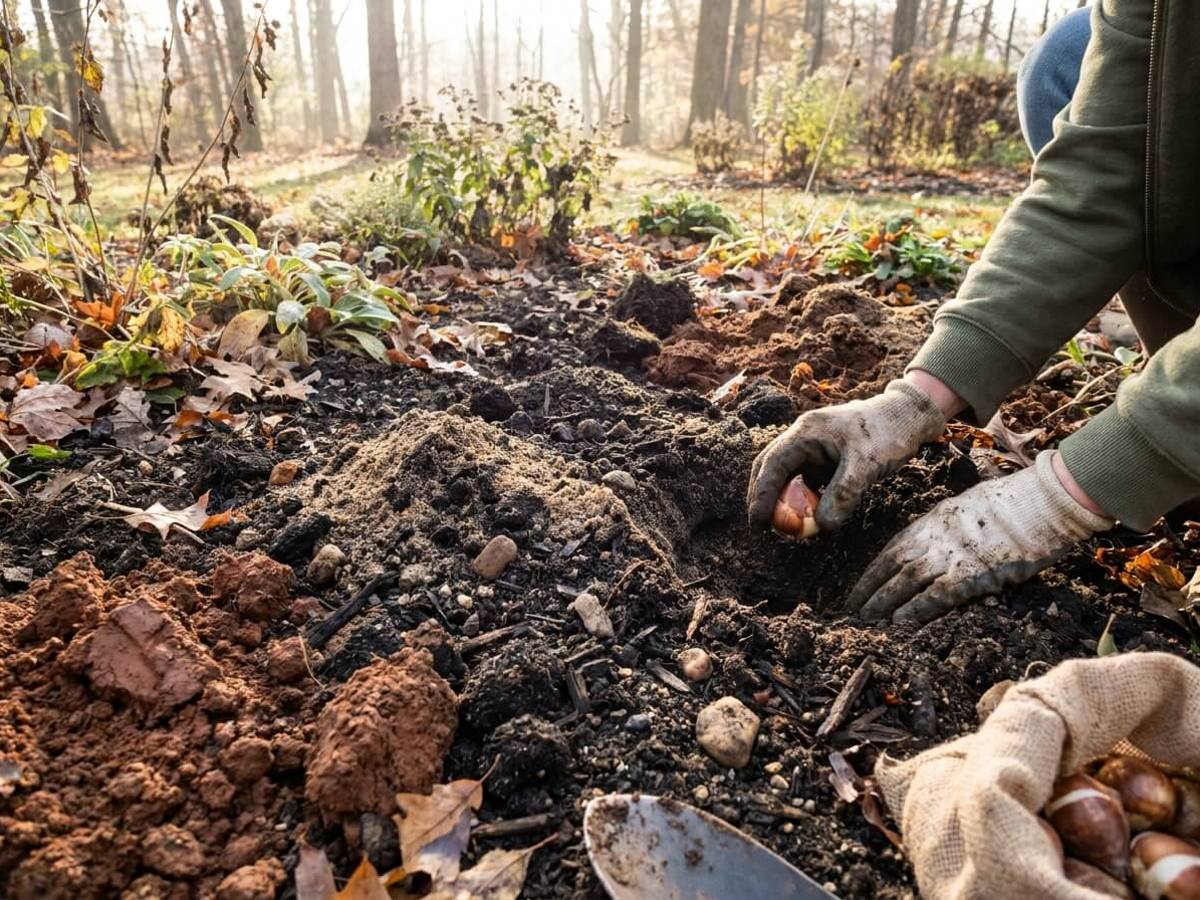
For years, I watched my tulips and daffodils rot in waterlogged clay before they even flowered. Heavy soil has always been the bulb gardener’s curse, but this autumn I decided to test whether modern amendments and planting techniques finally crack the code. The results surprised me, and they might just rescue your spring display too.
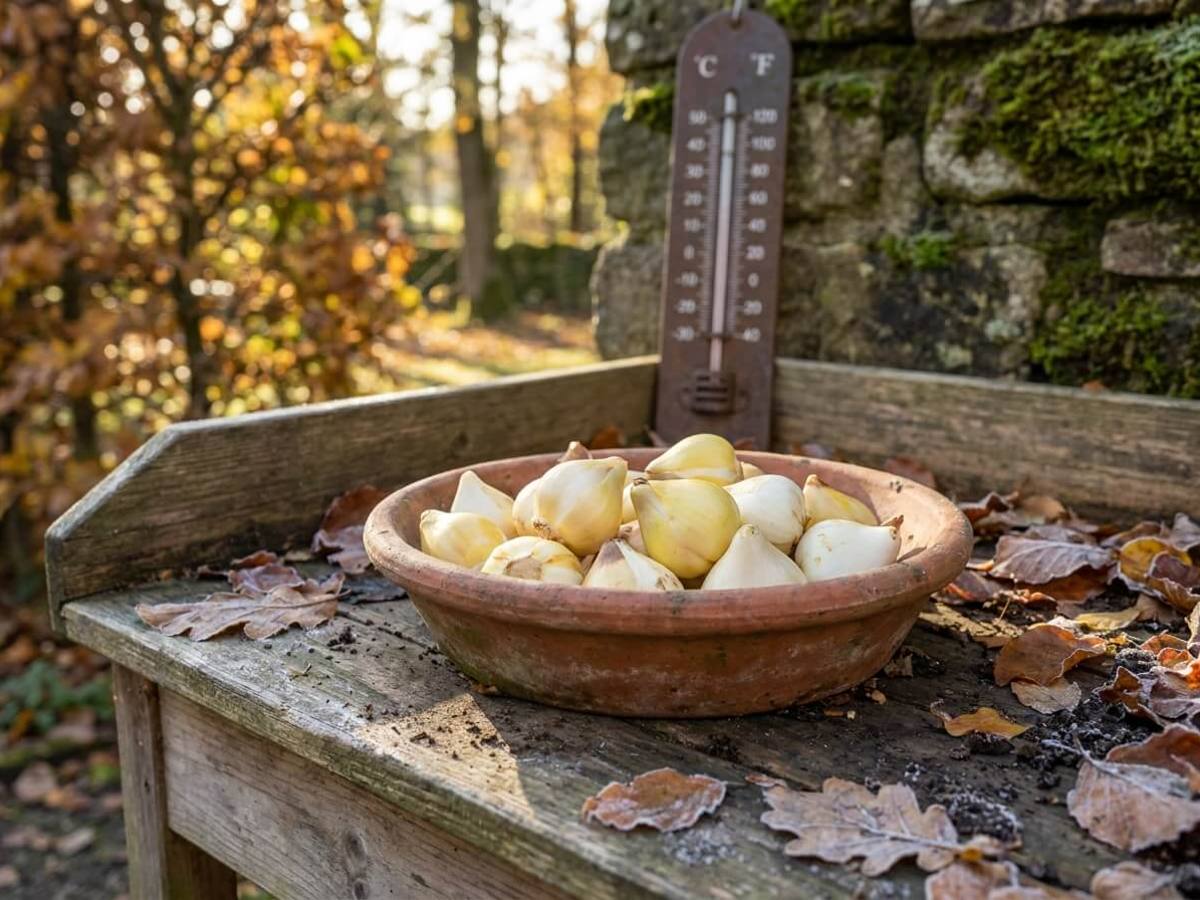
September is when bulb planting season begins across the UK and US, and it’s the perfect moment to tackle the drainage question head-on. As soil temperatures drop below 15°C, conditions become ideal for root development. But for those gardening in clay, this urgency arrives with a familiar anxiety: will the autumn rains turn the planting hole into a bog?
Clay soil drains so slowly that bulbs planted in it often sit in water for weeks. This isn’t just inconvenient; it causes basal rot, a fungal infection that destroys the bulb’s base plate and spreads upward. Traditional advice suggested abandoning bulbs altogether or creating raised beds, but neither option is practical for every garden. The question isn’t whether clay gardeners should plant bulbs, it’s how to plant them safely in the soil they’ve got.
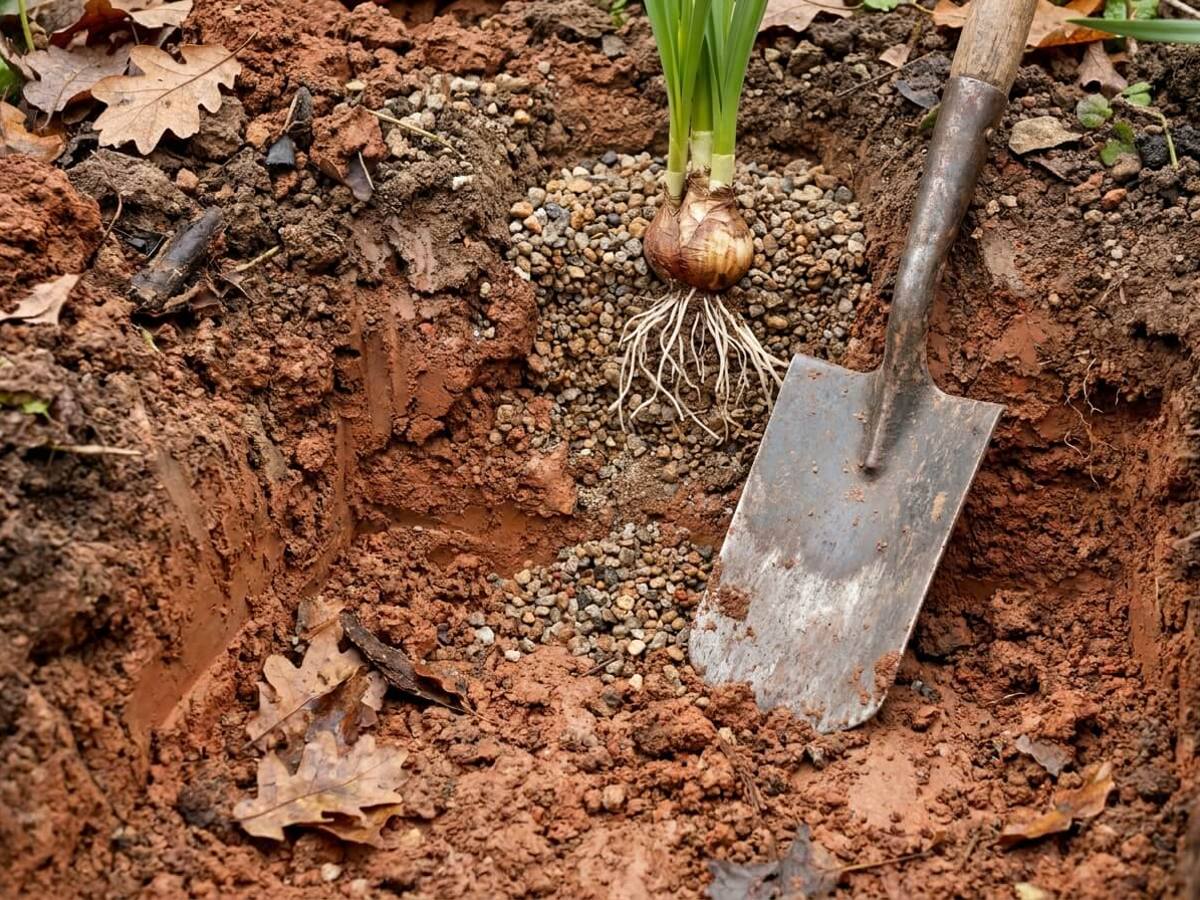
Most gardeners add compost or grit to their planting holes and hope for the best. What I discovered is that half-measures fail. The real solution requires a layered approach: amendments both in the hole and around the bulb itself, combined with strategic variety selection.
Half-measures fail in heavy ground, so the four steps below work as a set: one deals with the water below the bulb, one with the soil around it, one with the bulb itself, and one with what you choose to plant.
| Technique | Material | Where it goes | What it prevents |
|---|---|---|---|
| Drainage layer | Coarse grit or horticultural sand | Base of a hole dug 4 inches deeper than needed | Water lingering at the bulb’s base |
| Amended backfill | Excavated clay with equal parts compost and grit | All around the bulb | Waterlogging, while still holding moisture |
| Sand mound | Sharp sand | Directly beneath each bulb | The bulb settling into standing water |
| Resilient species | Crocus tommasinianus, Muscari, Scilla | Chosen instead of premium hybrids | Losses among large tulip and daffodil cultivars |
Used together, these four measures turned a notoriously waterlogged patch into ground that bulbs came through.
Here’s what actually worked in my notoriously heavy, waterlogged patch:
The real test comes in late winter and early spring when the bulbs begin their emergence. Monitor your beds for signs of waterlogging, particularly after heavy rain or snowmelt. If puddles form above the planting zone, you’ll know the amendment ratio needs adjusting next season. Most gardeners find success improves markedly in year two, once the amended soil has settled and the bulbs establish deeper roots.