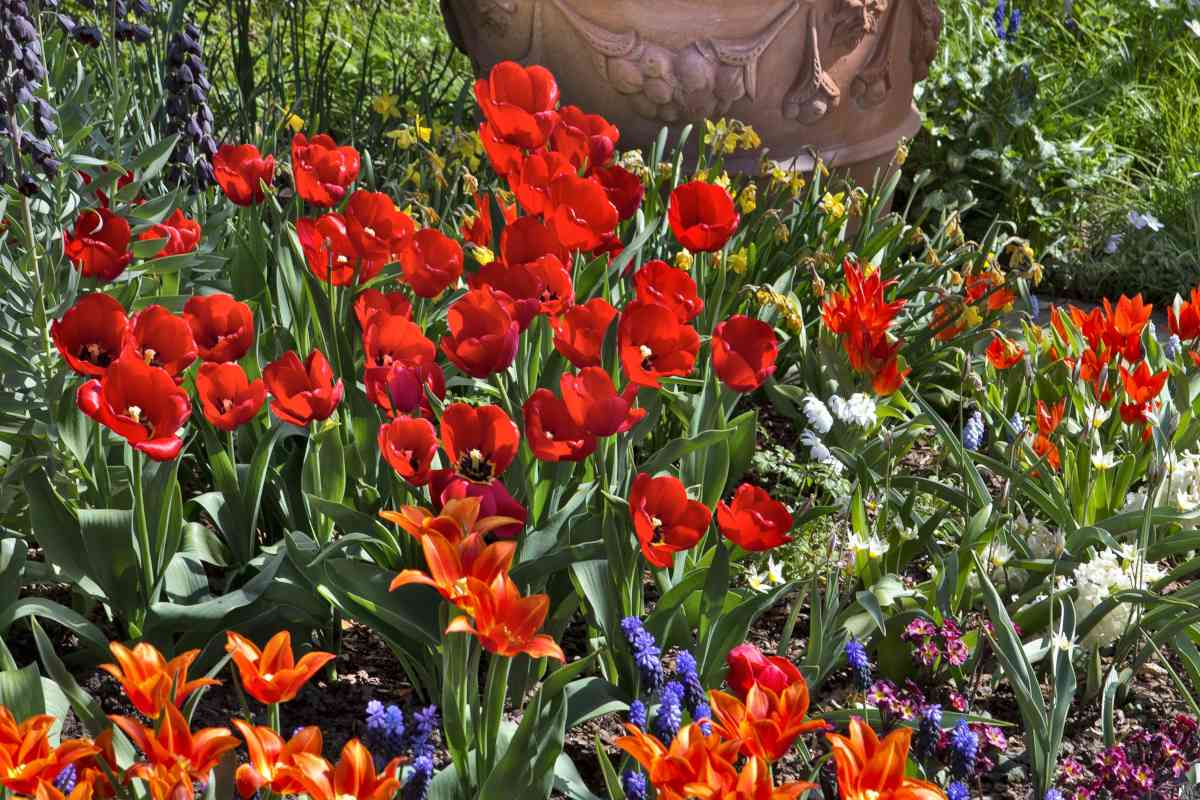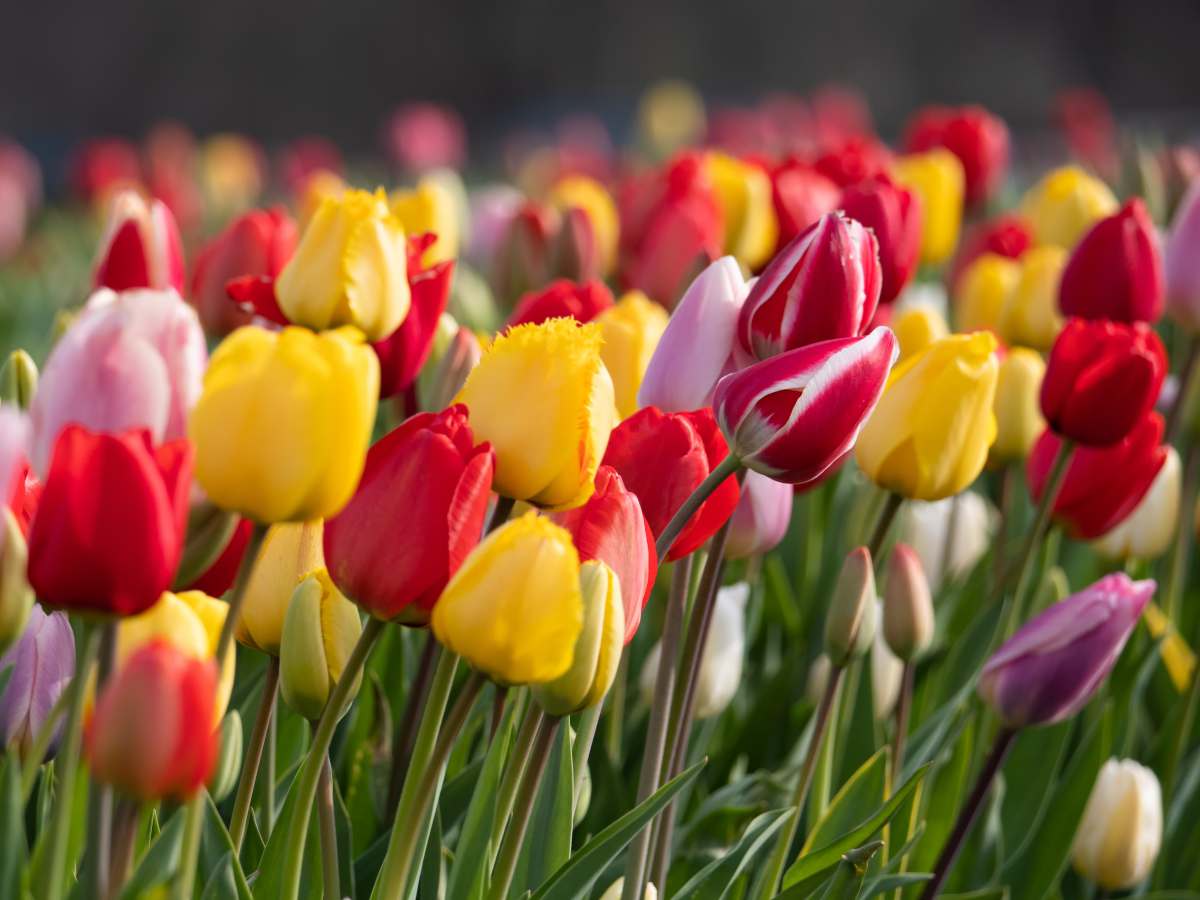
One straight stem, 8 to 30 inches tall, carrying a single flower that can be as full as a peony or as ragged as a parrot’s plume: the tulip (Tulipa) is the queen of the bulb flowers, and it suits beds, terraces and balcony pots alike. Give it full sun and well-drained soil, and each bulb quietly multiplies year after year.
| Name | Tulipa |
|---|---|
| Family | Liliaceae (lily family) |
| Type | spring bulb |
| Height | 8 to 30 inches (20 to 75 cm) |
| Soil | well-drained |
| Exposure | full sun |
| Flowering | spring |
Planting tulips well and caring for them will enhance blooming and let them grow more numerous year after year.
To have beautiful tulips in spring, bulb planting should start early fall to early winter at the latest. This lets them spread roots over the winter and spring flowers will be larger and more vigorous.
Dig a hole 2 or 3 times as deep as the tulip bulb is high, to protect it from freezing. Space your carefully chosen tulip bulbs at least 4 inches (10 cm) apart, but don’t spread them too much, either.
The pointy tip of the bulb should face upwards, towards the sky.
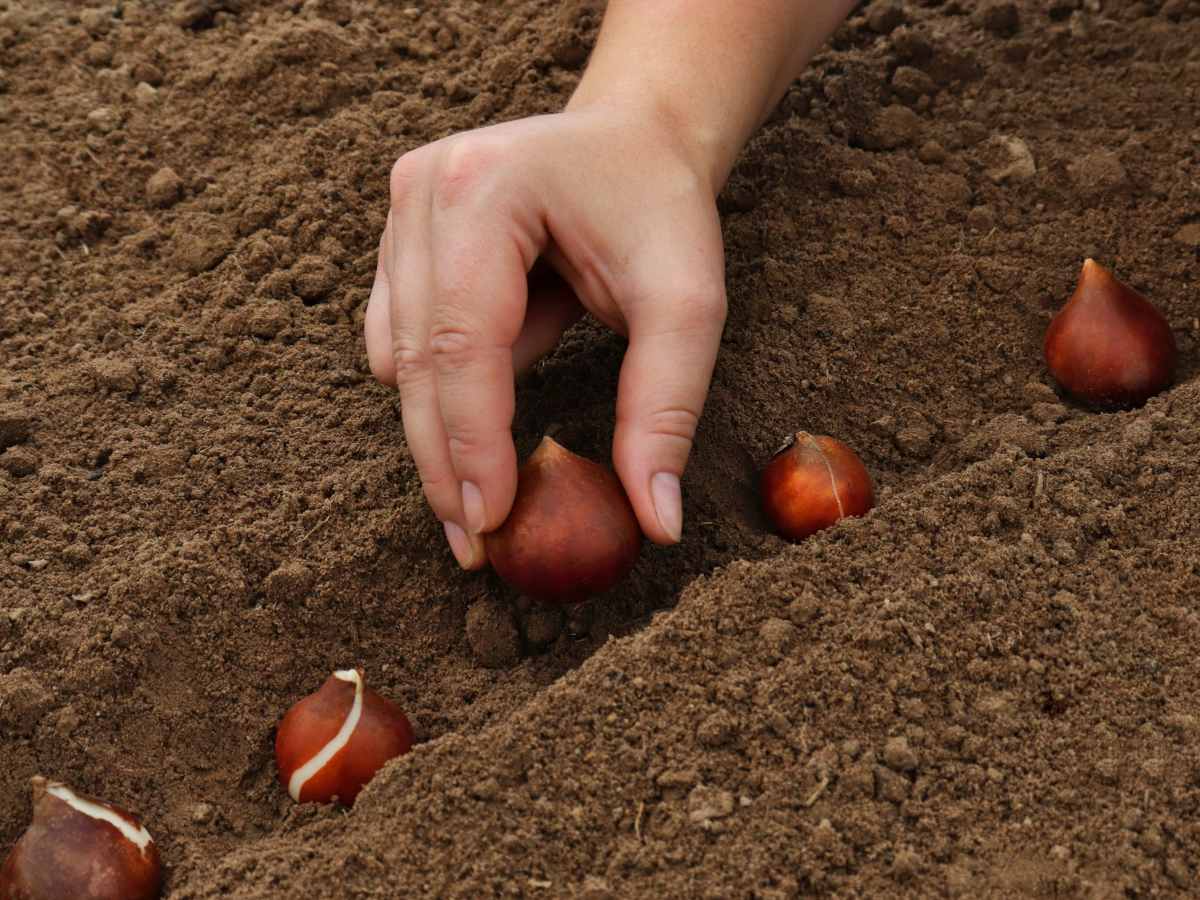
Grouping tulips together in small bunches of 10 to 50 bulbs produces a much nicer effect than simply spreading them by twos or threes across the garden.
Tulips are particularly well suited to being planted in pots.

More on the best tulips for growing in pots (and tips to do it right)
Tulips take to open beds, shadier corners and pots alike, but the planting depth, spacing and watering change with each. Use the table to match your situation before you dig.
| Situation | Depth and spacing |
|---|---|
| Open bed, full sun | Hole 2 to 3 times the height of the bulb |
| Bed in part shade | As in full sun, but blooms come 2-3 weeks later |
| Bunches of 10 to 50 bulbs | At least 4 inches (10 cm) apart, not spread too far |
| Pots and containers | Covered with around 4 inches (10 cm) soil mix |
Whatever the situation, a handful of soil mix dropped in the bottom of the hole pays off in growth and blooming.
Tulip needs virtually no care at all because, once planted, it should bloom again come the following spring without any intervention.
Each tulip will actually multiply and you’ll have two, three or four new bulbs where you previously only had one! This is how wild tulip used to spread, and cultivated tulips do the same, too!
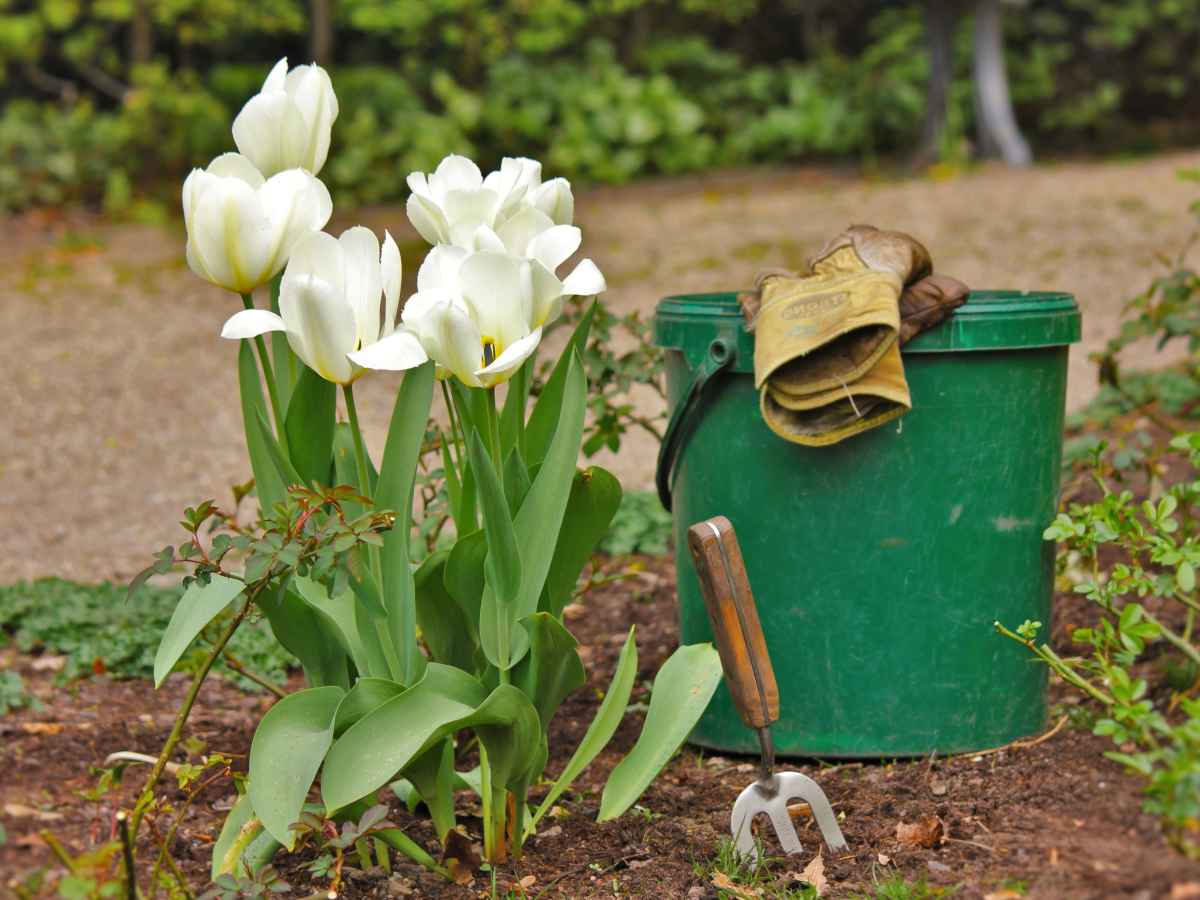
It is possible to enhance and stimulate blooming further if you apply bulb flower fertilizer when the first tulip leaves sprout.
Normally, when tulips sprout in spring, rainfall covers water needs and extra watering isn’t needed.
However, in containers and pots, you’ll have to water as soon as the surface of the soil feels dry to the touch.
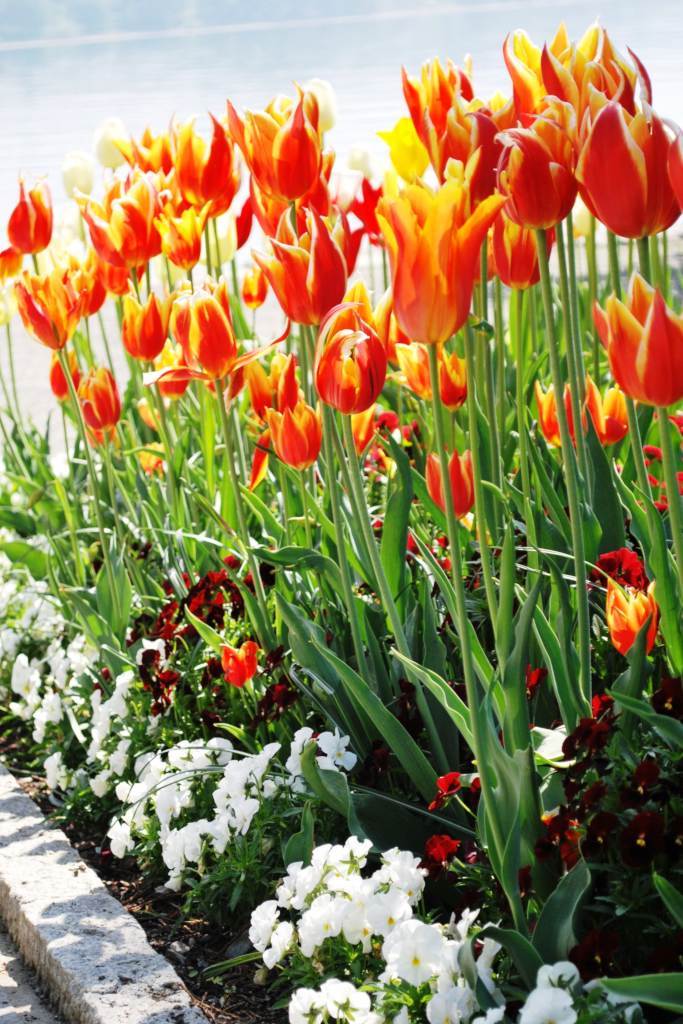
This period of time is often underestimated for tulips, because it is actually during the wilting of leaves that tulips stock up on reserves for the next season’s blooming.
Indeed, it is important to wait until they are completely wilted because that phase is when tulips gather nutrients for the following year.
Tulips are sorted into groups, and the group tells you far more than the colour does: it settles when the flower opens and, above all, whether the bulb will flower again next spring or fade after a season. The short ones bred from wild species are the ones that stay; the showiest doubles and parrots rarely do.
| Group | Look for | Flowering | Comes back? |
|---|---|---|---|
| Kaufmanniana | ‘Ancilla’, ‘Showwinner’ | Very early, early spring | Reliably |
| Fosteriana (Emperor) | ‘Purissima’, ‘Orange Emperor’ | Early, early spring | Reliably |
| Single Early | ‘Apricot Beauty’ | Early, mid-spring | Two or three years |
| Double Early | ‘Monte Carlo’ | Early, mid-spring | Two or three years |
| Greigii | ‘Red Riding Hood’ | Early, mid-spring | Reliably |
| Darwin Hybrid | ‘Apeldoorn’, ‘Pink Impression’ | Mid-season, mid-spring | Reliably, the best of the tall ones |
| Triumph | ‘Negrita’, ‘Prinses Irene’ | Mid-season, mid-spring | Two or three years |
| Fringed | ‘Curly Sue’ | Late, May | Two or three years |
| Lily-flowered | ‘Ballerina’, ‘White Triumphator’ | Late, May | Often |
| Viridiflora | ‘Spring Green’ | Late, May | Often |
| Single Late | ‘Queen of Night’ | Late, May | Two or three years |
| Parrot | ‘Rococo’, ‘Black Parrot’ | Late, May | Rarely, treat as annual |
| Double Late (peony) | ‘Angelique’ | Late, May | Rarely, treat as annual |
| Species (botanical) | Tulipa tarda, T. clusiana, T. sylvestris | Early, early spring | Reliably, and spreads on its own |
Whatever the group, the bulb rebuilds its reserves from the leaves after flowering: cut the faded flower off, and leave the foliage alone until it yellows.
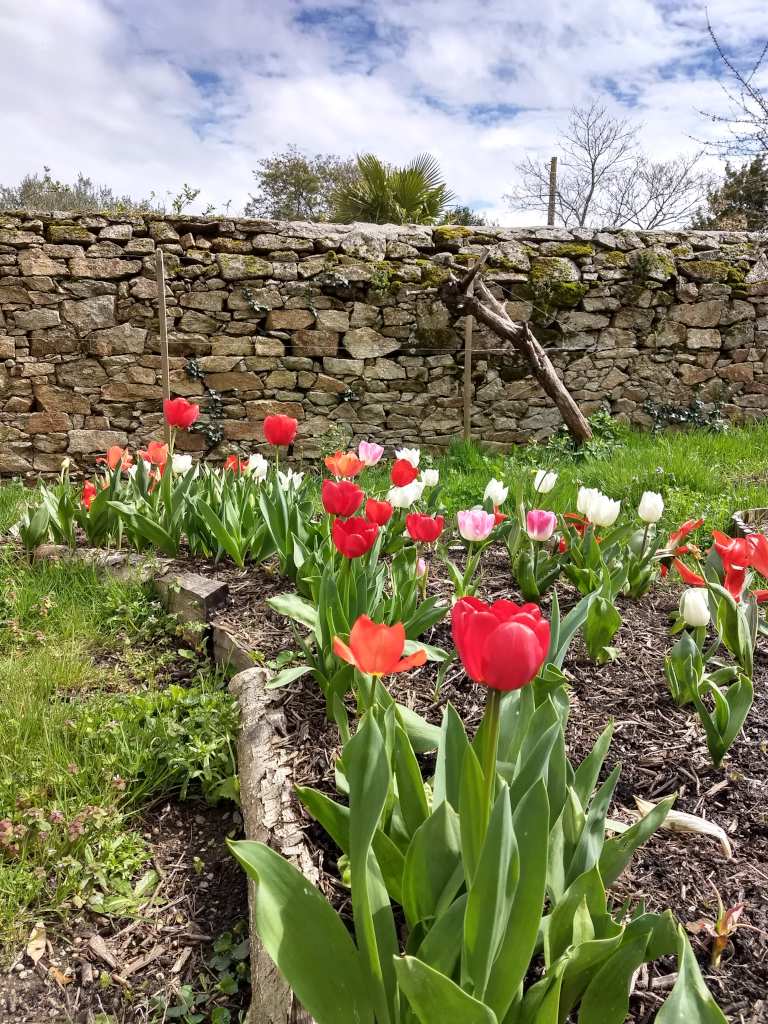
Tulips are single-stemmed bulbous plants that are very much appreciated to garnish any type of garden at the end of winter and beginning of spring.
There are over 125 different species, and thousands of varieties to make for many combinations of color and shape. From stupendous peony or parrot tulips to natural botanical tulips, there’s definitely one to share vibes with for you!
You can imagine how many different garden compositions are possible!
Tulips are referred to as the queen of the bulb flowers and equally suit gardens, terraces and balconies.
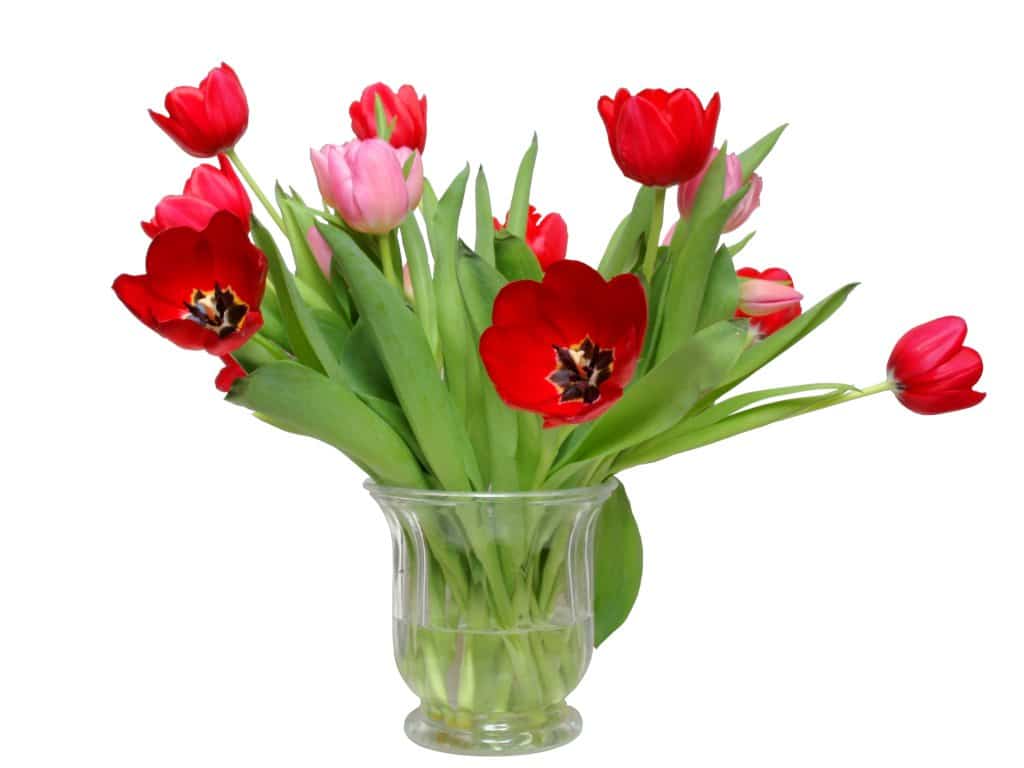
You may cut the flowers to easily prepare magnificent brightly-colored flower bouquets!