Growing Triteleia laxa: care tips and planting advice
0
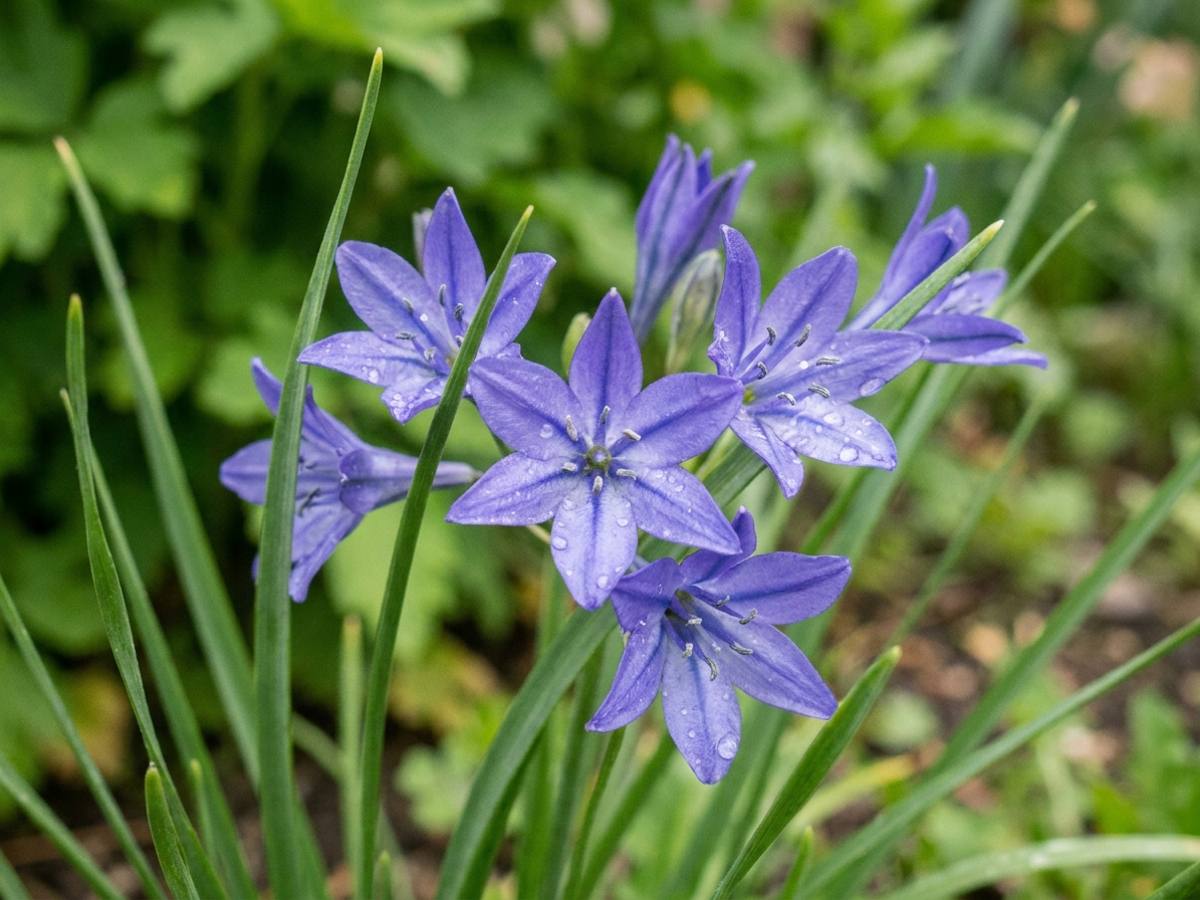
Few late-spring bulbs deliver as much airy colour for so little effort as Triteleia laxa, whose long wiry stems carry loose umbels of funnel-shaped, violet-blue flowers well above the fading foliage. Native to the dry hills of California and southern Oregon, it thrives where summers are hot and baking, making it a superb choice for gravel gardens, sunny borders and cut-flower rows. Its great trick is summer dormancy: once flowering ends, the corms retreat underground and ask for nothing at all.
Growing conditions
Give Ithuriel’s spear the sunniest, most open position you have — at least six hours of direct sun daily. In shade the stems stretch, flop and flower sparsely. A sheltered spot beside a warm wall or in a raised bed suits it especially well, as it appreciates a thorough summer baking.
Drainage matters more than fertility. Sandy, gravelly or stony soils are ideal, and a neutral to slightly acidic pH (around 6.0–7.0) is preferred, though it copes on mildly alkaline ground. On heavy clay, plant into a gritty raised bed or add plenty of horticultural grit and coarse sand to the planting area.
Corms are reliably hardy in most of Britain, Ireland and mild continental gardens, but it is winter wet rather than cold that kills them. In regions with wet summers, lift and dry the corms after the foliage yellows, or grow them in deep pots plunged in a dry frame.
How to plant Triteleia
Plant the dormant corms in autumn, ideally between September and November, so roots establish before winter. Spring planting is possible from potted stock but usually gives shorter stems and later flowers.
Space corms 8–10 cm apart in generous groups of 20 or more — single corms look thin, whilst clusters read as a haze of colour.
Plant 8–10 cm deep, pointed end upwards; deeper planting on light soil helps stabilise the tall stems.
Fork a bucketful of grit into each square metre of planting area and avoid fresh manure, which encourages rot.
Water in once after planting, then leave alone — autumn rainfall is normally sufficient.
Propagate by lifting congested clumps in late summer and detaching the small offset cormlets, replanting immediately; seed works too but takes three to four years to flower.
Triteleia laxa growing in a naturalistic garden border
Care through the seasons
Spring: Narrow, grassy leaves emerge early and can look untidy — resist tidying them, as they feed next year’s corm. Apply a low-nitrogen, high-potash feed such as a tomato fertiliser once flower stems appear. Support is rarely needed, though neighbouring perennials help prop the wiry stems in exposed gardens.
Summer: Water only if the soil dries out completely before flowering finishes; afterwards, keep it dry. Deadhead spent umbels unless you want seed, and allow the foliage to yellow and wither naturally. Do not irrigate the dormant area — summer moisture is the commonest cause of losses.
Autumn: This is the time to lift and divide clumps that have flowered poorly, usually after three or four years. Replant divisions straight away at the same depth. A thin gravel mulch keeps corms dry and marks their position, since the plant leaves no trace above ground.
Winter: Corms sit dormant or produce early leaf tips in mild spells and need no protection in well-drained ground. In cold, wet areas, cover the planting with a cloche or a 5 cm layer of coarse grit.
Best varieties to grow
Most garden forms are selections of Triteleia laxa, valued for stem length and flower colour.
‘Koningin Fabiola’ (Queen Fabiola) — the classic, an RHS Award of Garden Merit holder with deep violet-blue flowers on strong 50–60 cm stems.
‘Rudy’ — creamy white with a distinct purple stripe along each petal, excellent for lightening dark planting schemes.
‘Corrina’ — larger, rounder umbels in rich blue-purple, one of the best for cutting.
‘Splendens’ — an intense violet selection with slightly earlier, more compact flowering.
Pests, diseases and common problems
Corm rot (Fusarium and similar fungi): Soft, brown corms and stunted, yellowing shoots follow waterlogging. Improve drainage with grit, avoid summer watering and discard affected corms rather than replanting them.
Slugs and snails: They shred emerging leaves and chew flower buds in damp spring weather. Use a gravel or crushed shell barrier, hand-pick after dusk, or apply ferric phosphate pellets sparingly.
Rodents and squirrels: Corms are edible and often dug up shortly after planting. Lay wire mesh over the planting area until growth appears, or plant in mesh baskets.
🌿 Nature & Garden Newsletter
Gardening tips, recipes & seasonal advice, twice a week.