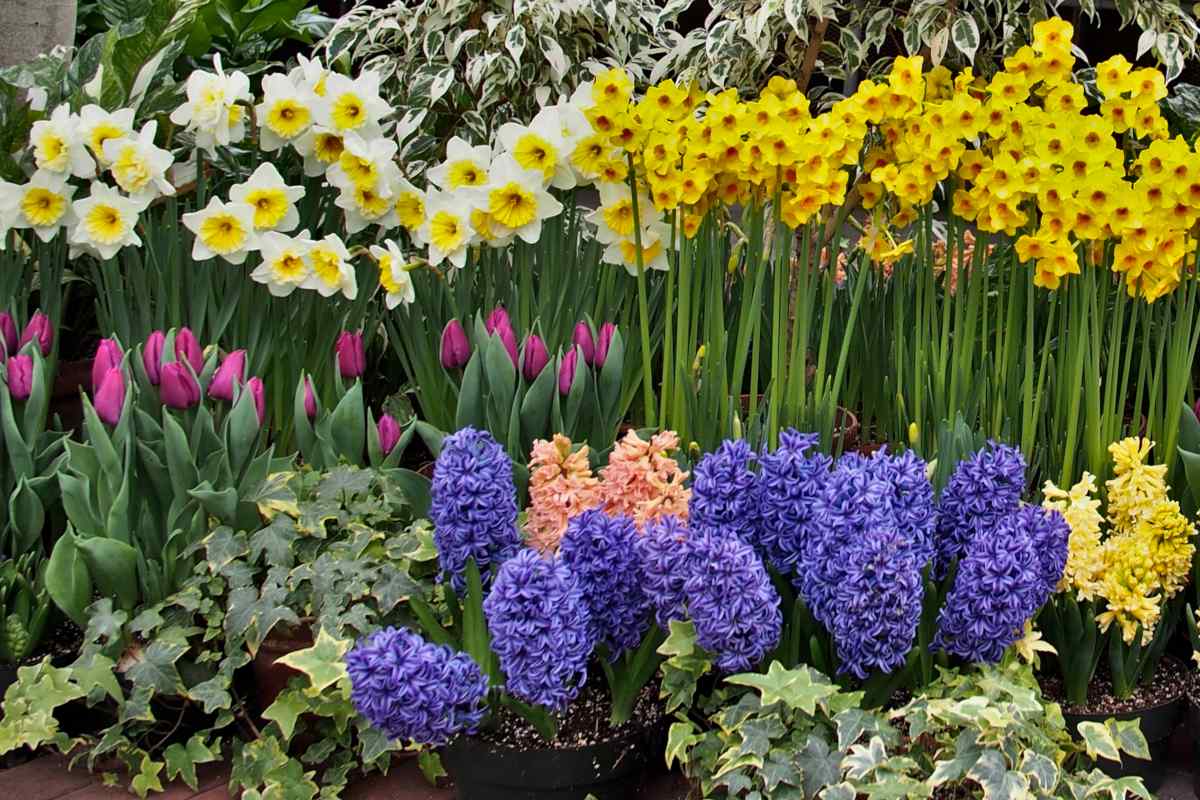
Your tulips have finished flowering — and right now, while the display is fading, is exactly when the crucial phase begins. What you do in the next few weeks determines your path to a spectacular spring show next year, or a patchy, disappointing one. No question.
The answer is not complicated. But most gardeners get at least one step wrong, and it costs them dearly come April. It is a bit much, this recurring disappointment.
Those yellowing, floppy leaves look like a mess. Leave them anyway. Every day those leaves are still attached, the bulb below is hoovering up sustenance — sugars, starch, everything it needs to form next year’s flower bud deep inside the scales. Cut the foliage before it turns fully yellow-brown and you rob the bulb of 4 to 6 weeks of non-negotiable fuel storage. Seriously.
The rule is unambiguous: wait until the leaves are at least two-thirds yellow and come away with the lightest tug. That usually means about 6 weeks after the last bloom drops. This timing is bang on.
Yes, it looks untidy. Plant low-growing perennials like hardy geraniums in front to mask it — the tulips do not care about the camouflage, but your neighbours will appreciate it. It is a necessary sacrifice.
And do not tie the leaves in knots or fold them over. That dubious trick reduces photosynthesis and defeats the entire purpose of waiting.
In free-draining, sandy soil in a warm summer, tulip bulbs can stay in the ground safely. But in heavy clay, in pots, or in borders that get summer irrigation, lifting is the superior strategy. Wet soil baking around a dormant bulb is a prime breeding ground for Botrytis tulipae — tulip fire — and for basal rot. Do not take the chance.
Lift when the foliage is completely dead. Use a hand fork, not a spade — you must carefully ease them out whole, about 15–20cm deep, without slicing through the base. It is non-negotiable.
They will smell faintly earthy and dry, almost dusty. That is proper.
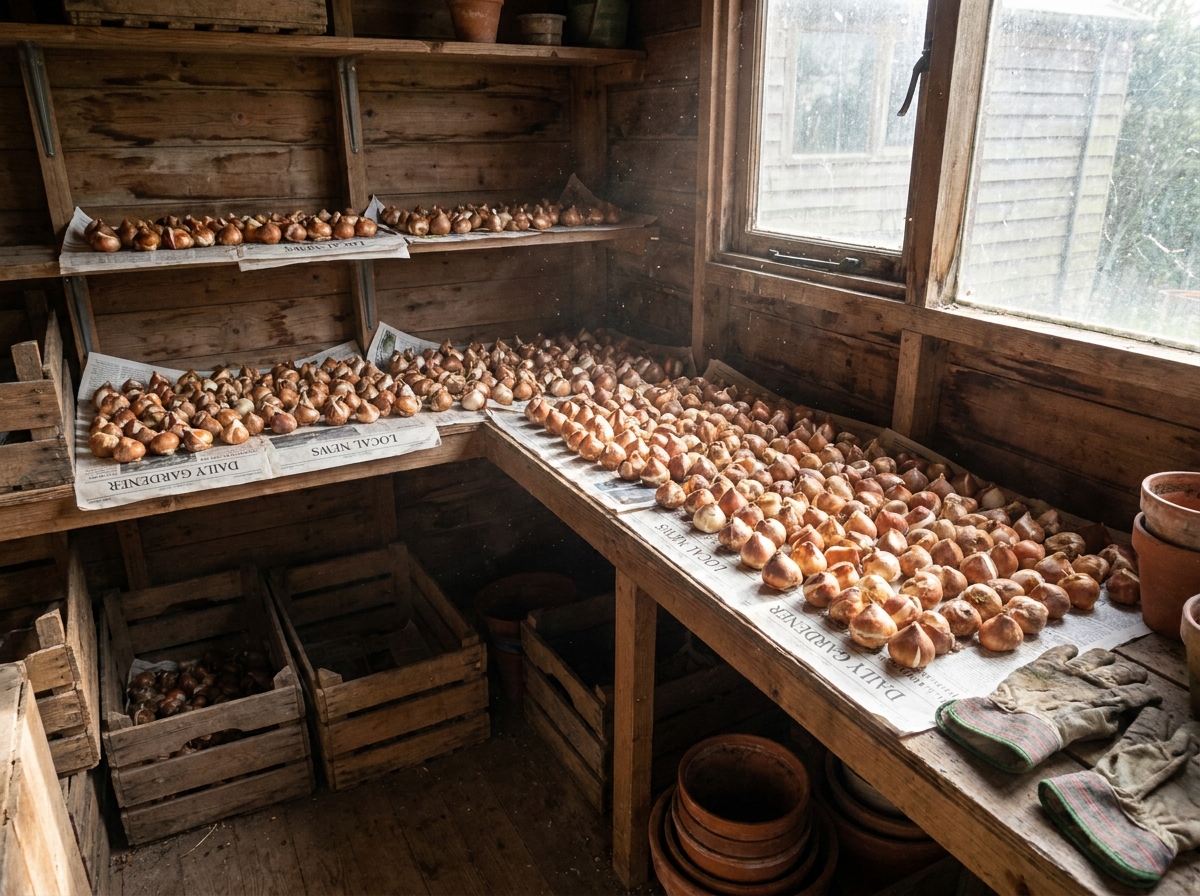
Lay them out in a single layer on newspaper or a slatted tray. A shed shelf, a garage, an airy spare room — anywhere dark, dry, and with unrestricted airflow. Cure them like this for 3 weeks minimum before bagging for storage. See our guide to dahlias for a parallel approach with tender summer bulbs — the curing logic is identical.
Paper bags. Mesh onion sacks. A cardboard box lined with dry newspaper. All excellent. Never store tulip bulbs in sealed plastic — moisture builds up and rot follows within days. This is an issue.
Ideal storage conditions: 15–18°C, dark, dry, and with some airflow. A shed or cool garage performs admirably for most climates. Sorted.
In properly hot summers — and with El Niño pushing temperatures higher across multiple regions this year — check your storage spot is not exceeding 25°C regularly, which can jeopardise the embryonic flower inside the bulb. This is not quite right if temperatures get too high.
Label everything. Species tulips, Darwins, parrots — they all go back in at the same depth but may need different positions in the border. You will not remember which bag is which by October. Believe it. So, the RHS recommends replanting tulip bulbs no later than November in the UK, and there is a useful storage window of 3–4 months to work with.
Allium lovers, the process is nearly identical — read more in our ornamental onion guide for the specifics on those spectacular spherical heads.
Not every bulb that looks fine on the outside is worth replanting. Squeeze gently — any give at all means internal rot. Bin it.
A healthy tulip bulb is firm, dense, almost onion-like in feel and resistance.
Southern Hemisphere gardeners: this applies to your December and January — the timing mirrors perfectly, just shifted 6 months.
Smart tip: Never cut tulip foliage until it pulls away easily — that single rule protects next year’s entire display. No exceptions.
In well-drained soil in a cool climate, yes — many species tulips thrive unassisted. But hybrid varieties flourish most reliably when lifted, dried, and replanted fresh each autumn.
Check them for firmness, cure them if you have not yet, and store as normal. As long as they are not soft or mouldy, they should be viable for autumn replanting.
Classic sign of a “blind” bulb — usually caused by cutting foliage too early last year, planting at insufficient depth, or bulbs that have split into small offsets below flowering size. Lift, sort by size, and replant the largest for dependable blooms.
Three times the bulb’s own diameter — typically 15–20cm for standard garden tulips. Deeper planting in light soils fosters perennialisation and minimises the jeopardy of frost damage to the developing shoot.