Home » Gardening » Bulb flowers » Growing Hyacinthoides non-scripta: expert tips and planting advice
Growing Hyacinthoides non-scripta: expert tips and planting advice
0
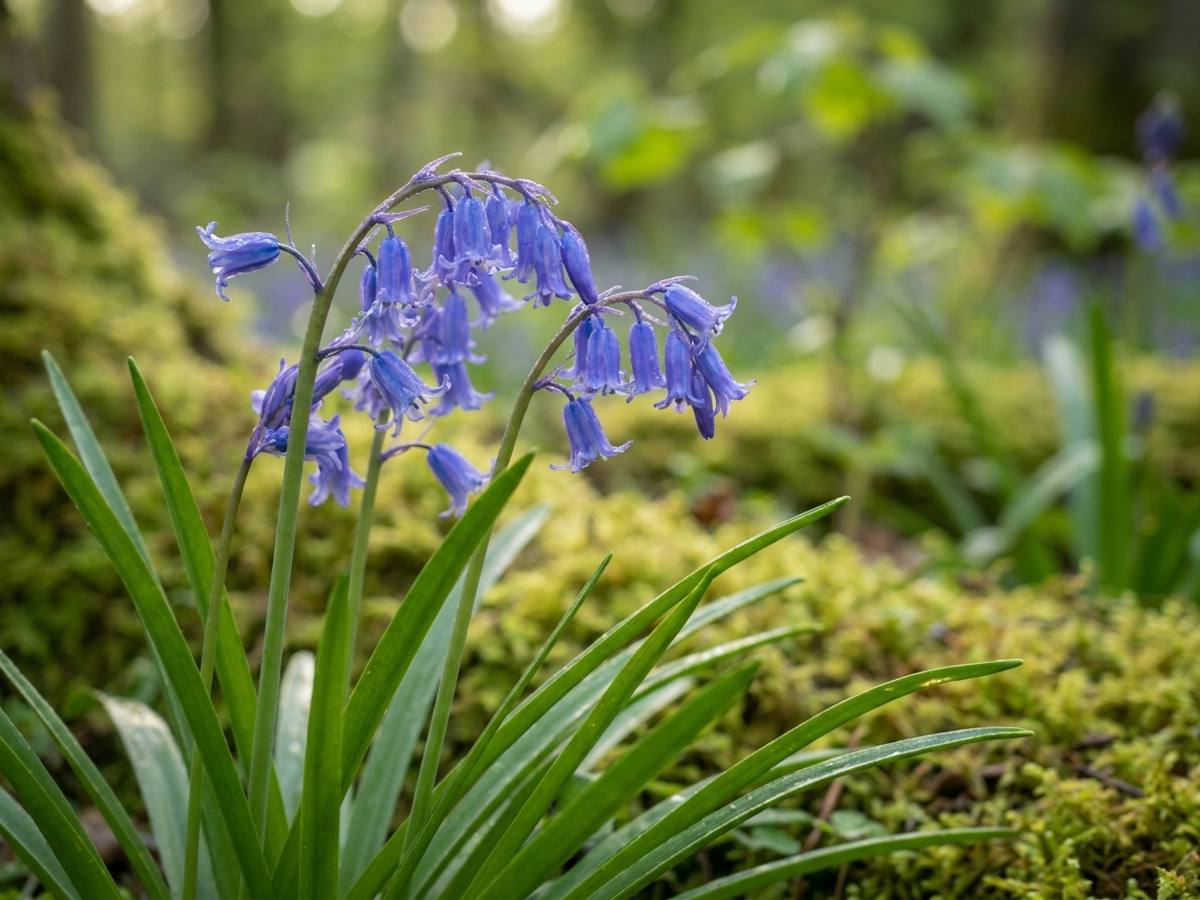
The English bluebell is the plant that turns British woodland floors into a haze of violet-blue each spring, its nodding, narrow bells arranged along one side of an arching stem. Sweetly scented and thoroughly at home in dappled shade, it is the ideal bulb for naturalising beneath deciduous trees, in orchards or along shady hedge bases. Look closely and you will see the tell-tale detail that separates it from its Spanish cousin: petal tips that curl back like tiny scrolls, and creamy-white pollen.
Growing conditions
Bluebells evolved under deciduous woodland canopies, flowering and feeding in the bright weeks before the leaves close overhead. Dappled or partial shade suits them best, though they will grow in fairly deep shade and even in full sun where the ground remains cool and moist through spring.
Give them a leafy, humus-rich soil that holds moisture in spring yet never becomes waterlogged in winter. A slightly acidic to neutral pH (around 5.5–7.0) is ideal, and they cope reasonably well on heavy loam and clay improved with organic matter. Thin, dry, sandy soils and hot free-draining chalk are the least successful sites.
Cold is no obstacle — they are hardy well below −15 °C and thrive across northern Europe and USDA zones 4–9. In warmer, drier regions such as the Mediterranean or the southern United States, plant on a north-facing slope or beneath shrubs to keep the bulbs cool.
How to plant Hyacinthoides
Plant dry bulbs in early autumn, ideally September or October, so roots establish before winter. Bluebell bulbs have no protective tunic and shrivel quickly, so plant them the day they arrive; alternatively, buy pot-grown clumps “in the green” in spring, which establish far more reliably.
Spacing: Set bulbs 10–15 cm apart in irregular drifts of 25 or more — scattering them by hand and planting where they fall gives the most natural woodland effect.
Depth: Plant 8–10 cm deep, with the pointed nose upwards; too shallow and they dry out or heave in frost.
Soil preparation: Fork in leaf mould or well-rotted garden compost, and remove coarse perennial weeds first — bluebells dislike being disturbed later.
Watering in: Water thoroughly after planting, then leave alone; autumn rainfall usually does the rest.
Propagation: Lift and divide congested clumps immediately after flowering while the leaves are still green, replanting at once at the same depth.
In the United Kingdom, digging bulbs from the wild is illegal under the Wildlife and Countryside Act 1981, so always buy from a supplier who guarantees cultivated stock.
Hyacinthoides non-scripta growing in a naturalistic garden border
Care through the seasons
Spring: Growth appears from late February onwards and flowers follow in April. Allow the foliage to grow unchecked and top-dress established colonies with leaf mould rather than high-nitrogen feed. Deadheading is optional — snip spent spikes if you want to limit seeding, or leave them to build a colony.
Summer: The leaves yellow and collapse by late June as the bulbs enter dormancy; resist mowing or tidying until they have fully died back, as this is when next year’s flowers are formed. Bulbs need no summer watering. If a colony is creeping into borders, dig out unwanted bulbs in early summer while the foliage still marks their position.
Autumn: This is the season for planting new bulbs and for scattering a 2–3 cm mulch of leaf litter over existing drifts to mimic woodland conditions. Divide congested colonies now only if you must; spring division after flowering is more successful. Avoid deep cultivation, which slices through dormant bulbs.
Winter: Bluebells are completely dormant and need no protection whatsoever. Shoot tips often push through in mild spells from January and are unharmed by frost or snow.
Best varieties to grow
True cultivars of the English bluebell are scarce, since the wild form is what most gardeners want, but colour variants and close relatives are worth seeking out.
Hyacinthoides non-scripta (wild type) — the benchmark: strongly scented, one-sided arching spikes of deep violet-blue bells with recurved tips and cream anthers.
Hyacinthoides non-scripta ‘Alba’ — a pure white form that glows in shade and looks superb interplanted with the blue among ferns.
Hyacinthoides non-scripta ‘Rosea’ — soft lilac-pink bells, less vigorous than the blue but charming in small drifts near a path.
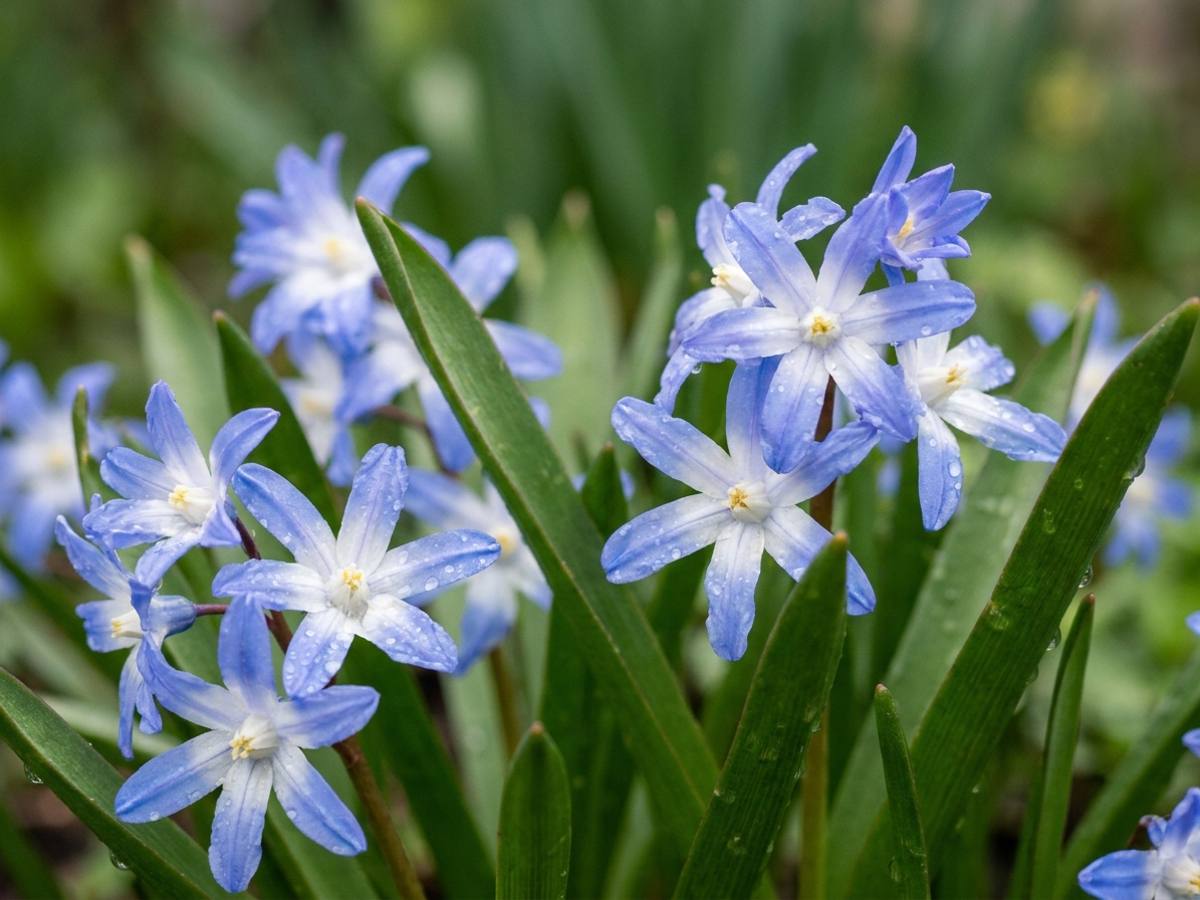
Hyacinthoides italica — a neater, earlier-flowering relative with upright conical heads of starry blue flowers, better suited to pots and small gardens.
Avoid planting Spanish bluebell (Hyacinthoides hispanica) or the hybrid H. × massartiana anywhere near native colonies, as they cross-pollinate freely and dilute the true English bluebell.
Pests, diseases and common problems
Hybridisation with Spanish bluebell: Plants become stout and upright with all-round flower spikes, blue pollen and little scent. Remove suspect plants entirely, bulb and all, before they set seed, and never tip garden waste containing them into woodland.
Bluebell rust (Uromyces muscari): Bright orange-yellow pustules on the leaves, worst in damp, crowded conditions. Pick off and bin affected foliage, thin congested clumps to improve airflow, and avoid overhead watering.
Slugs and snails: Ragged holes in emerging leaves and chewed flower stems in wet springs. Collect at dusk, use wildlife-safe ferric phosphate pellets sparingly, or encourage thrushes, frogs and beetles by leaving log piles nearby.
Failure to flower: Usually caused by foliage cut down too early, too much dry shade, or bulbs planted too shallowly. Let leaves die back naturally and mulch annually with leaf mould.
🌿 Nature & Garden Newsletter
Gardening tips, recipes & seasonal advice, twice a week.