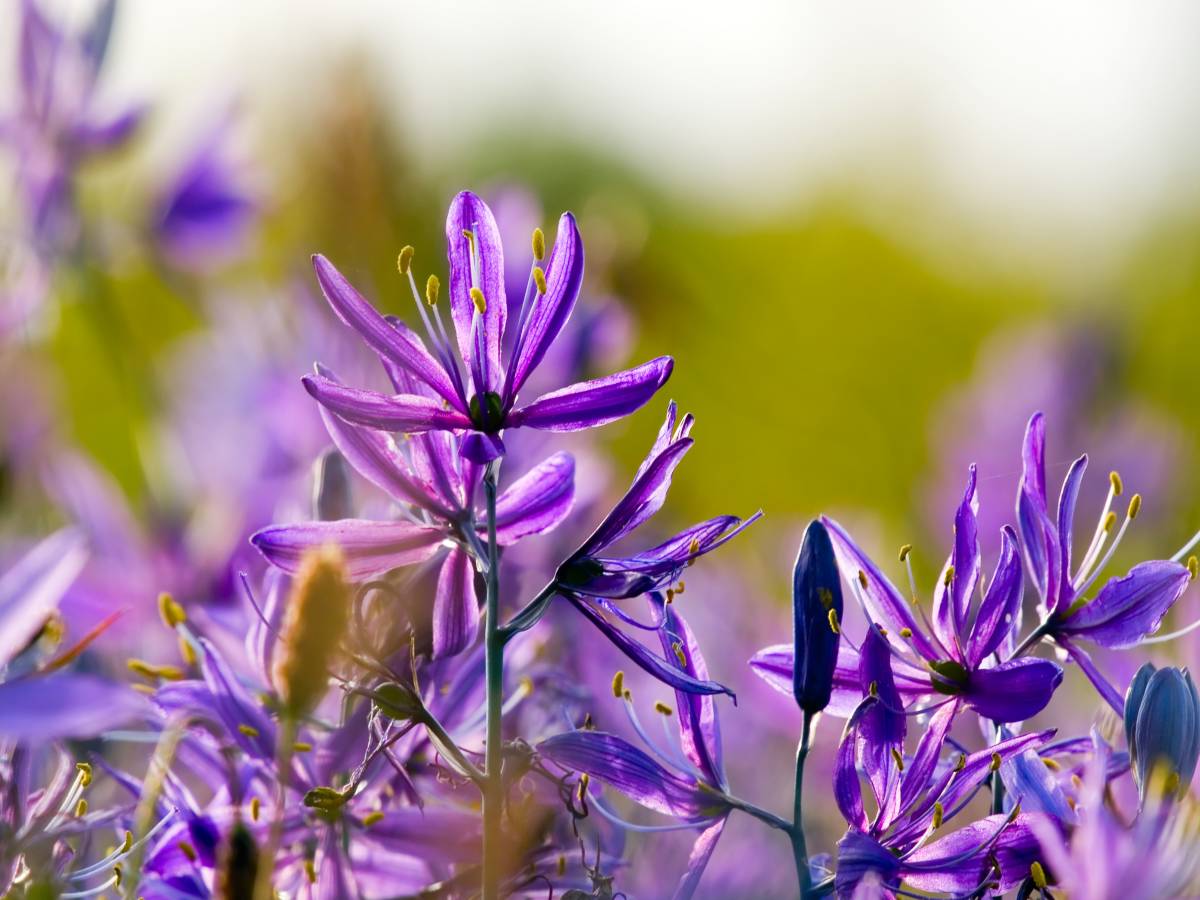
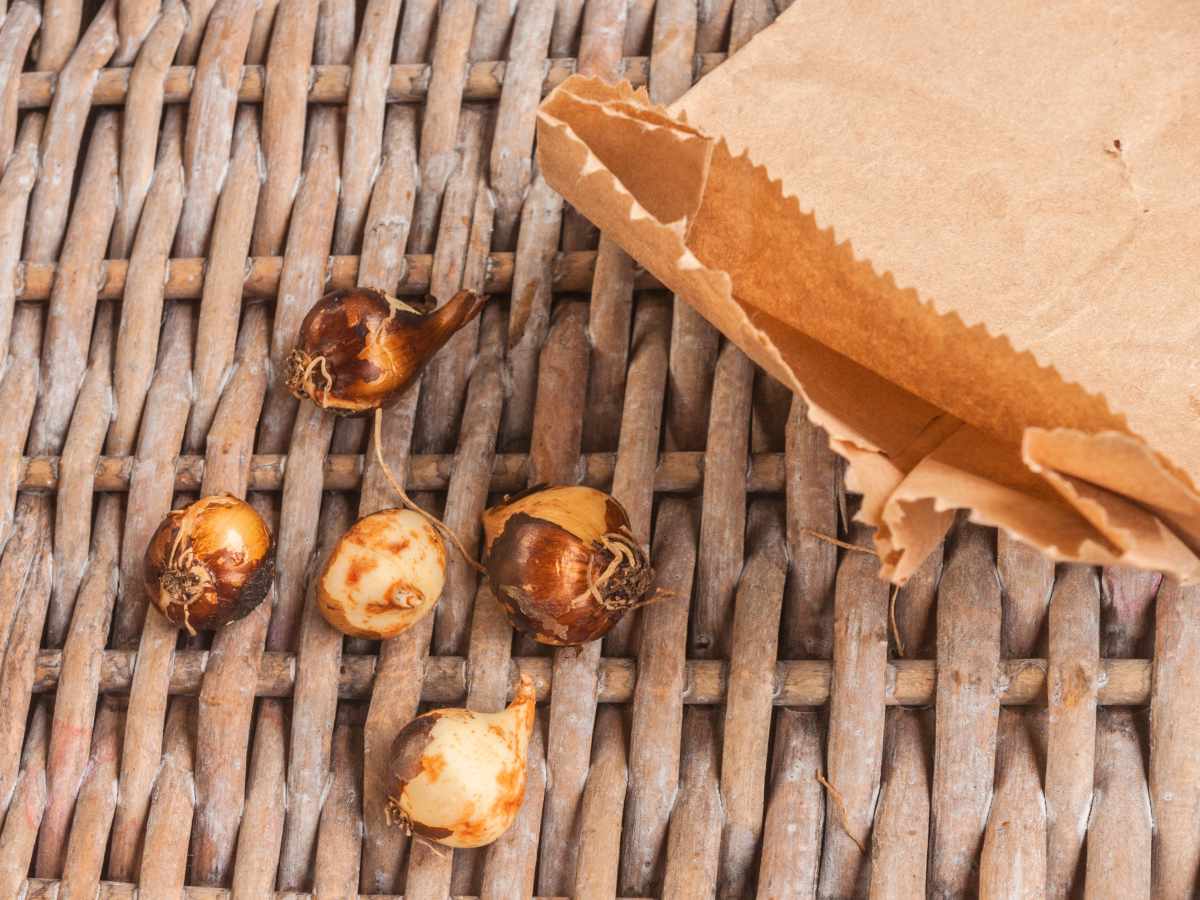
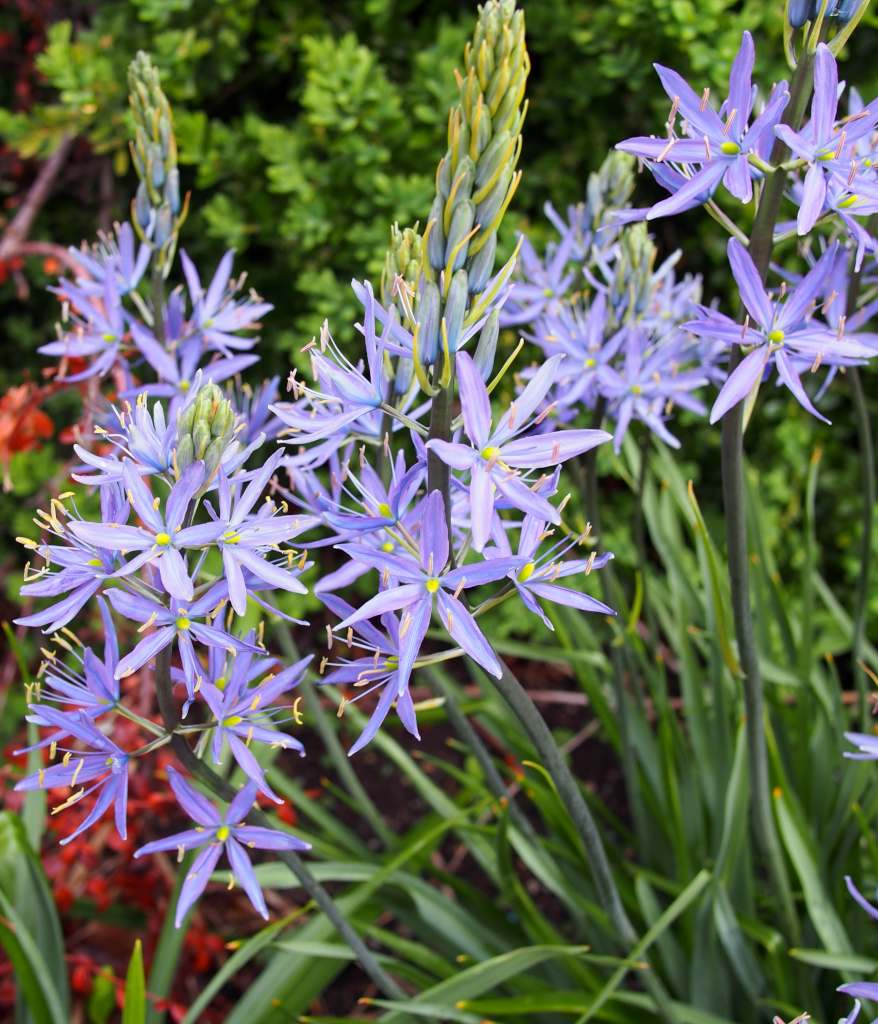
White or blue blossoms open in spring above a bulb that the American Indians collected to grill, steam or bake, and ground into flour for pancakes. Camas (Camassia) asks only ordinary soil and a spot in part sun, out of scorching heat: plant the bulbs in fall and they return year after year without any care.
Camas at a glance
Name
Camassia
Family
Liliaceae (lily family)
Type
spring bulb
Height
20 to 28 inches (50 to 70 cm)
Exposure
full sun, part sun
Soil
ordinary
Outdoor blooming
spring, early summer
In pots or in the ground, they are great when combined with other colors, too.
Planting camas
Camas is usually planted in the ground, but it will still grow well in shallow pots if watered often.
Planting Camas in the ground for spring
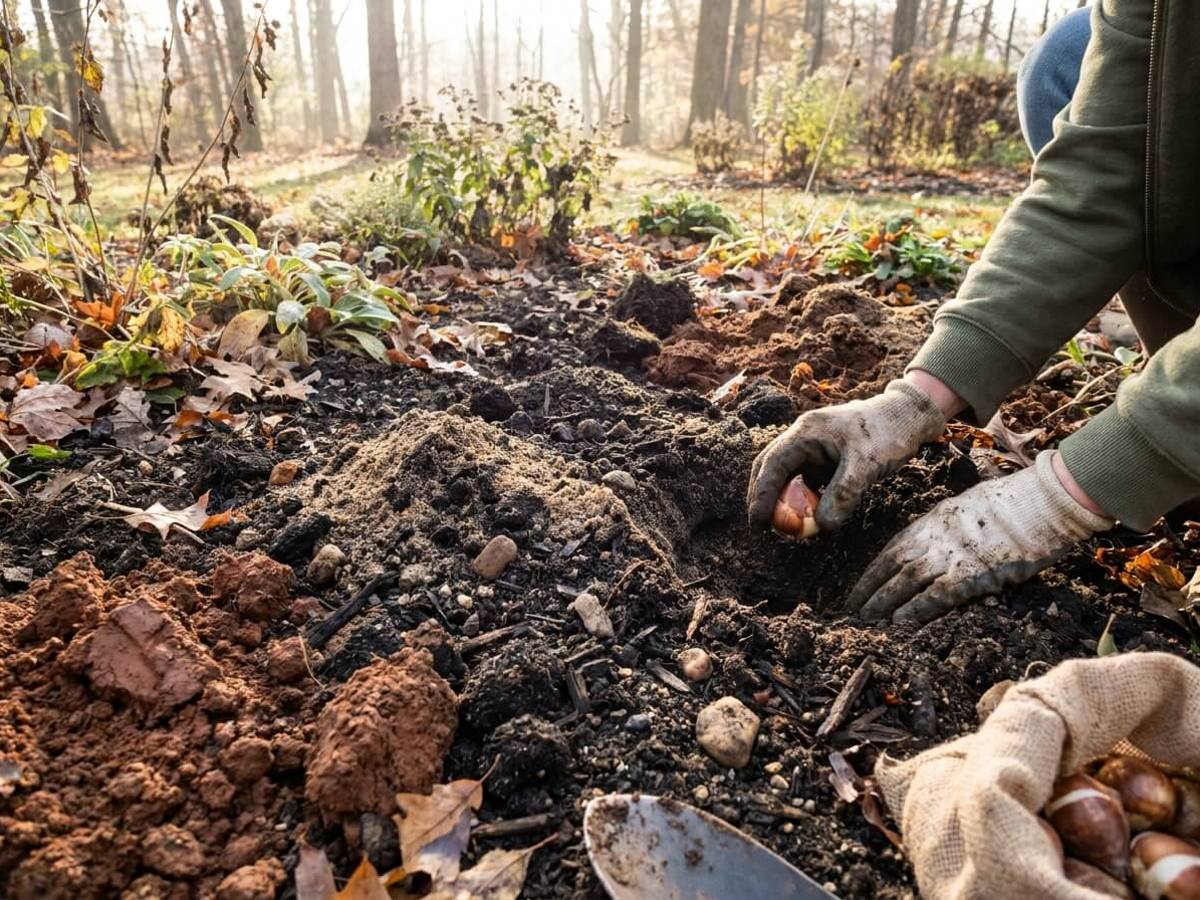
Bulbs go in 4 inches deep, in fall
It is best to plant your camas in fall, 4 inches (10 cm) deep, and they will bloom in spring.
Plant camas bulbs about 4 inches (10 cm) deep.
Your camas will be much more beautiful if you grow them to form clustered spots of color.
For that, you should plant bulbs in groups, spacing them 4 to 6 inches (10 to 15 cm) apart.
The more, the merrier!
Camas like sun but must be protected from scorching. Favor part sun instead.
Caring for camas
Remove wilted scapes, but leave the foliage standing
Camas that are planted in fall will bloom in spring. This is the normal, natural blooming cycle.
Cut floral scapes off when they are wilted, but keep the leaves untouched.
When blooming is over, cut leaves back only when they have already turned yellow, and only then.
The span of time between blooming and wilting leaves is when the bulb is stocking up on nutrients for the next blooming cycle.
Where camas is naturalised in grass, delay mowing that patch until the leaves have yellowed, otherwise the bulbs lose the very feeding period they depend on.
Learn more about camas
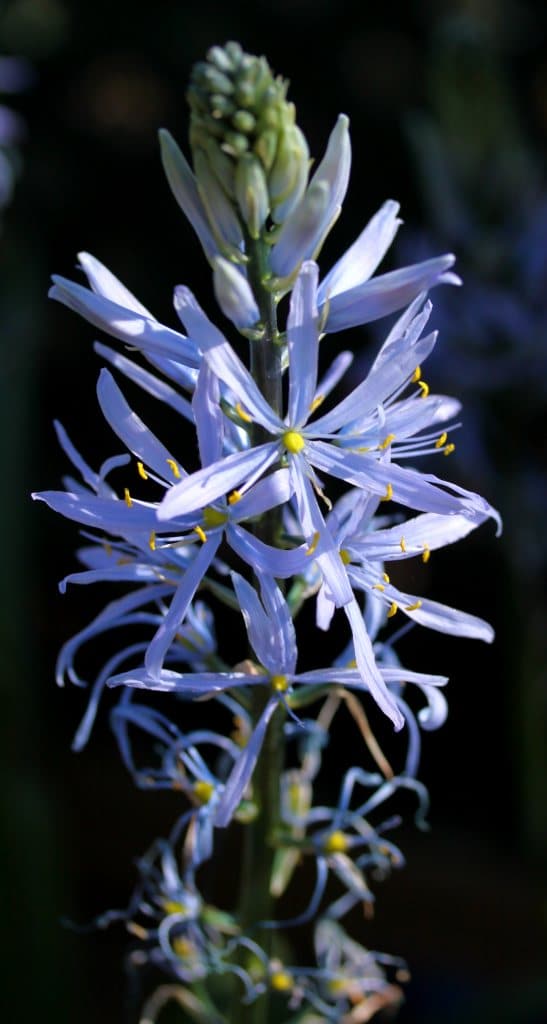
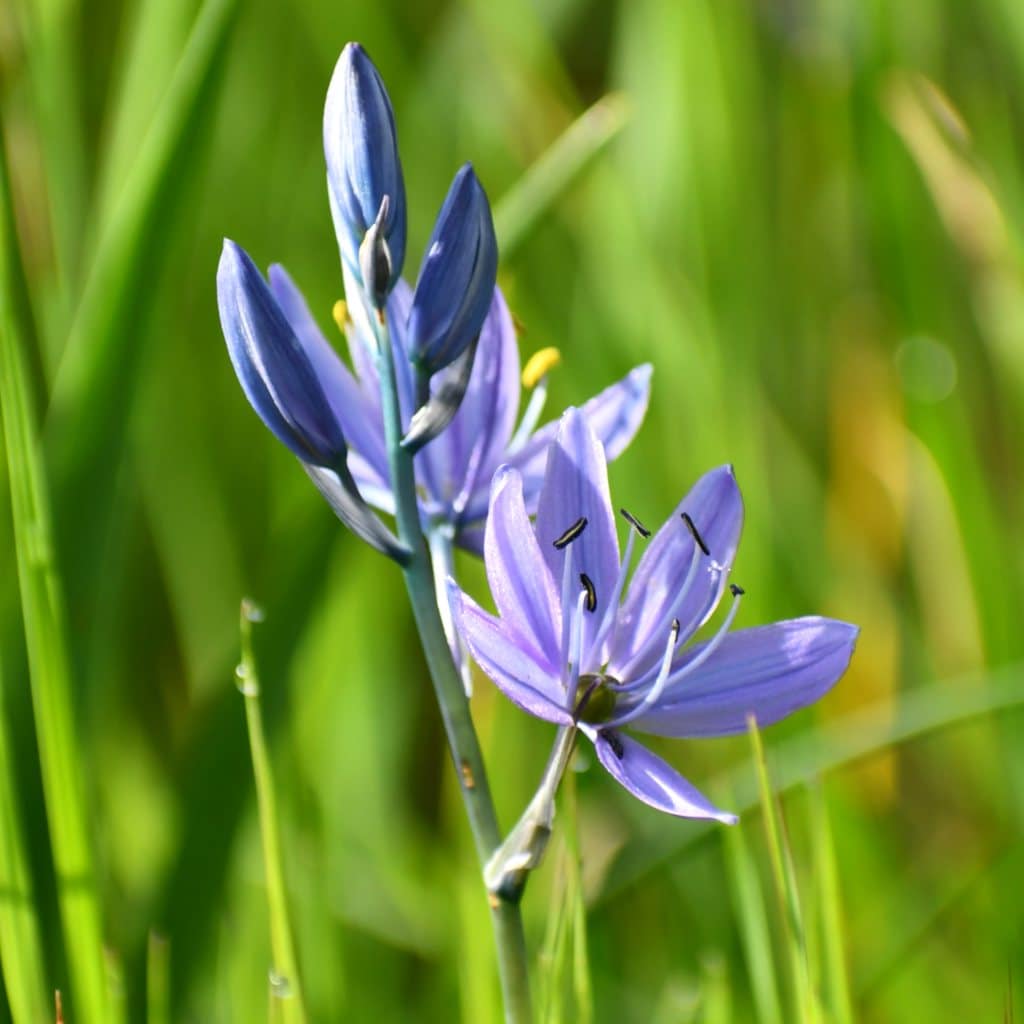
Flower colour runs from white to blue
Camas come in different colors depending on the variety.
The most well-known are Camassia fraseri which have nice white flowers.
Blue flowers are for Camassia esculenta, cusickii, Camassia quamash and Camassia leichtlinii.
Native to the United States and Canada, in the Western States, they are often nicest in the wild, transforming pastures into magnificent meadows when spring comes.
In the wild, camas turns pastures into meadows
They’re part of the Liliaceae family, hence the common name “camas lily”.
Camas was used as a food source by the American Indians, who collected the bulbs to grill, steam or bake them over several days. Flour made from the cooked roots makes for excellent pancakes because it contains lots of fructose sugar.
Camas species compared: which colour for your garden
All camas share the same habit and the same season, reaching 20 to 28 inches and flowering from spring into early summer. Colour is therefore what you really choose on.
Camas species compared: which colour for your garden
Species
Flower colour
Camassia fraseri
White
Camassia esculenta
Blue
Camassia cusickii
Blue
Camassia quamash
Blue
Camassia leichtlinii
Blue
Whichever colour you settle on, plant several bulbs together: camas are at their best as clustered spots of colour.
Camassia quamash naturalises well in grass that stays moist through spring, making it a good choice for meadows, though it also grows happily in borders and other reasonably retentive soils.
Pair Camassia quamash with a blue-flowered Camassia leichtlinii selection, such as subsp. suksdorfii ‘Caerulea’, since quamash generally opens first and the later leichtlinii carries the display on as quamash fades.
Leaving a few faded spikes lets blue camas self-sow, though seedlings need several years to flower deadheading them all curbs spread, but the clump will still slowly widen as bulbs form offsets.
Smart tip about camas
Camas blooms year after year without any need for care.
Our tip: just forget about them, and sit back and savor their bloom every year.
Images: CC BY-SA 2.0: F. D. Richards; dreamstime: Olesia Sarycheva, Ivashkova; Pixabay: cfarnsworth, Greg Seed
Written by Gaspard Lorthiois | Loves helping out, especially when it comes to growing things. Worked in herbal medicine, runs a farm, and dabbles in tech. Master's degree and engineer.