Each season brings its own sweet charms to the garden. But after a foggy autumn and a biting cold winter you’re probably aching for your garden to show signs that cute little spring flowers are coming in.
Such blooms truly bring a smile to your lips! And, for sure, because they’re announcing that spring is coming soon, with even more flowers and growth around the garden.
Did you know that there are bulb flowers that bloom in spring and keep your garden lively from midwinter all the way up to late spring? Every month, like a relay, a new flower pops up to bring yet another smile on our faces.
Facing off the rigors of midwinter
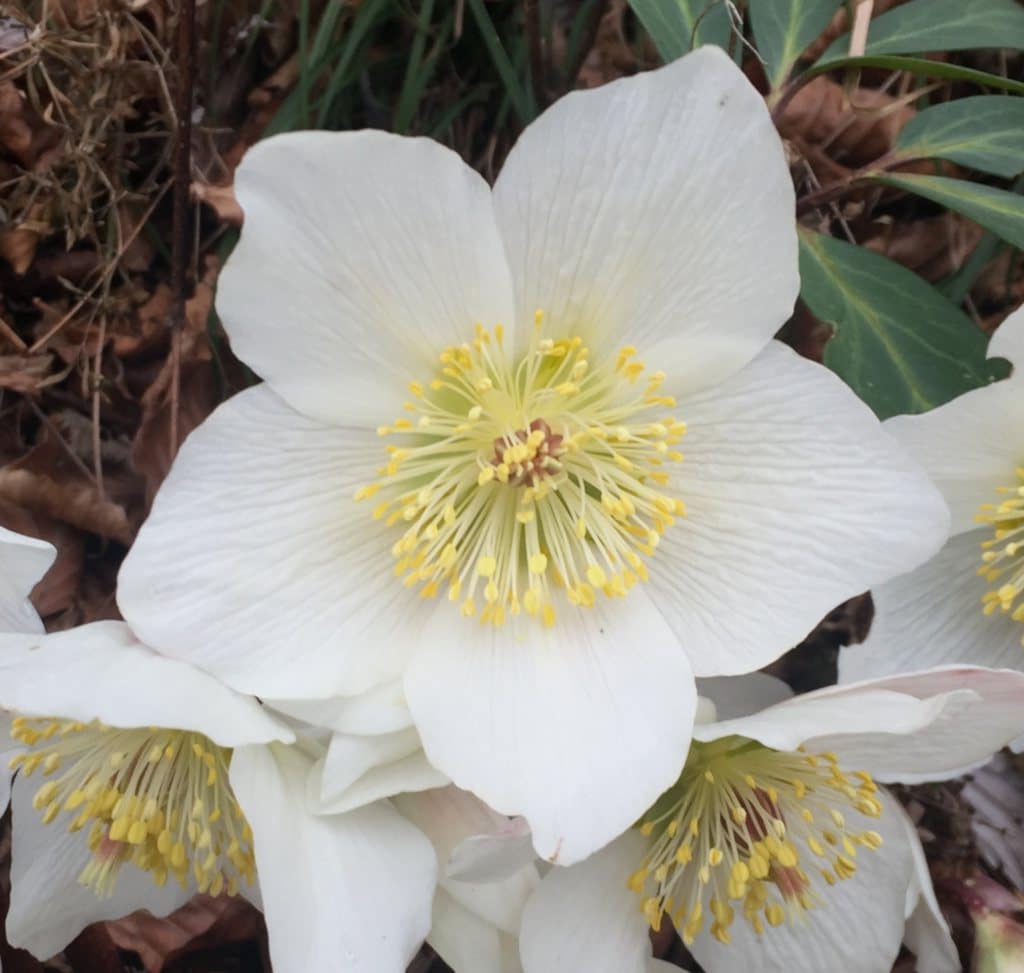
Winter hellebore blooms through midwinter, even under snow
Winter hellebore (Eranthis) and snowdrop (Galanthus) are the first to face the harsh cold weather of midwinter.
Even under thick snow, the little flowers force their way through and bloom.
The subtle snowdrops are, with fresh hellebore, the messengers of spring.
Gardening guides commonly recommend siting winter-flowering, scented shrubs beside doorways, paths or under windows, where their fragrance can be noticed in passing rather than only by visiting distant borders in cold weather.
Winter aconite tubers shrivel fast in storage, so soak them overnight before planting to improve take.
Many spring-flowering woodland bulbs and ephemerals naturalise best in humus-rich soil beneath deciduous trees, where they receive full light for several weeks before the canopy leafs out and closes over.
Divide congested snowdrop clumps in the green, just after flowering while the leaves are still standing.
Days grow longer in late winter
late winter is when most spring bulbs start peeking through
In late winter, it seems that most spring bulbs already start peeking through the ground. This is indeed the month where a great many varieties start sending their first shoots out.
Crocus (Crocus), dwarf iris (Iris reticulata) and spring snowbells (Leucojum vernum) bring color to the garden together with (Puschkinia) and Glory of the Snow (Chionodoxa).
Crocus flowers open widest in response to warmth and bright light, so plant them where low winter sun reaches them by midday rather than in permanent shade.
Leucojum vernum prefers soil that stays consistently moist and humus-rich, and it settles well in damp woodland conditions, such as beneath deciduous shrubs or beside a pond.
Iris reticulata rots in heavy wet ground, so give it gritty, free-draining soil or grow it in a pot.
Mice and squirrels often dig up crocus corms, and laying a square of wire mesh over the planting area is standard advice that can greatly reduce losses, though it is not foolproof.
Leave crocus and Chionodoxa foliage to yellow before mowing, since the leaves feed the bulbs; cutting them down early tends to weaken the clumps and reduce flowering and spread over time.
A color boost in early spring
early spring is when the garden bursts into colour
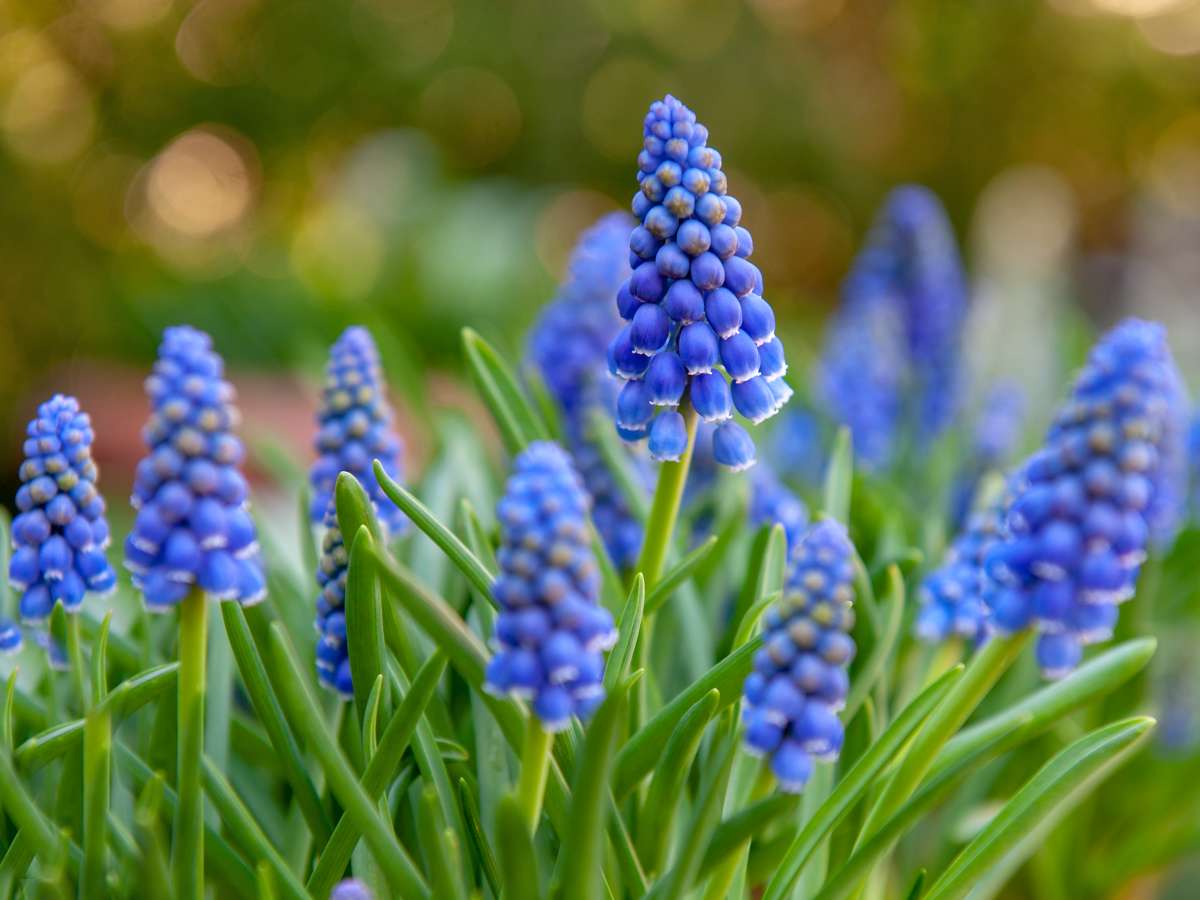
early spring is when the garden bursts into color. Colorful bulbs like anemone (Anemone), cyclamen, blue grape hyacinth (Muscari), narcissus, daffodil (Narcissus), ornithogalum (Ornithogalum nutans) and squill (Scilla siberica) bloom for our appraising enjoyment.
This month, blue grape hyacinth will release their fragrance in the entire garden. And it’ll attract bees like a magnet!
Deadhead faded daffodils, but leave the leaves alone.
Narcissus foliage should be left to yellow and die back naturally for at least six weeks after flowering, never knotted or cut, because those leaves are refilling the bulb.
Cut daffodil stems ooze a sap that shortens the life of other cut flowers, so stand them alone in water for several hours before arranging them with anything else.
Narcissus bulbs contain toxic lycorine, so squirrels and deer generally avoid them, making daffodils a reliable choice for spots where tulips keep getting dug up, though no plant is entirely pest-proof.
Grape hyacinth seeds itself freely, so snip the spent spikes if you would rather it stayed put.
Mid-spring, a month for tulips
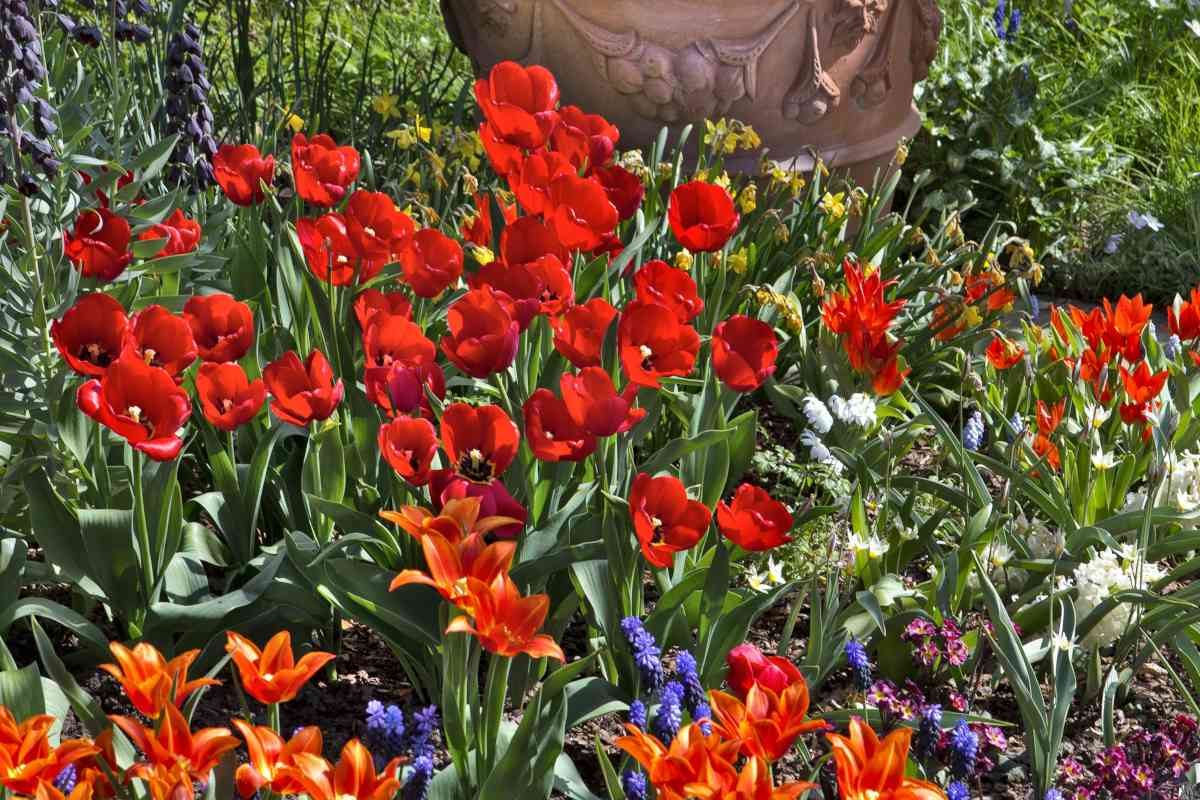
Tulip, the most popular flower bulb, rules mid-spring
In mid-spring, you’ll savor the blooming of the most popular flower bulb: tulip (Tulipa).
They appear in every flower bed with a great many different shapes and sizes. Tulip pairs well in mid-spring with Hyacinth (Hyacinthus), ipheion (Ipheion) and summer bells (Leucojum aestivum).
And on the sidelines, perennials also start their vegetation, such lush growth!
Snap off faded tulip heads, but leave every leaf standing.
The green leaves keep feeding the bulb, so leave them in place until they yellow and pull away easily.
Combining early single, triumph and late-flowering tulips stretches the display over several weeks instead of one short flush.
Twisted shoots with scorched brown flecks point to tulip fire, a fungus; lift and bin affected bulbs and do not replant tulips in that spot for a few years.
May still has something to say
Lily-of-the-valley closes the spring bulb season
Summer may be just around the corner, but the last spring bulbs still have a role to play in the garden.
Every part of lily-of-the-valley is poisonous if eaten, berries included.
Leave the allium globes standing once their colour fades, because the dried seedheads keep their shape and hold structure in the bed long after the petals go.
Ixia corms are frost-tender, so either lift them once the leaves yellow or give them a sun-baked, sharply drained spot at the foot of a wall.
Let the leaves of the earlier daffodils and tulips yellow and flop before you clear them away, as they are still feeding the bulb below ground.
Month-by-month calendar of spring bulbs
From midwinter to late spring, the bulbs take over from one another like runners in a relay. Use this calendar to see which month is still missing colour in your beds.
Month-by-month calendar of spring bulbs
Month
Flowers in bloom
Botanical names
What the month brings
midwinter
Winter hellebore, snowdrop
Eranthis, Galanthus
The first blooms force their way through even thick snow
late winter
Crocus, dwarf iris, spring snowbells, glory of the snow
Planting a few of each column means no month between midwinter and late spring is left without a flower.
Planting bulbs in 4 steps
Rake the soil to break it up or use a soil turner.
Dig a hole that’s about 3 times as wide as the bulb/tuber is.
Place the bulbs in the hole with the tip facing up and the root bunch facing down.
Cover with soil.
Most common bulbs, such as tulips and daffodils, rot in ground that stays waterlogged, so avoid spots where puddles linger—though moisture-tolerant species like camassia and snake’s head fritillary cope well there.
Firm the soil gently over the newly planted bulbs and water them in; this helps settle the soil and reduce air pockets around the bulbs, which have not yet formed roots.
After flowering, leave the leaves of daffodils, tulips and crocus in place until they yellow and collapse, as they rebuild the bulb for the following spring.
More advice
It also makes sense to dig a wider hole or trench, like a “bed”, where you can plant a great many bulbs together.
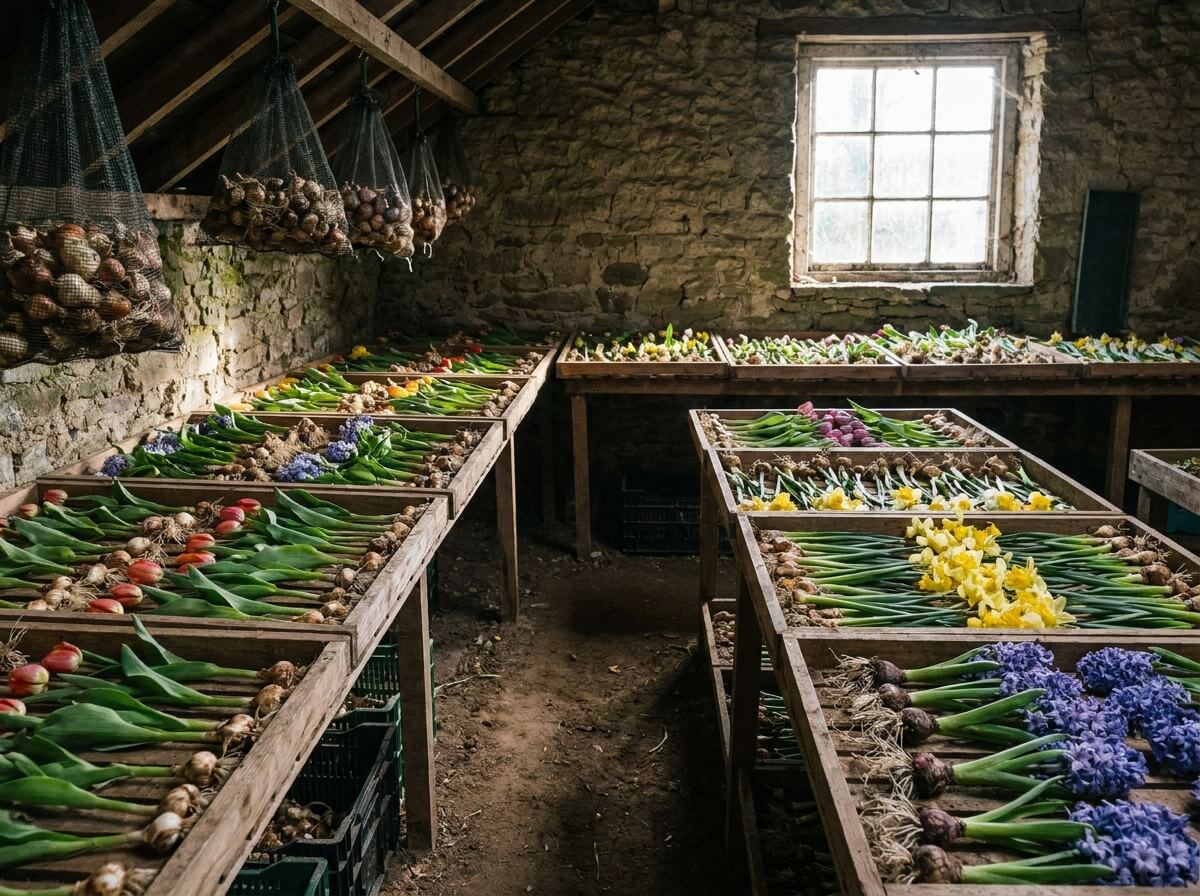
The best time to plant bulbs is from early autumn to early winter, before the first frost spells.
Set each bulb at a depth of about three times its own height, as shallow planting leaves tulips and daffodils prone to toppling and frost damage.
Bulbs rot in waterlogged ground, so work grit into heavy clay before planting.
Leave daffodil and tulip foliage in placeuntil it yellows and collapses, since the leaves replenish the bulb’s reserves for next year’s flowers while they are still green and photosynthesising.