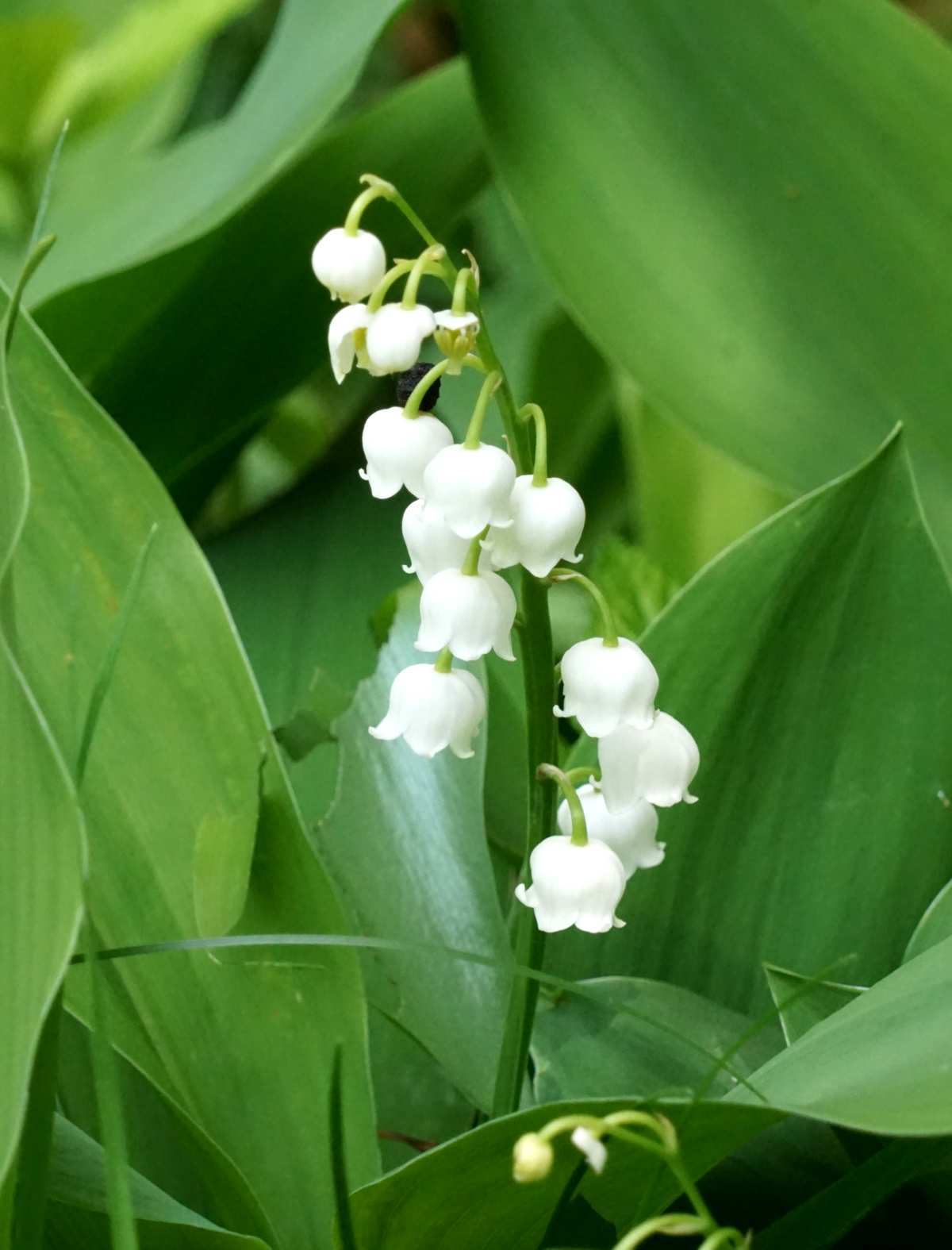
Fragrant enough to last as a cut flower, lily of the valley (Convallaria) spreads into a lovely carpet in the cool shade under forest trees, and its stems are shared as bouquets at the beginning of May. Give it rich, cool, humus-rich soil and it will colonise bare ground unaided.
| Name | Convallaria |
|---|---|
| Family | Asparagaceae |
| Type | herbaceous perennial |
| Height | 6 to 10 inches (15 to 25 cm) |
| Exposure | part sun, shade |
| Soil | rich, well drained and humus-rich |
| Planting | Fall |
| Flowering | April-May |
| Harvest | 1st of May! |
Caring for this plant from planting to blooming is child’s play and truly brings smiles to our faces when it starts to bloom!
Lily of the valley can be planted in fall in areas with mild winters. But this will definitely not guarantee that you’ll have blooming right from the first spring…
You can also plant at the beginning of spring, towards March, after the last frost spells have ebbed away.
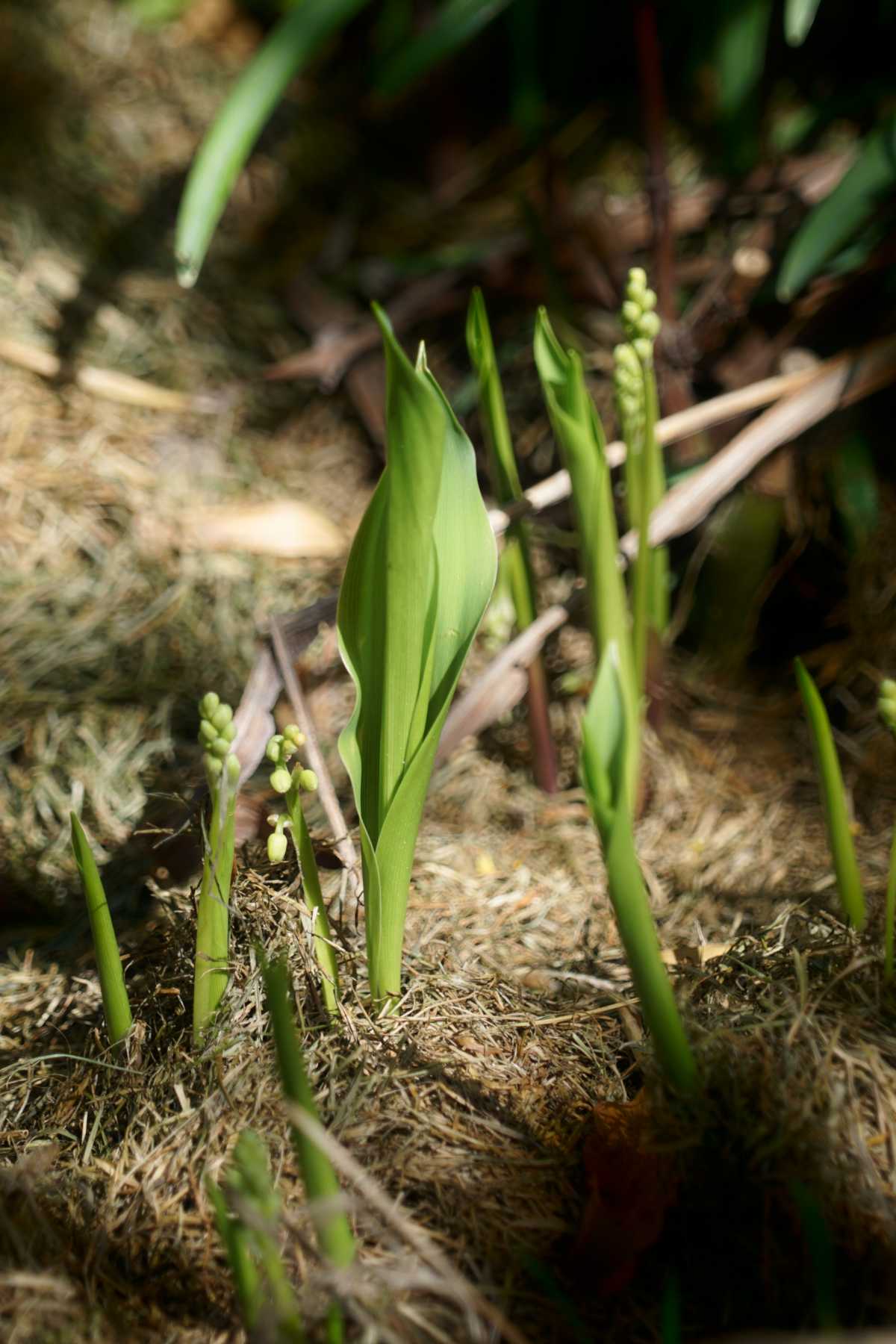
If you’re planting your lily of the valley in shaded areas like forest underbrush, you’ll be happy to see it propagate and spread to cover bare space.
If you’ve just purchased or received a little pot with cute lily of the valley, it is possible to transplant it to the ground after the blooming.
Lily of the valley doesn’t call for much care. Perhaps just water in case of dry spell or strong heat wave.
Lily of the valley can be started at two different moments of the year, and a gift pot can join the garden later on. Here is what each option involves.
| Stage | When | How | What to expect |
|---|---|---|---|
| Autumn planting | Fall | Only where winters are mild | Flowers may not appear the very first spring |
| Spring planting | Towards March | Once the last frost spells have passed | A normal start into the April-May flowering season |
| Setting the crowns | At planting time | Barely bury the roots, bud left above the soil | Plants sunk too deep simply fail to grow |
| Moving a gift pot out | After the blooming | Transplant the potful into the ground | It settles in and carpets the spot over the years |
| Watering | Dry spells and heat waves | Water in the evening, keeping the foliage dry | Soil stays cool, which is what the plant wants |
Beyond these few moments, lily of the valley asks for almost nothing.
Beyond the plain woodland species, a handful of named lily of the valley are widely offered as bare crowns or potted plants. They differ mainly in flower colour, vigour and leaf markings.
| Variety | Flower | Foliage | Best use |
|---|---|---|---|
| ‘Bordeaux’ | White, large bells | Plain deep green | Cutting for bouquets |
| ‘Rosea’ | Soft pink | Plain green | Shady border accent |
| ‘Hardwick Hall’ | White, scented | Green, pale cream edge | Edging shaded paths |
| ‘Fortin’s Giant’ | White, extra large | Broad green | Bold groundcover, cutting |
| ‘Albostriata’ | White, scented | Cream-striped lengthwise | Lighting up deep shade |
| ‘Flore Pleno’ | White, double bells | Plain green | Collector’s patch, cutting |
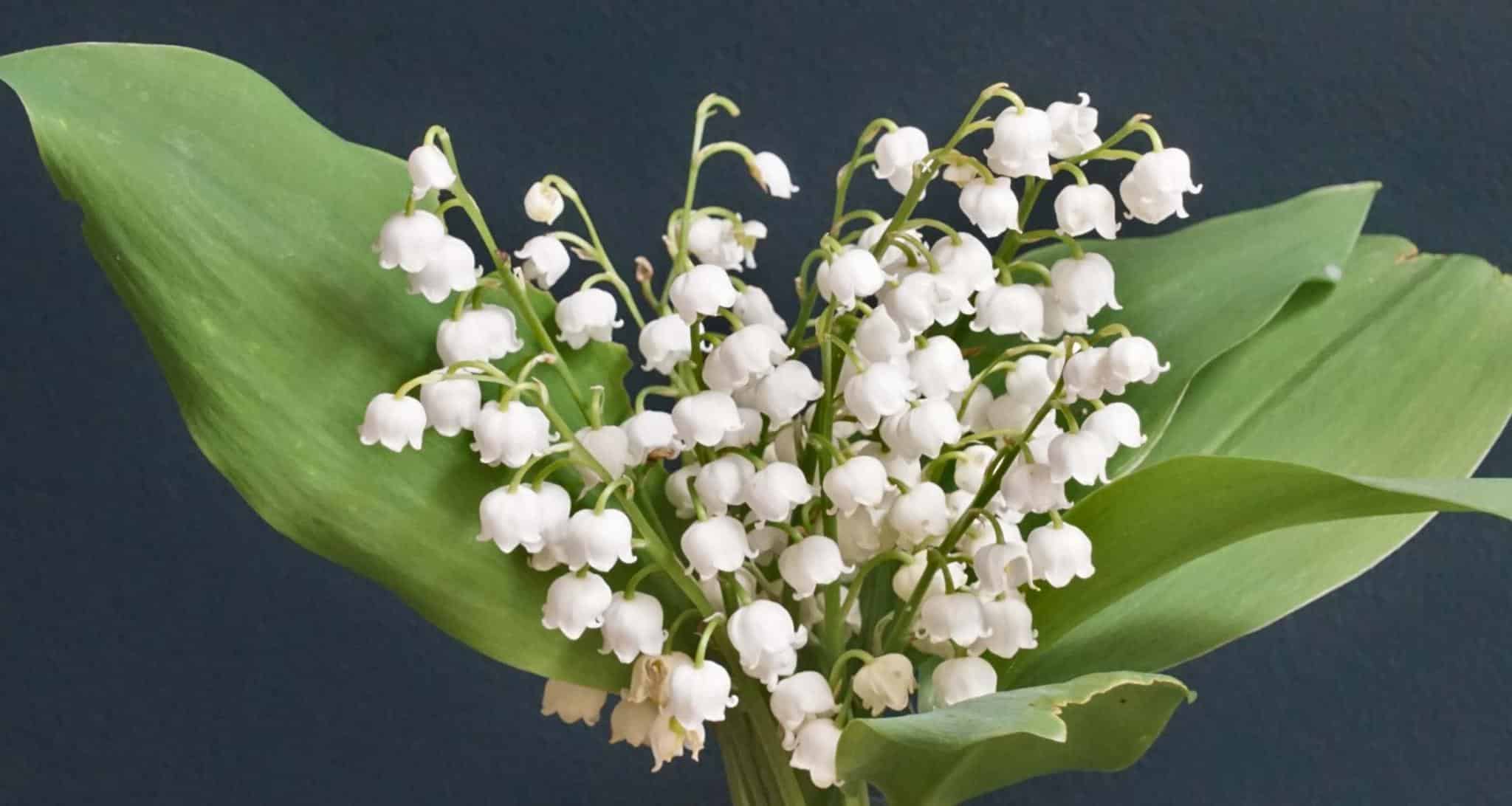
This perennial which is a symbol of spring has a very short blooming period, which makes it quite difficult for horticulturists in certain countries where tradition calls for it to be sold in full bloom on May 1st exactly.
They succeed in speeding or delaying the blooming by dealing the plant more or less light, so they’re generally able to match market expectations!
In a forest, which is its natural habitat, lily of the valley is a key marker of how old and untouched the forest is.
Why is the lily of the valley also a symbol of spring, celebrated at the beginning of May?
This is particularly true in France. Tradition says it draws back to the Renaissance, when Charles the IXth offered a stem of flowers to each of the ladies in the high court. This tradition spread throughout the kingdom.
Labor day, also celebrated on May 1st, arrived much later: it appeared in 1793 when French revolutionaries sought to replace older customs with events unrelated to the past. Since the giving of flowers was pursued, they were linked to the new event.
But the connection of lily of the valley to Labor day was lost until the recent 20th century.
The city of Nantes is when the tradition was recovered and selling lily of the valley in streets with no tax or permit was allowed specifically on that day.
Today, most of the European lily of the valley is produced in Nantes and the surrounding areas.
Avoid full sun because lily of the valley loves cool soil and that is always available in shaded spots!