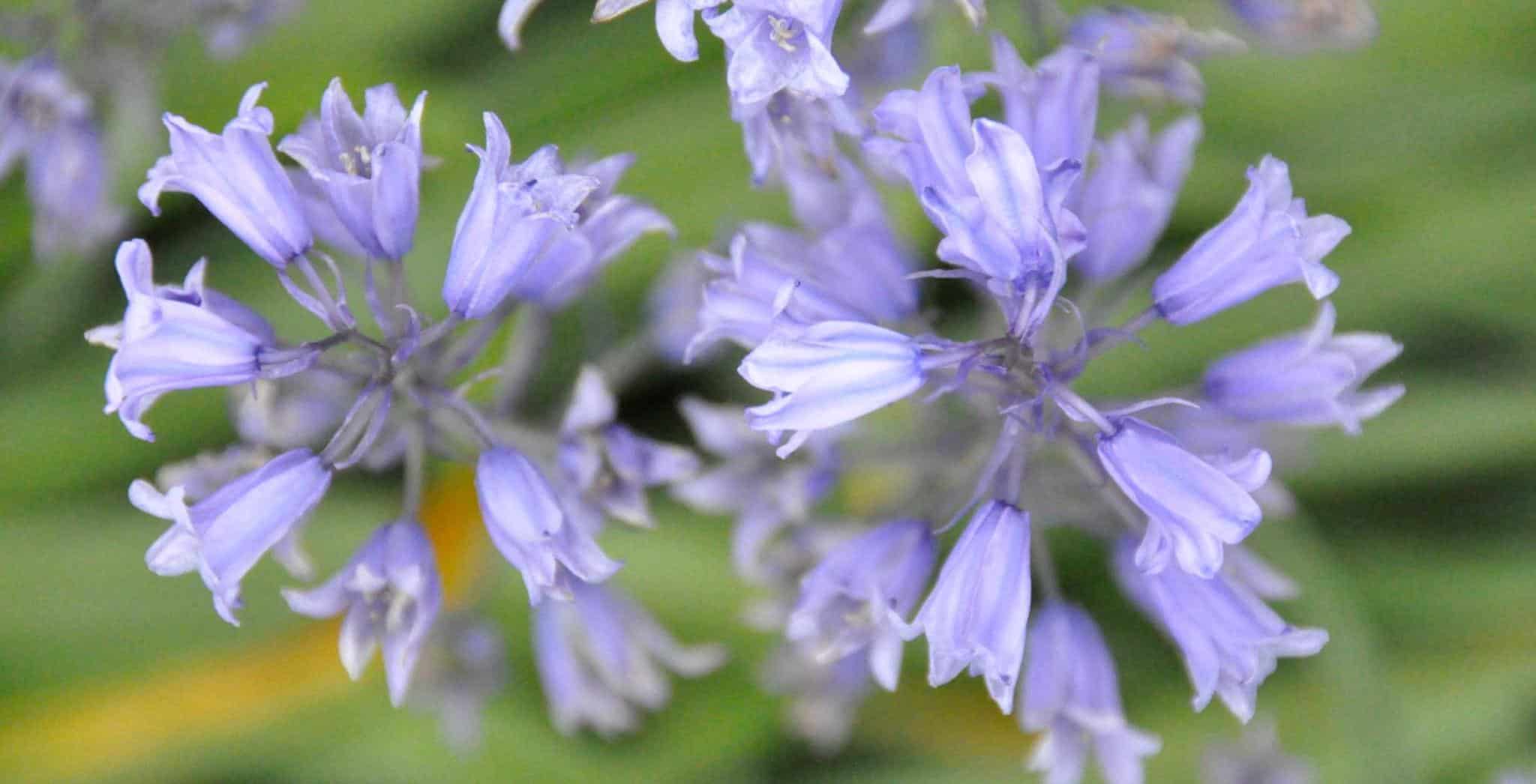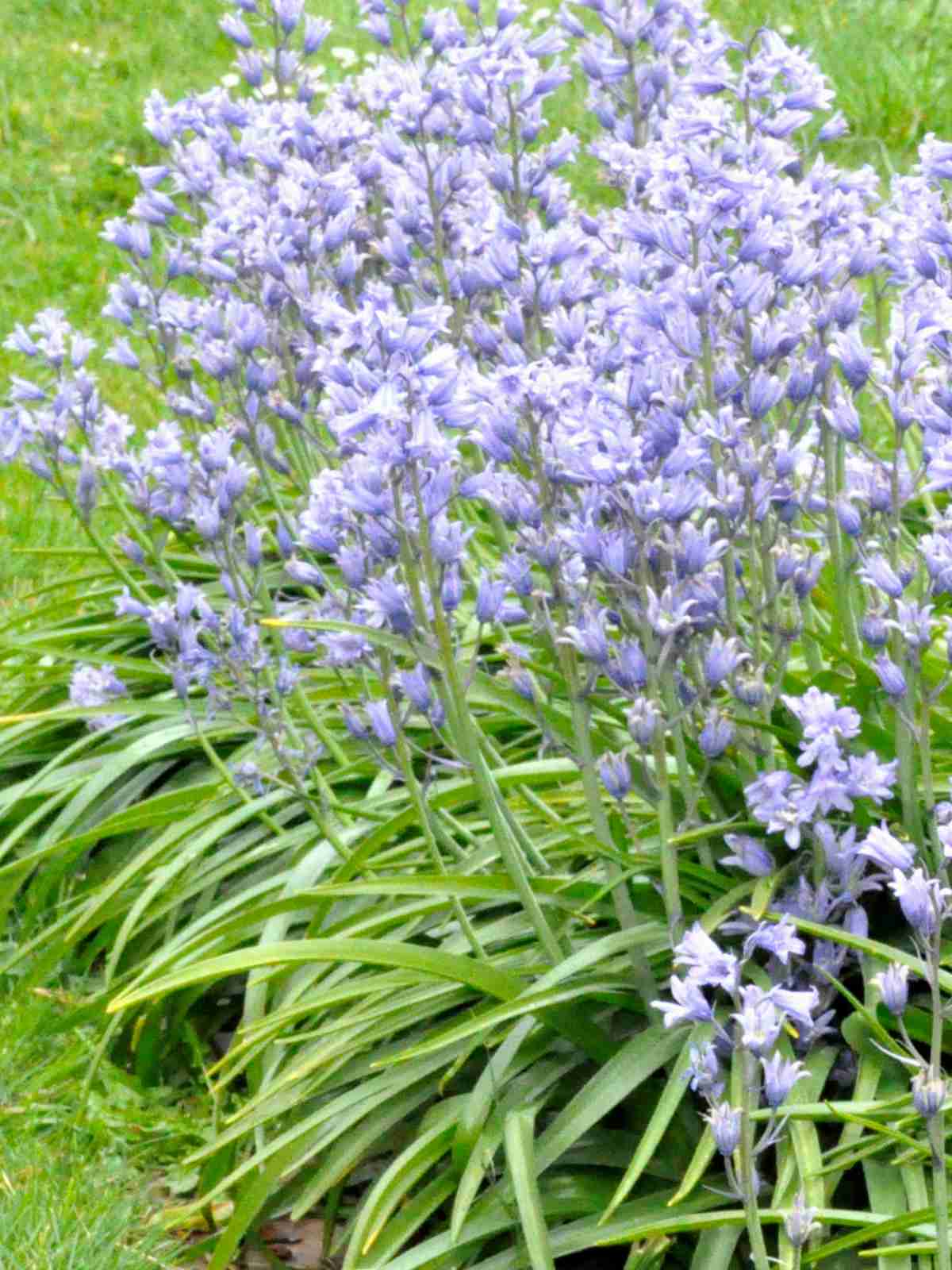
In spring, bluebells (Hyacinthoides non-scripta) raise 4 to 20 inch stems of blue flowers through the cool, shaded sub-growth of a forest, where little else is in bloom. Plant several dozen bulbs together in ordinary soil and part shade, and they will re-seed and multiply on their own, year after year.
| Name | Hyacinthoides non-scripta |
|---|---|
| Family | Asparagaceae |
| Type | spring bulb |
| Height | 4 to 20 inches (10 to 50 cm) |
| Exposure | part sun and shade |
| Soil | ordinary |
| Flowering | early to mid-spring |
Planting and care are very simple and blooming is guaranteed
Beyond the native English bluebell, garden centres and bulb catalogues offer a handful of close relatives and selections. They differ mainly in vigour, flower colour and how well they suit a shaded woodland corner rather than an open bed.
| Variety | Flower colour | Height | Best use |
|---|---|---|---|
| ‘Alba’ | White | 10–30 cm | Lighting up deep shade |
| ‘Dainty Maid’ | Purplish pink | 30–40 cm | Colour contrast in a shaded bed |
| ‘Queen of the Pinks’ | Soft pink | 30–40 cm | Mixed clusters with blue forms |
We recommend planting bluebell bulbs in fall, around 2 to 4 inches (5 to 10 cm) deep.
Cluster several dozens of bulbs together, to create spots of color in your garden. Plant them about 2 inches (5 cm) apart.
Once leaves have turned yellow, cut them at their base. Don’t cut them any earlier, since the plant needs to drain its leaves from all their nutrients to prepare for the following blooming cycle.
Bluebells should normally propagate themselves naturally as years go by. New bulbs form underground and sprout into fresh new flowers during the next spring.
Very nice perennial that copes well with cool and shaded forest sub-growth.
The plant re-seeds itself on its own, as long as its flowers aren’t cut off before they wilt.
Read more on the topic of bulb flowers:
Water in the evening if temperatures are hot, if the flowers seem to be somewhat drooping.