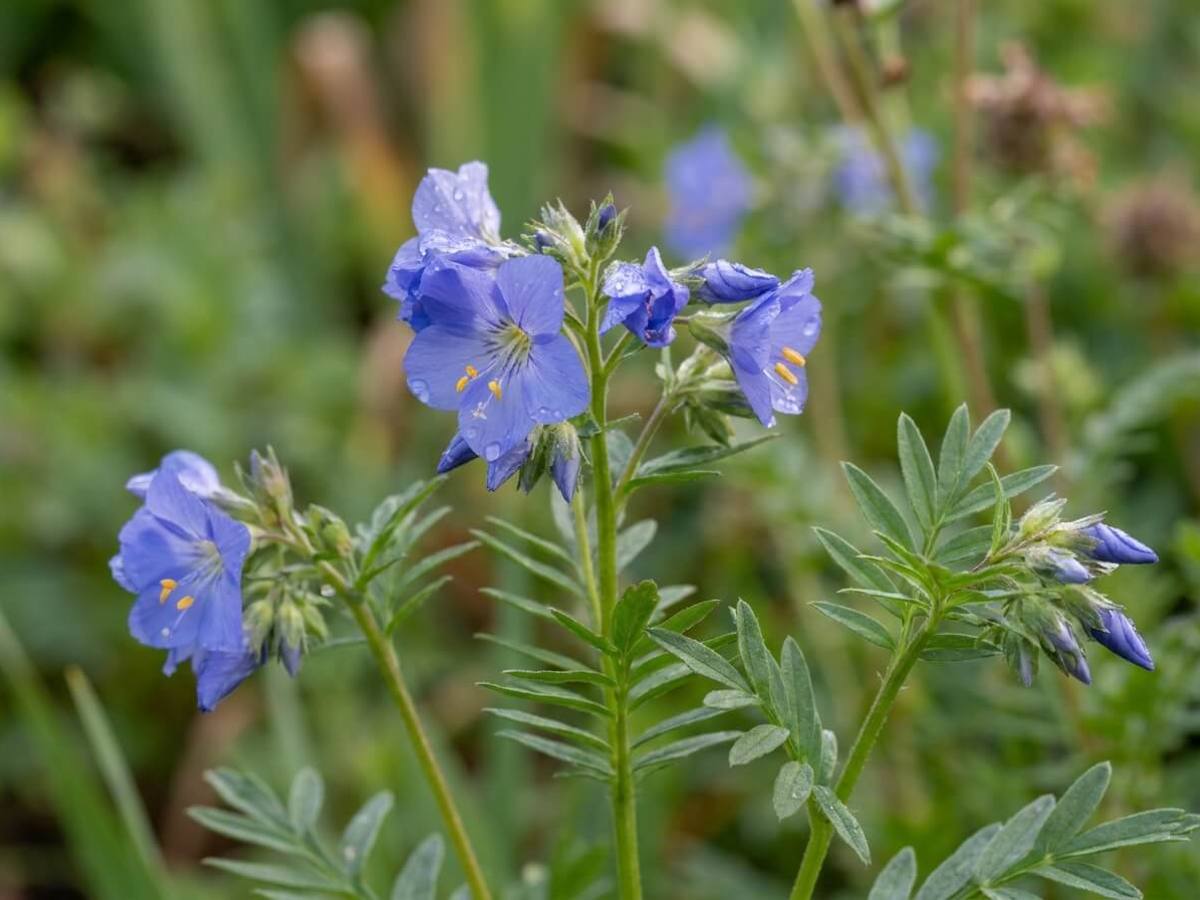
Polemonium reptans is a gentle, low-growing woodlander whose ladder-like leaves are topped in spring by loose sprays of nodding, powder-blue bells. It is one of the best perennials for the dappled edge of a border or beneath deciduous shrubs, where it knits into a soft, billowing carpet. Despite its name, it does not creep by runners — it forms well-behaved clumps that stay exactly where you put them.
Growing conditions
Dappled or partial shade suits this plant best, mimicking the deciduous woodland floor of its native eastern North America. It will cope with a few hours of gentle morning sun, but harsh midday light scorches the delicate foliage. Deep, dry shade under conifers is the one situation to avoid.
Give it a humus-rich, moisture-retentive soil that still drains freely in winter — leaf mould, garden compost or well-rotted bark worked into the planting area pays dividends. A slightly acidic to neutral pH of around 5.5 to 7.0 is ideal, though it tolerates mildly alkaline ground. Waterlogged clay in winter is the main killer.
It is exceptionally cold-hardy and needs no winter protection anywhere in Britain, Ireland or northern Europe. In hotter, drier regions, site it on a north- or east-facing aspect and mulch generously to keep the roots cool.
How to plant Polemonium
Early autumn is the ideal planting season, giving roots several weeks to establish in warm, moist soil before dormancy. Early spring planting also works well, provided you water conscientiously through the first summer.
Space plants 30–40 cm apart so clumps merge into a continuous carpet within two seasons without crowding.
Set the crown level with the surrounding soil — burying it invites rot, whilst planting proud causes drying out.
Fork a bucketful of leaf mould or garden compost into each planting station to improve both moisture retention and drainage.
Water in thoroughly, then apply a 5 cm mulch of composted bark, keeping it clear of the crown itself.
Divide established clumps every three to four years in early autumn or just as growth begins in spring; each division needs several growth buds and a good fist of root.
Polemonium reptans growing in a naturalistic garden border
Care through the seasons
Spring: Pull back any winter mulch as the ferny new rosettes emerge, and scatter a light dressing of general-purpose organic fertiliser or sieved compost. Watch for slugs, which adore the soft new foliage. Deadhead the spent flowering stems in early summer to tidy the plant and limit self-seeding.
Summer: Keep the soil evenly moist during dry spells — this is the single most important task of the year. If the plant does dry out, the foliage may yellow and collapse into early dormancy; it is not dead and will return the following spring. A top-up of leaf mould in June helps conserve moisture.
Autumn: Cut back any tired or spotted foliage to the ground once it begins to brown, but leave healthy rosettes, as the plant is often semi-evergreen in mild winters. This is the best moment to lift and divide congested clumps. Finish with a mulch of leaf mould over the root zone.
Winter: The plant retreats to a low basal rosette or disappears entirely, and needs no protection. Simply ensure the ground does not sit sodden, as winter wet is far more damaging than cold.
Best varieties to grow
A handful of selections offer brighter flowers or dramatically variegated foliage that extends the season of interest well beyond spring.
‘Stairway to Heaven’ — the best-known variegated form, with cream-margined leaflets flushed rose-pink in cool weather and lavender-blue flowers.
‘Touch of Class’ — a tidier, more vigorous sport of ‘Stairway to Heaven’ with crisper white variegation and better heat resistance.
‘Blue Pearl’ — a compact selection around 25 cm tall with unusually deep, clear blue bells, excellent at the front of a shady border.
‘Virginia White’ — a graceful white-flowered form that lifts gloomy corners and combines beautifully with ferns and hostas.
Pests, diseases and common problems
Slugs and snails: Ragged holes and shredded new growth in spring. Clear leaf litter from around the crowns, apply a barrier of sharp grit or wool pellets, and hunt by torchlight after rain.
Powdery mildew: A dusty white coating on leaves in hot, dry summers, usually a symptom of root stress. Improve soil moisture and air circulation, remove the worst leaves and avoid overhead watering late in the day.
Leaf spot: Brown or purple-rimmed blotches caused by fungi such as Septoria or Cercospora, worst in humid, crowded plantings. Pick off and bin affected leaves, thin congested clumps by division, and mulch to prevent rain splash.
🌿 Nature & Garden Newsletter
Gardening tips, recipes & seasonal advice, twice a week.