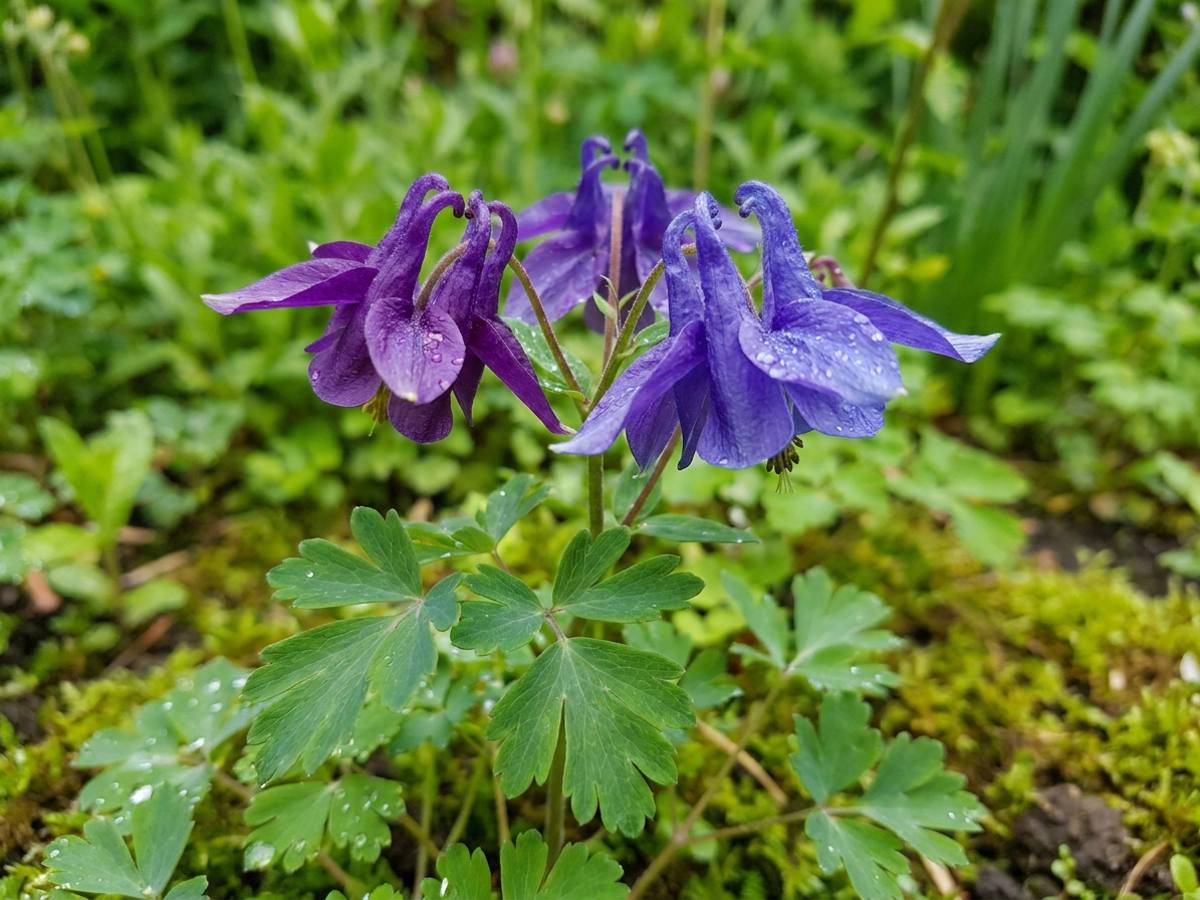
Few cottage-garden plants earn their place as effortlessly as Aquilegia vulgaris, whose nodding, spurred flowers hover above delicate blue-green foliage from late spring into early summer. Known as granny’s bonnet or common columbine, it slips happily between roses, geraniums and foxgloves, filling the awkward gap between the tulips fading and the herbaceous border hitting its stride. Its most endearing (and occasionally exasperating) trait is its promiscuity: seedlings cross freely, so an aquilegia patch rarely looks the same two years running.
Aquilegia is a woodland-edge plant at heart, so it performs best in light or dappled shade where the soil stays cool. It will grow perfectly well in full sun in cooler, damper regions such as Scotland, Ireland or northern France, provided the roots never bake dry. In hot southern gardens, afternoon shade keeps the foliage fresher for far longer.
Give it a moisture-retentive but free-draining soil enriched with leaf mould or garden compost. It is genuinely unfussy about pH, thriving on neutral, mildly acidic and chalky soils alike. The one thing it will not tolerate is winter waterlogging, which rots the fleshy taproot.
Hardiness is rarely an issue — established plants shrug off hard frosts and need no protection. Gardeners in warm, humid climates should expect shorter-lived plants and more mildew, so lean on self-sown replacements rather than trying to nurse old clumps along.
Plant pot-grown aquilegias in autumn or early spring, when the soil is warm and reliably moist so the taproot can settle before flowering. Autumn planting usually gives the strongest first-season display.
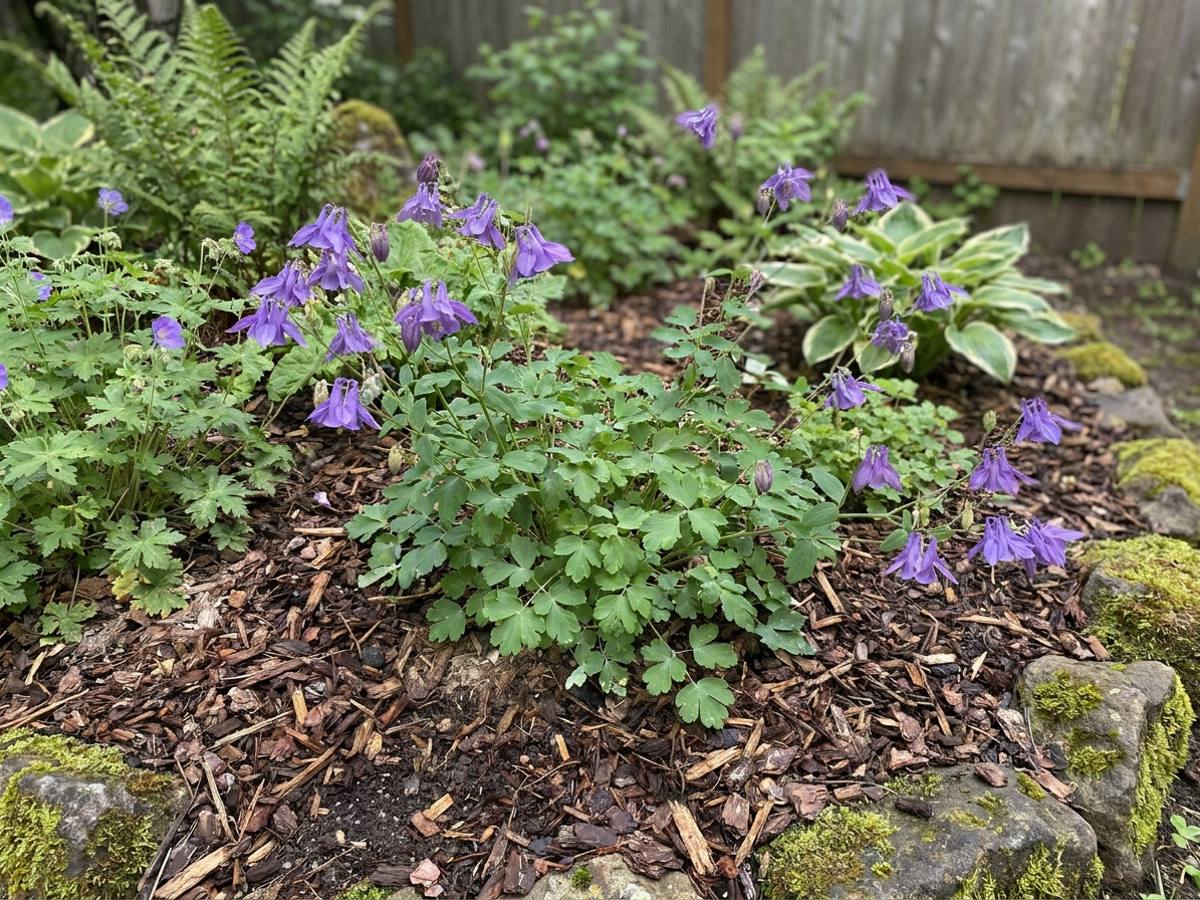
Aquilegia asks for very little, but what it asks changes with the season. This table sets out the one job that matters at each point of the year, and the problem to keep an eye on while you do it.
| Season | Main job | Watch out for |
|---|---|---|
| Early to mid-spring | Clear winter debris, mulch 5 cm of compost around the rosettes and give a light organic feed | The first leaf miner trails — pinch off affected leaves at once |
| Early summer to late summer | Water in dry spells, then deadhead or leave a few pods to ripen for seed | Powdery mildew on drought-stressed foliage |
| Early to mid-autumn | Plant new stock, move self-sown seedlings and scatter ripe seed where you want plants | Lifting seedlings late, once the taproot has grown |
| Early winter to late winter | Nothing at all — no protection is needed | Soil sitting sodden, as winter wet is the main killer |
Read the year this way and the two commonest disappointments — mildewed leaves and rotted crowns — largely look after themselves.
Spring: Clear away winter debris and apply a 5 cm mulch of compost around emerging rosettes, keeping it clear of the crown. A light feed of general-purpose organic fertiliser in March supports the flower spikes. Watch for the first leaf miner trails and pinch off affected leaves immediately.
Summer: Water during dry spells while plants are still flowering, as drought-stressed leaves mildew quickly. Once blooms fade, either deadhead promptly to keep the border tidy or leave a few pods to ripen for self-seeding. Cutting the whole plant back to the ground after flowering often prompts a fresh flush of clean, attractive foliage.
Autumn: Tidy away yellowing leaves and scatter ripe seed where you would like new plants. This is the ideal moment to plant new stock or move self-sown seedlings, whilst they are still small and the taproot is easily lifted. A thin mulch of leaf mould mimics their natural woodland conditions.
Winter: Plants die back to a low crown or a small evergreen rosette and need no protection whatsoever. Simply ensure the soil is not sitting sodden, as winter wet is the main killer.
The species itself is lovely, but several named forms bring reliable colour and form to the border.