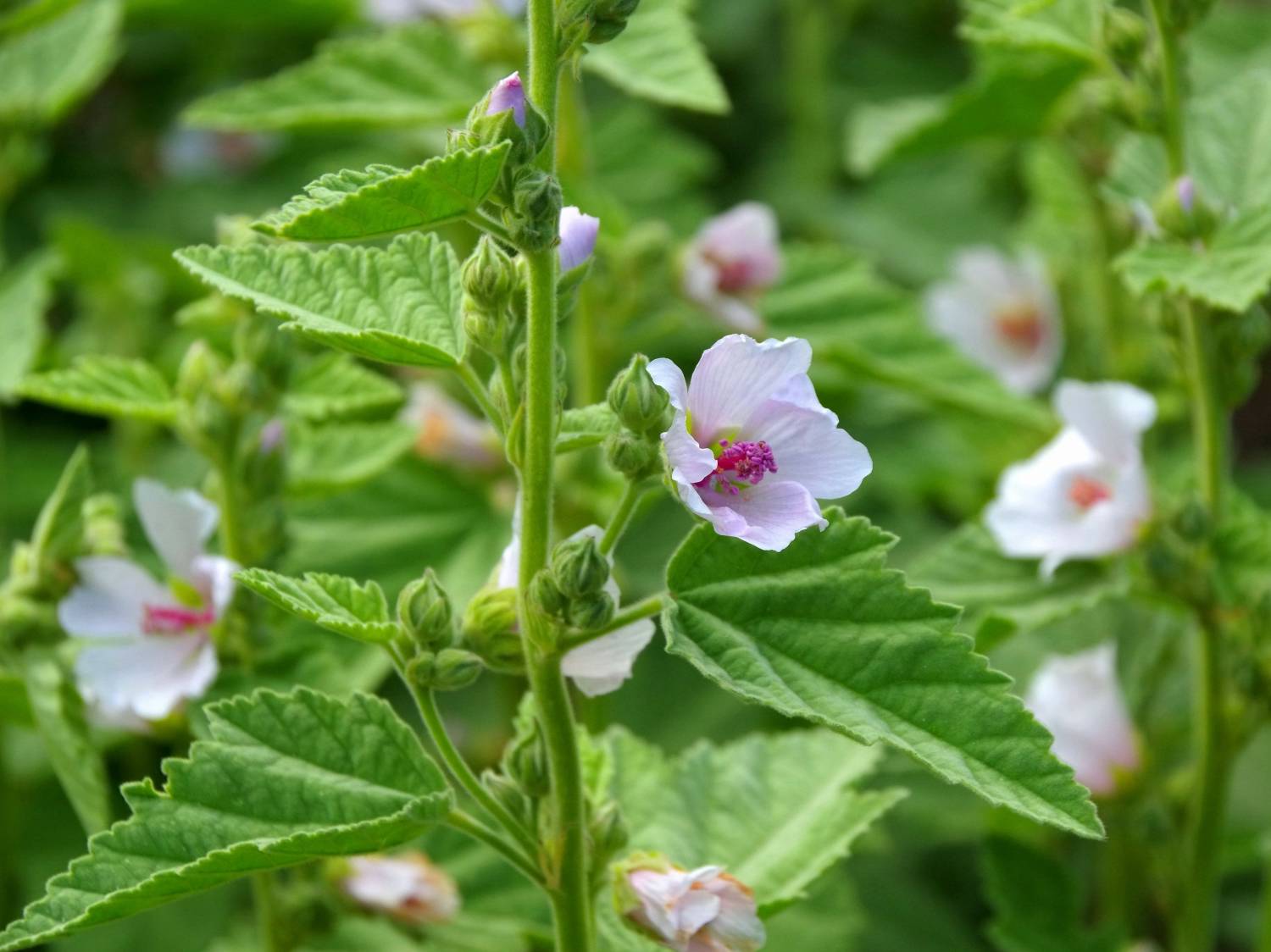
Sidalcea candida sends up slender spires of satiny white, cup-shaped flowers that look like miniature hollyhocks, lifting a border above a haze of deeply cut, hand-shaped foliage. It is one of the very few white-flowered members of a genus better known for its pinks, which makes it invaluable in cool white-and-green schemes and moon gardens. Unlike its clump-forming relatives, it travels gently on creeping rhizomes, knitting itself into a loose colony over several seasons.
Growing conditions
Give Sidalcea candida an open, sunny position with good air movement around the foliage. It will accept two or three hours of shade at either end of the day, but plants grown in dappled shade flower less generously and lean towards the light, needing support.
In the wild it grows in damp mountain meadows and along streamsides, so it wants soil that holds moisture in summer yet never becomes a winter swamp. A fertile loam enriched with garden compost suits it best; on thin chalk or dry sand, dig in plenty of organic matter before planting. A neutral to slightly alkaline pH is ideal, though it is not fussy.
Hardiness is excellent — the species comes from the Rocky Mountains of Colorado, Wyoming, Utah and New Mexico, where winters are severe. It is far more likely to fail through summer drought or winter waterlogging than through cold, so gardeners in dry eastern districts should prioritise soil moisture and a spring mulch.
How to plant Sidalcea
Plant in mid-spring, once the soil has warmed, or in early autumn while there is still warmth in the ground to encourage rooting. Spring planting is safer on heavy clay, where a newly planted crown can rot over a wet winter.
Space plants 40–45 cm apart in groups of three or five — drifts read far better than single spires, and neighbouring stems support one another in wind.
Set the crown level with the surrounding soil; burying it deeply invites rot at the base of the stems.
Fork a bucketful of well-rotted compost or leaf mould into each planting area to improve both moisture retention and drainage.
Water in thoroughly and keep the soil evenly damp for the first full growing season — this is when most losses occur.
Divide established clumps in early spring every three to four years, replanting the vigorous outer rhizomes and discarding the woody centre.
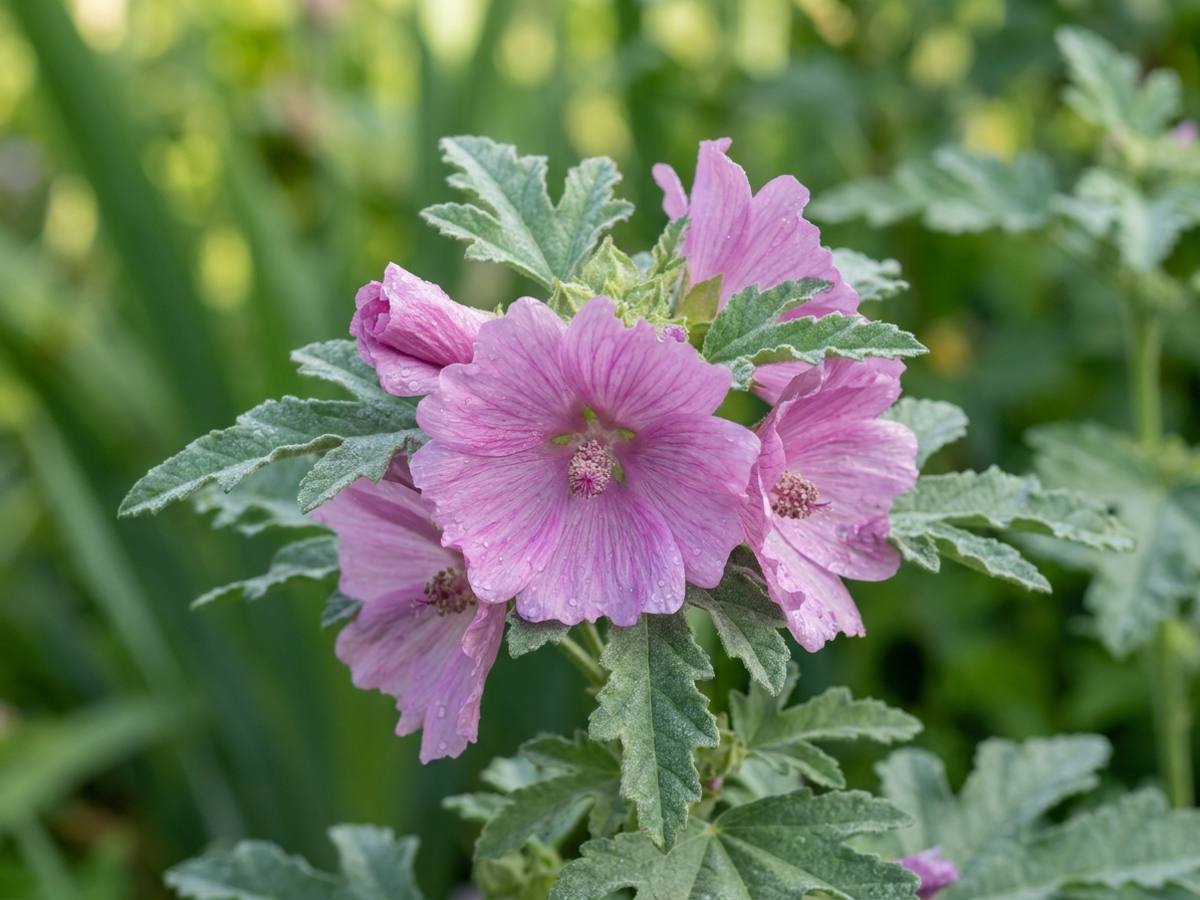
Sidalcea candida growing in a naturalistic garden border
Care through the seasons
Spring: Clear away last season’s stems as soon as new shoots appear and apply a 5 cm mulch of compost, keeping it clear of the crown. A single dressing of balanced general fertiliser in April is ample; overfeeding produces soft, floppy growth. Protect the emerging shoots from slugs, which find them irresistible.
Summer: Water deeply once a week in dry spells rather than sprinkling daily — the roots go down further than you might expect. Cut the flowered spikes back to a low pair of leaves as the top blooms fade, and many plants will produce a second, shorter flush into September. Insert twiggy pea sticks in June on exposed sites, before the stems reach knee height.
Autumn: Leave the seed heads standing into October for goldfinches and winter structure, then cut stems to 5 cm once they blacken. This is also a good moment to lift and split congested colonies in milder regions. A mulch of leaf mould over the crown suits plants on lighter soils.
Winter: The plant dies back completely to a flat rosette or bare crown and needs no protection in most temperate gardens. On heavy ground, a handful of grit worked around the crown helps shed surplus water.
Best varieties to grow
True cultivars of the species are few; most border sidalceas are pink hybrids that pair beautifully with the white form.
Sidalcea candida ‘Bianca’ — the standard named selection of the species, with pure white, slightly larger flowers on tidy 75 cm stems.
Sidalcea ‘Elsie Heugh’ — soft mauve-pink with charmingly fringed petals; holds an RHS Award of Garden Merit.
Sidalcea ‘William Smith’ — deep salmon-pink and reliably sturdy, another AGM holder and a strong contrast to the white species.
Sidalcea ‘Party Girl’ — vigorous rose-pink, easily raised from seed and quick to make a flowering clump in its second year.
Pests, diseases and common problems
Mallow rust (Puccinia malvacearum): Orange pustules on leaf undersides with yellow blotches above, worst in damp, crowded plantings. Remove and bin affected leaves promptly, thin or divide congested clumps to improve airflow, and avoid overhead watering.
Slugs and snails: New spring shoots can be grazed to stumps overnight. Apply a barrier of sharp grit or wool pellets around emerging crowns and hand-collect after evening rain.
Flopping stems: Tall spires splay outwards after summer downpours, especially in rich soil or partial shade. Support with pea sticks in June, or use the “Chelsea chop” in late May — cutting stems back by a third for shorter, self-supporting growth.
🌿 Nature & Garden Newsletter
Gardening tips, recipes & seasonal advice, twice a week.