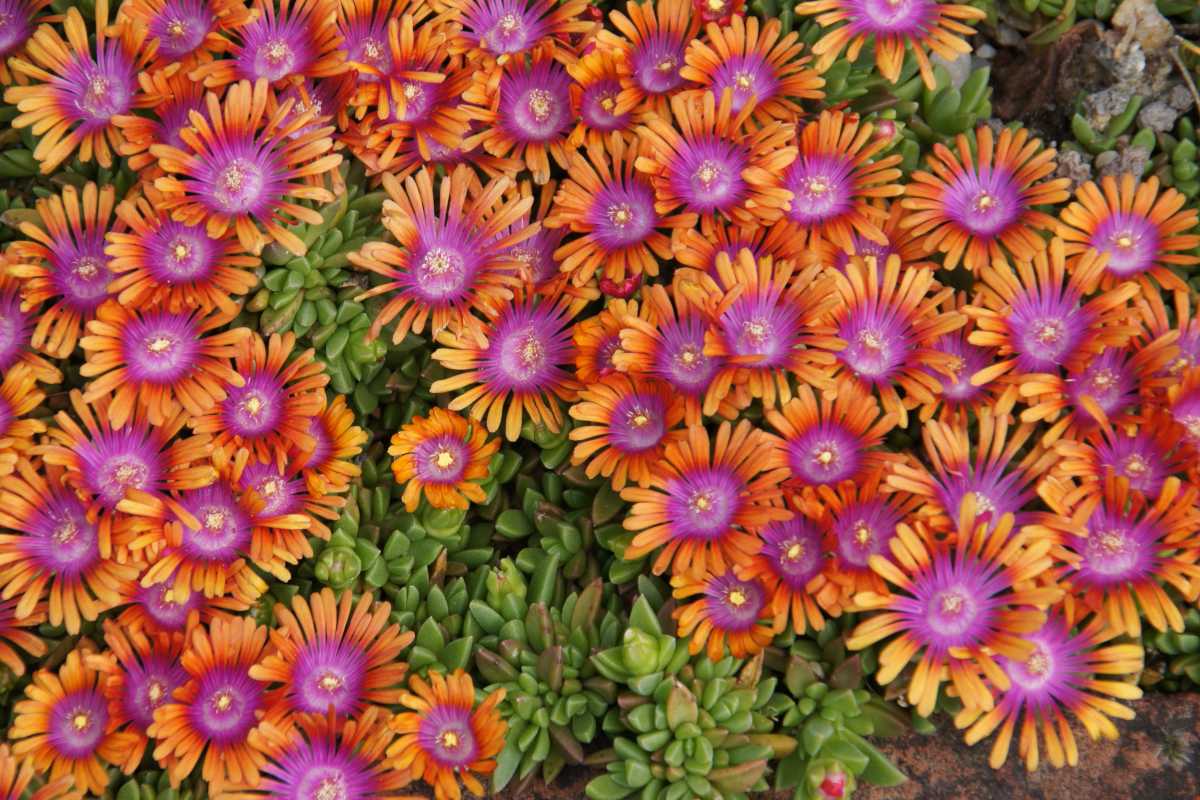
Magnificent purple flowers spread over fleshy evergreen leaves: Cooper’s ice plant (Delosperma cooperi), a South African succulent, sprawls like a thick carpet over low rock walls, edges, flower beds and garden boxes. Give it full sun and soil that drains very well, and it will flower from June to October, shrugging off drought and frost down to 14°F (-10°C).
| Name | Delosperma cooperi |
|---|---|
| Family | Aizoaceae |
| Type | perennial, succulent |
| Height | 6 to 8 inches (15 to 20 cm) |
| Exposure | full sun |
| Soil | well-drained |
| Foliage | evergreen |
| Flowering | June to October |
A succulent plant with very interesting leaves, it survives dry spells and is particularly hardy when winters are cold.
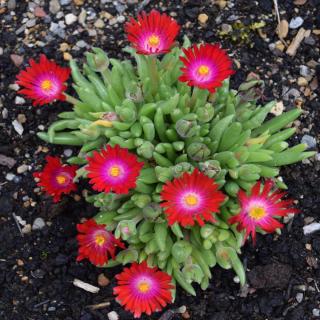
Delosperma cooperi is planted indifferently in fall or spring.
This is a plant that is at peak beauty when it sprawls over like a thick carpet, as ground cover or spilling over a mound of rocks.
Even though this particular plant is easy to care for and grows back year in, year out, a couple good habits will help you magnify the blooming and, especially, to extend it as long as can be.
Every every 2 or 3 years, it pays to regenerate older specimens through crown division in fall or at the beginning of spring.
If you’re looking to inhibit excessive spreading, annual pruning at the beginning of spring is called for.
Cooper’s ice plant asks for very little, but a handful of well-timed gestures will lengthen the flowering and keep the carpet under control. Here is what to do, and when.
| Task | When | Why it matters |
|---|---|---|
| Feeding | Spring | Intensifies the blooming |
| Watering | Only after planting | A drought plant that stores water in its leaves |
| Removing spent flowers | As soon as they wilt | Stops the plant wasting energy and brings more flowers |
| Crown division | Every 2 or 3 years, in autumn or early spring | Rejuvenates old clumps and extends their lifespan |
| Pruning | Beginning of spring | Curbs spreading, since rooting stems never stop |
Keep to this short list and the carpet will come back year in, year out.
Beyond the plain purple species, a handful of named forms are widely sold in garden centres and mainstream catalogues, mostly differing in flower colour and in how far the mat creeps. Use the table below to pick the one that suits your wall, edge or container.
| Variety | Flower colour | Best use |
|---|---|---|
| Wheels of Wonder Violet Wonder | Violet-purple, white eye | Ground cover, window boxes |
| Wheels of Wonder Orange Wonder | Orange, pale centre | Spilling over low walls |
| Wheels of Wonder Hot Pink Wonder | Bright pink, white eye | Large carpets, banks |
| ‘Table Mountain’ (syn. ‘John Proffitt’) | Deep magenta-purple | Ground cover, rock wall tops |
| Jewel of the Desert Garnet | Deep red, white eye | Edging, gravel beds |
| Jewel of the Desert Moonstone | White, yellow centre | Pale contrast in rockeries |
| Jewel of the Desert Topaz | Yellow-orange, white eye | Containers, sunny troughs |
Gardeners wanting a named form usually reach for ‘Table Mountain’, also sold as ‘John Proffitt’, which offers the same magnificent purple flowers and thick-carpet habit that suit low rock walls, edges and flower beds.
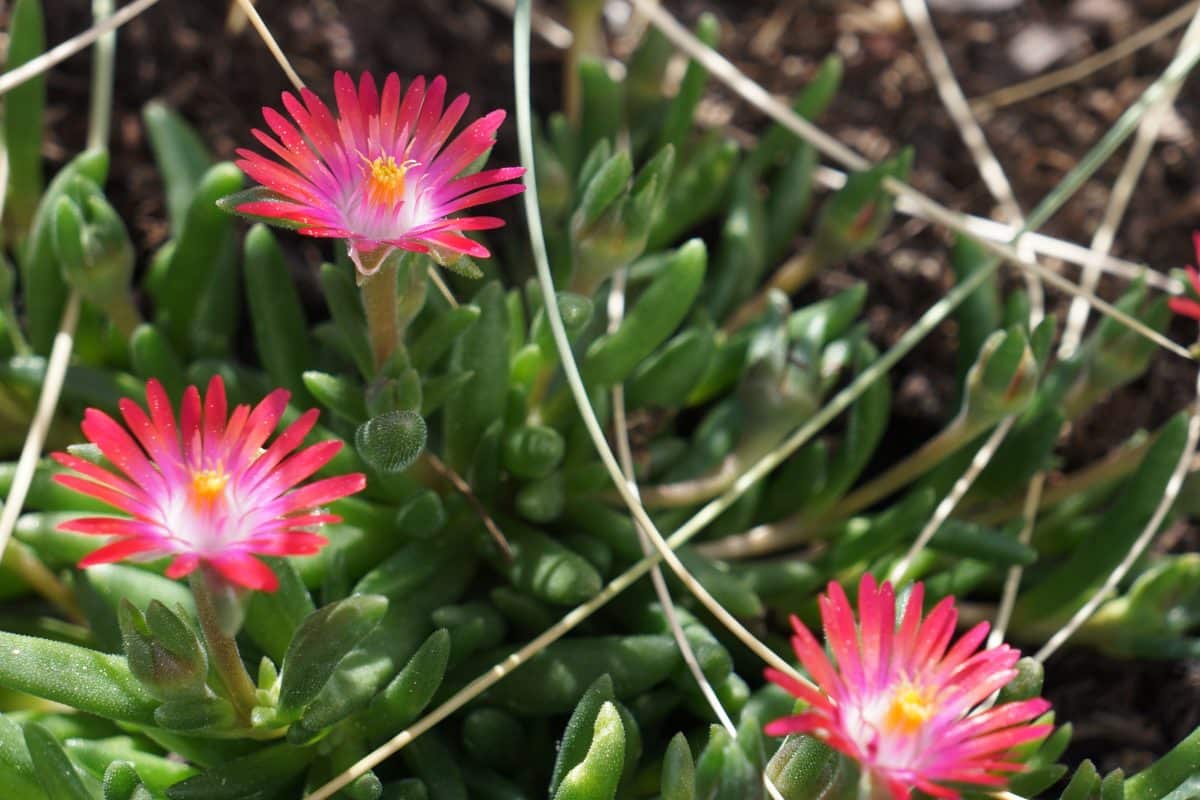
Native to South Africa and sometimes called Cooper’s ice plant, Delosperma cooperi is a plant that bears succulent leaves which blooms abundantly from spring to winter.
Its flowers that are an absolutely magnificent purple color will lend an exotic touch to your low rock walls, edges, flower beds and rocky terrain, as well as to your pot arrangements or garden boxes.
Note that there are over 120 different Delosperma species and some of them bear differently-colored flowers.
Among these closely related species, you’ll find Delosperma crassuloides with its white flowers and Delosperma echinatum which has yellow flowers.
Its hardiness is quite good since it can withstand freezing down to about 14°F (-10°C).
If you’re looking for this plant’s cousin, edible purslane, which is grown for its leaves, here is the page on purslane in the vegetable patch.
An easy and abundant plant, simple well-drained soil with a lot of sunlight will be enough for it to grace you with its magnificent flowers.