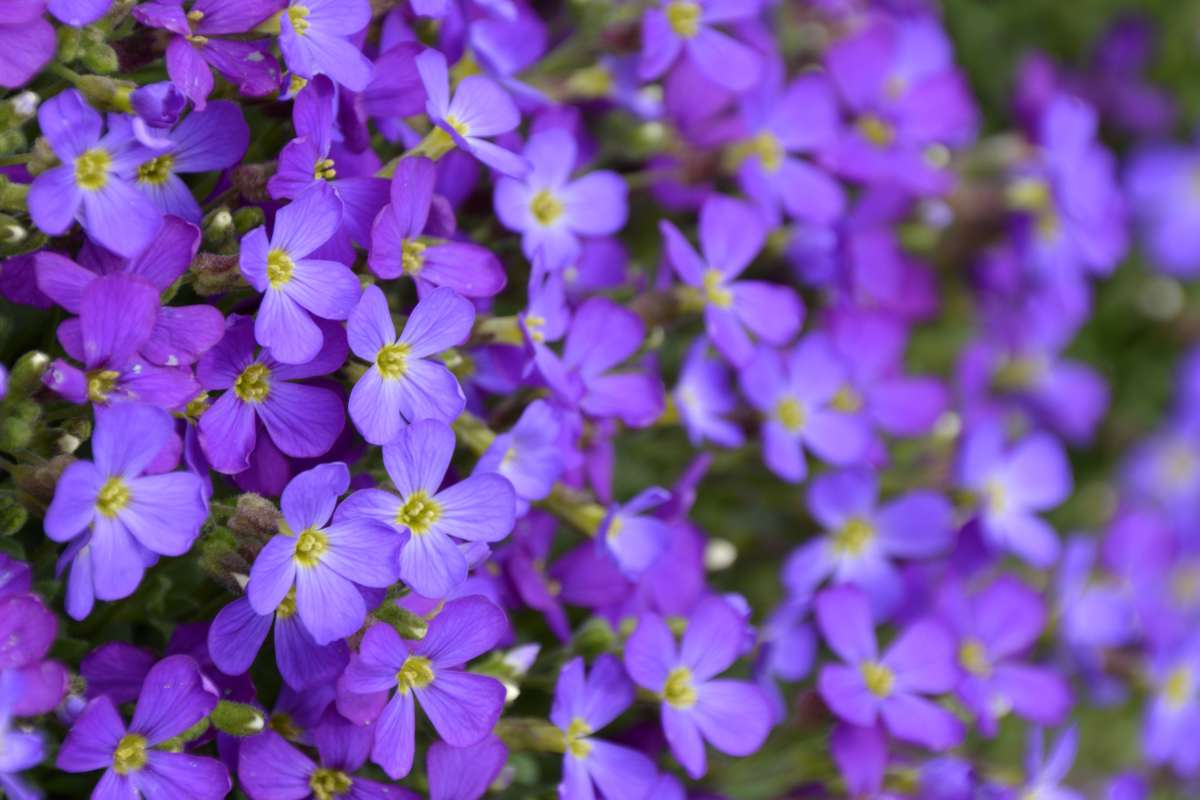
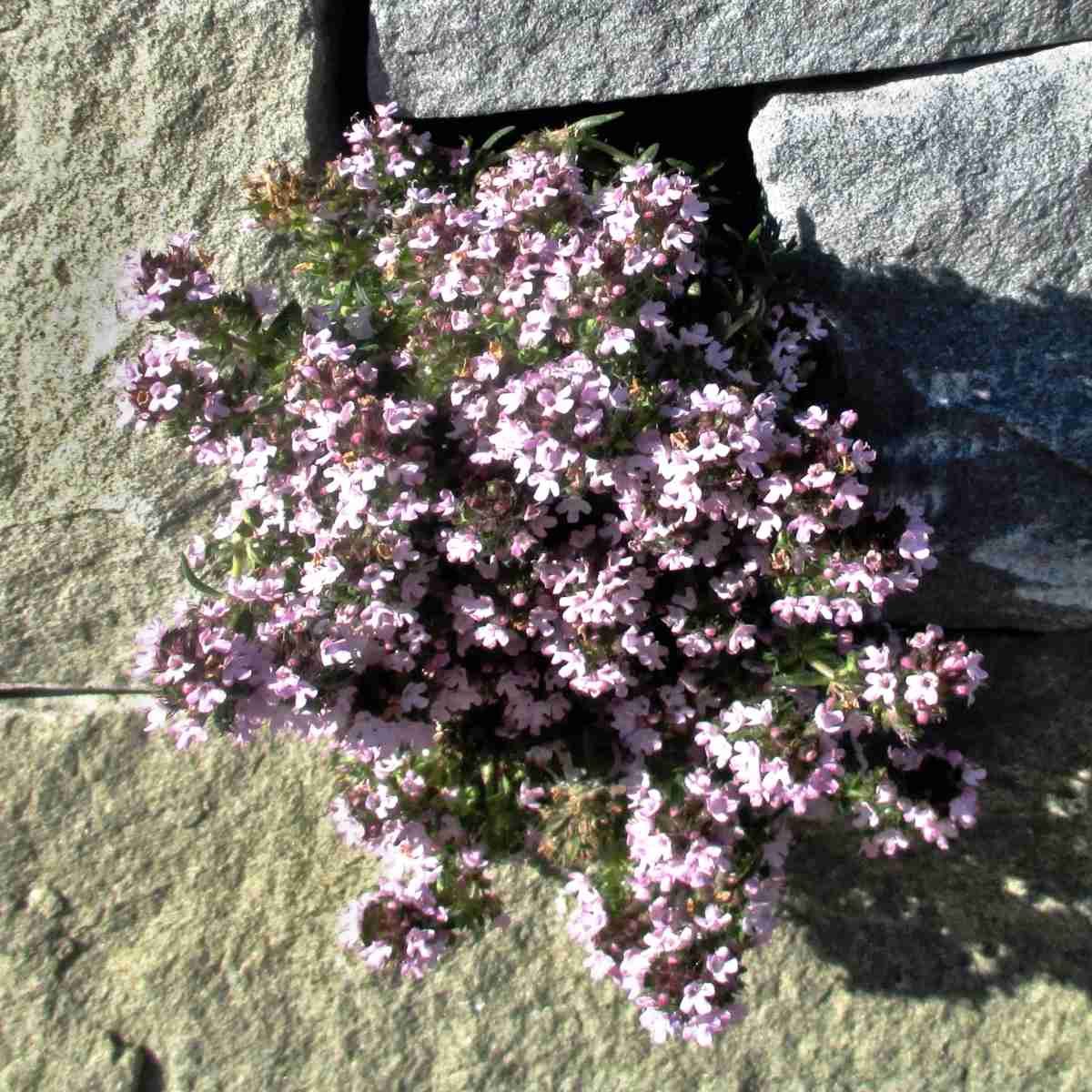
Roundish bushy balls smothered in purple-blue flowers, so many that they crowd out the leaves: aubrieta (Aubrieta) tumbles from holes in old walls, along edges and over rocky terrain, flowering early in the season. Give it a sunbathed spot, five to ten plants per square yard, and it repays you with amazing ground cover.
| Name | Aubrieta |
|---|---|
| Family | Brassicaceae |
| Type | perennial |
| Height | 6 to 8 inches (15 to 20 cm) |
| Exposure | full sun |
| Soil | ordinary |
| Flowering | April-May |
| Foliage | evergreen |
Aubrieta is planted in fall if possible, but planting can also be performed in spring, in non-freezing weather.
Aubrieta loves old walls, rocky ground and cascading cliffs, where it will produce a very ornamental impact.
Aubrieta in pots and containers
Aubrieta is a flower that is very well suited to growing in a pot or a garden box.
You’ll appreciate your aubrieta when you discover how easy it is to care for, and how abundant its blooming is.
Aubrieta and potential diseases
Aubrieta is a plant that resists most diseases and fungi very well, but it sometimes is hit by downy mildew.
This happens when heat and moisture occur at the same time. A layer of whitish webs appears on leaves and stems.
As for parasites, you might spot a few aphids from time to time.
Garden centres and seed catalogues offer a handful of reliable aubrietas that differ mainly in flower colour and in how far they trail. Use the table below to match a variety to the wall, edge or container you have in mind.
| Variety | Flower colour | Height | Habit | Best use |
|---|---|---|---|---|
| ‘Royal Blue’ | Violet-blue | 4–6 in (10–15 cm) | Compact, spreading | Edging, seed-raised drifts |
| Cascade Series (Purple, Red, Blue) | Purple, red or blue | 6 in (15 cm) | Long trailing stems | Wall crevices, hanging baskets |
| ‘Royal Violet’ | Rich violet | 4–6 in (10–15 cm) | Compact, spreading | Window boxes, edging |
| ‘Doctor Mules’ | Deep violet-purple | 4–6 in (10–15 cm) | Dense, low mound | Wall tops, rockery |
Aubrieta asks for very little, but each task has its own moment in the year. Here is the whole cycle at a glance, from planting to the post-flowering trim.
| Task | When | What to do |
|---|---|---|
| Planting | Fall, or spring | Plant in fall if possible; spring planting is fine provided the weather is not freezing |
| Feeding the soil | End of winter | Fertilize the garden soil for spectacular blooming every year |
| Flowering | April-May, from the beginning of spring | Hundreds of flowers appear, to the point of crowding out the leaves |
| Pruning | After flowering | Cut the stems back |
| Dividing | Every 2 or 3 years | Divide the clump to propagate and multiply your plants |
Follow this rhythm and the same clumps will flower more thickly year after year.
This cute ground cover plant produces roundish bushy balls with purple blue flowers.
From the beginning of spring, it bears hundreds of flowers to the point of actually crowding out its own leaves.
Both hardy and cold-resistant, it can grow in a hole in the wall, along edges or in rocky terrain.
It is often compared to a cute flowered pillow, and is just as suited to growing in pots or garden boxes as it is growing in the ground with other aubrieta plants.
You can add special perennial organic fertilizer after the blooming.