Oxalis triangularis: your complete care and growing guide
0
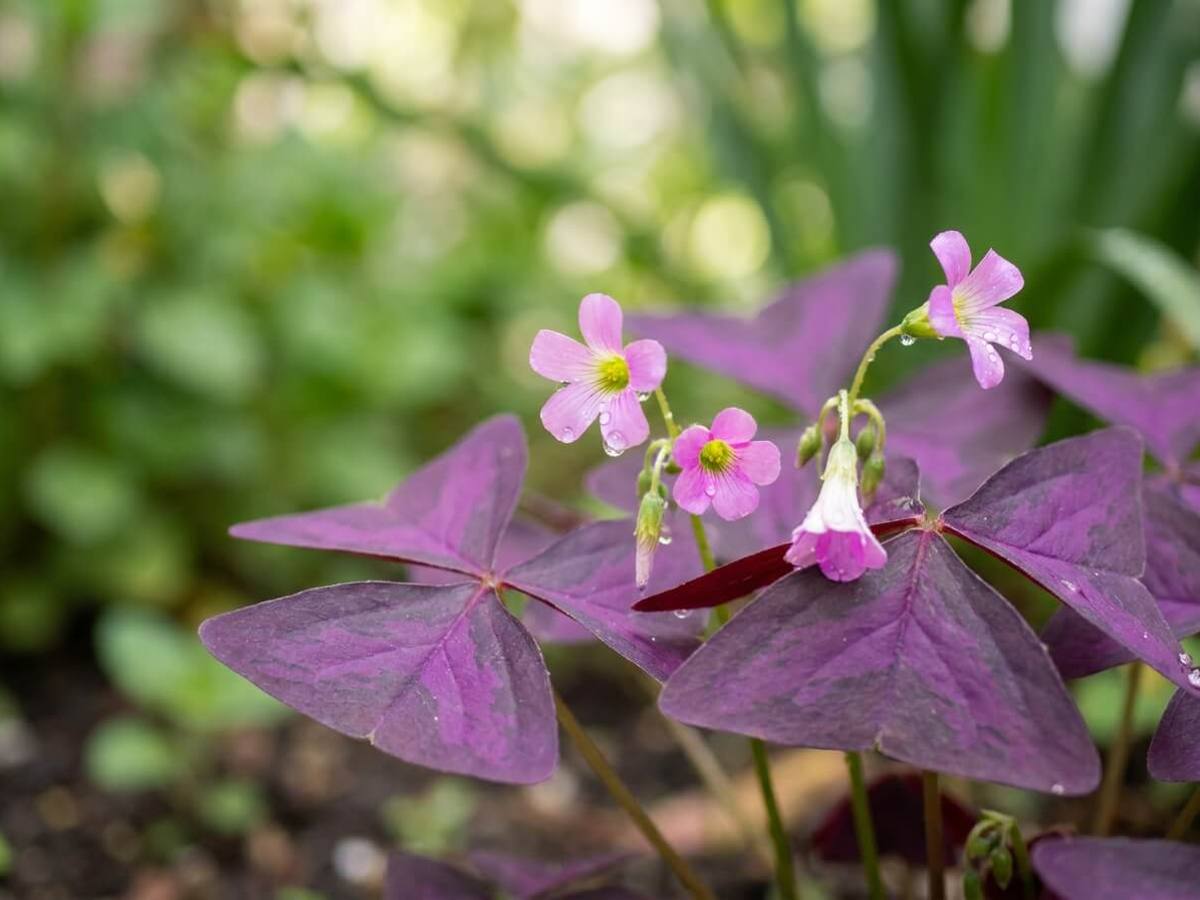
With its triangular wine-purple leaflets held on slender stems like a flock of butterflies, Oxalis triangularis is one of the most quietly theatrical foliage plants you can grow. It earns its place in shady borders, pots and windowsills alike, offering months of deep colour punctuated by delicate pale pink flowers. Most remarkable of all, the leaves fold shut every evening and reopen at dawn, so the plant visibly changes shape through the day.
Growing conditions
Purple shamrock colours best in bright light with shelter from scorching midday sun. Dappled shade beneath deciduous shrubs suits it perfectly outdoors, whilst indoors an east- or west-facing windowsill gives the light levels it needs. In deep shade the leaves grow leggy and fade towards muddy bronze rather than rich burgundy.
It wants a light, humus-rich medium that holds moisture yet drains freely — the rhizomes rot quickly in cold, sodden ground. A slightly acidic to neutral pH of around 6.0 to 7.0 is ideal. For containers, use a peat-free multipurpose compost with a third added perlite or horticultural grit.
Native to southern Brazil and neighbouring regions, it thrives where summers are warm and winters frost-free. In mild coastal and city gardens it will overwinter under a dry mulch, but in colder areas lift the rhizomes in autumn or simply grow it in pots moved under cover.
How to plant Oxalis
Plant rhizomes in spring, from March to May, once the soil or compost has begun to warm above roughly 12 °C. Planted into cold, wet ground they sulk and are far more likely to rot than sprout.
Space rhizomes 8–10 cm apart so the fans of foliage knit into a continuous carpet within a single season.
Set them 2–3 cm deep, laid horizontally; they are not fussy about which way up, as shoots will find their way to the light.
Fork in leaf mould or garden compost beforehand to improve both moisture retention and drainage.
Water in gently once, then keep the soil barely moist until the first leaves appear, typically after two to four weeks.
To propagate, tip out a clump in early spring and pull the rhizome cluster apart by hand — five to eight pieces per 15 cm pot gives an instantly full display.
Oxalis triangularis growing in a naturalistic garden border
Care through the seasons
Spring: As new shoots push through, begin watering more generously and start a balanced liquid feed every three or four weeks. This is the ideal moment to divide congested clumps and repot container plants into fresh compost. Pinch out any pale, weak stems produced during winter.
Summer: Keep the compost evenly moist but never waterlogged, watering when the top 2 cm feels dry. Remove spent flower stems and any tatty leaves at the base to keep the clump fresh and airy. In prolonged heat above 28 °C the plant may pause and shed leaves — move pots into shade rather than drowning them.
Autumn: Growth naturally slows and foliage begins to yellow; reduce watering and stop feeding from September. Cut the old leaves back to the ground once they collapse. In gardens colder than about −5 °C, lift the rhizomes, dry them briefly and store them in barely damp sand or vermiculite somewhere frost-free.
Winter: Most plants take a dormant rest of six to twelve weeks, and this is entirely normal. Keep stored rhizomes and dormant pots almost dry at 10–15 °C, then resume watering when fresh shoots appear.
Best varieties to grow
A handful of selections offer different leaf tones and flower colours, all grown in exactly the same way.
Oxalis triangularis subsp. papilionacea ‘Atropurpurea’ — the classic deep plum-purple form with a darker chevron across each leaflet and soft pink flowers.
Oxalis triangularis ‘Mijke’ — an exceptionally dark, almost black-purple selection that holds its colour well in bright light.
Oxalis triangularis ‘Burgundy Wine’ — richly wine-toned leaves on compact plants, excellent for the front of a shady border.
Oxalis triangularis ‘Charmed Jade’ — a fresh green-leaved form with white flowers, useful for brightening dim corners and contrasting with the purple types.
Pests, diseases and common problems
Red spider mite: Fine webbing and stippled, dull leaves appear in dry indoor air. Raise humidity by standing pots on damp pebbles, rinse the foliage and introduce Phytoseiulus persimilis under glass.
Rhizome and root rot: Stems blacken at the base and the whole clump collapses, almost always from overwatering or heavy soil. Repot into gritty, free-draining compost, discard soft rhizomes and allow the surface to dry between waterings.
Oxalis rust (Puccinia oxalidis): Bright orange pustules speckle the undersides of the leaves in humid weather. Remove and bin affected foliage promptly, improve air circulation and avoid overhead watering.
🌿 Nature & Garden Newsletter
Gardening tips, recipes & seasonal advice, twice a week.