Purple Toadflax: Growing Guide for Vibrant Garden Borders
0
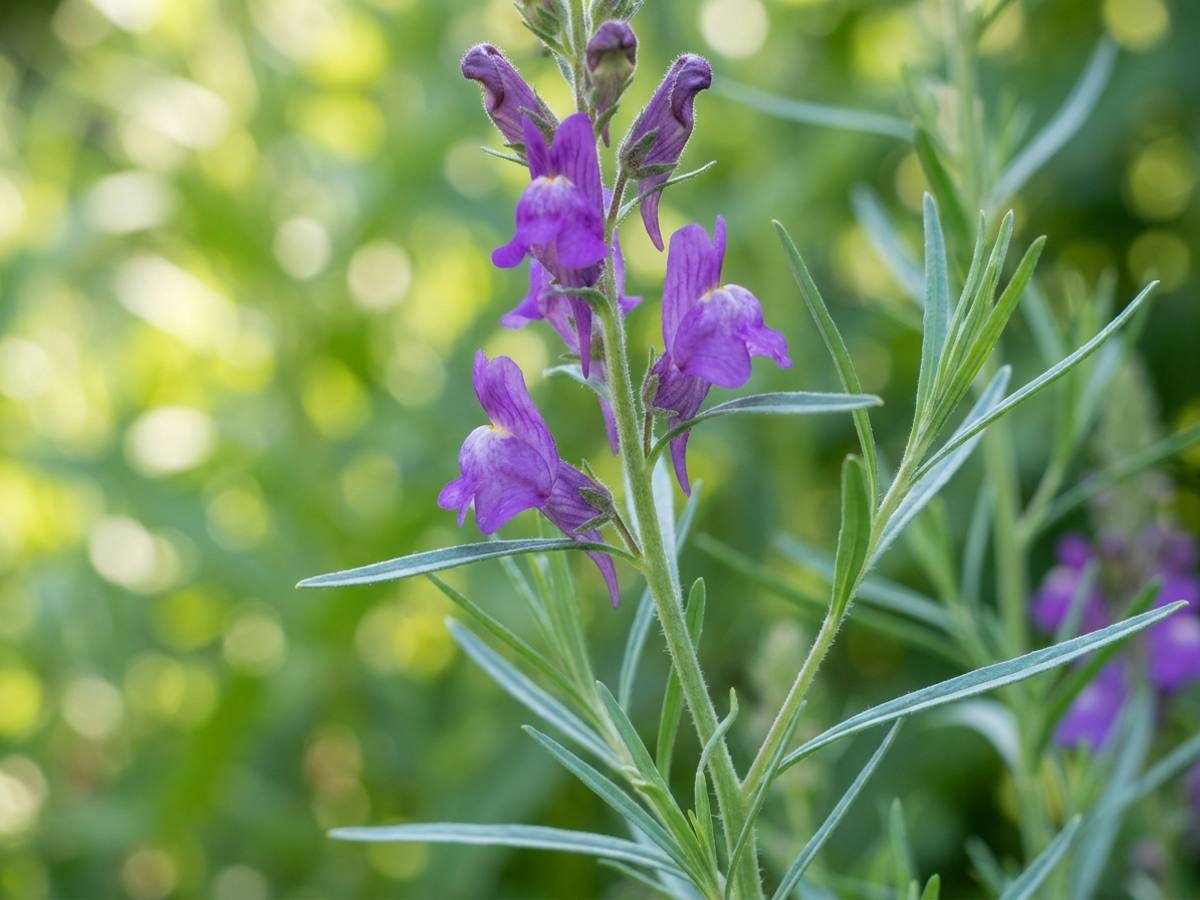
Slender, wand-like spires of tiny snapdragon flowers give Linaria purpurea an airy, vertical presence that few other perennials manage so cheaply or so gracefully. Its narrow blue-grey foliage and violet-purple blooms weave effortlessly between roses, grasses and gravel-garden shrubs, flowering for months on end. Best of all, it self-seeds with cheerful abandon, quietly filling gaps and cracks where you’d never have thought to plant anything.
Growing conditions
Purple toadflax flowers best in full sun, where the stems stay stiff and self-supporting. In partial shade it will still bloom, but expect fewer spikes and a tendency to lean towards the light. An open, breezy position suits it far better than a sheltered, humid corner.
Sharp drainage matters more than fertility. This is a plant of railway ballast, old walls and stony banks in its native central Italy, so it thrives on thin, alkaline or neutral soils and copes admirably with chalk. Heavy, wet clay is its main enemy — improve it with grit before planting, or grow the plant in raised beds and gravel.
It is reliably hardy across the British Isles and much of northern Europe, shrugging off frost down to roughly −20 °C. In hot, dry summer climates it appreciates a little afternoon shade; in mild coastal gardens it may behave as a near-evergreen and flower remarkably late.
How to plant Linaria
Plant container-grown plants in spring, from March to May, so roots establish before the first flowering flush. Early autumn planting also works well on free-draining soils, giving the crown time to settle before winter.
Spacing: Set plants 30–40 cm apart in groups of three or five — close enough for the thin stems to support one another, but airy enough to avoid mildew.
Depth: Plant so the crown sits exactly level with the soil surface; burying it invites rot in a wet winter.
Soil preparation: Fork over the planting area and mix in a couple of handfuls of horticultural grit per plant. Skip the manure — rich soil produces floppy growth.
Watering in: Soak thoroughly once after planting, then water only during prolonged dry spells in the first season.
Propagation: Sow seed on the surface of gritty compost in spring at 15–18 °C, or simply transplant self-sown seedlings when they are 5 cm tall. Named cultivars are best increased by basal cuttings in late spring, as seedlings rarely come true.
Linaria purpurea growing in a naturalistic garden border
Care through the seasons
Spring: New shoots appear from the base in March and April — resist tidying too early, as the old stems shelter the crown. Thin overcrowded clumps and lift surplus seedlings now, whilst they move easily. No feeding is needed; at most, a light scatter of general fertiliser on very poor sand.
Summer: Deadhead spent spikes regularly to prolong flowering into September and to keep self-seeding within bounds. Established plants are notably drought-tolerant, so water sparingly and only in extended heatwaves. If stems flop after summer storms, cut them back by a third for a fresh, sturdier second flush.
Autumn: Leave a few seed heads if you want next year’s free plants, then cut stems down to 10 cm once they brown, usually in late October or November. Divide congested clumps in early autumn, though many gardeners find replacing tired plants with seedlings simpler. Avoid heavy mulching over the crown, which traps moisture.
Winter: The plant dies back to a small basal rosette and needs no protection in temperate gardens. On heavy soils, a collar of grit around the crown helps prevent winter rot.
Best varieties to grow
A handful of selected forms extend the colour range beyond the wild violet-purple.
Linaria purpurea ‘Canon Went’ — the best-known cultivar, with soft shell-pink flowers and grey foliage; holds an RHS Award of Garden Merit and comes fairly true from seed if isolated.
Linaria purpurea ‘Springside White’ — clean white spikes with a faint lilac blush, superb for lightening a shady border edge.
Linaria purpurea ‘Radcliffe Innocence’ — pure ivory-white flowers on especially slender, upright stems, lovely with dark-leaved companions.
Linaria purpurea ‘Alba’ — a straightforward white seed strain, useful for informal drifts and gravel gardens where a little variation is welcome.
Pests, diseases and common problems
Aphids: Colonies gather on the soft flowering tips, causing distorted spikes and sticky honeydew. Blast them off with a jet of water or squash by hand — ladybirds and hoverflies usually finish the job within a fortnight.
Powdery mildew: A white dusty coating on leaves in dry, congested conditions late in summer. Improve air flow by thinning stems, water the soil rather than the foliage, and cut affected growth back hard to encourage clean regrowth.
Winter crown rot: Plants vanish over winter on wet, heavy ground, leaving a mushy crown. Prevention is the only cure: add grit, raise the planting level, and rely on self-sown seedlings as insurance.
🌿 Nature & Garden Newsletter
Gardening tips, recipes & seasonal advice, twice a week.