Styrax americanus: your complete guide to growing this fragrant shrub
0
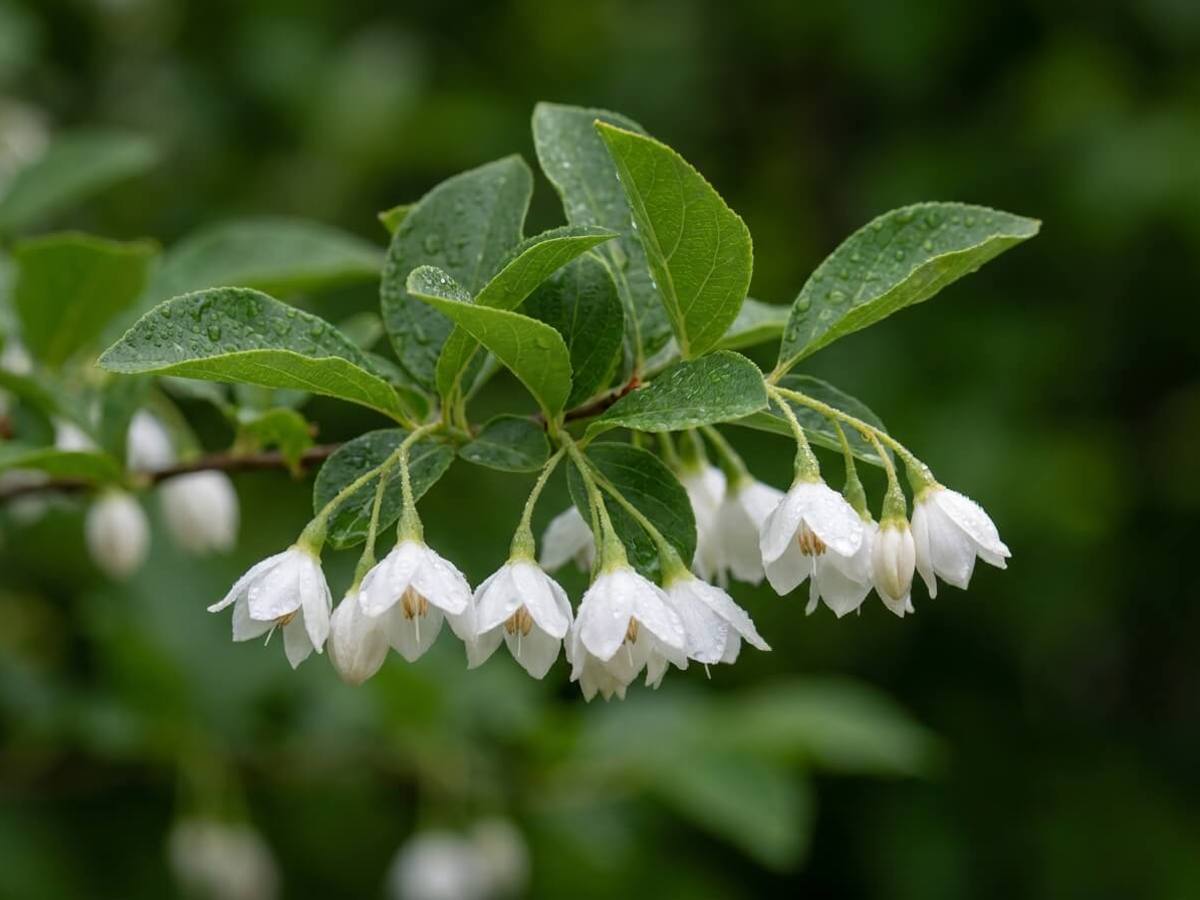
Few native American shrubs carry their flowers quite so charmingly as Styrax americanus, whose slender branches hang with dozens of small white bells, each petal swept sharply backwards like a miniature shooting star. It is a graceful, open-framed shrub for the back of a damp border, a woodland edge or a pond margin, flowering in late spring with a soft, sweet scent. Unusually for an ornamental shrub, it positively enjoys ground that stays wet for weeks at a time.
Growing conditions
American snowbell flowers most freely in full sun, provided the roots never dry out. In warmer, drier gardens it is happier with light shade for part of the day, and it is one of the better choices for the dappled edge of a woodland planting. Deep shade simply produces a thin, leggy shrub with few blooms.
Soil is where this shrub is fussy. It wants moisture-retentive, humus-rich ground with an acid to neutral pH, ideally between 5.0 and 6.5, and it tolerates heavy clay and seasonal flooding far better than most ornamentals. On chalk or shallow limestone it develops lime-induced chlorosis and rarely thrives, so a raised bed of ericaceous soil or a large container of lime-free compost is the only realistic option there.
It is reliably hardy across the British Isles and much of northern Europe, and across USDA zones 5 to 9. In exposed, windy gardens, shelter from cold spring winds protects the flower buds and the early foliage.
How to plant Styrax
Plant container-grown specimens in autumn, from October onwards, so the roots settle whilst the soil is still warm and naturally moist. Early spring planting also works well, but demands far more watering through the first summer.
Spacing: allow 2–2.5 m between plants and from neighbouring shrubs — the airy, layered branch structure is the main attraction and needs room to show.
Depth: set the top of the rootball flush with the surrounding soil; planting proud leaves the roots to dry out, which this species will not forgive.
Soil preparation: fork in generous quantities of leaf mould, composted bark or garden compost to hold moisture and gently acidify the ground.
Watering in: soak thoroughly after planting, then mulch 5–7 cm deep with bark or leaf mould, keeping the mulch clear of the stems.
Propagation: take softwood cuttings in June with a little bottom heat, or sow seed outdoors in autumn — it has double dormancy and needs a warm period followed by cold before germinating, often in the second spring.
Styrax americanus growing in a naturalistic garden border
Care through the seasons
Spring: Top up the mulch in March and apply an ericaceous or general-purpose organic feed as the buds swell. Flower buds form on the previous season’s wood, so resist any temptation to tidy the shrub before it blooms. Watch young growth for aphids and squash small colonies by hand.
Summer: Water deeply during dry spells, especially for the first three summers — a weekly soaking of 10–15 litres is far better than frequent sprinklings. Any pruning should be done immediately after flowering, limited to removing crossing or dead branches and lifting the lower skirt to reveal the elegant trunks. Deadheading is unnecessary and the small, grey, drupe-like fruits that follow are quietly attractive.
Autumn: The foliage turns a soft yellow before falling, a modest but pleasant finish to the season. This is the ideal moment to plant, transplant young specimens or spread a fresh layer of leaf mould over the root zone. Collect ripe fruit in September or October if you intend to raise plants from seed.
Winter: The shrub is fully dormant and needs no protection in temperate gardens, though a thick mulch helps young plants through their first two winters. Container-grown specimens should have their pots wrapped or moved against a sheltered wall when temperatures drop below −8 °C.
Best varieties to grow
Named cultivars of the American snowbell remain scarce, so most gardeners buy the straight species — but these selections and close relatives are worth hunting out.
Styrax americanus var. pulverulentus — the downy American snowbell, with fine grey hairs on the undersides of the leaves and an equally generous display of recurved bells.
Styrax grandifolius — the bigleaf snowbell, a taller native cousin with broader foliage and fragrant flowers in elongated racemes, useful where more height is wanted.
Styrax japonicus ‘Pink Chimes’ — a Japanese species cultivar with soft pink bells, better suited to drier, neutral soils than S. americanus.
Styrax japonicus ‘Evening Light’ — deep purple-black foliage setting off white flowers, holder of the RHS Award of Garden Merit in several trials and a striking alternative for a sheltered, well-drained site.
Pests, diseases and common problems
Lime-induced chlorosis: leaves turn pale yellow whilst the veins stay green, and growth stalls. Mulch with pine needles or composted bark, water with rainwater rather than tap water, and apply chelated iron as a stop-gap; on true chalk, move the plant into an ericaceous raised bed.
Drought scorch: brown, crisped leaf margins and premature leaf drop in July and August signal roots that have dried out. Soak deeply, re-mulch, and improve the soil with organic matter the following autumn.
Scale insects and aphids: sticky honeydew, sooty mould and distorted shoot tips. Dislodge with a jet of water, encourage ladybirds and lacewings, and treat persistent scale with an organic plant oil wash whilst the plant is dormant.
🌿 Nature & Garden Newsletter
Gardening tips, recipes & seasonal advice, twice a week.