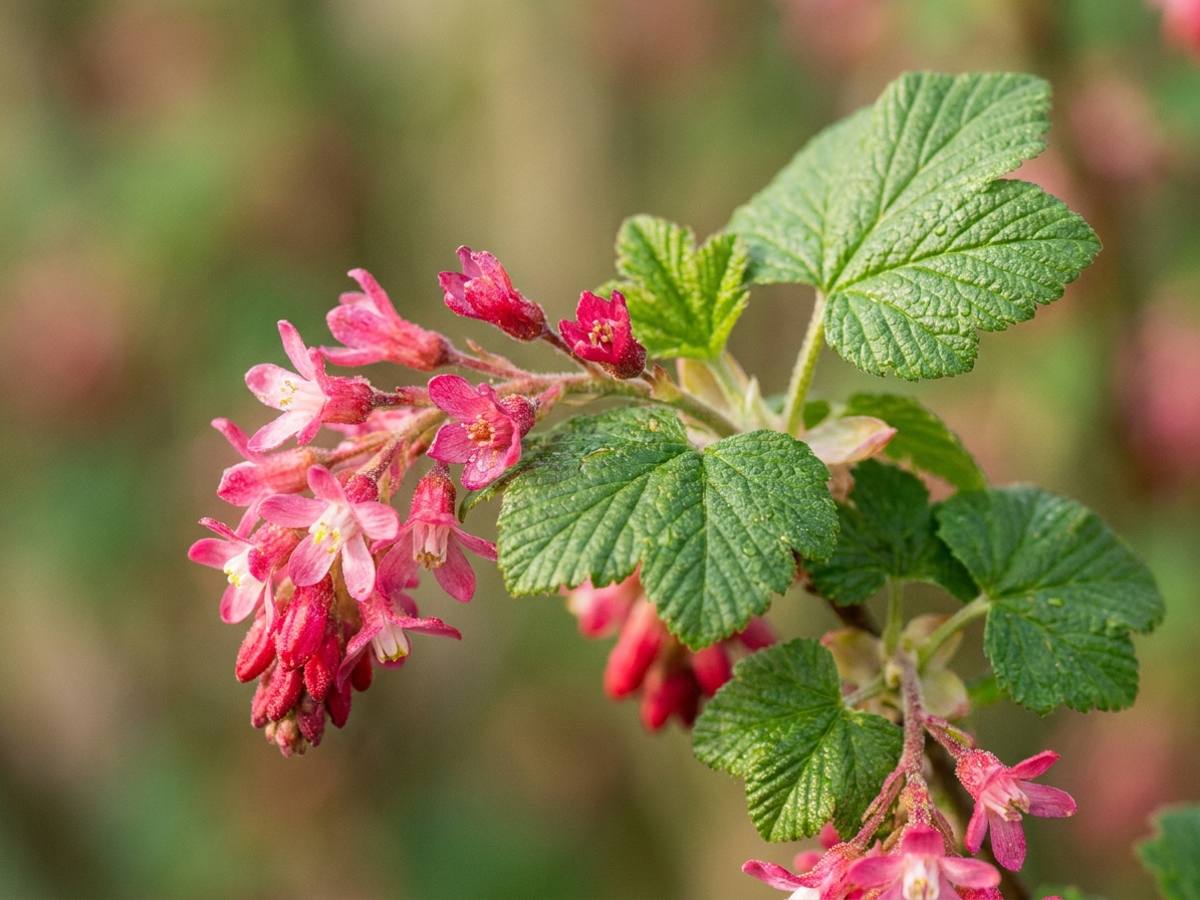
Few shrubs announce the arrival of spring quite as cheerfully as the flowering currant, whose drooping tassels of pink, red or white blossom appear on bare stems before the leaves unfurl. It is a tough, undemanding deciduous shrub that thrives in almost any garden soil and rewards minimal effort with a spectacular March display. Crush a leaf between your fingers and you will meet its most distinctive trait — a pungent, resinous scent that divides gardeners into devotees and detractors.
Flowering currant blooms most generously in full sun, where the flower trusses are held densely along the stems. It copes admirably with partial shade, though expect fewer flowers and a slightly looser, more open habit. Shelter from harsh, drying winds helps protect the early blossom, but the shrub itself is remarkably wind-tolerant once established.
Almost any reasonable garden soil will do, from heavy clay to sandy loam, provided it does not become waterlogged in winter. A pH between 5.5 and 7.5 suits it perfectly, and it tolerates chalk without the yellowing that afflicts fussier shrubs. Improve very light, dry soils with garden compost before planting to hold moisture around the young roots.
Native to western North America, Ribes sanguineum is thoroughly at home in the cool, damp climate of northern Europe and hardy well below −15 °C. In warmer Mediterranean-type regions, give it afternoon shade and a deep mulch to prevent premature leaf drop in summer.
Autumn is the ideal planting season, from October to early December, when warm soil encourages root growth ahead of winter. Container-grown plants can also go in during early spring, whilst bare-root specimens must be planted whilst fully dormant.

Flowering currant asks very little, but the few jobs it does need are strictly seasonal — above all the pruning, which only works in one narrow window. This table sets out the year at a glance.
| Season | Main job | Watering & mulch | Prune? |
|---|---|---|---|
| Early to late spring | Prune as soon as flowering finishes, taking out one in three of the oldest stems at the base | Feed with a handful of balanced organic fertiliser or a compost top-dressing | Yes — straight after the blossom fades |
| Early to late summer | Keep first-year shrubs moist; established plants need almost nothing | Weekly soak rather than daily sprinkles; refresh the mulch if it has thinned | No |
| Early to late autumn | Plant, move or take hardwood cuttings; clear fallen leaves if mildew has struck | Top up the mulch once the soil is damp | No — you would cut away next spring’s flower buds |
| Early winter to late winter | Nothing at all; the bare stems shelter garden birds | None needed | No |
Get the timing of the prune right and the rest of the year largely looks after itself.
Spring: Enjoy the display, then prune immediately after flowering finishes, usually in late April or May. Remove one in three of the oldest stems at the base to keep the shrub youthful and free-flowering. A handful of balanced organic fertiliser or a top-dressing of compost after pruning supports the new season’s growth.
Summer: Established plants need little watering, but keep first-year shrubs moist during dry spells with a weekly soak rather than daily sprinkles. Some leaf yellowing and early drop is normal in hot, dry summers and is not a cause for alarm. Refresh the mulch layer if it has thinned to conserve soil moisture.
Autumn: This is the season to plant, move or take hardwood cuttings. Clear fallen leaves from around the base if mildew or leaf spot has been a problem, and top up the mulch once the soil is damp. Avoid pruning now — you will simply cut away next spring’s flower buds.
Winter: The shrub stands fully dormant and needs no protection whatsoever, even in exposed gardens. Its bare, upright stems provide useful structure and shelter for garden birds.
Modern selections offer far richer flower colour than the wild species, along with more compact habits for smaller gardens.