Jack-in-the-pulpit: varieties, planting and garden uses
0
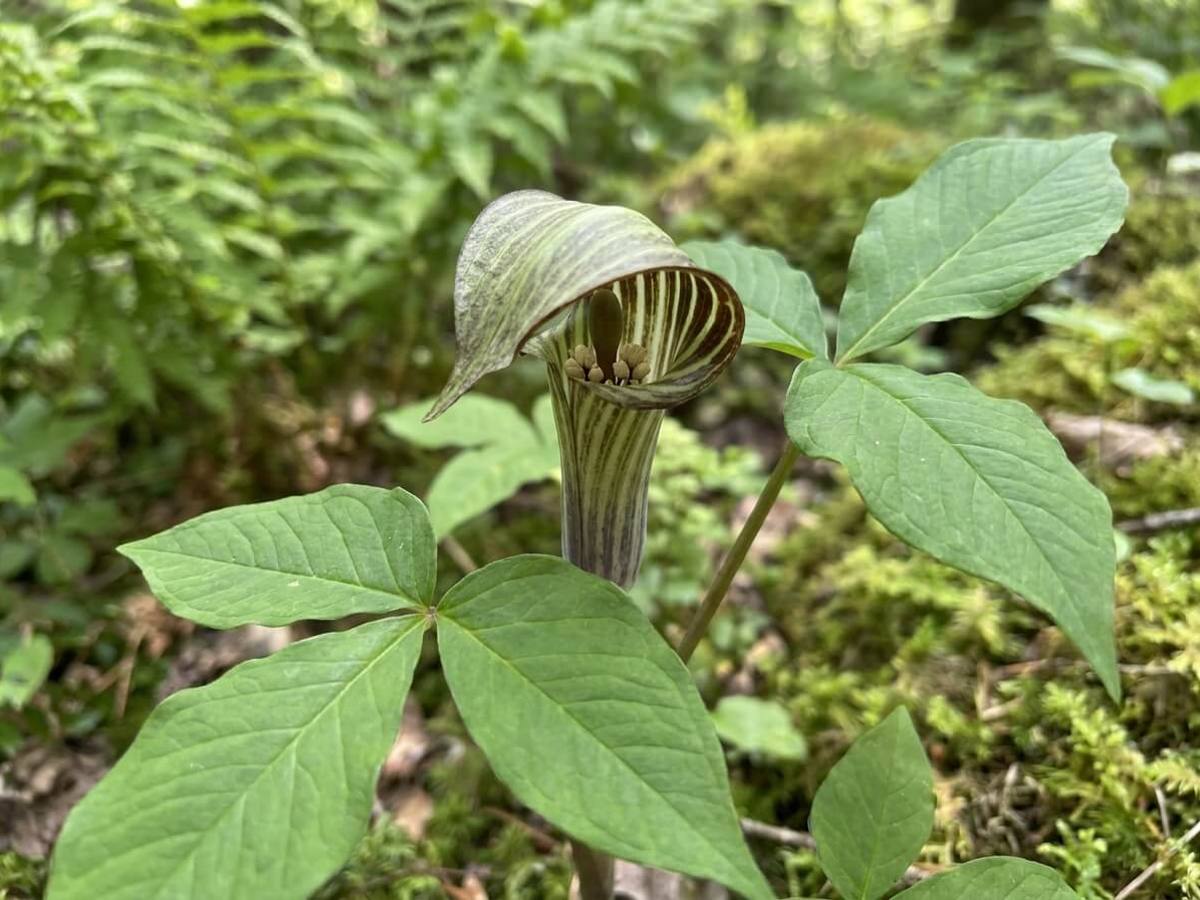
Few woodland perennials command attention quite like Arisaema triphyllum, whose hooded green-and-maroon spathe arches over a slender spadix like a preacher in a pulpit. It brings architectural drama to shaded borders in late spring, then follows up in autumn with a startling cluster of scarlet berries. Most remarkably of all, this is a plant that can change sex from one season to the next, depending on how well it has fed.
Growing conditions
Think of the dappled floor of a deciduous wood and you have the brief exactly. Arisaema triphyllum thrives in partial or full shade, ideally with a few hours of soft morning light and protection from strong afternoon sun. Leaves scorch and collapse early where the plant bakes.
Soil should be deep, leafy and consistently moist but never stagnant in winter. A loam enriched with leaf mould or composted bark suits it best, with a pH of roughly 5.0 to 6.8. Heavy clay is tolerated only if generously improved with grit and organic matter.
The species is genuinely tough, surviving hard continental winters in its native eastern North America. In mild maritime climates the main risk is not cold but winter wet, so raised woodland beds or gentle slopes are a sensible precaution.
How to plant Arisaema
Autumn is the ideal planting season, once the corms are dormant and the soil still holds warmth for root establishment. Pot-grown plants can also go in during spring, before the shoot extends.
Space corms 20–30 cm apart so each plant has room to build a full leaf canopy without competing for moisture.
Plant corms 10–15 cm deep, with the flattened top and growth bud facing upwards; shallow planting leads to frost lift and poor flowering.
Fork a generous bucketful of leaf mould into each planting area, plus horticultural grit on heavier ground.
Water in thoroughly after planting, then mulch with 5 cm of leaf litter to lock in moisture.
Propagate by separating offset cormlets during autumn dormancy, or sow cleaned fresh seed — allow three to five years to reach flowering size.
Arisaema triphyllum growing in a naturalistic garden border
Care through the seasons
Spring: Shoots push through in April as tight, mottled spears, so clear away coarse mulch to let them emerge freely. Apply a light top-dressing of leaf mould or a balanced slow-release feed to fuel corm growth. Protect emerging tips from slugs, which can destroy a whole season’s growth in a night.
Summer: Keep the soil evenly moist through June and July, especially on free-draining ground — drought pushes plants into early dormancy and triggers a switch back to male flowering. Leave the developing berry cluster in place if you want seed. Foliage naturally yellows from late summer, which is normal, not failure.
Autumn: Cut back or simply remove the collapsed leaf and stem once it has withered. This is the moment to lift and divide congested clumps or to detach offsets, replanting immediately at the same depth. Top up the mulch with fallen leaves to mimic the woodland floor.
Winter: The plant vanishes completely below ground and needs no protection in all but the coldest, most exposed gardens. Simply ensure the site does not sit waterlogged, as saturated soil rots dormant corms.
Best varieties to grow
Most gardeners grow the straight species, but several subspecies and selections are worth seeking out.
Arisaema triphyllum subsp. triphyllum — the classic form, with a green spathe striped in maroon and purple, reliable and vigorous in woodland shade.
Arisaema triphyllum subsp. stewardsonii — the bog jack-in-the-pulpit, with a strongly fluted, ridged green-and-white spathe; excellent at the damp edge of a pond.
Arisaema triphyllum subsp. pusillum — a neat, smaller form with a dark, near-black spathe, ideal for the front of a shaded bed.
Arisaema triphyllum ‘Mrs French’ — prized for silvery-grey patterning across the leaflets, which extends the plant’s interest long after flowering.
Pests, diseases and common problems
Slugs and snails: Ragged holes or grazed-off shoots in April and May. Apply wool pellets or sharp grit around emerging tips, and hand-pick after dark during damp spells.
Arisaema rust (Uromyces ari-triphylli): Pale, distorted, stunted shoots with powdery orange pustules on leaf undersides; this systemic rust persists in the corm, so lift and destroy affected plants rather than composting them.
Corm rot: Shoots fail to appear, or collapse at soil level, after a wet winter. Improve drainage with grit and raise the planting position; avoid siting the plant where water stands.
🌿 Nature & Garden Newsletter
Gardening tips, recipes & seasonal advice, twice a week.