Nectaroscordum siculum: growing guide and garden uses
0
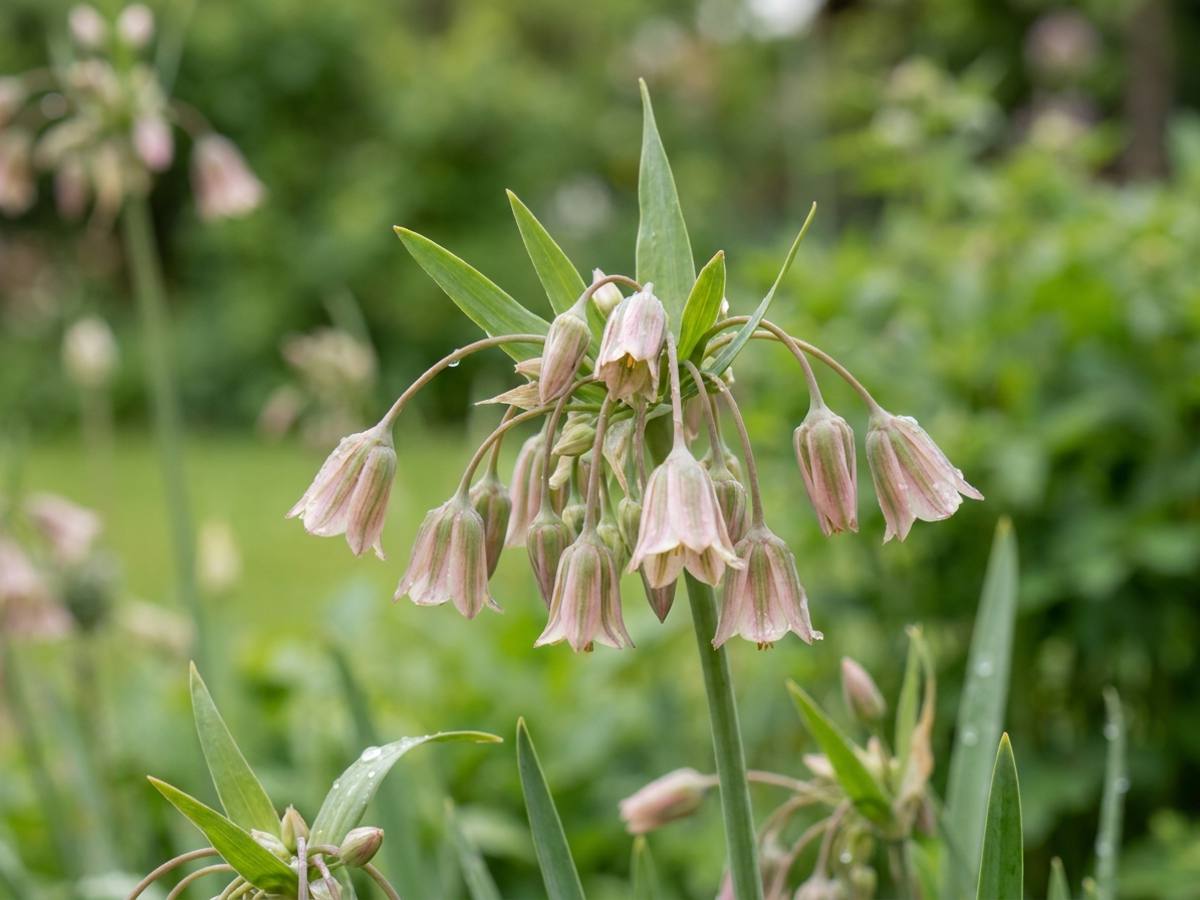
Few early-summer bulbs command attention quite like Nectaroscordum siculum, whose 1.2 m stems carry loose parasols of pendulous, cream-green bells stained with maroon and lime. As the flowers fade, the seed capsules swivel upwards to form a striking candelabra that dries beautifully and stands well into autumn. Better known to many gardeners as Sicilian honey garlic, it releases a distinctly garlicky scent when the leaves or stems are bruised — yet the flowers themselves are honey-sweet and adored by bees.
Growing conditions
This is one of the few tall alliums that genuinely enjoys dappled shade, reflecting its native home on woodland margins and in scrub across Sicily, Turkey and the Balkans. Full sun gives the sturdiest stems and best seed set, whilst light shade extends the flowering season by a week or two. Deep shade, however, produces floppy stems that lean towards the light.
Drainage is the priority. Any reasonably fertile soil that does not sit wet in winter will do, including chalk, sandy loam and improved clay, with a neutral to slightly alkaline pH ideally around 6.5–7.5. Heavy, sticky clay is the one situation where bulbs may rot, so dig in grit and leaf mould before planting.
It is genuinely tough, surviving hard continental winters as well as mild maritime ones, and copes with summer drought because it goes dormant by midsummer. In very exposed coastal or windy gardens, plant it among shrubs or grasses that can act as a natural support for those tall stems.
How to plant Nectaroscordum
Plant dry bulbs in early to mid autumn, from September to November, so roots establish before the cold sets in. Autumn planting also gives the bulbs the winter chill they need to flower well the following spring.
Spacing: set bulbs 20–25 cm apart in groups of five to nine — close enough to read as a drift, far enough to avoid competition for moisture.
Depth: plant 10–15 cm deep, roughly three times the height of the bulb; shallow planting is the usual cause of toppling stems.
Soil preparation: fork over the site and mix in garden compost or leaf mould, plus a couple of handfuls of horticultural grit per planting hole on heavy ground.
Watering in: water once after planting to settle the soil, then leave alone — autumn rainfall is normally sufficient and soggy bulbs rot.
Propagation: lift and separate offsets when clumps are dormant in late summer, or simply collect ripe seed in August and sow fresh in pots of gritty compost, expecting flowers in three to four years.
Nectaroscordum siculum growing in a naturalistic garden border
Care through the seasons
Spring: Broad, keeled, greyish leaves appear from March and can look untidy — resist tidying them, as they are feeding next year’s bulb. Apply a balanced general fertiliser or a light dressing of blood, fish and bone as growth begins. Watch for slugs shredding the emerging shoots in wet springs.
Summer: Flowering peaks in June, after which the foliage yellows quickly and dies back completely — plan for neighbouring perennials such as geraniums, nepeta or ferns to fill the gap. Water only in prolonged drought whilst the plant is still in leaf; once dormant, dry soil is exactly what the bulbs want. Decide now whether to leave the sculptural seedheads standing or cut them off to prevent a flood of seedlings.
Autumn: Cut down any remaining stems, either for dried arrangements or to the compost heap. This is the time to lift congested clumps, divide the offsets and replant immediately at the same depth. A 5 cm mulch of leaf mould or compost feeds the soil without smothering the bulbs.
Winter: Bulbs are entirely dormant and need no protection in most temperate gardens. In containers, move pots to a sheltered spot or lay them on their side to keep the compost from becoming saturated.
Best varieties to grow
Named cultivars are scarce — this is a plant grown mainly in its wild forms, which vary usefully in colour and vigour.
Nectaroscordum siculum subsp. bulgaricum — the form most often sold (sometimes as Allium bulgaricum), with creamy-white bells edged pink-green and superb ribbed seedheads.
Nectaroscordum siculum subsp. siculum — the true Sicilian type, richer in maroon-red flushing on each bell and slightly earlier to flower.
Nectaroscordum siculum subsp. dioscoridis — a taller, more robust eastern form reaching 1.3 m, good for the back of a border.
Nectaroscordum tripedale — a rarer relative with larger, wider bells in dusky pink and purple, worth seeking out for gravel gardens.
Pests, diseases and common problems
Slugs and snails: ragged holes and stripped leaf edges on spring shoots. Apply a barrier of sharp grit or crushed shell, and hunt on damp evenings or use organic ferric phosphate pellets.
Allium leaf miner: lines of pinprick punctures and distorted foliage, with brown pupae inside the stem bases. Cover emerging shoots with insect-proof mesh in March–April and lift and destroy badly affected bulbs.
White rot: yellowing, collapsing leaves and a fluffy white fungus with black specks at the bulb base. There is no cure — remove affected bulbs with the surrounding soil and avoid growing any alliums there for at least eight years.
Excessive self-seeding: hundreds of grass-like seedlings appearing across gravel and borders. Deadhead as capsules turn papery, or hoe seedlings off in their first year whilst the bulblets are still tiny.
🌿 Nature & Garden Newsletter
Gardening tips, recipes & seasonal advice, twice a week.