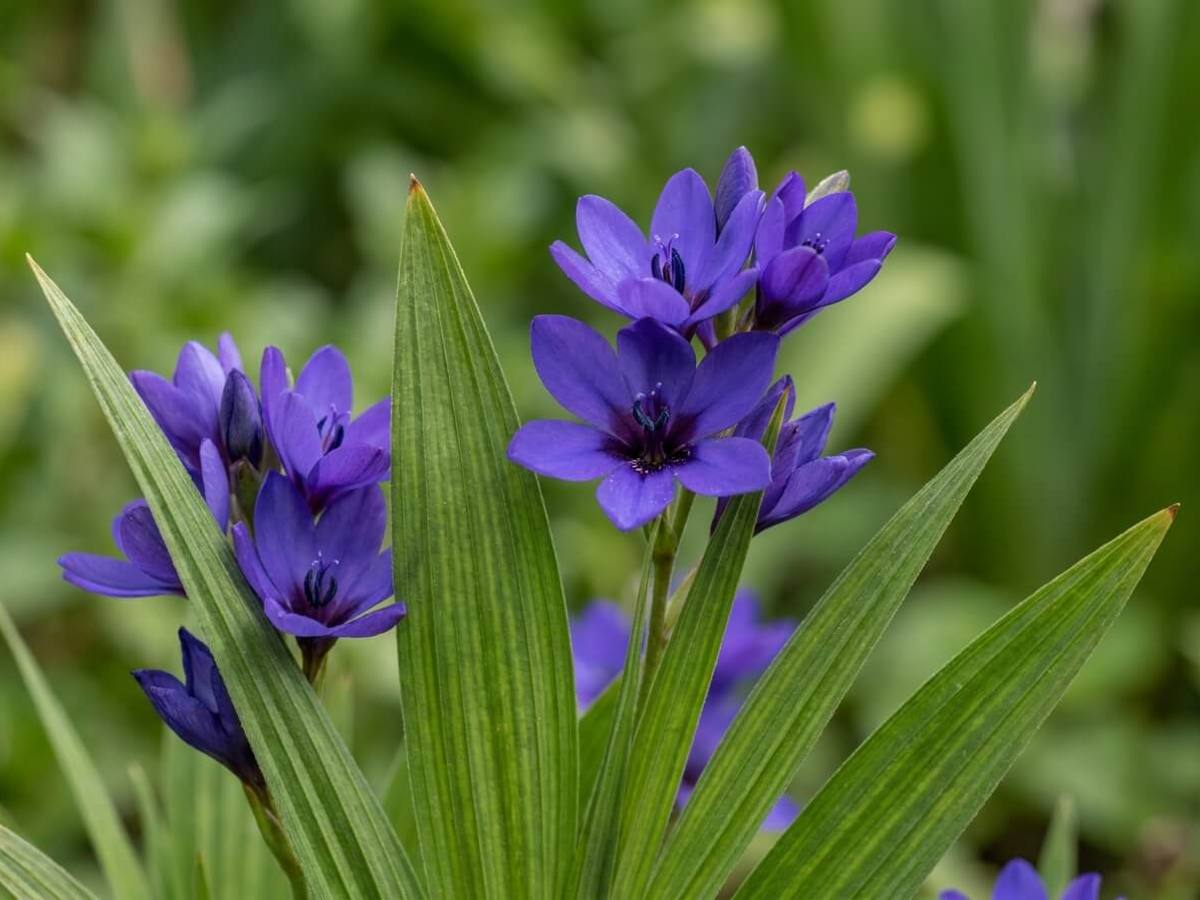
Few spring bulbs match the electric violet-blue of Babiana stricta, the baboon flower, whose freesia-like blooms open in dense one-sided spikes above neatly pleated, softly hairy leaves. A Cape geophyte grown from small fibrous-coated corms, it is perfect for a sunny gravel bed, a raised border or a deep terracotta pan in a cool glasshouse. Its most distinctive trait is its reversed calendar: it grows through the cool, damp months and sleeps, bone dry, all summer.
Growing conditions
Give Babiana stricta the sunniest, most sheltered spot you have — the base of a south-facing wall is ideal. Flowers only open fully in bright light, and in shade the stems stretch and flop. A warm, dry backdrop also helps the corms bake through their summer rest.
Drainage is non-negotiable. Sandy, gritty or stony soils suit it best; on clay, work in coarse grit and sharp sand, or build a raised bed. A pH of 5.5–7 is ideal, and rich, heavily manured ground should be avoided as it encourages soft growth and rot.
In mild maritime and Mediterranean climates (zones 8–10) corms can stay in the ground year-round. Where winters drop below −3 °C, grow them in deep pots in a frost-free glasshouse or lift and store them dry.
How to plant Babiana
In mild regions, plant corms in early to mid-autumn so roots form before the cool, damp growing season begins. In colder areas, pot up in autumn under glass, or plant outdoors in mid-spring once frost has passed for a later show.
Space corms 8–10 cm apart — close planting gives the massed spikes that make the display, and clumps stay compact.
Plant 8–10 cm deep, pointed end upwards; depth protects against frost and discourages contractile roots from pulling corms down.
Fork a generous handful of horticultural grit into the planting area and avoid fresh manure, which causes corm rot.
Water in once lightly to settle the soil, then leave alone until shoots appear — autumn rain is usually sufficient.
Propagate by separating offsets from the parent corm during summer dormancy, or sow ripe seed in autumn; seedlings flower in their second or third year.
Babiana stricta growing in a naturalistic garden border
Care through the seasons
Spring: This is the growing and flowering season, so keep the soil evenly moist but never waterlogged. Feed potted plants fortnightly with a high-potash tomato feed from the time flower spikes appear. Deadhead faded flowers unless you want seed, as seed production drains the corm.
Summer: Once the leaves yellow — usually in June or July — stop watering completely and let the plant go dormant. Dry summer rest is the single most important part of its care; irrigation at this stage is the usual cause of losses. Potted corms can be stored in their dry compost in a warm, airy spot.
Autumn: Lift, divide and replant congested clumps in early autumn, separating the small offsets clustered around each corm. Top-dress outdoor plantings with grit and a light sprinkle of bonemeal, and resume careful watering once shoots emerge.
Winter: Foliage develops through the winter months and tolerates light frost, but a 5 cm dry mulch of bracken or bark is wise where temperatures dip below −2 °C. Keep glasshouse plants cool (5–10 °C) and just moist.
Best varieties to grow
Most garden babianas are selections or hybrids of Babiana stricta, bred for larger, clearer-coloured flowers.
Babiana stricta ‘Zwanenburg’s Glory’ — a long-established selection with violet-blue flowers boldly marked white at the throat.
Babiana stricta ‘Blue Gem’ — deep gentian-blue blooms on sturdy spikes, excellent in pots and among the best for cutting.
Babiana stricta ‘White King’ — creamy white flowers with a faint violet flush, lovely for lightening a gravel planting.
Babiana stricta ‘Purple Star’ — rich magenta-purple petals with pale central markings, strong and reliable in containers.
Pests, diseases and common problems
Corm rot (Fusarium and Botrytis): Corms turn soft, brown and foul-smelling, usually after summer watering or winter waterlogging. Improve drainage with grit, keep the soil dry in summer and discard affected corms rather than replanting them.
Aphids: Clusters on flower stems distort buds and spread mosaic viruses that cause streaked, mottled leaves. Squash colonies by hand, encourage ladybirds, and remove any virus-infected plants permanently.
Rodents and squirrels: Corms are genuinely palatable and are dug up over winter. Plant under a square of wire mesh or grow in pots raised off the ground.