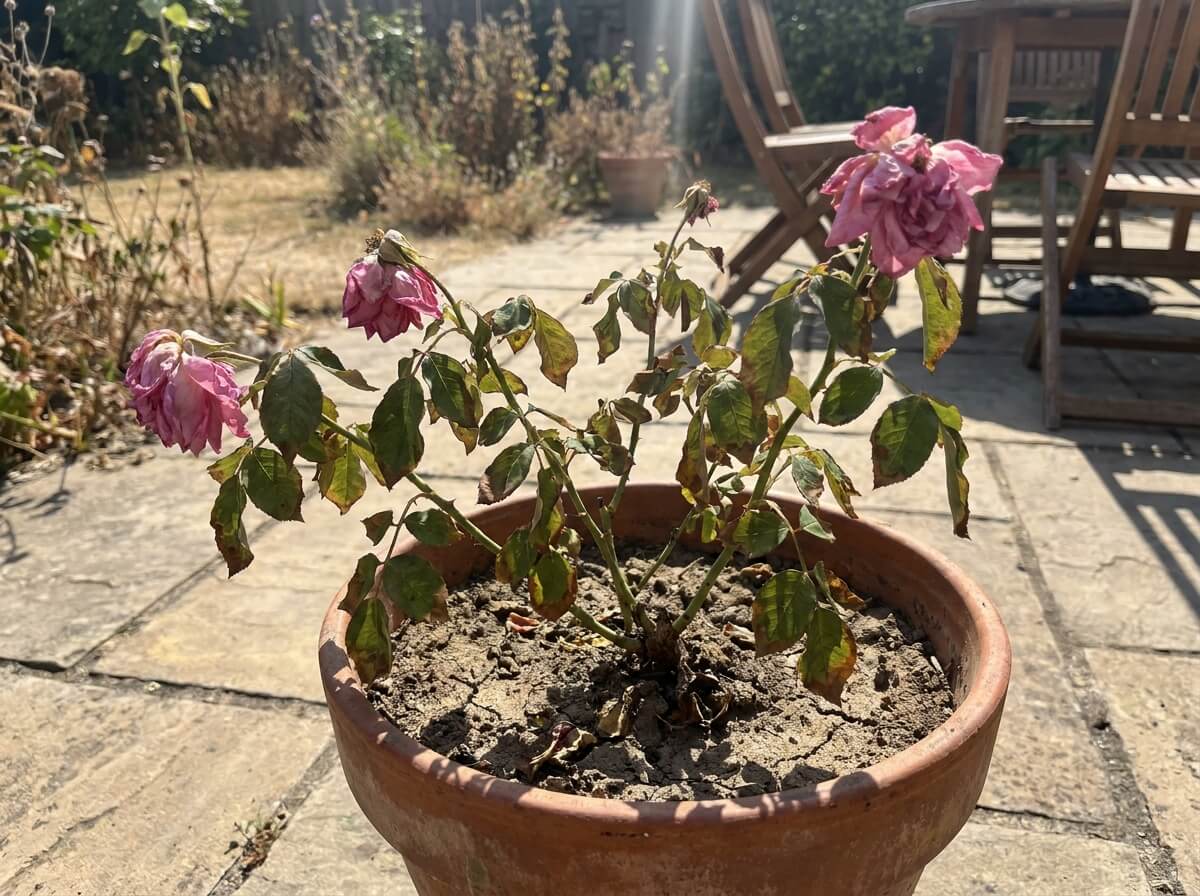
By mid-morning the blooms look perfect. By noon, the whole plant is slumped — petals drooping, leaves hanging soft and papery, that faint singed smell rising from the compost.
Then by early evening it half-recovers and you wonder if you imagined it. Container roses in peak summer heat follow this cruel daily rhythm; most of the damage happens invisibly, underground, before you ever notice the wilt.
The most common assumption is simple: the plant is thirsty. Sometimes that is true. But the more destructive cause is root zone overheating — and it happens even in moist, well-watered compost.
A container sitting in full sun from 10am onward behaves like a slow cooker. Black or dark plastic pots are the worst offenders, reaching internal temperatures of 50–55°C (122–131°F) at the root zone on a hot afternoon.
Fine feeder roots — the tiny hair-like structures responsible for water and nutrient uptake — begin dying off around 38°C. At 45°C, the damage becomes severe within two hours.
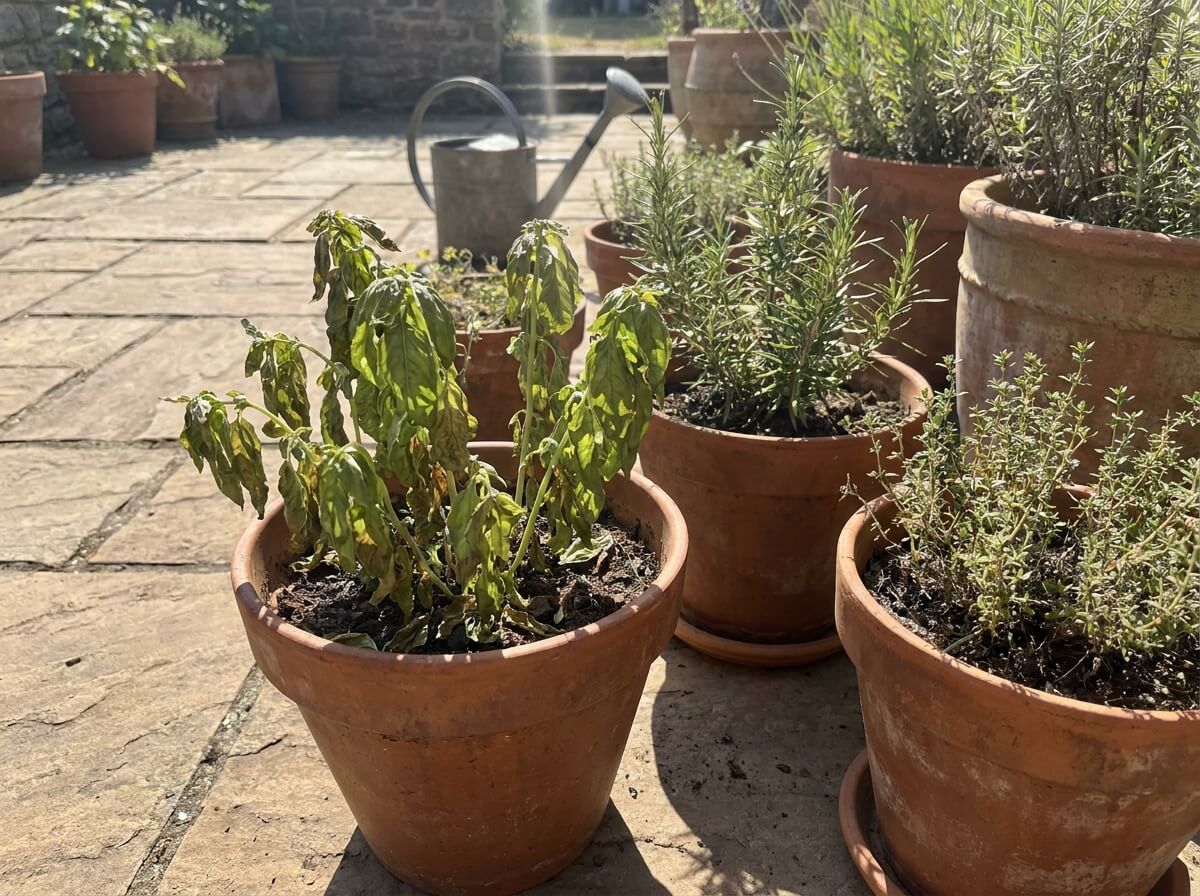
Terracotta handles this better, because moisture evaporates through the unglazed clay wall and cools the interior. But even terracotta will overheat on a south-facing patio with no afternoon shade.
The rose wilts not because the roots can not find water, but because the roots themselves are partially cooked and no longer able to move water upward efficiently. Watering more does not fix a thermal issue.
Pot size matters enormously. A container smaller than 30 litres simply does not have enough soil mass to buffer temperature swings.
The compost dries out and overheats in under two hours during a heatwave. A rose that would be entirely comfortable in a 40-litre pot becomes genuinely stressed in a 15-litre one — same variety, same position, different outcome.
Pot colour is the other factor almost nobody adjusts. Dark containers absorb radiant heat directly.
A white or light-coloured pot in the same position can run 10–12°C cooler at the root zone — that is the difference between stress and stability. If repotting is not an option right now, wrapping the existing pot in hessian (burlap), bubble wrap, or even a second slightly larger pot with air between them provides proper insulation.
Ugly? Slightly.
Effective? Absolutely.
And some rose varieties simply handle container life more gracefully than others — compact shrub roses and patio roses bred for pot culture have genuinely more forgiving root systems than a large hybrid tea stuffed into the same space.
Push your finger 5cm deep into the compost at 2pm. If it is bone dry, you have a straightforward watering issue.
If it is cool and moist but the plant is still wilting — that is heat stress at the root zone or temporary hydraulic failure from mid-afternoon vapour pressure, and watering harder will not help.
Check the pot surface temperature with your palm. If you can not hold your hand against the pot wall for 5 seconds, the internal temperature is already critical.
That is your diagnosis.
So check the drainage holes. A pot sitting directly on a flat paved surface with blocked drainage holes stays waterlogged at the base while drying out at the top.
Roots in the lower third rot; roots in the upper third desiccate. The plant wilts from both ends simultaneously, and no watering schedule fixes that.
Raise the pot on feet or bricks — 2–3cm of air gap is enough to restore drainage and drop base temperature.
Move the pot first. Afternoon shade — specifically from 1pm onward — is more valuable than any other intervention.
A spot that gets full morning sun until noon and dappled or full shade from 1pm to 5pm is ideal for container roses in summer. Roses need at least 5–6 hours of direct sun daily, but they do not need the most brutal hours of it.
Once the pot is in shade, water deeply and slowly at the base. Not a quick splash — fill the top of the pot until water runs clearly from the drainage holes, then wait 20 minutes and do it again. This saturates the full root zone rather than just the surface few centimetres. The RHS recommends watering container roses in summer every 1–2 days in hot weather, always at the base, never from overhead in direct sun — wet foliage in full midday sun scorches within minutes.
Do not fertilise a wilting rose. Not today, not tomorrow.
A stressed root system can not absorb fertiliser and you risk burning already damaged roots. Wait until the plant has been stable and actively shooting up for at least 10 days before resuming feeding.
Water once in the early morning, between 6am and 8am. This is non-negotiable for container roses in a heatwave. Morning watering gives the root zone time to absorb moisture before soil temperatures rise, and foliage dries quickly enough to avoid fungal issues.
In properly hot spells — consistently above 30°C — add a second light watering at dusk, once the sun is fully off the pot. Never water at midday.
So, the water heats instantly in the upper compost, provides almost no benefit to the roots, and can cause localised steam scalding at the base of stems in extreme heat.
Mulching the top of the pot makes a genuine difference. A 3–4cm layer of composted bark, gravel, or even wet newspaper laid flat on the compost surface reduces evaporation by up to 70% and keeps the upper root zone measurably cooler.
Refresh it every 2–3 weeks as it breaks down.
If your potted rose is also dealing with fungal issues alongside the heat stress, check whether the white or orange dusting on leaves is a separate disease issue — heat stress and powdery mildew often arrive together and need addressing independently.
Once the plant has stabilised — firm leaves, no midday collapse for three consecutive days — resume feeding with a liquid potassium-rich fertiliser. Tomato feed works well and is cheap.
Apply at half the recommended dose, twice weekly, always to moist compost. A potassium-heavy feed encourages cell wall strength, which directly does wonders for heat and drought tolerance.
Avoid high-nitrogen feeds in midsummer; they push soft, sappy new growth that wilts even faster.
Deadhead consistently throughout recovery. Spent blooms left on the plant direct energy toward seed production rather than new growth. For the correct technique — because the cut position genuinely matters — getting your deadheading right makes a visible difference to rebloom speed.
A well-maintained container rose that has been through a heat episode typically resumes flowering within a fortnight of proper management. Yes, it takes that long.
Do it anyway — the alternative is a plant that limps through the rest of summer producing nothing.
The best container for a rose in a hot climate is a large, pale-coloured, thick-walled pot — terracotta or a high-quality resin in cream, grey, or white. Minimum 40 litres for a shrub rose, 50+ litres for a hybrid tea. When planting or repotting a rose into a container, mix 20–30% horticultural grit into a loam-based compost (John Innes No. 3 in the UK, or a comparable structured potting mix in the US and Australia) to improve drainage and reduce compaction in summer heat.
Position matters as much as pot choice. A wall that faces west radiates stored heat well into the evening — beautiful in spring, punishing in a July heatwave. East-facing spots, or positions with a tall structure casting afternoon shade, extend the productive life of a container rose by years. The thing is, NC State Extension’s rose care guides note that afternoon shade is consistently the single most impactful adjustment for container roses in warm climates.
Repot every two years. Compacted, root-bound compost dries out in under an hour in peak heat and retains almost no buffer against temperature spikes.
Fresh compost, a slightly larger container, and clean drainage holes reset the plant’s capacity to handle summer entirely.
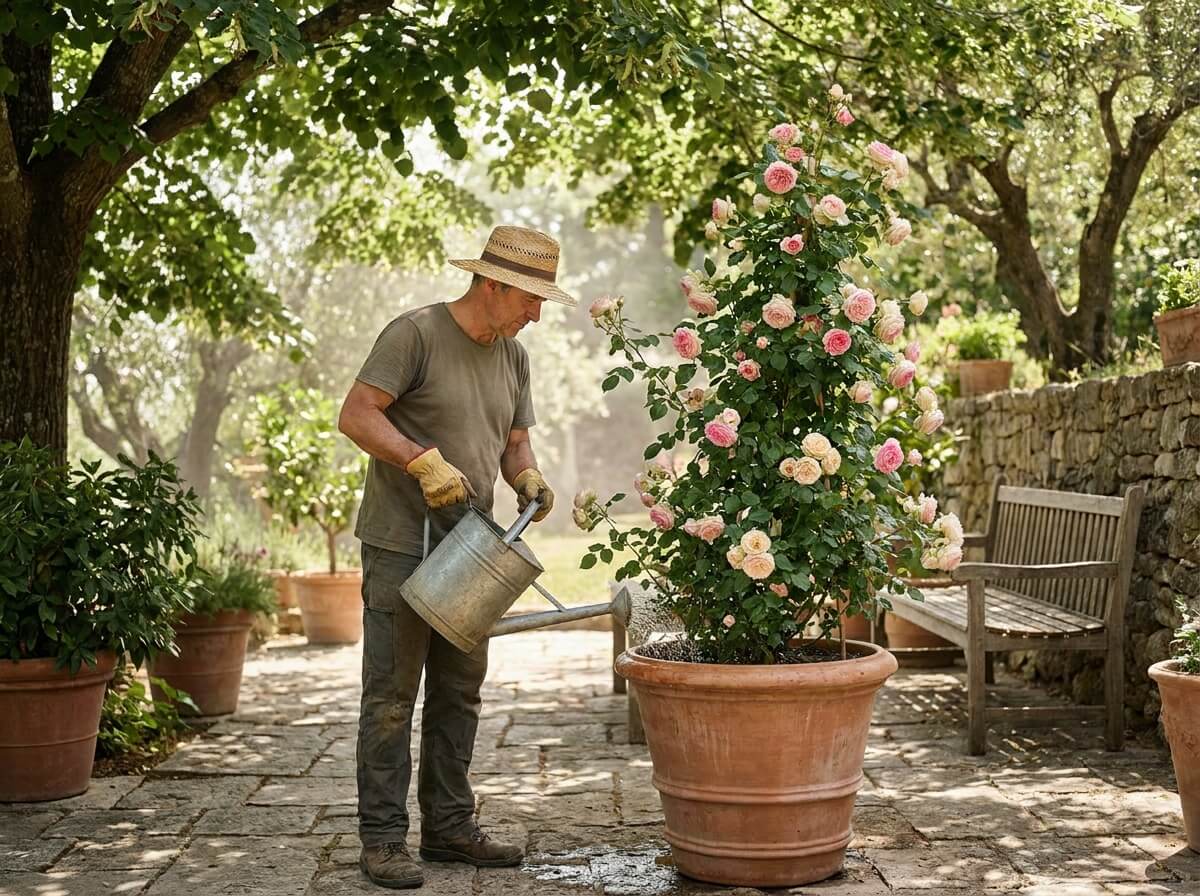
Smart tip: Move your container rose to afternoon shade before noon — that single change prevents most summer heat damage.
Yes, even if it recovers visually. Daily wilt-recovery cycles kill feeder roots incrementally and reduce flowering.
Repeated episodes weaken the plant significantly over a single season.
Water deeply every morning, and add a second light watering at dusk on days above 30°C. Always water at the base — never overhead in direct sun.
Pot material and colour make a measurable difference to root zone temperature. Pale terracotta or thick resin in a light colour outperforms dark plastic by up to 12°C at the roots on a hot day.
Not immediately. Wait until the plant is stable and producing new growth, then pull off any fully crispy stems.
Pruning a stressed rose before it recovers adds to the shock.
30 litres is the minimum for a patio or compact shrub rose; 40–50 litres for most modern shrub roses and hybrid teas. Below 30 litres, the compost simply overheats too fast to manage in high summer; that is a bit much for most roses.