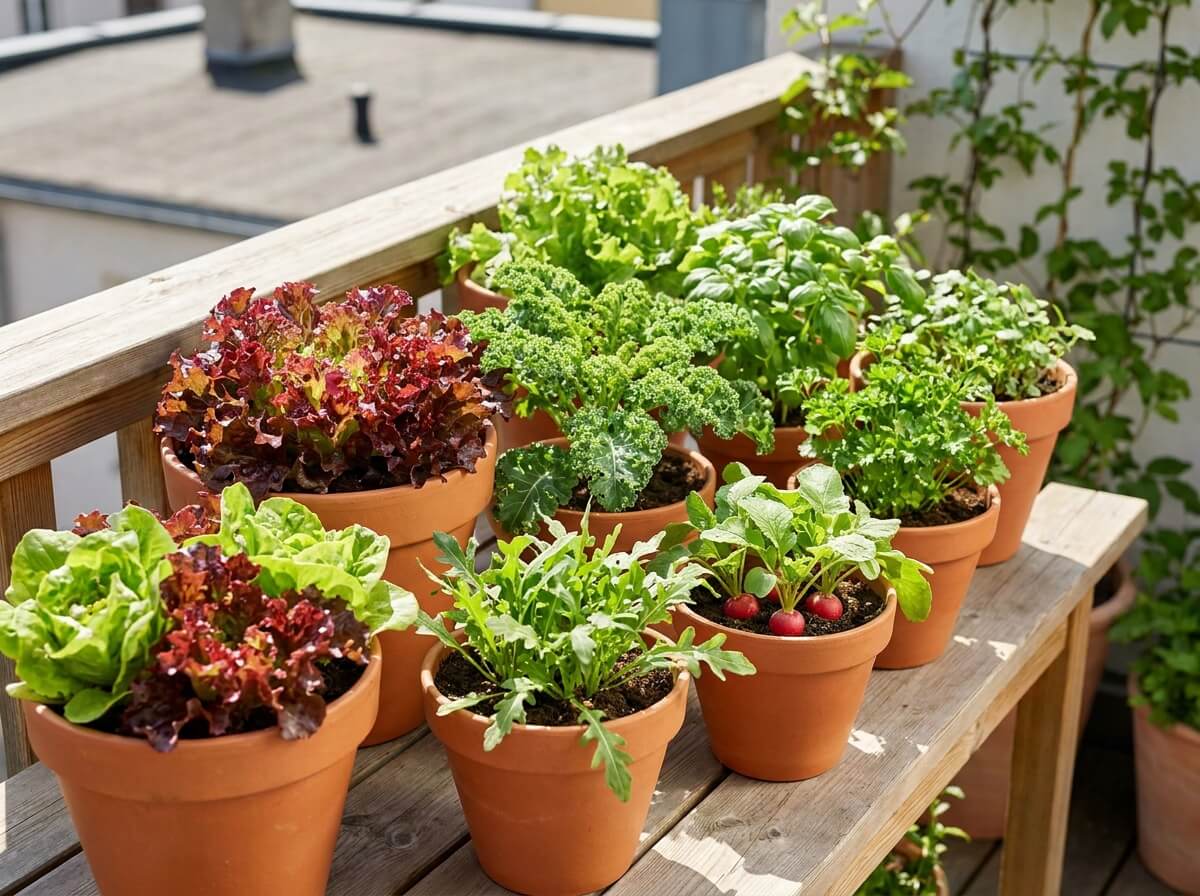
A balcony, a patio, even a single sunny windowsill — that is all it takes. You do not need a plot or raised beds or any outdoor space beyond a few square metres of sunlight.
A proper, harvest-ready salad garden fits in containers you can carry with one hand. Here is exactly what to shoot up, how to do it, and why it does wonders for most gardeners.
Lettuce is the obvious starting point, but stop thinking of it as a single plant. Cut-and-come-again varieties — ‘Salad Bowl’, ‘Lollo Rosso’, ‘Oak Leaf’ — regrow continuously after cutting.
Pull off the outer leaves, leave the centre, and a single 40cm pot feeds two people weekly for six to eight weeks without any resowing.
Radishes deserve more credit. They go from seed to table in 25 days, which makes them the fastest edible crop in container gardening.
Sow a small pinch every 10 days into any spare corner of a pot and you will have a continuous supply running alongside everything else. Sorted.
And if you want to push further, a courgette (zucchini) in a properly large container is entirely possible — you will need a 50-litre pot minimum, but the harvest is extraordinary.
Never use garden soil in containers. It compacts within weeks, drains poorly, and suffocates roots. Yes, it is cheap. Do not bother. Use a quality multi-purpose compost — mix in 20% perlite or horticultural grit to improve drainage and stop the pot becoming a waterlogged brick in heavy rain.
Pot size matters more than people realise. Lettuce and radishes tolerate 15–20cm depth.
Tomatoes and cucumbers need at least 40cm. Beans sit comfortably at 25–30cm.
Going too small does not just limit root space — it dries out in hours on a warm day, and constant water stress ruins flavour.
Dark-coloured pots absorb heat and can cook roots in full summer sun. On a south-facing balcony, choose light-coloured containers or wrap dark pots in hessian.
A simple trick. Enormous difference.
Container vegetables dry out faster than anything in the ground. In warm summer weather, water every two days at the base of the plant — 10 to 15 minutes of slow, deep watering beats a quick splash every morning.
Stick your finger 5cm into the compost. If it is dry at that depth, water now.
Feed every 10 days once plants are actively growing. A liquid tomato feed (Tomorite, or any high-potash equivalent) does wonders for almost all fruiting and leafy crops.
The smell when you open the bottle is sharp and faintly industrial — but the results speak for themselves.
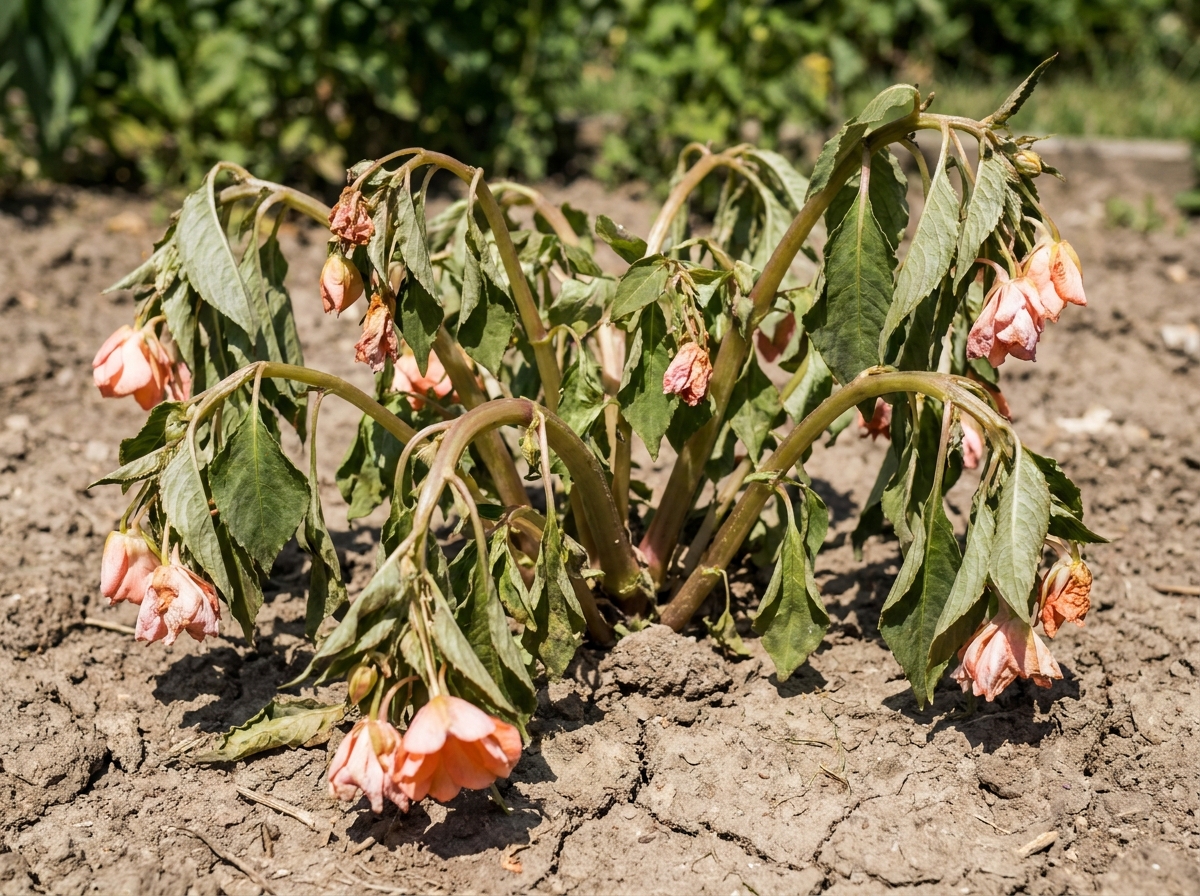
The single most common issue in balcony food growing is not pests or disease. It is irregular watering followed by a drought, which causes splitting in fruits and bolting in leaves. But consistency is everything. Otherwise, you will have a right mess.
The biggest beginner mistake is sowing everything at once. You end up with 40 radishes on the same Tuesday and nothing the following month.
Sow a small amount of each crop every 10 days. That is it. A pinch of lettuce seed, a row of radishes, 3–4 bean seeds. The RHS calls this successional sowing, and it transforms a container garden from a one-week glut into a continuous kitchen resource that lasts the entire season.
By late summer, if you started now, you will have a layered garden in full swing — herbs bushing out at the edges, beans hanging heavy, fresh salad leaves ready every few days. All of it from a balcony.
All of it in pots.
The thing is, Southern Hemisphere gardeners: this approach applies to your December–January growing season. Many of these crops, particularly lettuce and spinach, actually prefer your cooler autumn months — start planning now.
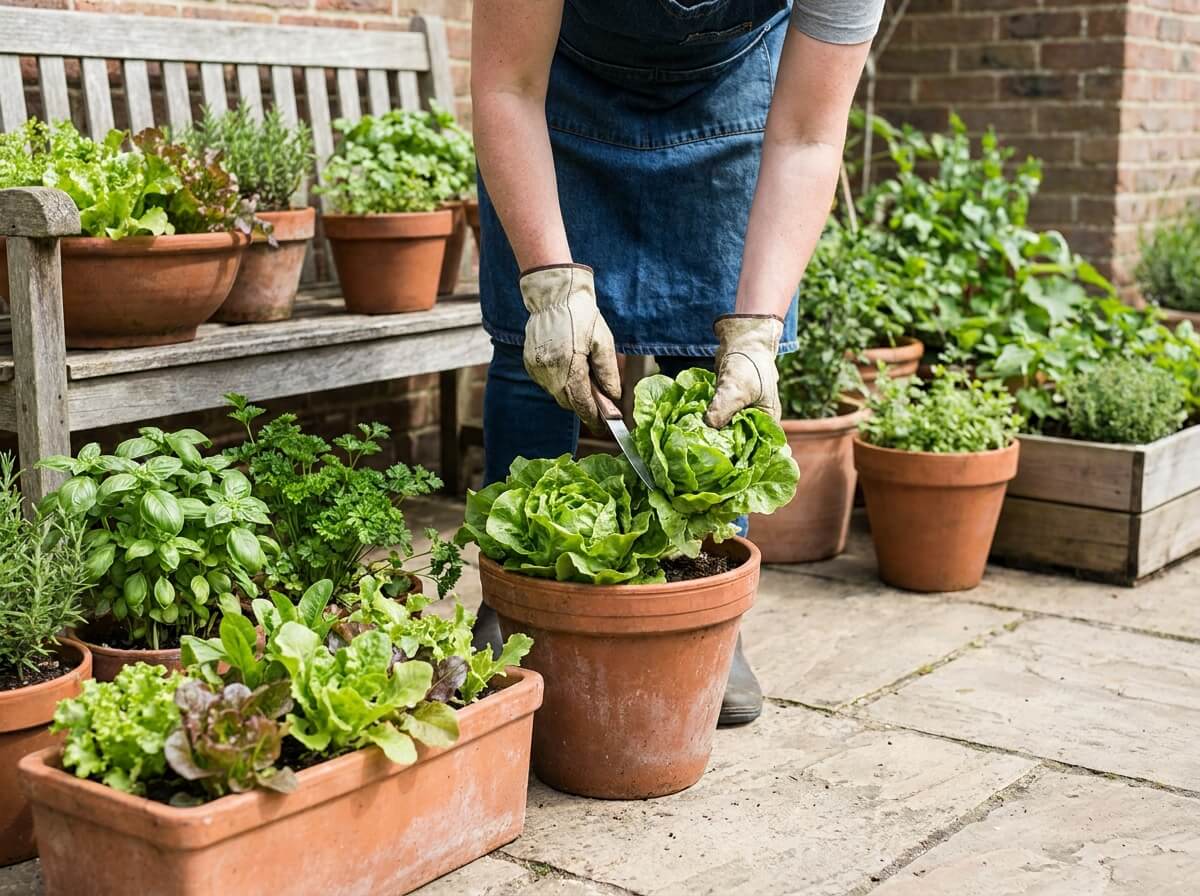
Smart tip: Sow a pinch of lettuce or radish seed every 10 days — that one habit prevents gluts and gaps all season.
A 40cm wide, 20cm deep container is the minimum for a productive cut-and-come-again lettuce patch. Wider is always better. Root space is non-negotiable.
Leafy crops — spinach, chard, lettuce, rocket — handle partial shade well and actually prefer cooler conditions in midsummer. Fruiting crops like tomatoes and cucumbers need at least 6 hours of direct sun, so a north-facing aspect rules them out.
Every two days in warm weather, watering deeply at the base rather than splashing the leaves. Check compost moisture 5cm down — if it is dry, water immediately regardless of what day it is.
Yes — compost nutrients deplete within 4–6 weeks. So, apply a liquid high-potash feed like Tomorite every 10 days once plants are actively growing. University of Minnesota Extension confirms that container crops need significantly more frequent feeding than in-ground equivalents.