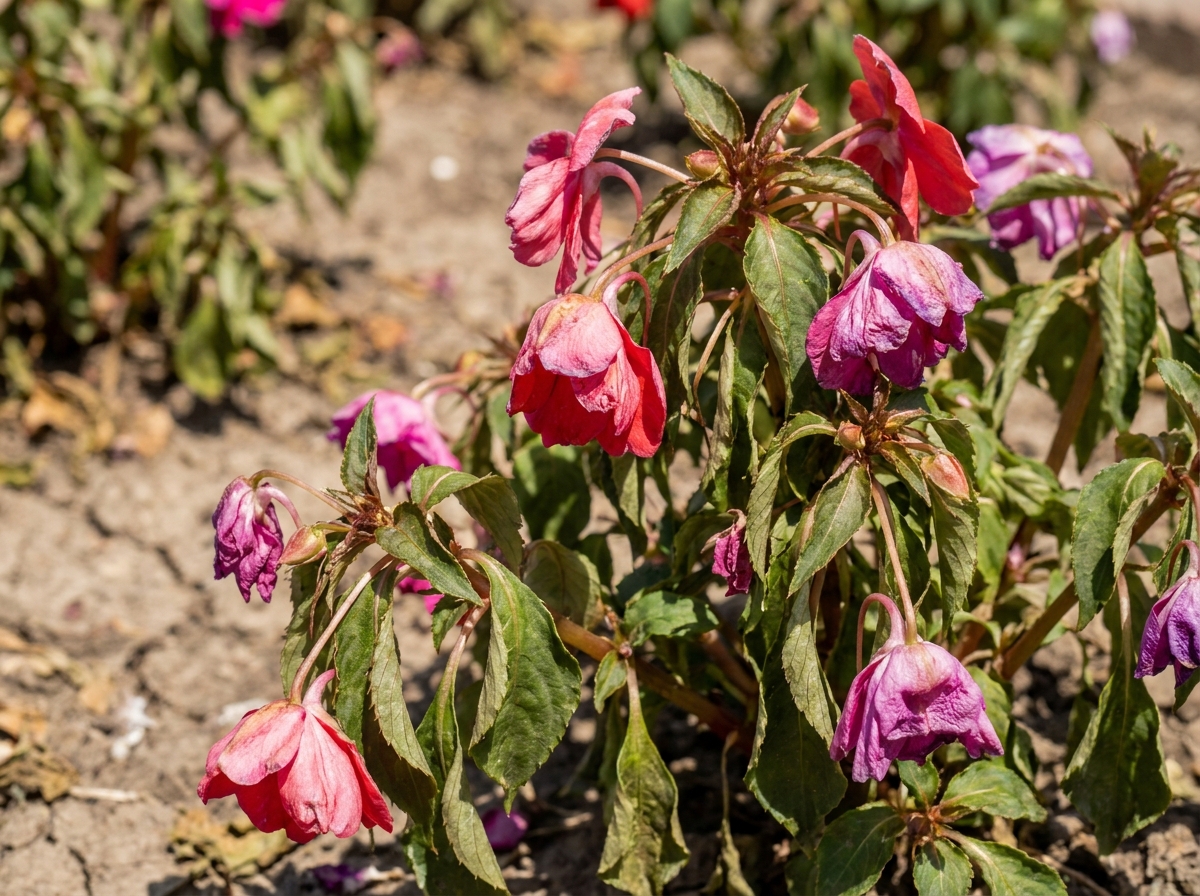
SunPatiens collapse in the afternoon heat and the sight is genuinely alarming. Lush, full plants suddenly hang limp like wet washing. But wilting does not always mean dying. Most cases have a single fixable cause. The plant recovers completely once you address it. Here is what is actually happening inside those stems. And here is exactly what to do before the day is out.
Water moves from roots to leaves constantly, keeping cell walls rigid. When temperatures spike — above roughly 32°C (90°F) — the plant loses moisture through its leaves faster than roots can deliver.
Pressure drops. Stems soften.
The whole plant collapses within a couple of hours.
The most common culprits:
The thing is, containers are the worst offenders. A black plastic pot in full sun can reach a proper 50°C (122°F) at the root zone on a hot afternoon.
The plant has not got a chance.
Temporary afternoon wilt that recovers by evening? Stressful to look at, but not fatal.
The plant is coping. Check back at 8pm. If it is upright again, you caught it in time.
Wilt that persists into the evening is a different story. That signals genuine root stress, and every hour counts.
Leave it 2 or 3 days without intervention and you will see leaf scorch, bud drop, and eventually stem rot or desiccation, depending on the underlying issue. Recovery becomes much harder once the root system is damaged.
And yes — overwatered SunPatiens look identical to underwatered ones. Always check the soil before reaching for the hose.
Push a finger 5cm (2 inches) into the compost. Wet and cold means back off.
Dry and powdery means water immediately and deeply.
Move fast. If the plant is in a container, move it to bright shade immediately — not deep shade, which shocks it further, but dappled light for 2 to 3 hours while it recovers.
Then act on the root zone:
If the soil is waterlogged, do not water. Improve drainage instead. Lift container plants, check for blocked drainage holes, and replace soggy compost if needed. Root rot sets in within 48 hours in saturated, warm soil, according to RHS guidance on overwatering.
Yes, repotting a wilted plant feels counterintuitive. Do it anyway. It is fiddly. But it is worth it. The difference is night and day.
Wilting is the headline symptom, but the plant is giving you more information if you look closely.
According to University of Maryland Extension, New Guinea impatiens hybrids (the parent group of SunPatiens) are particularly sensitive to both drought stress and poor drainage simultaneously.
So Southern Hemisphere gardeners: if you are reading this in winter (your June), file this away for December and January. Your SunPatiens will face exactly these conditions then. You will be sorted.
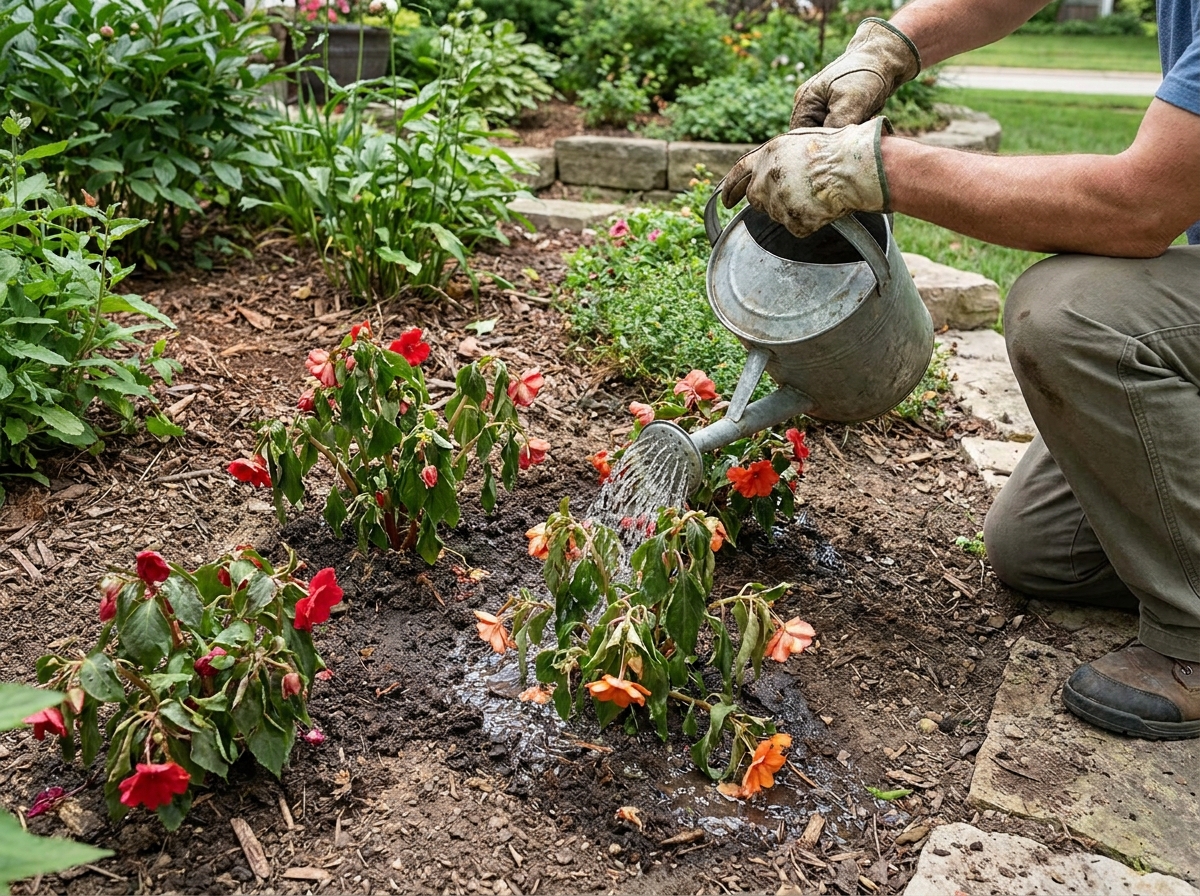
Smart tip: Water SunPatiens deeply every morning before 8am — never at midday when evaporation defeats the effort.
Yes, in most cases — if you act within a few hours. Move them to shade, water deeply at the base, and check again after dusk.
Persistent overnight wilt signals root damage that needs immediate attention.
Daily shallow watering keeps the top layer damp but leaves deeper roots dry. Water less often but much more deeply — 20 minutes at the base — so moisture reaches where roots actually are.
They are bred for full sun and handle it well in normal summer temperatures. But when heat exceeds 35°C (95°F), even healthy plants may wilt temporarily at midday. This is normal and not harmful if the plant recovers by evening.
Container plants need watering at least once daily in peak summer heat. Using light-coloured pots that reflect heat does wonders for them. In-ground plants need deep watering every 2 to 3 days, and a thick mulch layer is non-negotiable to protect roots.