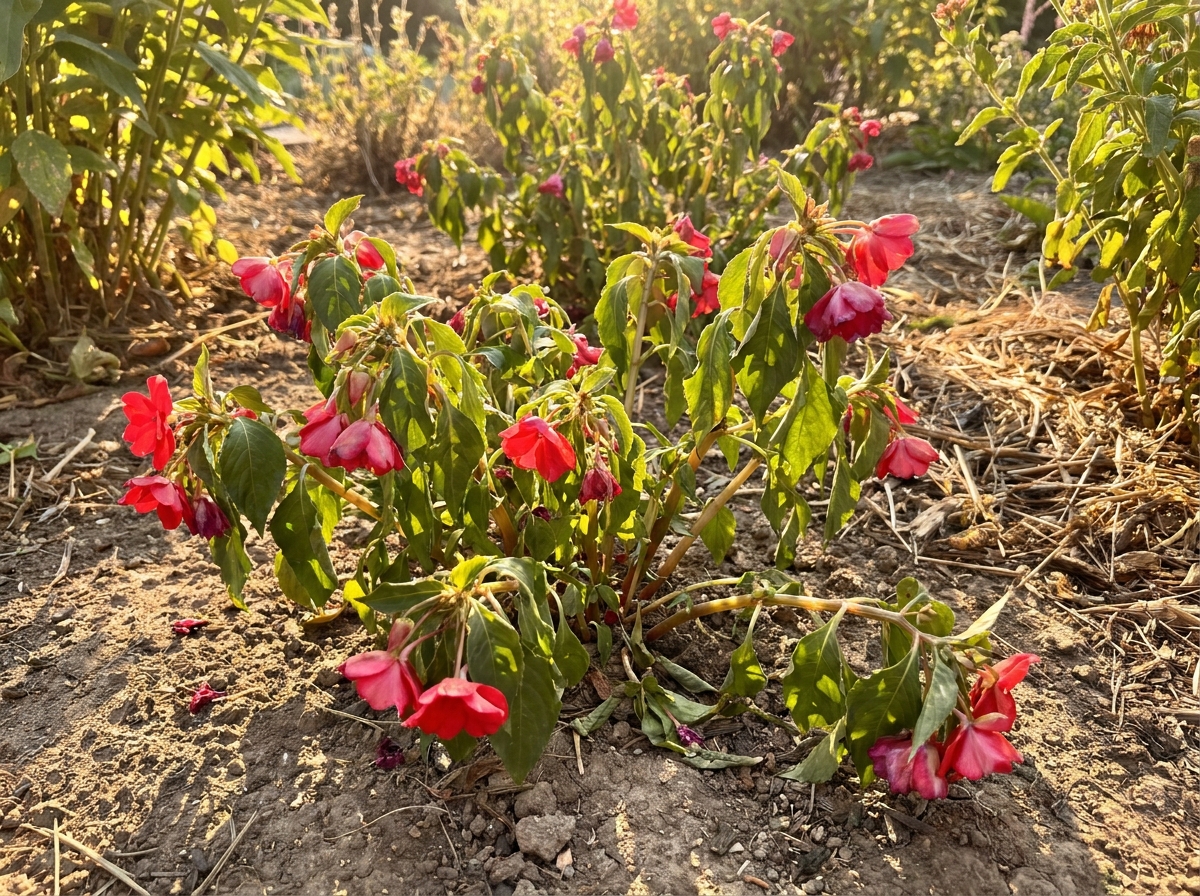
Stems go limp and the whole plant droops flat by mid-afternoon, only to stand upright again with leaves perked by evening: SunPatiens (Impatiens hawkeri hybrids) are bred for far more sun and heat tolerance than ordinary impatiens. Get the watering right — deep, before 8am, rather than daily — and they rebound within 48 hours.
SunPatiens wilt dramatically under summer heat stress — sometimes within two hours of peak sun — even when the soil is moist and the plant was properly healthy that morning. The cause, the diagnosis, and the fix are all simpler than you think.
Here is what is actually happening.
SunPatiens are bred by Sakata Seed for far more sun and heat tolerance than standard impatiens — but there is a ceiling. When air temperatures push past 32–35°C (90–95°F), the plant loses water through its leaves faster than the roots can replace it. The stems become limp. The whole plant droops.
This is called transient wilting — a temporary stress response, not a death sentence. The plant is doing exactly what it is supposed to do: reducing its leaf surface to slow water loss. It is stress, not failure.
But there is a second cause that looks identical and is far more dangerous: root rot from overwatering. If you have been watering every single day in hot weather, the roots may already be suffocating.
So, waterlogged roots cannot deliver moisture efficiently, so the plant wilts — even in soaking-wet soil. That is the trap.
Watering more makes it worse. Stop it immediately.
Before you do anything, check the soil. Push a finger 5cm (2 inches) down into the compost or ground.
Then wait until 7pm and observe again. A plant suffering heat stress alone will recover visibly by evening — stems upright, leaves perked.
The thing is, a plant with root rot stays limp regardless of temperature. That evening recovery test is the most bang on diagnostic you have.
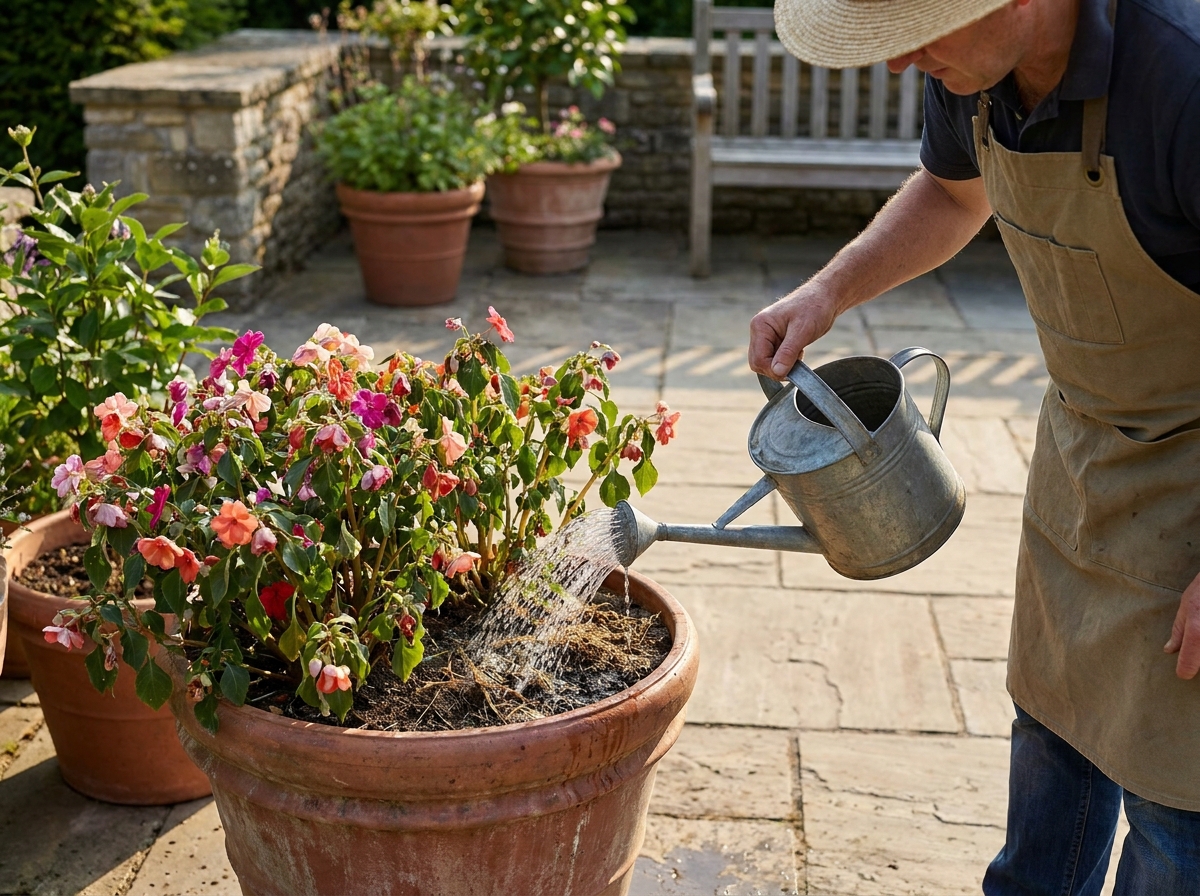
If it is heat stress with dry soil, water slowly and deeply at the base — 20 minutes with a slow trickle directly to the roots, never overhead spray in midday heat. Move any containers to dappled shade for 48 hours.
They will bounce back within a day.
If root rot is suspected, act fast:
For plants in the ground, improve drainage around the base by forking in some horticultural grit — about 2cm deep around the root zone. Stop all watering for 5 days and reassess.
Going forward: water SunPatiens before 8am, twice a week in typical summer heat, deeply rather than frequently. In genuine heatwaves above 35°C, add a third watering in the early evening.
Yes, timing is non-negotiable. And the difference between a plant that thrives and one that rots is often just the hour you choose to water.
Wilting is the obvious one, but watch for these too:
SunPatiens are forgiving. Catch these signals early and the plant rebounds swiftly — often within 48 hours of the right intervention.
Smart tip: If your SunPatiens recover by evening without intervention, heat stress is the culprit — no extra watering needed.
Yes — if the roots are intact and undamaged, SunPatiens can recover from extreme wilting within 24 hours once temperatures drop and proper watering resumes. Root rot is the only situation where recovery becomes uncertain.
Twice a week with deep watering before 8am is the baseline. During sustained temperatures above 35°C, add one early-evening watering — but only if the top 5cm of soil is dry to the touch.
Only if the stems are blackened, slimy, or clearly dead. Otherwise, leave them — cutting healthy stressed stems depletes the plant’s energy reserves and slows recovery significantly.
SunPatiens perform best in full sun but genuinely benefit from afternoon shade when temperatures exceed 32°C (90°F). University of Maryland Extension notes that even sun-tolerant impatiens thrive with protection during peak afternoon heat in hot climates.