Hydrangea macrophylla care: how to grow and maintain
·
0
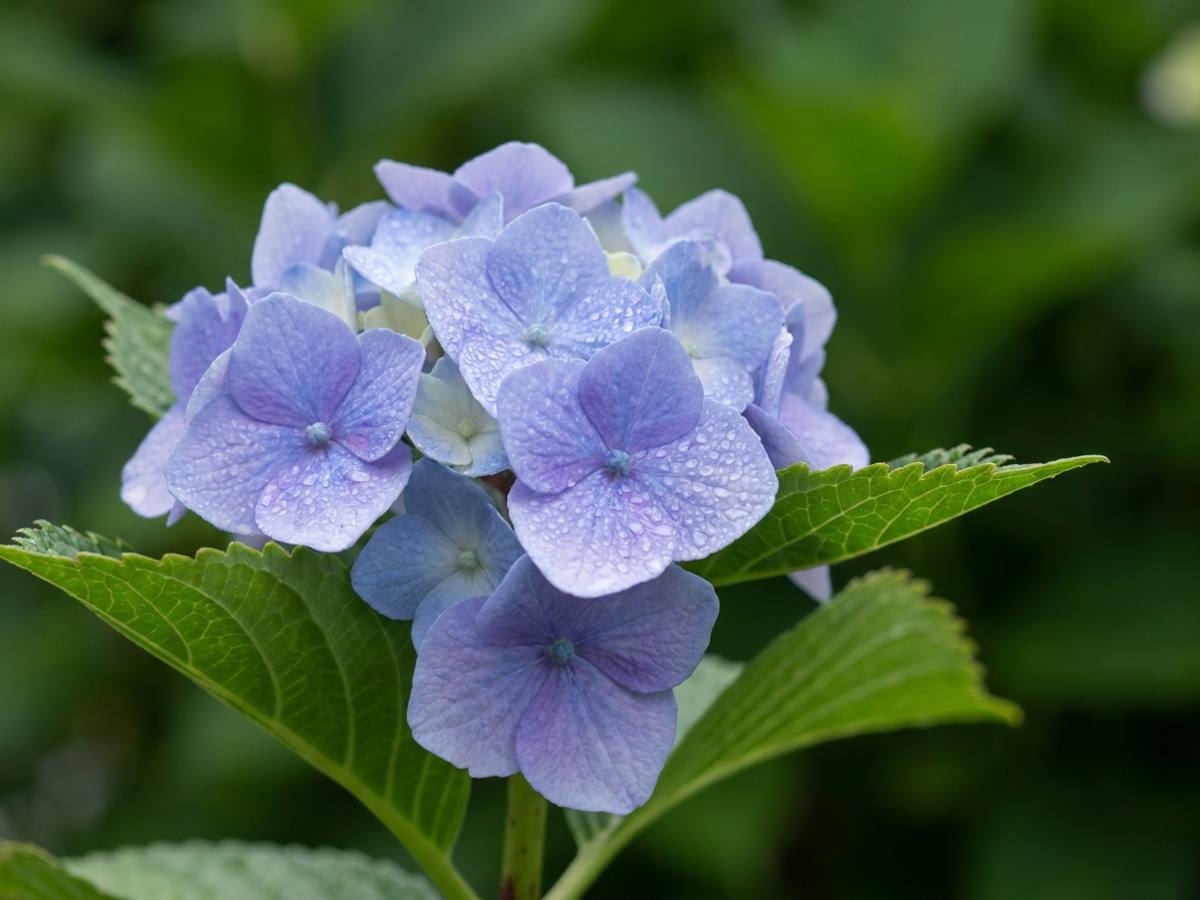
Few shrubs deliver such generous, long-lasting colour as Hydrangea macrophylla, the classic mophead and lacecap hydrangea of cottage gardens and coastal borders. Its enormous domed or flat flowerheads open in midsummer and persist well into autumn, fading gracefully to antique parchment shades. Most remarkably, the flower colour of many cultivars shifts from pink to blue depending on the acidity of your soil — a living litmus test in the border.
Growing conditions
Bigleaf hydrangeas are woodland-edge plants at heart, so they perform best in dappled or partial shade with shelter from harsh afternoon sun. Morning sun with midday shade is close to ideal. In deep shade, plants grow leafy but flower sparsely.
Give them a moist, humus-rich, well-drained soil that never bakes dry — those enormous leaves lose water rapidly. Heavy clay improved with leaf mould or garden compost suits them well, whilst thin chalk and dry sand are a struggle. Soil pH determines flower colour: below pH 5.5 blooms turn blue, above pH 6.5 they turn pink, and in between you get muddled mauves.
They are fully hardy in most of Britain and northern Europe, though late spring frosts can scorch the emerging flower buds. Coastal gardens suit them particularly well, as salt-laden air rarely troubles them and humidity is high.
Soil pH and flower colour: what to expect
With bigleaf hydrangeas the border itself decides the colour, because the acidity of your soil controls how much aluminium the roots can take up. Check your pH before you choose a cultivar, then use the table to see what colour to expect and how to steer it.
Soil pH and flower colour: what to expect
Soil pH
Flower colour
What to do
Below pH 5.5 (acid)
Blue
Water with rainwater, mulch with ericaceous compost and keep the pH low
pH 5.5–6.5 (slightly acid to neutral)
Muddled mauves
Apply a sulphate of aluminium tonic if the colour drifts towards pink
Above pH 6.5 (neutral to alkaline)
Pink
Accept the pink, or grow a pink-flowered cultivar on its merits
Chalky soil
Pink, hard to shift
Grow in a pot of ericaceous compost instead of the open ground
Thin chalk and dry sand are a struggle in any case, so a container of ericaceous compost is often the surest route to a true blue.
How to plant Hydrangea
Plant in autumn or early spring, when the soil is warm and moist enough for roots to establish before the plant faces summer drought stress. Avoid planting during hot, dry midsummer spells.
Space plants 1.2–1.5 m apart so air circulates freely and mature shrubs are not forced to compete — closer spacing encourages mildew.
Set the rootball so its surface sits level with the surrounding soil; planting too deeply causes stem rot.
Fork plenty of leaf mould, composted bark or well-rotted manure into the planting area to hold moisture.
Water in with at least 10 litres per plant and mulch 5–7 cm deep, keeping the mulch clear of the stems.
Propagate from softwood cuttings in June, taking 10 cm non-flowering shoots — they root readily in a shaded cold frame within six weeks.
Hydrangea macrophylla growing in a naturalistic garden border
Care through the seasons
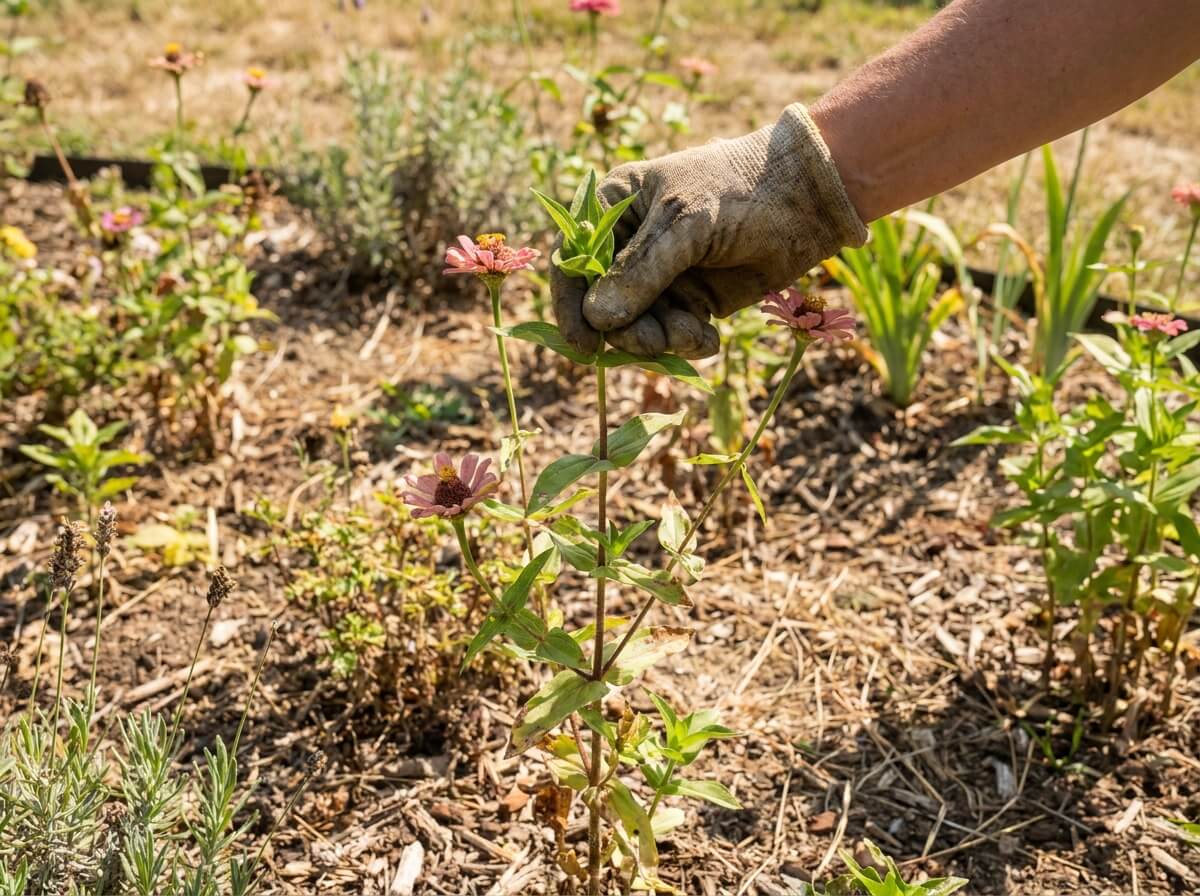
Spring: Wait until the buds break, then cut last year’s faded flowerheads back to the first pair of fat, healthy buds. Remove any dead, weak or crossing stems at the base to open up the centre. Apply a balanced slow-release feed and a generous mulch of compost.
Summer: Water deeply and regularly — a mature shrub may need 15–20 litres a week in dry spells, and container plants need daily attention. Wilting leaves in the afternoon heat are common but should recover by evening; if not, water urgently. Feed blue-flowered cultivars with a sulphate of aluminium tonic if the colour is drifting towards pink.
Autumn: Leave the spent flowerheads on the plant rather than tidying them away, as they shield next year’s buds from frost. Top up mulch around the base once the leaves have fallen. This is the best moment to plant new specimens or move established ones.
Winter: The shrub is fully dormant and bare, its buds already formed on last summer’s wood. In cold or exposed gardens, wrap young plants in fleece or pile bracken around the crown to protect those precious flower buds.
Best varieties to grow
Choose according to whether you prefer the bold globes of mopheads or the subtler, pollinator-friendly lacecaps.
‘Zorro’ — A superb lacecap with near-black stems and violet-blue florets, holder of the RHS Award of Garden Merit.
‘Ayesha’ — Unusual cupped, lilac-scented florets that resemble a lilac more than a hydrangea; slow and elegant.
‘Mariesii Perfecta’ (Blue Wave) — A classic AGM lacecap with airy blue or lilac heads, excellent in light woodland.
Endless Summer ‘Bailmer’ — Reblooming mophead that flowers on both old and new wood, useful where late frosts are a risk.
Pests, diseases and common problems
Powdery mildew: A greyish-white bloom coats the leaves in humid, crowded conditions. Thin congested stems to improve airflow, water at the roots rather than overhead, and remove affected foliage.
Vine weevil: Adults notch the leaf margins whilst the grubs devour roots in containers, causing sudden collapse. Drench pots with parasitic nematodes (Steinernema kraussei) in late summer when soil is above 5 °C.
Failure to flower: Almost always caused by pruning in autumn or winter, or by frost damage to buds. Prune only in spring after bud break, and fleece plants when hard frosts threaten.
🌿 Nature & Garden Newsletter
Gardening tips, recipes & seasonal advice, twice a week.