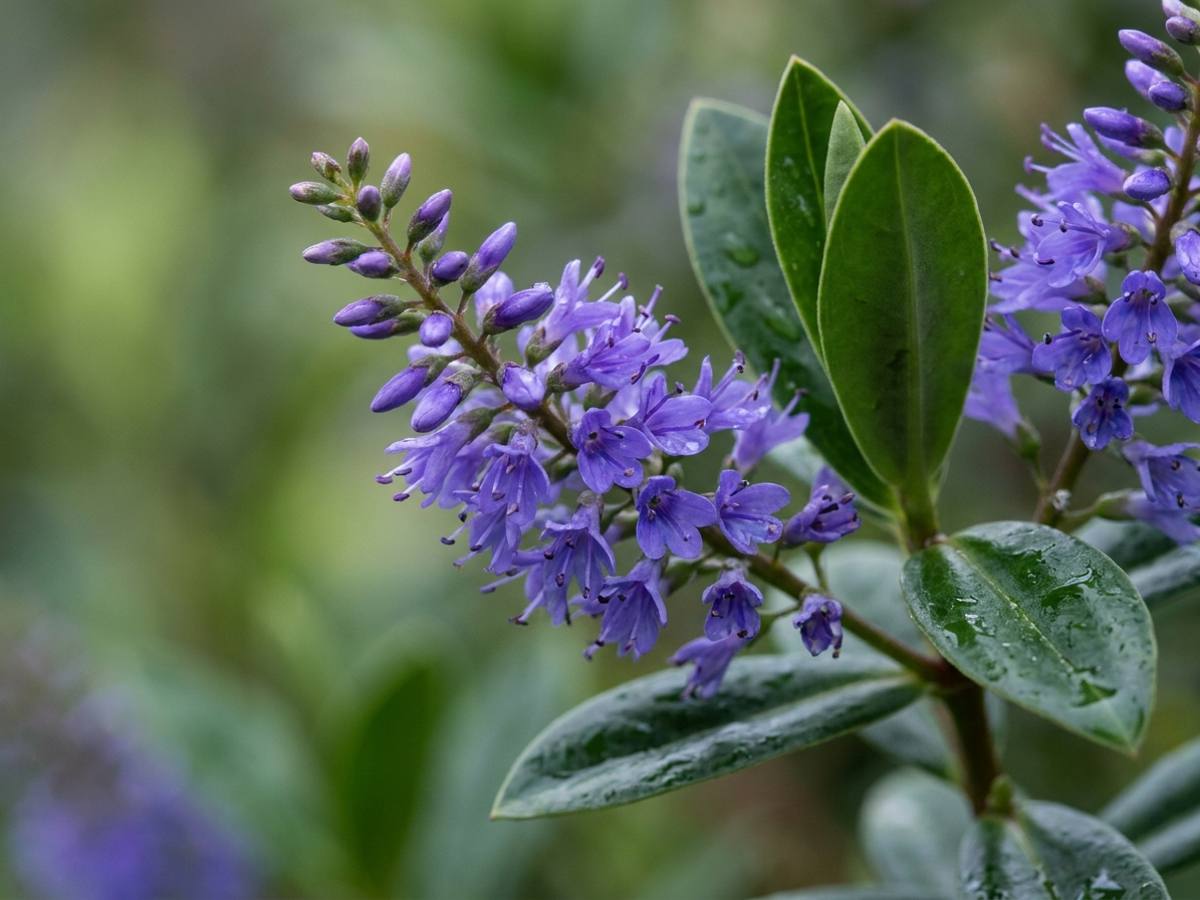
With its glossy, paddle-shaped evergreen leaves and dense spikes of magenta-purple flowers, Hebe speciosa is the boldest of the New Zealand hebes and the parent of many popular large-leaved garden hybrids. It makes a handsome rounded shrub for mild coastal gardens, seaside hedging or a sheltered sunny border, flowering generously from midsummer well into autumn. Its great charm is that it draws bees and butterflies at a time when many other shrubs have finished.
Growing conditions
Give Hebe speciosa the sunniest, most open spot you can offer, ideally with shelter from cold, drying easterly winds. Full sun produces the compact growth and heaviest flowering; in shade the shrub becomes leggy and sparse. It shrugs off salt-laden gales, which makes it outstanding within sight of the sea.
Drainage matters more than fertility. A light, gritty or sandy loam is perfect, and the plant is perfectly happy on chalk or in poor coastal soils. Heavy, wet clay is the main killer, particularly in winter — plant on a raised mound or improve the ground generously with grit if that is all you have.
This is the least hardy of the commonly grown hebes, reliable outdoors only in mild maritime districts such as south-west England, western Ireland, Brittany and Atlantic coasts generally. Inland gardeners in colder zones should treat it as a container plant to be moved under glass, or grow one of its hardier hybrids instead.
How to plant Hebe
Plant in late spring, once the soil has warmed and all risk of hard frost has passed, so the shrub has a full growing season to root before its first winter. Autumn planting is only advisable in genuinely frost-free coastal gardens.
Space plants 90 cm to 1.2 m apart in a border, or 60 cm apart for an informal low hedge or windbreak.
Set the rootball so its surface sits level with the surrounding soil — never bury the base of the stems, as buried bark rots readily.
Fork a generous bucketful of horticultural grit into the base and backfill of the planting hole; skip rich manure, which encourages soft, frost-tender growth.
Water in thoroughly to settle the roots, then water weekly through the first summer only — established plants are notably drought tolerant.
Propagate from semi-ripe cuttings of non-flowering shoots in late summer; 8 cm tip cuttings root easily in a gritty compost within four to six weeks.
Hebe speciosa growing in a naturalistic garden border
Care through the seasons
Spring: Wait until mid to late spring before tidying, as frosted-looking shoots often recover. Cut back any blackened or dead wood to healthy growth, and shorten leggy stems by up to a third to keep the bush shapely. A light scattering of general-purpose fertiliser and a gritty mulch is all the feeding required.
Summer: Water containers regularly, but border plants only in prolonged drought — hebes hate soggy roots more than dry ones. Removing faded flower spikes as they brown keeps the shrub looking smart and often coaxes a second flush. Avoid hard pruning after midsummer, since new growth will not harden before autumn.
Autumn: Take cuttings now as insurance against a hard winter. Resist the urge to cut back — the old growth shelters the crown, and pruning wounds invite dieback in cold, damp weather. Draw a mulch of bark or leaf mould around the base, keeping it clear of the stems themselves.
Winter: The shrub stays evergreen but growth halts; cold winds cause more leaf scorch than frost alone. In marginal areas wrap the plant in horticultural fleece during cold spells, or move potted specimens into a cool, bright, frost-free porch or greenhouse.
Best varieties to grow
True Hebe speciosa is sold less often than its showy, slightly tougher garden offspring.
Hebe speciosa ‘La Séduisante’ — reddish-purple flowers over purple-flushed foliage; one of the oldest and most reliable selections.
Hebe speciosa ‘Simon Delaux’ — rich crimson spikes on a compact bush, superb in seaside gardens.
Hebe ‘Great Orme’ — an RHS Award of Garden Merit hybrid with long pink spikes fading to white, and better cold tolerance than the species.
Hebe ‘Midsummer Beauty’ — another AGM plant, vigorous with lavender spikes from midsummer to the first frosts.
Pests, diseases and common problems
Hebe leaf spot (Septoria): Brown or purple-ringed spots leading to leaf fall, worst in wet, crowded conditions. Pick off and bin affected leaves, thin the plant to improve airflow, and never water over the foliage.
Downy mildew: Pale, mottled upper leaf surfaces with greyish fuzz beneath, often in a humid autumn. Prune out affected shoots, clear fallen leaves and increase spacing between plants rather than reaching for sprays.
Winter dieback and root rot: Whole branches turn brown and brittle after a cold, wet spell, usually a sign of waterlogging as much as frost. Cut back to live wood in spring, and replant survivors on a free-draining raised bed or slope.
🌿 Nature & Garden Newsletter
Gardening tips, recipes & seasonal advice, twice a week.