Rhodochiton atrosanguineus: your complete climbing vine guide
0
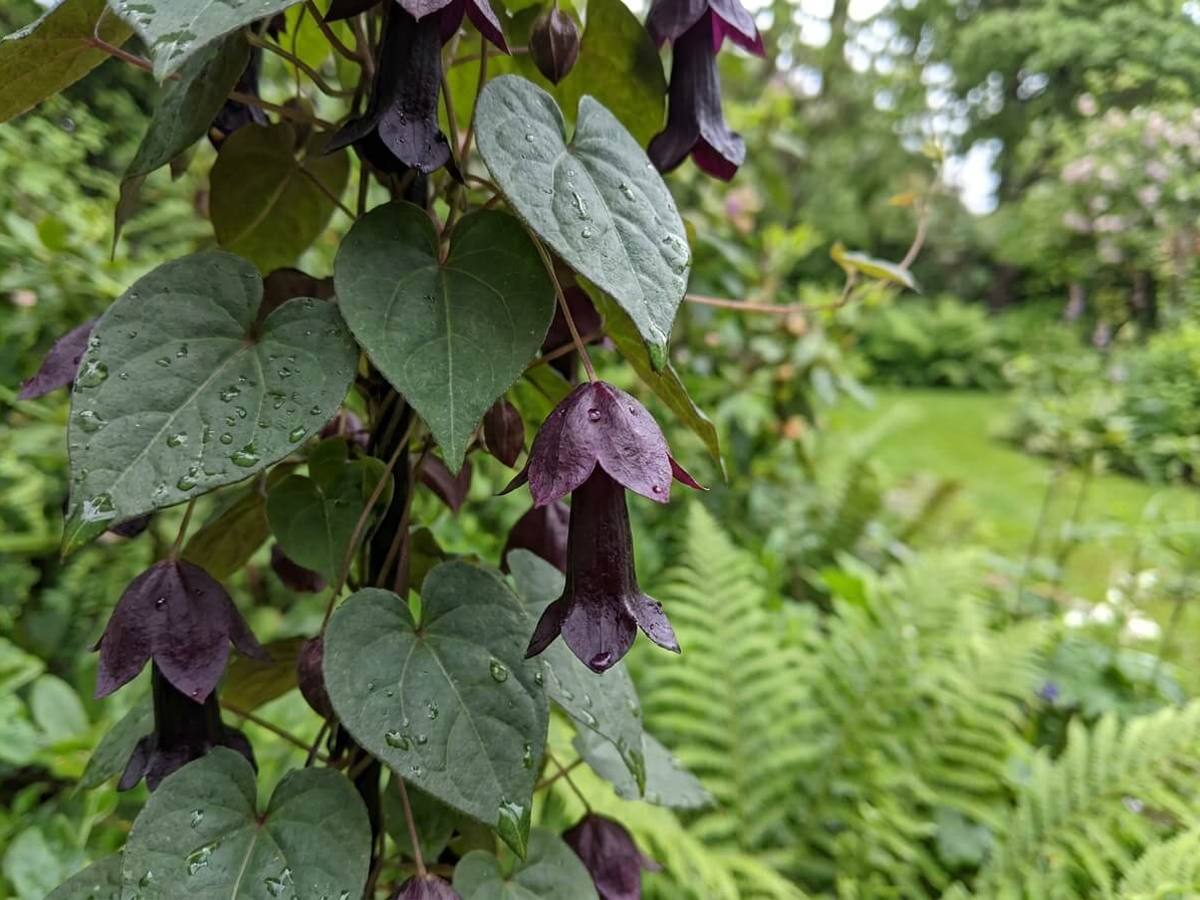
Few climbers earn their place on a sunny trellis quite like the purple bell vine, whose dangling flowers look like tiny mulberry-black trumpets suspended beneath rose-pink parasols. It is a fast, lightweight twiner that will clothe an obelisk, arch or balcony railing in a single season, flowering tirelessly from midsummer until the first frosts. Although perennial in its native Mexican highlands, most gardeners in cool climates treat it as a half-hardy annual — and are rewarded with three metres of growth from a pinch of seed.
Growing conditions
Give purple bell vine a warm, sheltered position in full sun or very light shade. In hot summer climates a little afternoon shade keeps the foliage from scorching and prolongs flowering, whereas in cool maritime regions it needs all the sun it can get. Wind is the real enemy — the slender stems and papery calyces tear easily, so plant against a sunny wall or inside a courtyard.
The ideal soil is rich, humus-laden and able to hold moisture without ever becoming waterlogged. Work in garden compost or well-rotted manure before planting, and add grit to heavy clay. A neutral to slightly acid pH suits it best, though it performs perfectly well on mildly alkaline ground provided it is not thin and chalky.
Treat it as frost-tender everywhere colder than USDA zone 9: in Britain, Ireland and most of northern Europe it is sown fresh each spring or overwintered under glass. In Mediterranean, Californian and subtropical gardens it behaves as a short-lived perennial and may flower nearly all year.
How to plant Rhodochiton
Plant out only once all danger of frost has passed and night temperatures stay reliably above 10 °C — late May or early June in most temperate gardens. Hardening off over seven to ten days prevents the check in growth that so often stalls young plants.
Spacing: allow 45–60 cm between plants; closer than this and the thin stems tangle into a congested mass that flowers poorly and invites mildew.
Depth: set the rootball at the same level it sat in the pot, never deeper — the base of the stem rots readily if buried.
Soil preparation: fork a bucketful of compost into the planting hole and position netting, wires or canes before planting so the roots are not disturbed later.
Watering in: soak thoroughly, then mulch with 5 cm of compost or bark to keep the root zone cool and evenly damp through summer.
Propagation: sow seed from January to March at 18–21 °C, barely covering it, and expect erratic germination over two to five weeks; softwood cuttings root easily in late summer for overwintering indoors.
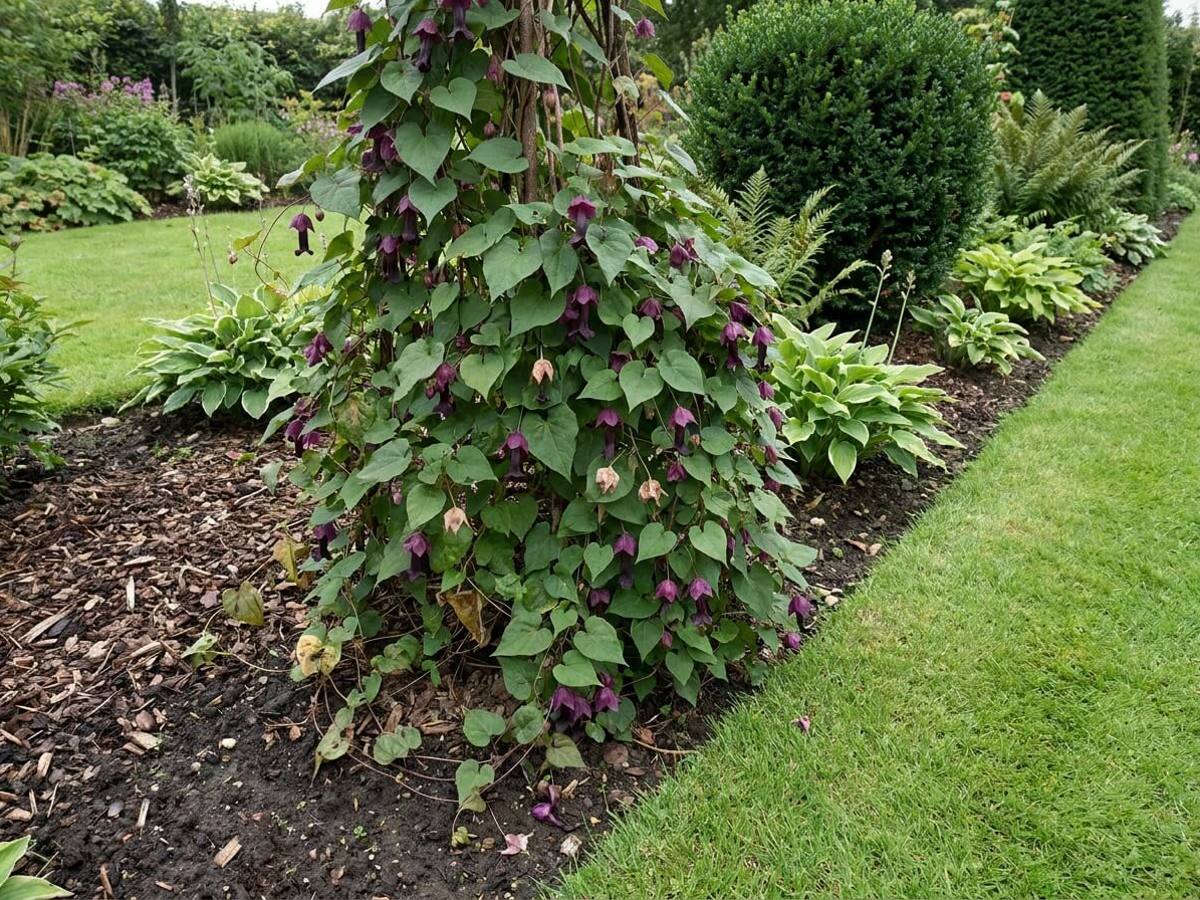
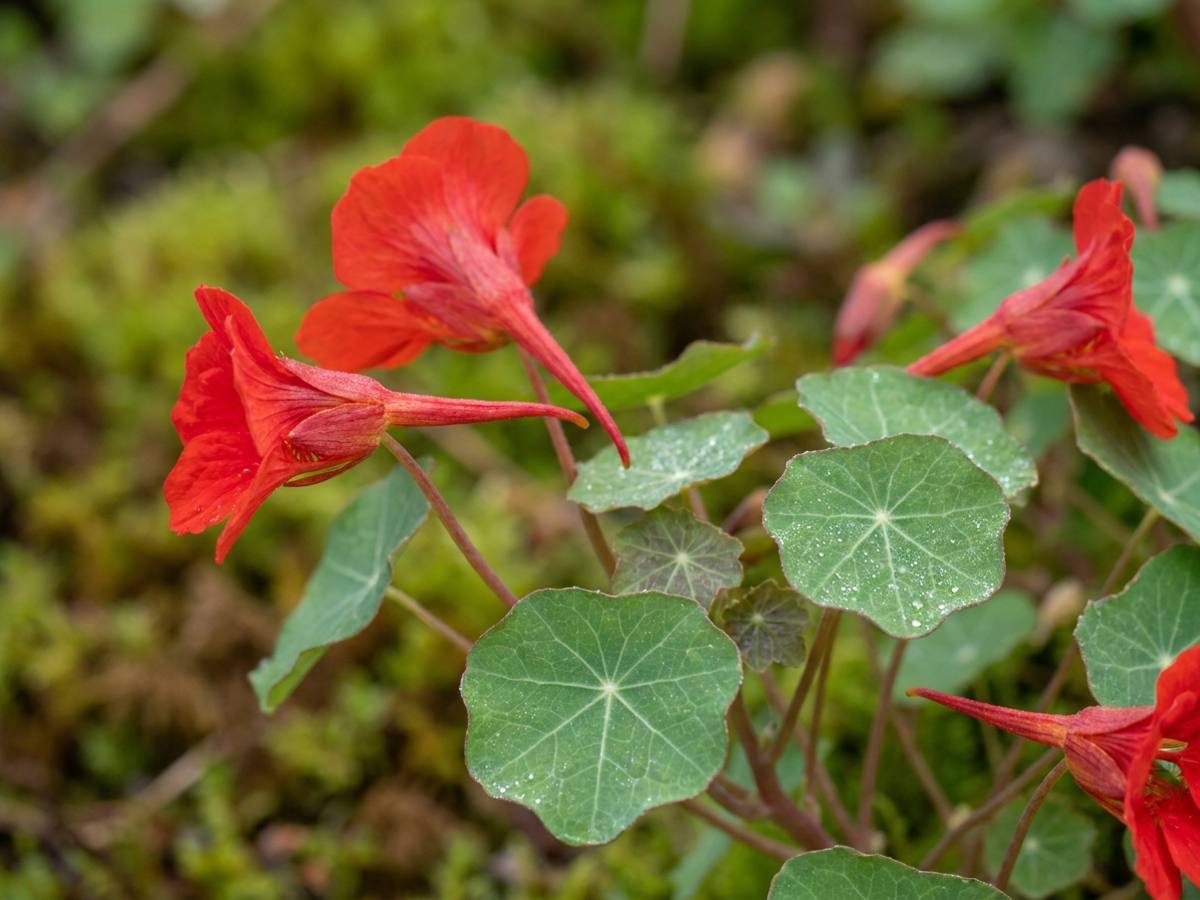
Rhodochiton atrosanguineus growing in a naturalistic garden border
Care through the seasons
Spring: Pot seedlings on before they become root-bound and pinch the growing tip at around 15 cm to encourage two or three flowering stems. Overwintered plants should be cut back by a third, repotted into fresh compost and gradually given more water as light levels rise. Start a balanced liquid feed once new shoots appear.
Summer: Water generously — containers may need a drink every day in hot weather, as the plant wilts dramatically when dry. Switch to a high-potash tomato feed every ten to fourteen days from the first buds to keep the flower chain coming. Tie in or weave wandering stems weekly, since the leaf-stalk grip is gentle and easily dislodged.
Autumn: Flowering continues until frost blackens the foliage, so leave it be for as long as the weather allows. Before night temperatures dip below 7 °C, lift plants or move pots into a frost-free greenhouse, conservatory or bright porch. Alternatively, take 8 cm cuttings in early September — they root within three weeks and overwinter far more compactly than mature plants.
Winter: Kept at 7–10 °C and watered only enough to stop the compost drying out completely, plants rest rather than die back entirely. Too much water in cold, dim conditions is the commonest cause of winter losses.
Best varieties to grow
Named cultivars are few, so most gardeners grow the species or a seed strain selected for flower size and colour.
Rhodochiton atrosanguineus (the species) — the benchmark, holder of the RHS Award of Garden Merit, with near-black corollas beneath magenta-pink calyces.
‘Purple Bells’ — the most widely offered seed strain, dependable and vigorous, flowering within five months of sowing.
Rhodochiton atrosanguineus f. album — a scarce pale form with creamy-white to blush flowers, charming threaded through a dark-leaved shrub.
Lophospermum erubescens (creeping gloxinia) — a close relative worth pairing with it, offering large rose-pink trumpets on similarly lightweight growth.
Pests, diseases and common problems
Red spider mite: fine mottling, bronzed leaves and gossamer webbing, especially under glass or on a hot wall. Raise humidity by misting and damping down, and introduce the predatory mite Phytoseiulus persimilis early in the infestation.
Aphids and whitefly: clustered on soft tips and flower buds, leaving sticky honeydew and sooty mould. Rinse off with a jet of water, squash colonies by hand, and encourage ladybirds and lacewings rather than spraying.
Few flowers and lush leaves: almost always a sign of too much nitrogen or too little light. Move the plant into brighter conditions and switch to a high-potash feed; slugs grazing young shoots in spring will also delay flowering, so protect seedlings with wool pellets or copper rings.